
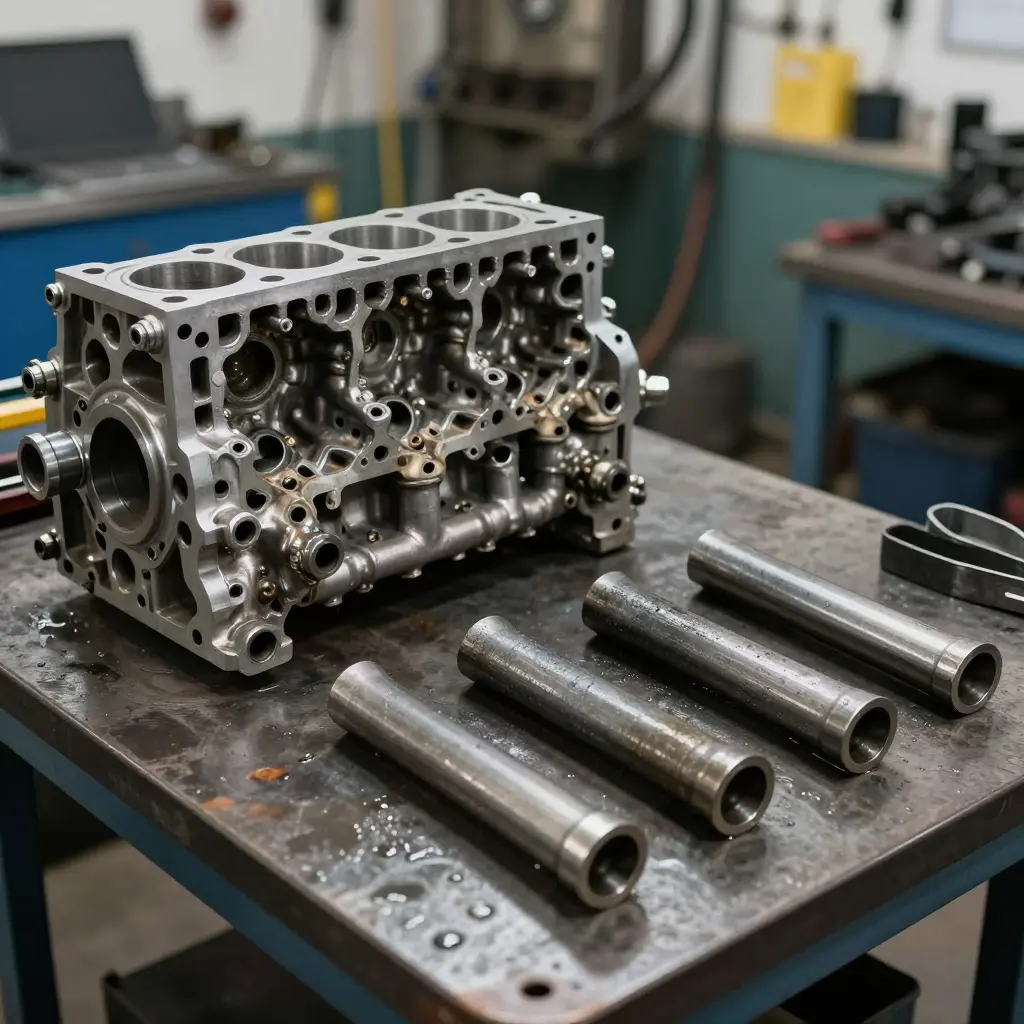
Engine sleeving restores worn or damaged cylinder bores by pressing or shrink-fitting a new sleeve into the block. What it costs varies widely, even between two of the same engine, because the price depends on the sleeve type, the number of cylinders, the bore work required, and the hours the machine shop spends on the job.
Dry sleeves and wet sleeves land at very different prices. A dry sleeve presses into a solid casting, so the block itself stays intact. A wet sleeve touches coolant directly, which means more machining, more sealing, and a more careful install. The comparison below covers dry sleeve versus wet sleeve pricing and shows where the machine shop hours actually go. For the wider picture, start with this guide to engine sleeve cost.
What Engine Sleeving Actually Involves
A cylinder sleeve is a precision-made metal liner, usually cast or ductile iron, that sits inside an engine block and becomes the wall your piston rides against. On a sleeved engine block, that liner carries the load and absorbs the wear; the original aluminum or iron casting just holds it. Some sleeves are “dry,” pressed into a solid bore, while others are “wet” and contact coolant directly.
People sleeve an engine for a few familiar reasons:
- Cracked cylinder bores that can’t be welded back reliably
- Deep scoring or gouges left by a failed piston or ring
- Bores already cut to their maximum oversize, with nothing left to machine
- A matching-numbers block that’s too valuable to swap out
Dry Sleeve Jobs: Why They Cost Less
A dry sleeve presses into a bore that isolates it from the water jacket. It sits against the block casting and never touches coolant, so it works as a wear surface while the casting handles the cooling. The dry sleeve engine explained guide covers the design in more detail.
Three things about that design hold the price down.
Sleeve material: a thin cast-iron or ductile wall, with no flanges or seals.
Boring and honing time: machinists cut a straight interference-fit bore instead of a stepped, sealed counterbore, so honing takes less time.
Installation method: press or shrink fit, with no O-rings and no coolant leak checks.
Fewer operations mean fewer hours, so a dry sleeve job usually costs less.
When you compare quotes, ask for the boring and honing hours separately.
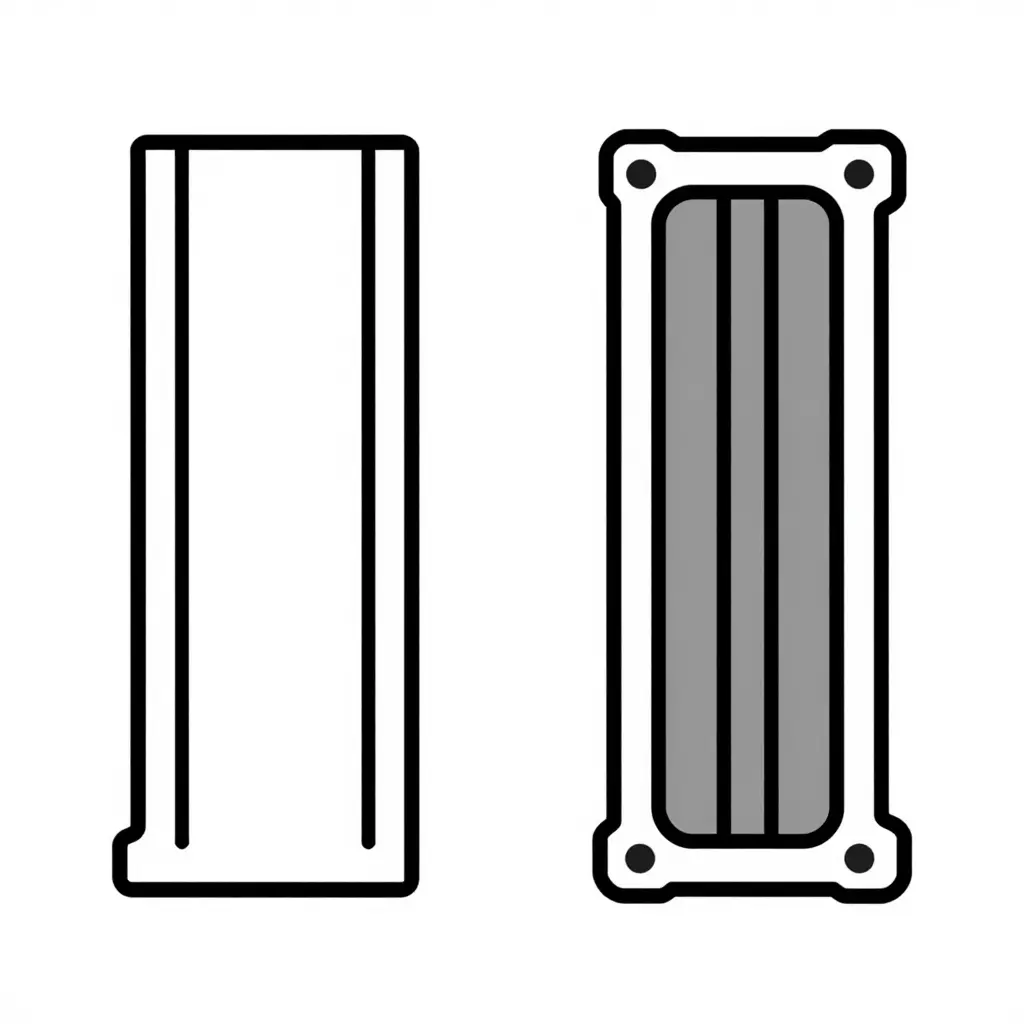
What the diagram shows: On the left, a dry sleeve sits in a bore surrounded by solid cast iron, so the wall can stay thin and coolant never reaches it. On the right, a wet sleeve drops into the block with coolant circulating all the way around the cylinder wall. That sleeve has to be thicker and sealed at the top and bottom to keep coolant out of the combustion chamber and the oil.
That structural difference, extra machining, extra sealing, a different cooling path, is why the two jobs price apart. For the design behind the left-hand shape, see this breakdown of how a dry sleeve engine works.
Wet Sleeve Jobs: Why They Cost More
A wet sleeve touches coolant directly, so its outer wall is part of the cooling jacket. The design controls heat well, see how wet sleeve engine thermal management works, but it changes the whole job.
Coolant surrounds the liner, so you need watertight seals at both ends. Liner protrusion has to be measured and shimmed exactly, and every seal should be pressure-checked before the head goes back on. Skip that and you risk leaks or a failed head gasket.
That extra work pushes shop time, and cost, upward:
- Sealing and O-ring replacement at both ends
- Coolant draining, flushing, and careful refilling
- Precise liner protrusion and fitment checks
A wet sleeve install also calls for cleaner surfaces and far more measurement than a dry job. More sealing, more coolant handling, and more precision add up to more machine shop hours.
Dry Sleeve vs Wet Sleeve: Cost Comparison
The table below shows where the two jobs diverge, and which materials, labor, and sealing work drive the overall engine sleeving costs.
| Attribute | Dry Sleeve | Wet Sleeve |
|---|---|---|
| Typical sleeve material cost | Lower, roughly $40-$80 each | Higher, roughly $80-$200 each |
| Machining time | Shorter, boring plus press fit | Longer, counterbore and liner fit |
| Sealing and coolant work | Minimal, no coolant seals | Extensive, O-rings and coolant sealing |
| Installation complexity | Moderate, press or shrink fit | High, protrusion and seal checks |
| Typical total range | Roughly $150-$400 per cylinder | Roughly $400-$900 per cylinder |
Where the Machine Shop Hours Go
Every line on a sleeving quote traces back to time on a machine, so the hours are the fastest way to read an estimate honestly.
- Block cleaning – hot-tanking and crack testing strip years of grime first; skip it and every cut that follows suffers.
- Boring (or boring to size) – cutting the cylinder to accept the sleeve is the slowest single operation, and harder blocks eat more time.
- Honing to final finish – dialing in crosshatch and roundness takes patience; this is where ring seal is won or lost.
- Deck surfacing – squaring the deck adds setup time but protects head gasket integrity.
- Fitting and sealing – pressing sleeves, checking protrusion and applying sealant is fussy, hands-on work.
- Final quality measurement – bore gauges and dial indicators confirm everything is in spec before assembly.
Each stage adds minutes, and the minutes add dollars, which is why engine sleeving cost swings so widely between quotes.
Machine Shop Hours per Sleeving Stage
The chart below breaks down approximate machine shop hours across the six core stages of a sleeve install: cleaning, boring, honing, deck surfacing, fitting and sealing, and final measurement.
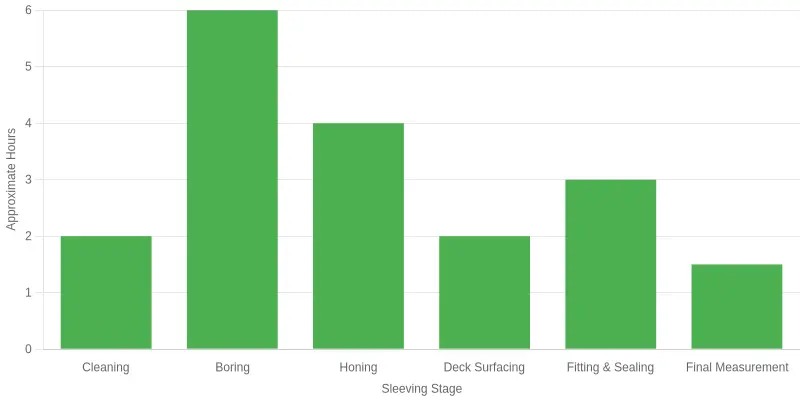
Boring takes the biggest share of the clock, with honing close behind; together they account for most of the hands-on machine time. That makes sense. Boring sets the bore geometry the sleeve will live in, and honing sets the final surface finish and roundness. Both need a skilled operator, a careful setup, and patience.
The smaller stages, cleaning, deck surfacing, fitting and sealing, final measurement, look modest on their own, but they add real time. Cleaning removes the contamination that would ruin a fresh bore. Deck surfacing restores a flat, true sealing surface. Fitting and sealing seats the sleeve at the right interference fit. Final measurement is the quality gate that confirms everything landed within spec.
This matters because labor, not the sleeve itself, is the dominant cost in most jobs. When an engine builder quotes a price, much of that number reflects hours in the machine, and those hours concentrate in boring and honing. Looking at engine sleeve cost this way shows why dry and wet sleeve jobs price so far apart: different wall thicknesses, different bore prep, different fitting tolerances, and different time at the machine.
Quick reference
| Sleeving Stage | Approx. Hours |
|---|---|
| Cleaning | 2 |
| Boring | 6 |
| Honing | 4 |
| Deck Surfacing | 2 |
| Fitting & Sealing | 3 |
| Final Measurement | 1.5 |
Takeaway: To estimate a sleeving quote, or to plan your own shop’s workflow, watch boring and honing first. That is where most of the hours, and most of the bill, go.
What Pushes the Bill Up or Down
No single number covers engine sleeving cost. A few variables decide whether a quote comes in low or climbs fast.
A four-cylinder block costs far less to sleeve than a V8 or inline-six, because labor and materials multiply with every cylinder. Off-the-shelf sleeves keep engine sleeve cost predictable; custom-machined sleeves add design work, setup, and lead time.
- Number of cylinders being sleeved, the biggest single driver
- Off-the-shelf sleeves versus custom-made ones
- Block condition, including cracks, corrosion, or old repairs
- Whether the engine stays in the car, since in-chassis work saves labor
- Geographic labor rates at your local machine shop
Cracked or heavily worn blocks demand extra machining and the occasional weld, and pulling the engine adds removal and reinstall hours. Regional shop rates can swing the final total by hundreds of dollars.
Warning Signs You Need Sleeving and Steps to Contain Cost
Knowing when a block really needs sleeving, and how to keep the job affordable, keeps a rebuild from becoming a budget problem. The warning signs below show up during teardown; the habits that follow help you control engine sleeve cost.
- Deep vertical scoring on the bore wall that you can catch with a fingernail usually means the cylinder is past a simple hone and needs a fresh cylinder sleeve.
- Coolant seeping into a cylinder, a sweet-smelling exhaust plume, or a milky oil film often points to a cracked or porous bore that only sleeving can rescue.
- A visible crack running through the bore, or a bore already overbored to its limit, leaves sleeving as the only reliable path back to service.
- Bundle machining steps, such as boring, decking, and honing, into one shop visit so you pay a single setup instead of three.
- Supply your own cylinder sleeve or sleeve kit so the shop bills labor rather than marking up parts.
- Choose a machine shop with in-house honing and torque-plate capability, which trims turnaround time and avoids outsourced handling fees.
Catch these signs early and pair them with sensible shop habits, and a rebuild stays on budget. Treat sleeving as planned work rather than an emergency, and engine sleeve cost becomes a line item you can predict instead of a surprise.
Real-World Price Ranges by Engine Platform
Actual figures shift with shop rates and machine hours, but these ballpark ranges are a starting point. A Ford Coyote 5.0 usually lands between $1,200 and $2,000 for a full set of eight sleeves, largely because the block’s tight bore spacing and high-boost duty demand extra fixturing and CNC time. Honda K24 builds typically run $800 to $1,400, since the open-deck aluminum casting needs careful boring and deck support to stay stable. The gap between how much to sleeve a Coyote and a four-cylinder comes mostly down to cylinder count, the single biggest driver of total engine sleeving cost. A Hellcat 6.2 application generally falls between $1,500 and $2,500, as these blocks receive premium ductile sleeves rated for extreme cylinder pressure. For the Coyote specifically, Coyote engine sleeve cost breakdowns show where those hours actually go.
The Sleeving Workflow, Step by Step
It also helps to see the job as a sequence rather than a list of charges. Every hour a machine shop bills for a sleeving job maps to one of the stages below, and each one has its own setup, tolerance and labor demands.
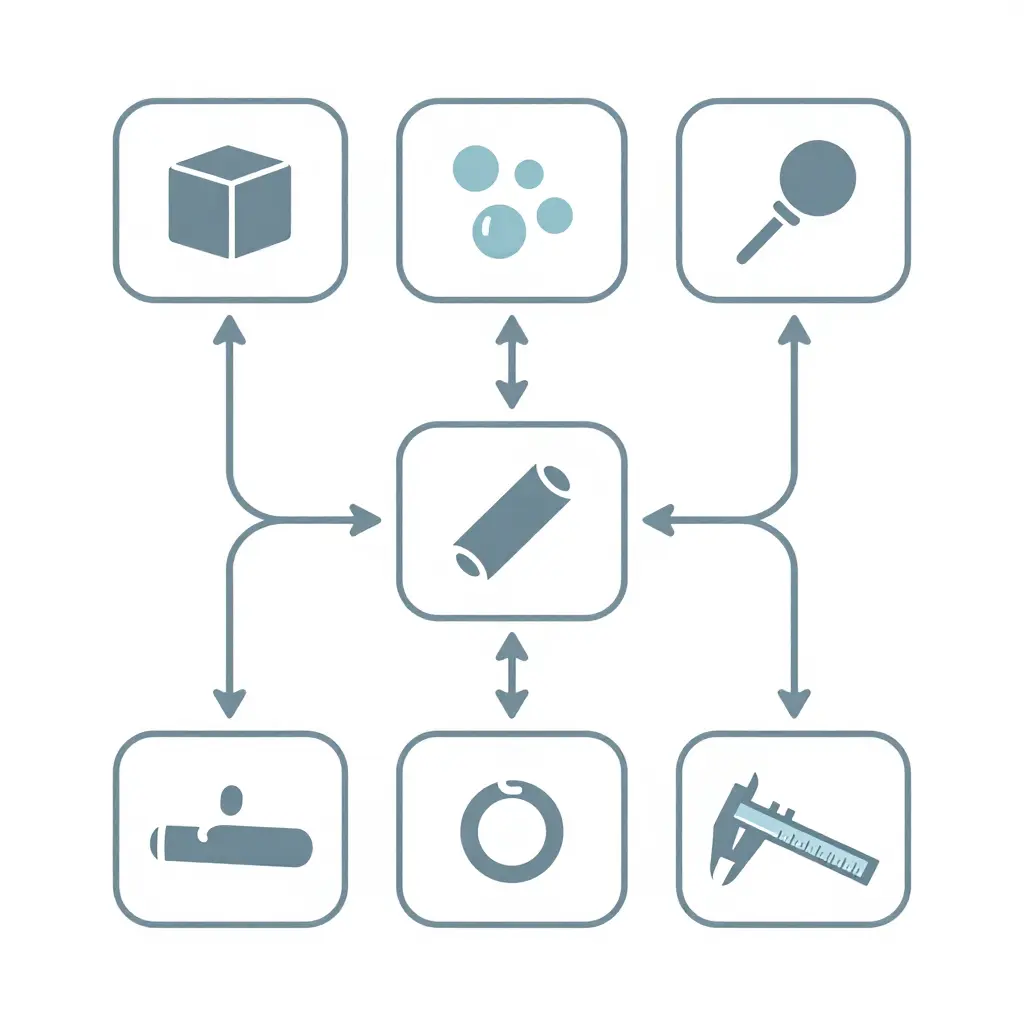
Reading the sequence
- Block preparation – the block is stripped, inspected and mounted so the shop can work to a true reference point.
- Cleaning – removing scale, oil and debris keeps measuring tools and cutting edges accurate.
- Boring – the existing cylinder is opened to the precise bore the sleeve requires.
- Honing – the surface is finished to a specific crosshatch so the new sleeve seats and seals properly.
- Sleeve fitting – the sleeve is pressed or installed, and this is where dry and wet designs start to diverge.
- Sealing – for wet sleeves, O-rings and sealant protect against coolant intrusion; dry sleeves rely on an interference fit.
- Final measurement – bore size, roundness and clearance are verified before the engine goes back together.
For the wider context on how these steps turn into a quote, it is worth exploring how engine sleeve cost is actually calculated.
Frequently Asked Questions About Engine Sleeving Cost
Is sleeving cheaper than a new block?
Usually yes. A quality sleeve job typically costs far less than sourcing, shipping, and machining a fresh block, especially for rare or numbers-matching engines. It also lets you keep the original casting instead of hunting down a hard-to-find replacement. For a fuller breakdown, see our guide to overall engine sleeve cost.
Why do wet sleeves cost more than dry sleeves?
A wet sleeve seals directly against coolant, so it needs precision sealing, fresh O-rings, and careful fitting to avoid leaks. A dry sleeve presses into the existing bore, which takes fewer machine shop hours. That extra sealing and fitting work is the main reason wet-sleeve jobs cost more.
How many hours does sleeving usually take?
Most single-cylinder jobs run only a few machine shop hours, while a full wet-sleeve overhaul can take considerably longer. The real time depends on how many cylinders you sleeve and how much block prep is needed. Boring, fitting, and final honing all add up.
Can you sleeve just one cylinder?
Yes. Many rebuilders sleeve a single damaged cylinder and leave the rest alone, which keeps cost and machine shop hours low. Just confirm the finished bore matches the others so the engine stays balanced.
Does sleeving affect engine reliability?
Not when it is done correctly. A properly installed dry or wet sleeve restores the bore to like-new specs and can handle high mileage or boost. An experienced shop keeps tolerances tight and reliability intact.