
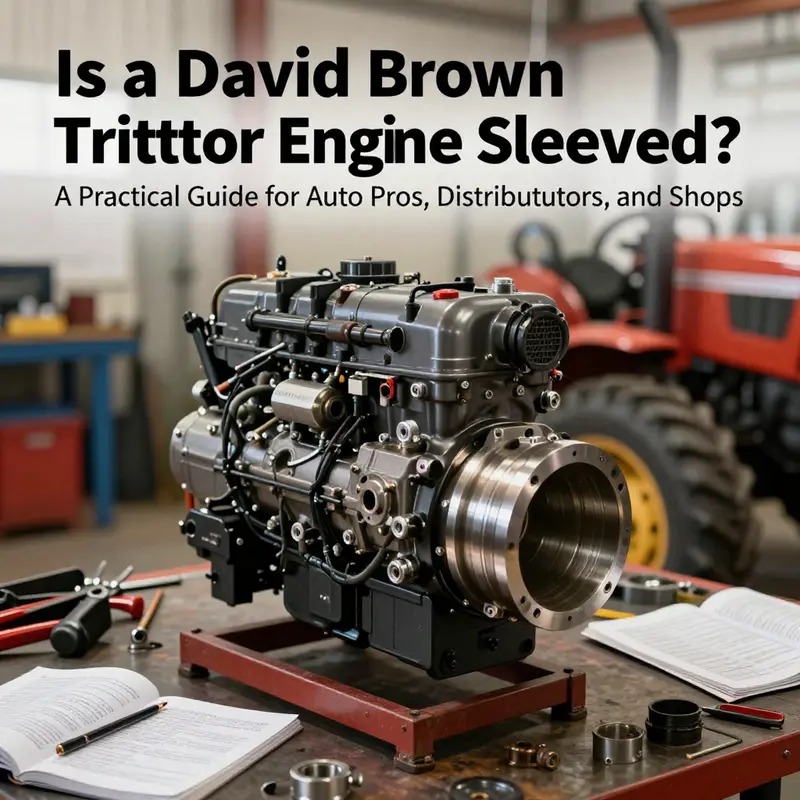
David Brown tractors are iconic and rugged, featuring heavy‑duty diesel engines originally designed for farming and industrial tasks. Over time, wear and damage to cylinder bores can limit compression, power, and fuel efficiency. Cylinder sleeving—the process of installing a durable sleeve inside the cylinder to restore a smooth surface—offers a cost‑effective path to reclaim engine longevity. While sleeving is common in tractor maintenance, it also presents relevant lessons for motorcycle and auto repair professionals, parts wholesalers, and repair shops that value robust, long‑term repair strategies. This article translates the tractor‑specific practice into a practical framework: what sleeving is, which engine models and sleeves fit, and how to install, maintain, and source sleeves. Readers will gain actionable guidance on model compatibility (AD3/49, AD4/55, AD6/55 series and more), installation steps, inspection checklists, and where to obtain sleeves or reconditioned blocks. The chapters build a holistic view, connecting the sleeves concept to sourcing, maintenance workflows, and cross‑application insight that auto shops and distributors can apply to broader engine repair challenges.
null
null
null
null
Sleeved for Endurance: Installation, Care, and the Hunt for Cylinder Sleeves in David Brown Tractors
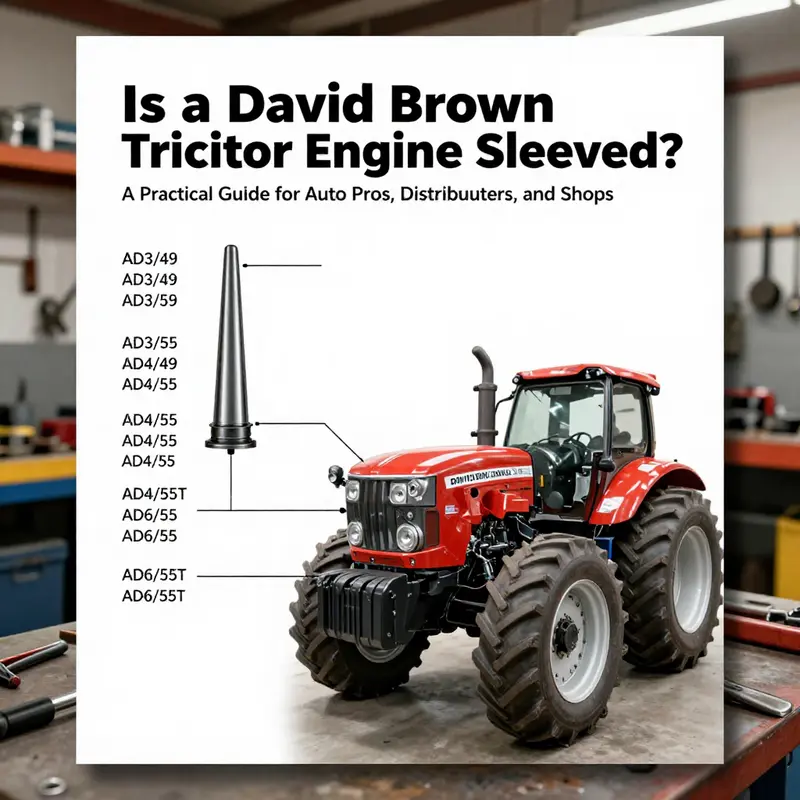
The decision to sleeve a David Brown tractor engine is rarely born from whim. It grows from a quiet accumulation of miles on fieldwork, a chorus of signs that the bore has begun to hollow or score, and a pragmatic recognition that a sleeve can restore the engine’s heart without sacrificing its character. David Brown tractors have built a reputation for stubborn reliability, especially in the classic three-cylinder diesel lineage that powers models like the 885, 990, 995, and 996. These engines, whether driven by the AD3/49, AD3/55, AD4/49, AD4/55, or AD6/55 families, were engineered to endure. Yet even the strongest blocks endure wear, and when the cylinder wall shows signs of thinning, a liner can recover the original compression, heat dissipation, and piston ring seal required for steady performance in demanding field conditions. The sleeving process, properly executed, returns the tractor to a rhythm that feels almost factory fresh, with a fidelity that new components cannot always deliver in a vintage package. The decision to sleeve is as much about preserving the tractor’s historic value as it is about restoring its power, a balance of function and provenance that guides many owners through the repair shop and back to work in the fields.
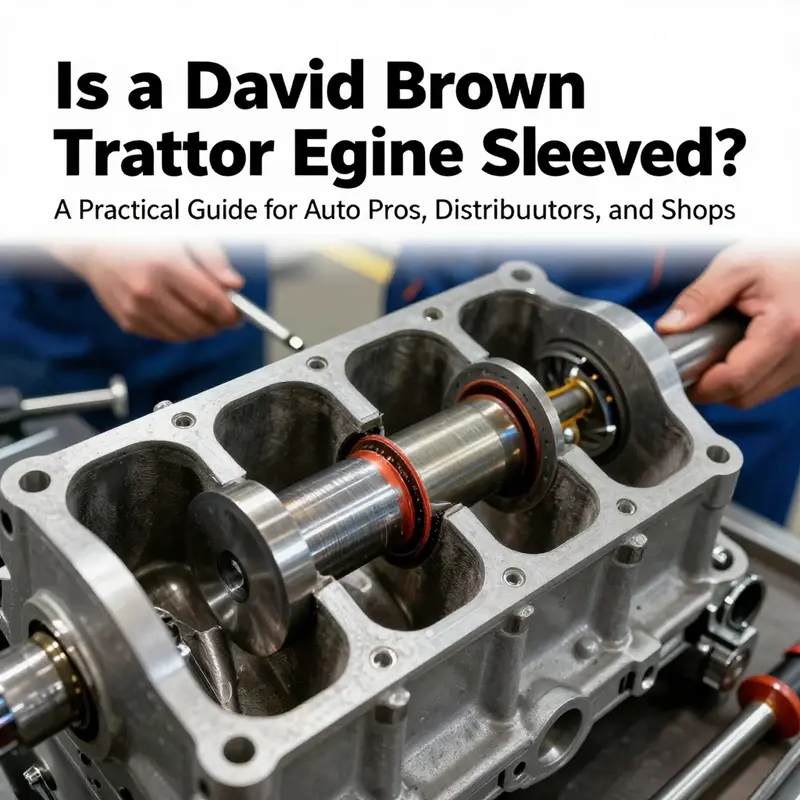
To understand the craft of sleeving a David Brown engine is to step into a sequence of careful checks and deliberate actions. A three-cylinder diesel has its own geometry, its own tolerances, and its own rhythm of wear. The AD-series engines relied on cast iron blocks, with sleeves that could be honed, bored, and replaced to reclaim the bore’s circularity and surface finish. A properly installed sleeve isn’t simply a tube pressed into a bored hole; it’s a precise interface between the crankcase, the coolant path, the piston rings, and the combustion chamber. The sleeves must seat flush with the block surface, align perfectly with the piston axis, and maintain the correct clearance so that the rings can seal and slide without galling or excessive friction. In practice, the process starts long before the sleeve is touched. It begins with diagnosis: signs of wear, loss of compression, abnormal smoke, or a dip in power that coincides with a particular cylinder performing differently in a compression test.
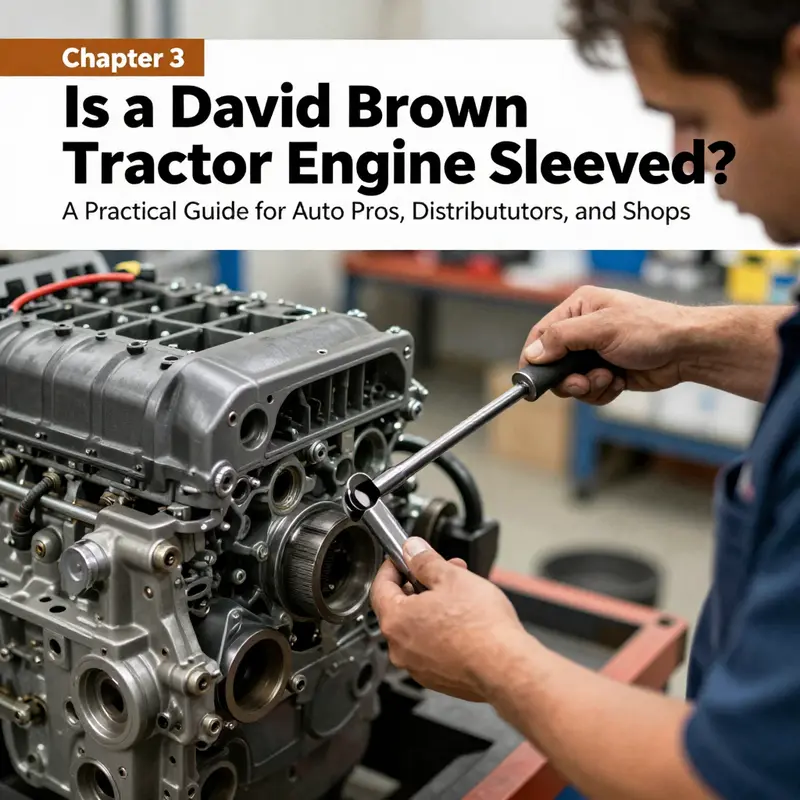
The practical steps of installation follow a disciplined sequence. First comes the complete access: removing the cylinder head, then the piston assembly, to expose the worn bore. The old sleeve must be extracted with care, avoiding damage to the surrounding block. This is where the skill of a technician shines—knowing how far to push, how much force to apply, and which tools to use so the bore remains square and unmarred. Once the old sleeve is out, the bore is cleaned and inspected with equal rigor. Any hairline cracks or distortions must be identified, because a sleeve cannot correct a compromised block. The bore surfaces are then cleaned, deburred, and checked for roundness. The right sleeves are selected to match the engine model—whether the AD3/49, AD3/55, AD4/49, AD4/55, or AD6/55 family—so that the internal diameter, wall thickness, and heat transfer path align with the original design.
The new sleeve is then prepared. It is pre-lubricated with assembly lube or the recommended lubricant to ensure the initial seating is smooth. The sleeve is gently pressed into place using a hydraulic press or an equivalent tool, with careful alignment to prevent any tilting that could distort the bore or crease the liner’s edge. The goal is to seat the sleeve so its top edge is flush with the block face, not protruding or recessed, which would alter piston clearance. Once seated, the critical piston-to-sleeve clearance is checked with a feeler gauge or the manufacturer’s specified method. This clearance is the difference that permits oil film formation, minimizes scuffing, and maintains efficient combustion chamber geometry as the piston moves up and down. Keeping this clearance within spec is essential for long-term reliability; a small deviation now can translate into overheating, accelerated wear, or uneven ring wear in later service.
After the sleeve is installed and clearance verified, the engine assembly proceeds with reassembly of the timing system, the carrier plate, and the timing cover. The service manuals remind technicians that the timing cover should be reassembled with care, and a traditional technique for protecting the surface is to place it on two pieces of wood during reassembly. This simple precaution helps prevent marring of the cover’s mating face, a detail that, if neglected, could introduce timing errors that whisper through the engine under load. The gasket, bolts, and carrier plate must be arranged in the correct sequence to restore timing accuracy and to seal the engine against coolant and oil leaks. The experience here is as much about patience as it is about precision: taking time to check torque specifications, to ensure the gasket seats evenly, and to confirm that coolant passages align cleanly with the block and head.
But sleeving is not merely a mechanical fix; it is a disciplined maintenance philosophy. Regular maintenance becomes the shield that protects the sleeve’s service life. Oil changes must follow the viscosity and grade prescribed by the engine’s original specifications; coolant quality and level must be monitored to prevent overheating that could distort the sleeve or warp the block over time. A well-maintained cooling system is essential, especially for three-cylinder David Brown engines where heat extraction occurs across a relatively compact core. The borescope, a modern maintenance aid, allows technicians to peek into the bore for early signs of wear, scoring, or sleeve movement without disassembly. It provides a window into the bore’s condition, letting the shop catch problems before they become severe. Periodic compression checks, listening for unusual noises during operation, and monitoring smoke characteristics in the exhaust are all standard practices that keep sleeved engines running reliably through seasons of hard work.
Of course, parts sourcing is a conversation that often runs alongside the technical work. Cylinder sleeves for David Brown engines are available through both OEM channels and reputable aftermarket suppliers, with a spectrum of options aligned to specific models like the 1190, 1290, 1390, 1194, and the AD-series engines. The goal is to find sleeves with the same bore diameter and a compatible alloy or casting technology that matches the block’s thermal characteristics. For many owners, the decision to source sleeves is tied to history: a sleeve from a trusted supplier that preserves the engine’s signature torque curve and fuel efficiency. It’s not just about replacing metal; it’s about maintaining the character of a tractor that has supported fields and livelihoods for decades. In this sense, sleeving becomes a stewardship act—an investment in keeping a piece of agricultural heritage in service rather than consigning it to donor blocks and modern substitutes.
The literature surrounding this work emphasizes the same practical mindset: sleeving is a recognized, standard repair method in the David Brown community and parts market. References to engine models and five-figure maintenance cycles appear in service literature and repair guides that accompany many vintage tractors. The three-cylinder David Brown diesel engine manual, often grouped under sections like Three-Cylinder Diesel Engine, is a key resource for mechanics and enthusiastic hobbyists alike. The manuals provide technical diagrams and step-by-step guidance on engine removal, sleeve installation, and the handling of components such as the dipstick sleeve and crankcase access during repairs. The guidance about removing and reinstalling these parts is not simply about getting the engine running again; it is about preserving the engine’s integrity and alignment so that the machine can deliver consistent power across seasons.
This attention to detail is echoed in practical notes about sources and part numbers. A genuine sleeve for a David Brown engine is selected not only by bore size but also by the sleeve’s top collar design, its tolerance to thermal cycling, and its compatibility with the block’s heat-transfer path. A sleeve that fits too loosely can allow oil and coolant interaction that promotes wear at the interface, while one that fits too tightly can induce stress cracking or distortion in the block. The balance is delicate and requires a careful assessment of the block’s condition. In practice, the process often begins with a careful measurement of the bore and a comparison with the sleeve catalog. For those who maintain multiple David Brown tractors, the ability to cross-reference the AD-series sleeves with the AD4 and AD6 families becomes a practical skill. The result is a shop capable of delivering consistent results across a range of models without compromising the core geometry that keeps these engines reliable.
Alongside the technical steps and sourcing realities, there is a broader conversation about the wear mechanisms that lead to sleeve replacement in the first place. In diesel engines of this vintage, wear accumulates in a few predictable ways. Piston rings can become scored, causing blow-by that reduces compression. The top-half crown of the bore can wear unevenly if cooling behavior is inconsistent, leading to tight spots and partial lubrication. The sleeve, once installed properly, provides a renewed, wear-resistant surface that retains a precise cross-hatch finish and an optimal seal for the piston rings. This is the quiet magic of sleeving: the bore becomes a controlled variable once again, and the engine can cycle through thousands of hours of operation as if it were younger—though the tractor will always carry its history in the damp grain dust and the sun-bleached paint that remains visible on its block.
Woven into this technical narrative is a practical thread about how to approach sleeving as an owner or technician. If you intend to undertake a sleeving project, it is wise to build your plan around reputable manuals and trusted suppliers. The David Brown service manuals, especially the Three-Cylinder Diesel Engine reference, lay out the foundational procedures and the correct order of operations. They offer crucial guidance about the sequence of disassembly and reassembly and provide the official dimensions and tolerances that your local repair shop must honor. The official manuals are a dependable backbone for any sleeving project, and they are meant to be consulted at every critical juncture—from the moment you decide to sleeve to the moment you verify the final timing and compression once the engine is back in service.
For those encountering sleeving for the first time, a concise primer on what sleeves are and how they function can be valuable. Sleeves, or cylinder liners, serve as replaceable surfaces inside the engine block. They allow restoration of the cylinder’s inner diameter without replacing the entire block. For a quick, accessible explanation, see the overview of engine sleeves. Understanding the concept helps frame the more detailed maintenance plan surrounding sleeving a David Brown engine and clarifies why this repair path remains a practical choice for vintage tractors that are meant to endure.
As the project nears completion, the rider’s eye for detail matters as much as the engineer’s calculations. The engine must be reassembled with clean components, gaskets seated correctly, and fasteners torqued to specification. A test run after assembly should begin with a careful break-in period, avoiding full-load operation for the first hours and monitoring for any signs of distress. A well-executed sleeving job rewards the operator with smooth idle, stable idle combustion, and predictable performance under load, echoing the dependable feel of a well-tuned vintage engine rather than a reengineered modern block.
Sourcing and compatibility continue to be a living part of the sleeving journey. OEM parts, while often more expensive, provide a sense of continuity with the original manufacturing standards. Aftermarket sleeves can offer cost efficiencies and availability, but the buyer must verify that the replacement sleeve aligns with the block’s specific dimensions and the engine’s cooling and lubrication paths. Keeping a catalog cross-reference within reach helps avoid mismatches, especially when multiple David Brown variants share similar sleeves yet demand precise differences in bore, top collar, and surface finish. The broader marketplace recognizes the value of sleeves as legitimate repair and maintenance components, underscoring the importance of credible suppliers who provide clear documentation, proper fitment, and warranty where applicable.
In the end, sleeving a David Brown engine is a precise, patient craft that blends mechanical skill with a respect for the tractor’s heritage. It demands a disciplined approach to diagnosis, a careful execution of each step, and a thoughtful plan for ongoing maintenance. The sleeve acts as a bridge between what the engine is and what it can become again—a reliable, enduring workhorse that continues to serve as the backbone of a farm’s daily life. For owners who have spent hours in the cab during harvest, the sense of continuity that sleeving offers can be deeply satisfying: the machine’s heartbeat returns to a steady rhythm, and the field once again yields its yield with confidence. The process does not erase the tractor’s history; it writes a new chapter that honors that history while preserving functional power for years to come.
To grow more confident in this repair path, it helps to consult the technical documentation and to engage with experienced technicians who have walked this road before. The David Brown service manuals provide the essential blueprint for engine removal, sleeve installation, and precise assembly. They are the anchor that keeps the work aligned with the manufacturer’s specifications and the real-world demands of field operation. For those readers who wish to explore further, an introductory resource on engine sleeves can illuminate terminology, materials, and function, reinforcing the practical steps described here and providing a framework for understanding how a well-chosen sleeve fits into the engine’s overall performance envelope. In short, sleeving a David Brown engine is not a one-off fix; it is a considered restoration that blends engineering judgment with the fabric of agricultural life, ensuring these tractors remain capable partners in work and history alike.
For readers seeking more on component selection and installation specifics, the importance of matching sleeves to model and year cannot be overstated. The block’s bore, the sleeve’s outer diameter, the height and seating surface, and the alignment of oil and coolant passages all matter. When done properly, sleeving returns the engine to a condition that supports efficient combustion, reliable lubrication, and consistent cooling under load. When done poorly, it can accelerate wear, create heat pockets, or allow coolant intrusion that undermines the very seal the sleeve provides. This is why many operators rely on service manuals for guidance, on experienced machinists for hands-on work, and on reputable suppliers for sleeves that meet the exacting standards of David Brown engines. The cumulative effect is a durable, dependable engine that preserves the tractor’s character while returning it to robust service and productive life in the field.
In sum, sleeving a David Brown engine is a disciplined, technically informed repair that unlocks renewed performance while honoring a legacy of reliable farming power. By approaching installation with careful measurement and controlled execution, maintaining vigilant upkeep, and sourcing sleeves that meet the block’s exacting tolerances, owners can ensure their vintage tractors continue to perform with quiet strength. The sleeve becomes less a replacement part than a continuation of a mechanical conversation between machine and operator—a conversation that began decades ago and continues through maintenance bays, fields, and the shared memory of turning soil under wide-open skies. The result is not merely a repaired engine, but a restored partnership that carries forward with confidence into the next season and the next generation of David Brown tractors in the fleet.
For readers who want a quick primer on sleeves as a concept, see the brief overview linked here. It offers a concise explanation of how sleeves function within an engine and why sleeving is sometimes the most practical choice for preserving a vintage diesel’s performance and longevity. What engine sleeves are.
External resource for deeper guidance and official specifications: the David Brown service manual hub, which hosts the Three-Cylinder Diesel Engine reference and related diagrams and notes. This official resource provides diagrams and step-by-step instructions that complement the practical experience described above. https://www.davidbrowntractor.com/manuals/
Final thoughts
Cylinder sleeving in David Brown engines is more than a repair technique; it’s a disciplined approach to preserving power, reliability, and service life for vintage and industrial machines. By understanding model-specific sleeve compatibility, proper installation procedures, and reliable sourcing channels, auto repair shops, distributors, and independent technicians can extend engine life without resorting to costly block replacements. The practices outlined here, while rooted in tractor heritage, translate to broader engine repair workflows—especially for motorcycles and light auto engines where bore wear and compression loss threaten performance. The key takeaways are clear: identify the correct sleeve for the model, verify tolerances with precise measurements, follow manufacturer‑recommended seating and lubrication steps, and source sleeves from reputable suppliers with traceable specifications. Embracing a structured sleeving program reduces downtime, protects residual engine value, and reinforces a service‑first mindset in shops and distribution networks.