
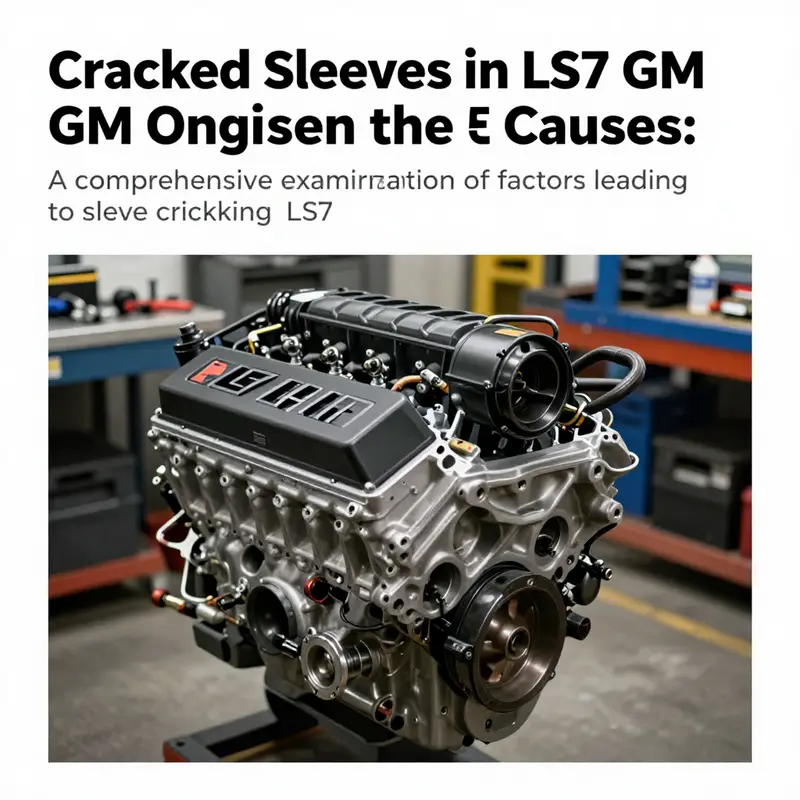
The LS7 GM engine, celebrated for its power and performance, has garnered attention from automotive enthusiasts, whether motorcycle owners, car owners, or auto repair professionals. However, a rare but critical issue—sleeve cracking—can impact its remarkable durability. Understanding how extreme thermal stress, improper installation, excessive engine load, and even manufacturing defects contribute to this problem is essential for anyone involved in maintenance, repair, or performance upgrades. Each chapter explores these causes in-depth, providing insights into preventative measures and reinforcing the importance of adhering to best practices in maintenance and assembly. Whether you’re a mechanic, distributor, or car enthusiast, this guide aims to enhance your understanding and enable you to make informed decisions regarding LS7 engines.
When Heat Becomes the Enemy: How Extreme Thermal Stress Cracks LS7 Cylinder Sleeves
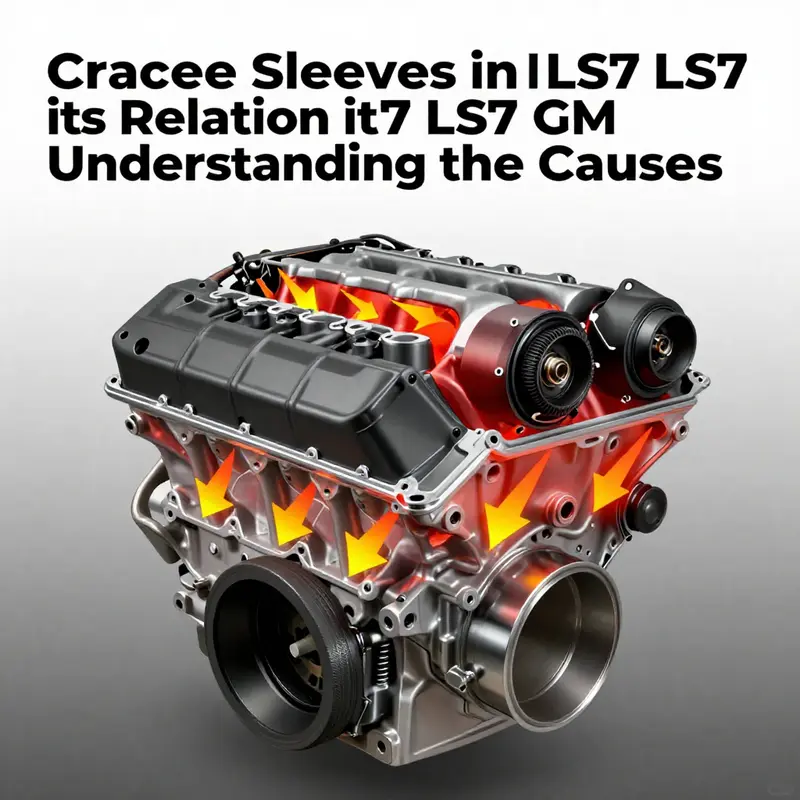
When operating temperatures climb and the LS7 is pushed past its comfort zone, thermal stress becomes the primary culprit behind sleeve cracking. The LS7 was engineered for high power and high revs, but even robust designs have weak points when heat cycles are severe, cooling is compromised, or assembly practices leave the structure vulnerable. Understanding how heat turns routine combustion into a progressive failure mechanism requires seeing the engine as a system of materials, clearances, and flows that react differently to temperature. The result is not a single dramatic break, but a sequence of small events that concentrate stress at predictable locations and then exploit microscopic weaknesses until a crack opens and grows.
At the core of the problem is differential expansion. The LS7 uses an aluminum block with integral cylinder walls and a lubrication system designed for high-performance duty. Aluminum conducts heat well and expands more than the harder materials used for sleeves or sprayed bore surfaces. When cylinder temperatures rise quickly during repeated hard use, the aluminum around the bore grows at a higher rate than the sleeve material. That mismatch translates directly into hoop stress on the bore surface. If the temperature rise is uniform and gradual, the materials can accommodate the change. But in real-world extreme use—racing, long track sessions, or repeated hard launches—temperature gradients form. The top of the bore sees the hottest gases and the least cooling in many scenarios. The result is localized thermal strain concentrated around the upper cylinder region, where cracks most often initiate.
Localized overheating multiplies the problem. Coolant flow that is marginal, clogged, or restricted does not remove heat evenly. Small scale deviations in block flatness, machining, or surface finish can divert coolant away from a local patch. That patch runs hotter on each cycle, making that area expand more than its neighbors. Over hundreds or thousands of cycles, this repeated mismatch becomes fatigue loading for the sleeve material. Microscopic inclusions or machining marks then serve as stress risers: tiny imperfections that concentrate stress and convert cyclic thermal strain into a growing crack. The crack often begins as a micro-fracture near the deck or the upper cylinder wall and propagates downward as more cycles occur.
The way the engine is assembled plays a major role in how severe these stresses become. Head-bolt torque, head gasket selection, and the uniformity of clamp load control how the cylinder and head mate under heat. When fasteners are not torqued to the proper pattern or specification, the clamping force can vary around the bore. That variation lets the cylinder deform differently around the circumference, creating areas of tensile stress. Even small angular misalignments or uneven head seating change how combustion pressure and thermal expansion interact. Engines that have had heads removed and reinstalled without following the tightening sequence or without verifying torque-to-yield fastener replacement are more likely to develop uneven loading points—exactly where thermal stress will do the most damage.
Fueling and combustion behavior also amplify thermal loads. An engine running lean, or one that experiences detonation or pre-ignition, produces higher peak cylinder temperatures and hotter exhaust gas temperatures. Those conditions push more heat into the cylinder walls and head, reducing the margin the cooling system has to manage temperatures. Combined with intermittent cooling failures—blocked radiators, failing thermostats, air pockets in the cooling circuit—these combustion issues can create the notorious thermal spikes that encourage sleeve cracking. Forced induction compounds the issue if supporting systems are not upgraded. Supercharging or turbocharging raises cylinder pressures and thermal loads. Without larger capacity cooling, upgraded oil and fuel systems, and proper tuning, the LS7’s cylinders may be exposed to temperatures beyond what the original design anticipated.
Another important vector is the engine’s duty cycle. The LS7 can rev high and sustain those RPMs better than many engines, but sustained high RPM for long durations increases mechanical friction and oil temperatures. Higher oil temperature reduces the oil’s ability to carry heat away and protect components. In addition, high RPMs give less time per stroke for the coolant to absorb and carry heat away, effectively shortening the heat transfer window every revolution. Engines repeatedly pushed to the redline in track sessions will experience a harsher thermal regimen than street driving. Repeated extreme cycles bring cumulative fatigue to whatever micro-flaws exist in the cylinder surfaces.
The metallurgy of the sleeve or bore surface determines how a given stress will translate into failure. Materials with higher tensile strength and toughness can tolerate larger strain before cracking. But even the toughest metals will succumb if cyclical thermal strain persists and if small defects are present. While manufacturing defects are rare, they are not impossible. A tiny inclusion, a localized porosity, or an irregularity at the bore’s edge can act as a seed for crack initiation, especially under the asymmetric thermal expansion that defines track use. This is why careful quality control during machining and checking for microscopic imperfections is critical for engines destined for competition.
Diagnosing thermal-stress-induced sleeve cracking requires reading symptoms that often mimic other failures. Coolant loss, white smoke, milky oil, and a drop in compression in one or more cylinders are common signals. Pressure-testing the cooling system and doing a leak-down test helps pinpoint whether coolant is escaping into the combustion chamber or oil galleries. Visual inspection with a borescope can reveal hairline fractures near the top of the bore. Cross-contamination of oil and coolant indicates that a crack may have connected previously isolated passages. Early detection is essential, because once a crack grows through the wall, repair options become more invasive and costly.
Mitigation is twofold: control thermal inputs and remove stress concentrators. On the cooling side, improving the system’s capacity and reliability pays immediate dividends. A high-efficiency radiator, consistent coolant flow, and an oil cooler that keeps lubricating oil temperatures in check reduce peak operating temperatures and stabilize thermal cycling. Bleeding the cooling system of air pockets and ensuring the thermostat and water pump perform correctly avoid hot spots. In high-load applications, re-engineering coolant flow paths to eliminate low-flow areas around the top of the bores can be beneficial. Even modest changes, like ensuring the proper coolant mixture and replacing aging hoses and thermal controls, reduce the likelihood of localized overheating.
On the mechanical side, attention to assembly and maintenance details prevents stress concentrations that thermal cycling can exploit. Follow correct head-bolt torque patterns, use specified fasteners, and check head gasket condition regularly. Cylinder heads should be installed on a properly prepared deck with the right gasket thickness to maintain intended clearances. Avoid rough machining finishes in critical areas; keep transitions smooth to minimize stress risers. When the engine has been modified for higher power, match those changes with supporting upgrades—fueling, cooling, and strengthening items that reduce the thermal and mechanical stress on the cylinder bores.
For damaged engines, repair decisions come down to severity and intended use. Minor surface cracks might be arrested or repaired by specialized machining and re-sleeving techniques. Replaceable wet sleeves or pressed-in liners offer a way to restore cylinder integrity without replacing the entire block. However, re-sleeving must be done with precision to avoid introducing new differential expansion problems. In some cases, replacement of the block or the use of a fortified aftermarket block designed for higher thermal loads is the most reliable long-term solution for extreme duty applications.
Preventing sleeve cracks also means tuning the engine conservatively under extreme conditions. Avoid running too lean, verify ignition timing under load, and use detonation control strategies. If forced induction is added, retrofit cooling and fueling systems to match the extra heat and pressure. Track drivers should monitor coolant and oil temperatures and allow the engine to cool properly between sessions. Good pit discipline—cool-down laps, checking coolant levels, and inspecting for leaks—extends engine life more effectively than chasing power without considering thermal management.
Finally, educating anyone who works on the engine about these failure modes changes outcomes. Technicians who understand how thermal expansion interacts with fastening practices, coolant flow, and combustion will make choices that reduce risk. That includes knowing what engine sleeves are and how they function within the block; a clear primer on that topic helps when considering repairs or upgrades. For a concise explanation of sleeve types and roles, see this guide on what are engine sleeves.
When heat becomes the persistent force acting on an engine, it exposes the weakest link. For the LS7, those links can be localized hotspots, uneven clamp loads, aggressive tuning without cooling upgrades, or microscopic material imperfections. Each on its own might be manageable, but together they create an environment where thermal stress evolves into mechanical failure. The response is straightforward: control heat, remove stress risers, and ensure assembly and maintenance practices preserve the block’s geometry and cooling paths. Those measures keep the LS7 doing what it was built for—high performance—without letting thermal stress quietly crack the cylinders from the inside out.
For in-depth technical discussion and testing on high-performance engine behavior under extreme conditions, see EngineLabs: https://www.enginelabs.com
Hidden Fault Lines: The Role of Improper Assembly in Cracking LS7 Cylinder Sleeves
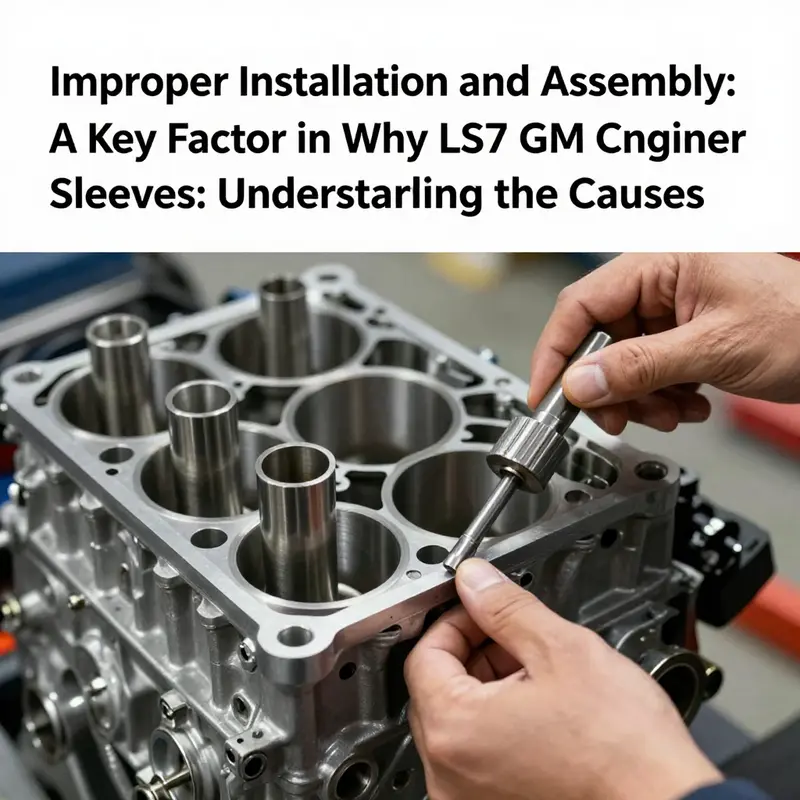
External resource for official assembly procedures: https://service.gm.com/techdocs/LS7-Assembly-Procedure.pdf. This document provides the manufacturer’s perspective on the assembly approaches that help prevent sleeve cracking and related issues, underscoring the importance of following prescribed steps and tolerances to maintain engine integrity across operating conditions.
Raising the RPM Bar: How Extreme Load and Over-Revving Can Crack LS7 Sleeves
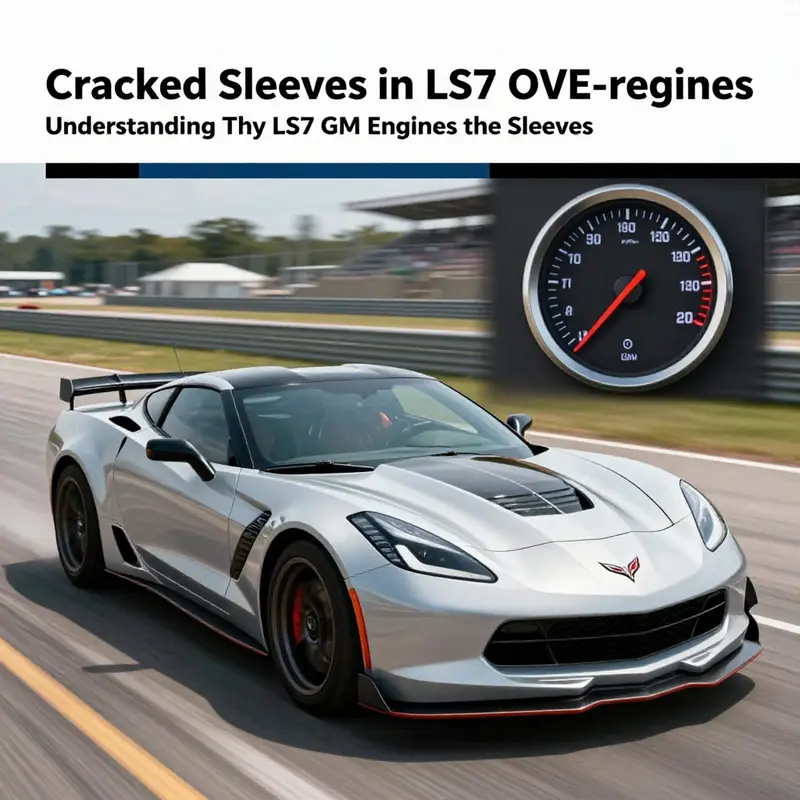
High-performance engines are built to endure extremes. They crave RPM, they demand torque, and they reward the driver with rapid responses and blistering power. Yet those very extremes can become the catalyst for a rare, but consequential, failure: the cracking of cylinder sleeves in a high-output V8. In the context of a famous 7.0-liter family of engines, this failure is not common, but it is not impossible. The interplay between excessive engine load and over-revving creates a perfect storm of thermal and mechanical stress that can push sleeve life beyond its endurance limit. To understand why this happens, it helps to visualize the LS7 as a strong but not infallible balance of materials, geometry, and operating discipline. The block is aluminum, light and quick to heat, while the sleeves—the iron liners embedded within the block—provide the hard-wearing surface on which the piston rings seal and the combustion process contains itself. The friction, the heat, and the shifting mechanical loads conspire to test the interface between those sleeves and the surrounding block. When the engine is pushed to its upper limits—especially in sustained, high-load conditions or during aggressive, repeated over-revving—the stresses that accumulate at the sleeve surface and its interface can surpass what the material can tolerate over time. The result, under certain conditions, is the initiation and propagation of cracks that can compromise compression, seal integrity, and ultimately engine reliability.
The mechanics begin with heat and pressure. Under heavy load, the engine does more work per revolution. The pistons push with greater force, the combustion events generate higher peak pressures, and the energy must be conducted away through the alloy block, the sleeves, and the cooling system. The LS7 design uses iron sleeves in an aluminum block to combine the best of both worlds: strength where it’s needed and lightness where it helps performance. But iron and aluminum expand at different rates when temperature rises. In a high-load situation, the local temperature can climb rapidly around the upper portion of the bore, where combustion temperatures peak and where the piston rings ride the bore under heavy scuffing and pressure. This differential expansion creates a thermal gradient that adds tensile and shear stresses to the sleeve and its seating. If the sleeve is not perfectly seated or if there is even a hint of misalignment, the stress concentration can form a weak point that becomes a crack focus under cyclic loading. Over time, those microcracks propagate with each combustion cycle and every additional load cycle, much like tiny fissures that slowly widen under the constant assault of heat, pressure, and friction.
Over-revving compounds the problem in a few critical ways. When the engine crosses or lurks near eight thousand revolutions per minute for extended periods, the rotating assembly—crankshaft, connecting rods, pistons, and rings—endures extraordinary inertial forces. Those forces translate into heightened piston-side loading and more aggressive ring sealing demands. The result is greater instantaneous cylinder pressure and more aggressive piston slap and contact with the bore. In a worst-case scenario, the combination of high pressure and elevated temperature within the upper portion of the bore accelerates material fatigue. The sleeves endure repeated micro-tears and bending moments, and the fatigue cracks can join up with any preexisting microscopic flaws in the casting or seating interface. The fatigue life of a sleeve is not infinite; it is finite and depends on how often and how intensely the engine is allowed to operate near or beyond its intended limits. The LS7 is engineered to handle high RPMs, but endurance is a matter of operating discipline as much as component strength. Sustained over-revving, especially when paired with aggressive launch control or track-driven high-load runs, imposes a rhythm of stress that can push the sleeve toward structural failure.
A point that often accompanies sleeve issues is the temperature distribution within the cylinder. The top of the bore experiences more heat than the middle and bottom sections because the combustion flame front travels through the chamber and because heat dissipation to the cooling system is not perfectly uniform around every cylinder. If the cooling system is compromised—whether by a partially blocked flow path, a marginal thermostat, or a coolant leak—the top region may heat even more relative to the rest of the bore. In those circumstances, the sleeve expands differently from the surrounding aluminum block, sharpening stress concentrations near the crown of the bore where the wall thickness is smallest or where seating is most critical. The result is a crack front that can propagate downward along the sleeve, nudging it toward a boundary where compression leaks, oil can intrude into combustion space, and the overall integrity of the bore collapses.
The perceptible symptoms often begin quietly. A driver may notice slight changes in compression, a minor uptick in oil consumption, or a shift in the engine’s responsiveness under load. In some cases, the problem becomes obvious only after a mechanical inspection or when a crack becomes large enough to allow coolant ingress or gas blow-by. It is important to recognize that valve train issues, such as excessive valve guide wear noted in some high-performance LS7 configurations, are not direct causes of sleeve cracks. Yet they can be part of a broader pattern of engine stress. When a engine is repeatedly pushed to high-load or high-RPM operation, ancillary wear paths—like valve guides—may accelerate, signaling that the engine has endured more stress than ideal. Those ancillary symptoms do not cause the sleeve crack by themselves, but they can be markers that the engine has spent too much time outside safe operating envelopes. The integration of these wear patterns with a suffering cooling system and high-load operation increases the probability that sleeve cracks will emerge.
From a maintenance perspective, the emphasis is on preventing conditions that could precipitate crack formation. A robust cooling system is non-negotiable in any high-performance engine that enjoys prolonged spells of high-load operation. A cooling system that cannot maintain uniform temperatures across all cylinders increases the risk of differential expansion across the bore. Regular inspection of coolant flow, pressure, and temperature across the entire system becomes essential, not only to protect the sleeves but to safeguard the entire block interface. While the sleeves are designed to withstand considerable heat, a sustained heat imbalance compounds the risk of thermal stress. Additionally, oil management cannot be neglected. Adequate oil pressure and oil temperature control are crucial in maintaining lubrication film strength under heavy loads. If oil film integrity diminishes due to over-revving and heat, piston rings can wear unevenly, raising the chance of ring-land and bore engagement irregularities. Those irregularities—though often subtle—can foster localized points of stress that act as crack initiation sites in the sleeve.
Another dimension to consider is the assembly quality and the seating of the sleeves themselves. Improper seating, meanwhile, is a known precursor to stress concentration. If a sleeve is not perfectly flush with the block or if it has a slight tilt, the load path during high-load operation becomes non-uniform. When the engine is folded into the uppermost ranges of RPM and torque, those misalignments can magnify. That magnification translates into uneven pressure distribution across the sleeve wall. The top region, already under heat and pressure, becomes the most vulnerable, and once a crack initiates there, the crack can propagate more readily under cyclic loading. It is a reminder that the sleeve is a system component. Its performance depends on the block, the seating, the materials, and how well the engine is maintained and operated.
For enthusiasts and technicians, the practical takeaway revolves around responsible operating parameters and vigilant maintenance. The temptation to chase peak RPM and ferocious launches must be balanced by an awareness of how those demands affect sleeve integrity. A disciplined approach to engine management—keeping rev limits within the designed range, avoiding sustained bursts at high RPM, and ensuring reliable torque delivery without abrupt load spikes—helps maintain sleeve health. Monitoring instruments provide valuable early warning signs. Oil pressure that falls with rising RPM or coolant temperature that climbs unexpectedly during high-load operation can indicate that the engine is approaching a stress threshold. In such cases, a conservative drive style and a check of cooling and lubrication systems are prudent steps to take before damage becomes irreversible. It is also wise to consider operating scenarios that could tax the sleeves beyond their intended life. Track use, aggressive launches, and repeated high-load accelerations are legitimate avenues for performance, but they demand a level of maintenance discipline commensurate with the risk of sleeve cracking. Those who push their engines in ways that exceed factory design expectations should plan for thorough inspections, particularly if the engine has a high mileage, has run under track-like conditions, or has shown any earlier signs of valve train wear or sealing issues.
The topic of sleeved cylinders has a long and nuanced technical history. A foundational understanding begins with the basic question: what are engine sleeves? Within a cylinder, the sleeve serves as the wear surface upon which the piston rings seal and the combustion process unfolds. The sleeve is designed to withstand repeated heating and cooling cycles, rapid expansion and contraction, and the abrasive contact that accompanies piston movement. To grasp why sleeves crack under extreme loads, it helps to consider the geometry of the bore and the material pairing. The sleeve’s interface with the aluminum block creates a mechanical boundary that is robust yet vulnerable to mismatch in thermal expansion. Under rapid temperature changes, the boundary can experience micro-movements and stress concentrations that promote crack initiation. For a deeper primer on sleeve basics and their role in engine durability, see the discussion here What are engine sleeves?.
For those who want to connect this topic with broader engine reliability discussions, it is useful to recognize that false economies in maintenance can amplify risks. Skimping on oil changes, neglecting cooling-system service, or neglecting proper torque during assembly can all contribute to a setting where sleeves are more likely to crack when subjected to high-load demands. A crack, once formed, can propagate relatively quickly under the cyclical thermal and mechanical stresses of high-RPM operation. In some scenarios, a crack may allow coolant to leak into the combustion chamber or for combustion products to seep into the sleeve, further accelerating damage and compromising the seal that keeps combustion gases contained. The chain reaction is clear: excessive load and over-revving begin a process that, if unchecked, can transform a high-performance engine into a compromised powerplant.
To close this discussion with a practical mindset, owners and builders should treat sleeve integrity as part of a broader performance discipline. The goal is not to dampen the thrill of high RPM and quick throttle responses, but to preserve the engine’s structural integrity for the long term. That means respecting rev limits, maintaining a story of consistent cooling and lubrication, and addressing any wear patterns promptly before they escalate into more serious failures. It also means recognizing when to step back from extreme operating conditions and plan for appropriate maintenance intervals that reflect the actual use case—particularly for engines that frequently endure high-load, high-RPM operation on the track. In the end, the LS7’s sleeve cracking story is less a tale of inherent weakness and more a reminder of the delicate balance between power, heat, and fatigue. When that balance tips, the sleeves, though strong, reveal their limits.
External resource: https://www.ls1tech.com/forums/mechanical-over-rev-how-does-it-cause-damage.1539433/
When Micro-Defects Become Macro-Failures: How Rare Manufacturing Flaws Crack LS7 Cylinder Sleeves
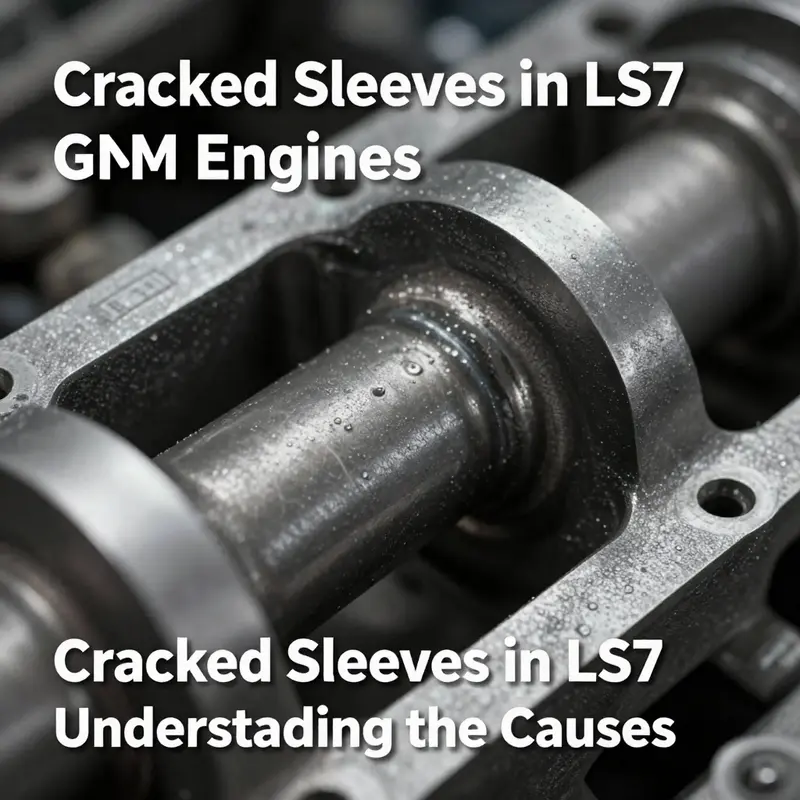
When Micro-Defects Become Macro-Failures: How Rare Manufacturing Flaws Crack LS7 Cylinder Sleeves
The LS7 engine earned its reputation by delivering high power in a lightweight package. Its aluminum block uses iron cylinder liners to marry strength with lightness. That arrangement works well for most applications. Yet, under specific circumstances, tiny flaws born in manufacturing can grow into catastrophic sleeve cracks. This chapter traces that path. It explains how microscopic imperfections form during casting and assembly. It also outlines the inspection steps and repair options builders use to stop a single defect from ending an engine’s life.
Casting an engine block is a complex metallurgical choreography. Molten metal fills a mold. It cools and solidifies. In that process, the material can trap gases or form uneven microstructures. These results are almost always harmless. But on rare occasions, they produce micro-voids, inclusions, or zones of porosity concentrated near the cylinder liner area. Under normal driving conditions, those flaws remain dormant. When combined with high combustion pressures and repeated thermal cycling, they can act as crack initiation sites. The LS7 runs hot near the top of the cylinder. That concentrates thermal and mechanical stress where even a tiny defect can matter.
Differential expansion between the aluminum block and the iron liners adds another variable. Aluminum and iron expand at different rates as temperatures rise. An otherwise negligible void at the liner interface may become a focus for stress when the two metals move against each other. Over many heat cycles, microscopic slivers of stress can link up. A crack begins as a hairline fracture. It grows with each power cycle until the liner fails. The process is slow and insidious. It does not require dramatic abuse. A small manufacturing flaw plus routine high load use can be all it takes.
Quality control usually catches problems long before engines are sold. Modern casting plants use non-destructive testing, sample pulls, and metallurgical analysis. Yet, no inspection system is infallible. Production runs pushed for volume, a temporary lapse in inspection, or a single contaminated batch of raw material can create an isolated set of liners with anomalies. In engines like the LS7, which are frequently used in severe performance roles, even a rare anomaly becomes meaningful. A handful of affected engines, out of thousands, will draw attention because failures on a high-profile platform are highly visible.
Assembly practices can turn a marginal liner into a failure. During engine assembly, sleeves must be seated precisely and bores torqued to specification. Improper seating can produce localized stress points at the sleeve’s shoulder. Overtight or undertight head-bolt torque alters the clamping pattern around the liner. If workmanship is poor, a small manufacturing void receives an amplified mechanical load. The result is the same as a casting flaw: stress concentration and crack initiation. For this reason, manufacturing defects often appear hand-in-hand with assembly errors when technicians are under time pressure.
Porosity and micro-voids sometimes originate in the liner material itself. Cast iron liners can develop micro-voids if gas bubbles are entrapped during solidification. Those voids are microscopic. They are invisible to cursory inspection. But they reduce fatigue resistance. Under sustained high combustion pressure, especially at elevated temperatures, the voids provide a ready seam for crack propagation. Microscopic cracks coalesce under repeated loads. When a crack reaches a critical length, it can cause sudden loss of compression or coolant intrusion. Engines used in motorsport or repeated high-rpm operation are most at risk simply because they experience more stress cycles per mile.
Detecting these defects early is challenging but possible. During rebuilds or warranty inspections, engine builders often use dye penetrant or electromagnetic particle inspection to find surface-connected flaws. For subsurface issues, ultrasonic testing and X-ray CT scanning are far more effective. These techniques reveal porosity patterns and internal inclusions. They can distinguish isolated defects from systemic casting problems. When inspections isolate a problem to a single production batch, manufacturers can respond with targeted recalls or replacement programs. When the defect is one of assembly or field maintenance, corrective training and revised procedures usually follow.
Material science provides another angle. The microstructure of the cast iron and the heat treatment applied to liners influence crack resistance. A properly normalized or heat-treated liner is tougher and better able to resist crack propagation. Conversely, liners that cool too quickly or too slowly during heat treatment may lock in residual stresses. Those residual stresses subtract from the metal’s fatigue life. In quality manufacturing, process control minimizes these risks. In rare cases, however, small deviations in furnace temperature or quench timing can create liners that perform poorly under stress.
Engine builders and owners have options when defects are suspected. The most conservative path is to remove and fully inspect the liners and block. If porosity or micro-cracks are confirmed, the choices are repair or replacement. Repair options are limited. Welding cast iron liners is difficult and rarely recommended for thin sleeves. More reliable is replacing the liners with high-integrity aftermarket sleeves or re-boring and installing new sleeves that meet upgraded metallurgical specifications. These solutions restore structural integrity and remove the original weak point. For many high-performance builds, upgraded liners provide a margin of safety against future failures.
Preventive measures during production are straightforward. Tightening process controls reduces the chance of porosity in new liners. That includes degassing melts, improving mold design, and refining gating systems. Better control of heat treatment cycles reduces residual stress. And enhanced non-destructive testing minimizes the chance a bad liner escapes into the field. Those are manufacturer-level solutions. At the workshop level, following precise installation procedures, using calibrated torque equipment, and verifying sleeve fit during assembly reduce the risk that a minor manufacturing defect will trigger a failure.
From an owner’s perspective, the signs of a liner issue usually appear quietly. Small coolant consumption increases, faint loss of compression on one cylinder, or unusual hot spots detected during a thermal scan can point to early damage. Pressure testing individual cylinders can help isolate a bad sleeve before it develops into a crack. Early intervention is cheaper and less invasive than a full engine replacement. Regular cooling system maintenance also plays a role. Overheating exacerbates any internal weakness. Keeping the engine at stable operating temperatures reduces the stress cycles that drive crack growth.
When engines are used for track duty, the operating envelope is narrower. Repeated high-rpm use, wide-open-throttle runs, and aggressive thermal cycling accelerate fatigue. For that reason, builders often choose to upgrade liners before pushing an LS7 to extreme limits. Upgraded liners use improved iron grades and tighter manufacturing tolerances. They eliminate the marginality that can exist in rare production anomalies. Even in stock engines, careful attention to assembly torque, head gasket choice, and cooling system capacity reduces the likelihood that a tiny manufacturing flaw will become a failure.
Insurance against manufacturing defects also takes a legal and administrative form. Robust traceability systems tie individual engines back to production records. If a pattern emerges, manufacturers can find the root cause and notify affected owners. In the aftermarket, reputable rebuilders provide warranties and test documentation. Those practices shift some risk away from owners and ensure that problems are addressed systematically rather than on a case-by-case basis.
The LS7’s sleeve cracking is rarely a mass failure. Most engines perform for many miles without issue. The cases that do fail point to a confluence of factors: an unfortunate manufacturing anomaly, suboptimal assembly, and high-stress operation. Understanding the metallurgy and the mechanical interactions at the liner interface clarifies why a microscopic flaw matters in a performance engine. It also makes clear how inspection, controlled manufacturing, and disciplined assembly practices limit the chance that such flaws survive to cause trouble on the road or the track.
For owners and builders, the practical takeaway is simple. Respect the installation procedures. Keep the cooling system healthy. Use precise inspection tools when doubt arises. And when upgrading an LS7 for demanding use, consider sleeves made to higher specifications. These steps don’t eliminate every possible failure, but they change a remote manufacturing risk into a manageable engineering variable.
For a detailed technical discussion and real-world case studies about LS7 sleeve issues, consult this in-depth resource: https://www.hotrodder.com/forums/ls7-sleeve-cracking-causes-and-repairs.201854/. Additional background on the role and types of sleeves can be found in this primer on what engine sleeves are: what are engine sleeves.
Final thoughts
Understanding why LS7 GM engines crack sleeves is crucial for maintaining their performance and longevity. Through careful attention to thermal stress, proper installation, load management, and awareness of manufacturing defects, vehicle owners and professionals can mitigate the risks associated with sleeve cracking. This knowledge empowers enthusiasts and mechanics alike to uphold the outstanding reputation of the LS7 engine and ensures a durable, reliable engine experience for years to come.