

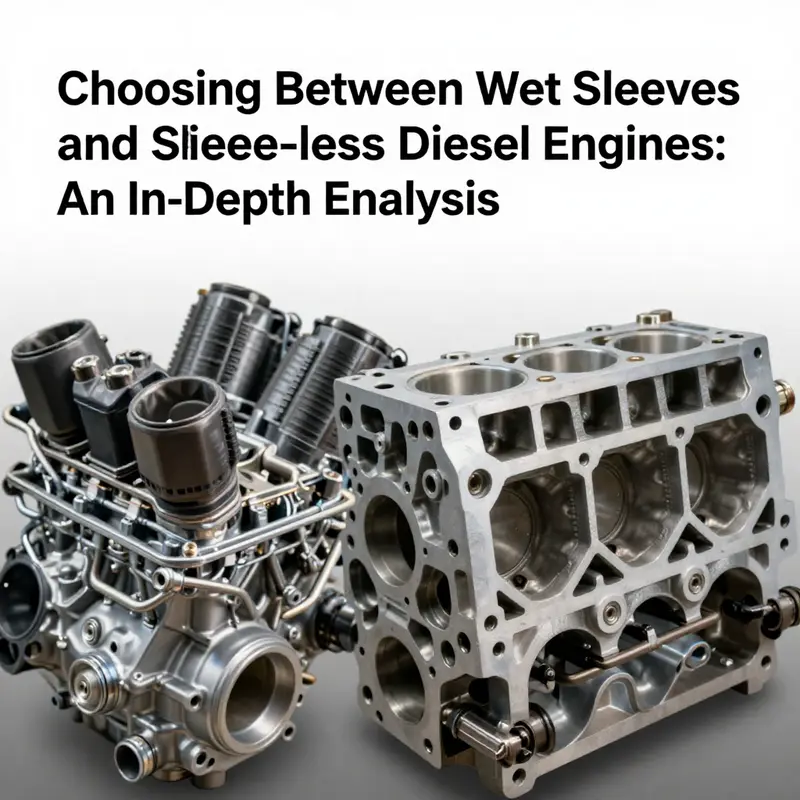
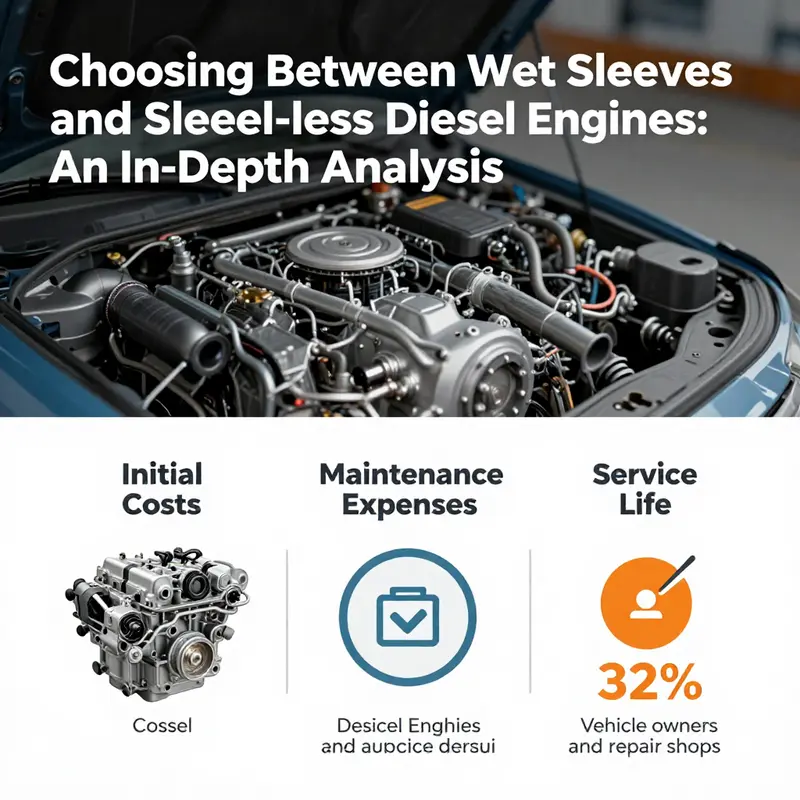
When considering engine designs, the debate over whether a wet sleeve or a diesel engine without one is better can be pivotal for motorcycle and auto owners, parts distributors, and repair shops. The choice can influence performance, longevity, and maintenance costs in real-world applications. This article lays the groundwork for understanding these two configurations, examining their comparative technical features, economic implications, maintenance needs, and overall performance in practical scenarios. By analyzing these aspects, readers will gain a comprehensive insight into which design may better suit their specific needs, helping them make informed decisions about their automotive investments.
null
null
null
null
Balancing Heat, Seals, and Servicing: Wet-Sleeve Versus Dry-Sleeve Diesel Engines Through Maintenance and Durability
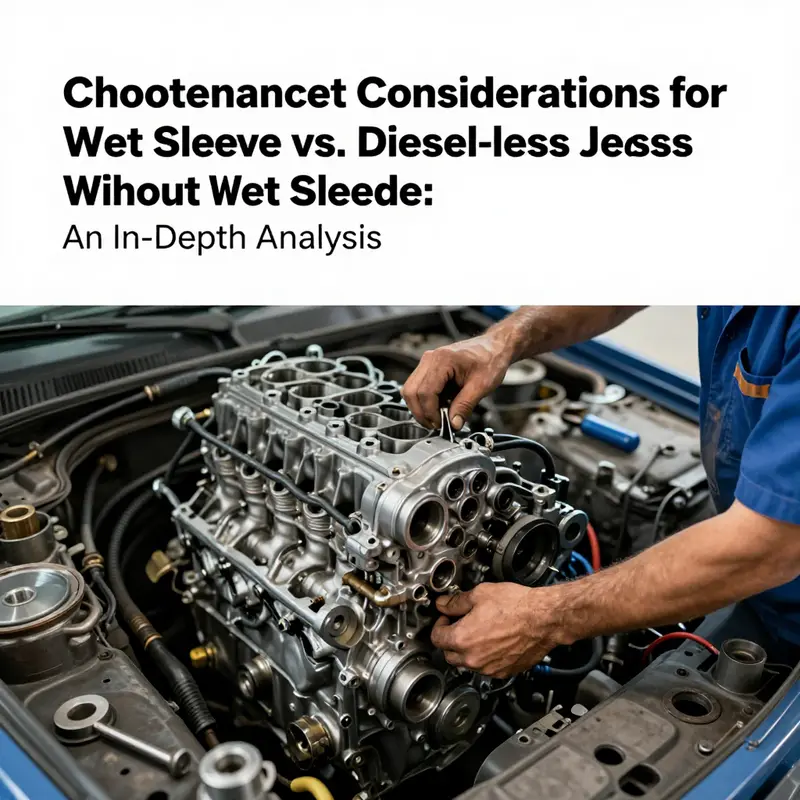
Choosing between a wet sleeve and a diesel engine without one is not a simple choice. It is a decision shaped by heat, load, maintenance capability, and the life the operator intends to squeeze from the machine. In the realm of heavy-duty diesel work, the wet sleeve is more than a feature; it is a design philosophy that prioritizes thermal management as a driver of reliability. The core idea is straightforward: when the cylinder liner is in direct contact with coolant, heat can move out of the combustion chamber faster and more evenly. That improved heat conduction translates into a more stable temperature profile, which reduces the risk of hot spots that can accelerate wear, deform components, or encourage cavitation in lubrication. In practice, this means engines designed with wet sleeves tend to perform better under strenuous duty cycles—long-haul runs, high-torque bursts, and continuous operation in challenging environments. The literature supports this view, emphasizing that direct coolant contact improves thermal balance and long-term durability. This is not merely about keeping the gauge in the green; it is about predictable behavior under stress, which in turn reduces the likelihood of sudden, costly failures that can bring a fleet to a standstill. For operators who depend on uptime, that reliability is often worth the trade-off in maintenance complexity.
Yet the maintenance story for wet sleeves is not one of unalloyed simplicity. The sealing interface between the sleeve and the engine block becomes a focal point of long-term reliability. The seals or gaskets that bridge the sleeve bore to the coolant and to the combustion environment must endure repeated thermal cycling, chemical exposure from antifreeze formulations, and the mechanical pressures generated by piston movement and baring wear. Over time, the seals can age, crack, or lose their elasticity. If a seal fails, coolant can find its way into places it should not go, and oil can become emulsified or contaminated with moisture. Both scenarios lead to elevated wear, reduced lubrication efficiency, and, in the worst case, catastrophic failures such as coolant ingress into the combustion chamber or oil sump. Regular inspection and timely replacement of sealing components thus become essential maintenance tasks, not afterthoughts. The difficulty compounds when a wet sleeve needs to be serviced; removing and reinstalling a sleeve is not a task for casual enthusiasts. It demands specialized tools such as sleeve pullers, precise measurement of the bore, and careful control of torque and alignment during reassembly. In short, the repair workflow is more intricate and resource-intensive than a dry-sleeve alternative, and the costs—both in time and equipment—can be substantial if the operation is not properly planned.
The replacement pathway for a wet sleeve also follows a nuanced logic. While the sleeve itself can be changed with less disruption to the engine block than many other components, the sealing interface must be re-started with precision. A marginal seal or a worn O-ring can immediately compromise the repair, nullifying the benefits of the new sleeve. This reality explains why maintenance plans for wet-sleeve engines often emphasize a proactive approach: scheduled inspections of seals, verification of coolant leak paths, and readiness for a controlled teardown if any sign of leakage or pressure loss appears. Operators who favor wet sleeves often pair this with robust shop capabilities, ensuring that when a sleeve service is required, the task is completed with exacting standards and traceable steps. The overarching narrative is familiar to engineers and fleet managers: a well-managed wet-sleeve program delivers dependable heat management and extended service intervals, but it demands disciplined maintenance practices and access to skilled technicians.
To balance the story, it is important to consider the alternative—dry sleeves, or sleeveless designs. A dry sleeve, which does not touch cooling water, yields a simpler sealing arrangement and generally lower maintenance complexity. The outer wall of the screw-in sleeve transfers heat to the engine block rather than directly to coolant, which reduces the number of potential coolant leaks and simplifies routine service. For many passenger cars, light-duty commercial applications, and compact engines, this approach makes good sense. The packaging benefits are tangible: lighter components, fewer constraints on the engine block geometry, and fewer opportunities for coolant-related failures to arise from the cylinder wall area. The trade-off, however, is clear in thermal performance. With heat transfer less aggressive than a wet sleeve, there is a higher likelihood of localized hotspots under sustained high-load operation. Over time, this can manifest as marginal temperature rise in peak cylinders, slight distortion of the bore, or accelerated wear on pistons and rings in zones that do not dissipate heat as efficiently. The consequence can be shorter life between overhauls in extreme duty environments and, in some cases, more frequent cooling system maintenance to guard against overheating scenarios.
The contrast becomes clearer when we place these designs side by side along the lifecycle and the operational context. Wet sleeves excel where heat removal is the rate-limiting factor: long-distance hauls, heavy equipment, and marine propulsion units where the engine endures meaningful thermal sine waves under continuous load. In such settings, wet sleeves help preserve a stable engine temperature, which, in turn, supports better engine breathing, more consistent lubrication, and an expanded operating envelope. Dry sleeves shine where simplicity and rugged sealing integrity trump peak heat transfer. They are favored in tightly packed, lighter-weight designs where the duty cycle does not push the cooling system to its absolute limit and where maintenance resources are limited or less specialized. The decision, in practice, hinges on how an operator values heat management versus maintenance simplicity, and on whether the expected operating regime will push the engine toward the thermal boundary conditions where wet sleeves hold a clear advantage.
The maintenance philosophy that accompanies each path is equally telling. With wet sleeves, the emphasis is on sealing integrity and precision service. The need for careful bore finishing, the correct seating of sealing rings, and the verification that the sleeve-to-block interface creates a reliable coolant seal becomes non-negotiable. Routine checks of coolant condition, pressure tests at the sleeve interfaces, and evidence of any cross-contamination between coolant and oil are prudent steps in a maintenance program. This approach guards against slow, creeping failures that can erupt into serious problems if neglected. In contrast, dry sleeves shift the emphasis toward ensuring the sleeve remains properly seated and bore alignments are within tolerance. Since the sealing complexity is lower, maintenance often centers on bore wear checks, occasional re-boring, and the practical challenges of re-fitting sleeves in a way that preserves engine block integrity. The buyer’s market and service network for a given engine design will influence how aggressive a preventive maintenance schedule should be; what is manageable in a well-equipped shop may be less feasible in a remote field operation.
From a practical standpoint, the maintenance calculus for wet sleeves also ties into the broader economics of engine life-cycle management. Wet-sleeve engines may demand higher upfront investment in workshop capability and maintenance planning, but they frequently offer lower replacement risk in the long run, particularly where uptime and thermal resilience translate into measurable productivity gains. The long-term cost of ownership in such cases can be favorable when the engine operates under conditions that would test a dry-sleeve solution. Conversely, for fleets whose cycles are short, whose duty is less arduous, or whose maintenance infrastructure is constrained, the dry-sleeve route can provide a cost-effective, reliable platform with fewer maintenance surprises. Both choices, in other words, reflect a spectrum of engineering compromise rather than a binary verdict on which design is inherently superior. The best-fit solution emerges when the design aligns with the expected thermal loads, maintenance capacity, and the operational cadence of the fleet.
This nuanced picture—where heat transfer, seal integrity, repair complexity, and lifecycle cost intersect—has practical implications for decision-makers. In a setting where high-load operation and extended service intervals are the norm, a wet-sleeve engine can offer tangible benefits in thermal stability and durability. Where the operating profile is lighter, the mission is compact and the maintenance footprint must be minimal, a dry-sleeve configuration can deliver reliable performance with simpler service requirements. For readers seeking a concise synthesis of this balance, the literature emphasizes the importance of direct, data-driven evaluation of duty cycle, cooling capacity, and maintenance capability before committing to a particular cylinder sleeve approach. The wet-sleeve approach is celebrated for its thermal prowess, while the dry-sleeve path is valued for its sealing simplicity and resilience in less demanding environments. This is the core insight underlying the maintenance perspective of wet sleeve versus diesel engine without wet sleeve.
For those who want to explore the topic further through a technical lens, a related discussion on wet sleeves and thermal management provides deeper detail about how direct contact with coolant shapes heat flow, temperature uniformity, and component longevity. See the deeper exploration here: wet sleeve engine thermal management.
In closing, the decision is not purely about which design handles heat better or which is easier to rebuild. It is about aligning the engine architecture with the operational realities of the workload, the reliability standards required by the mission, and the capacity to maintain critical interfaces over time. Wet sleeves offer a robust approach to thermal control for engines that endure demanding duty cycles, but they demand disciplined maintenance and skilled service. Dry sleeves present a simpler, often cheaper path with acceptable performance for less extreme applications. Both paths reflect the broader truth that modern diesel engineering is not a single blueprint but a family of solutions tailored to the rhythm of work that the machine is asked to perform. External references and practical case studies can illuminate how these principles play out in real-world settings, guiding operators to a choice that balances performance with maintainability.
External reference: https://www.engineerlive.com/understanding-nissan-td27-cylinder-sleeves-key-grades-structure-and-application-benefits/
null

null
Final thoughts
The choice between a wet sleeve diesel engine and one without can greatly affect not only performance but also long-term maintenance and economic viability. With insights drawn from technical features, economic factors, maintenance practices, and actual performance in demanding conditions, it’s clear that wet sleeves generally provide superior durability and serviceability. However, depending on application and budget, a non-wet sleeve design may still pose a viable alternative. Ultimately, understanding your specific needs and the contexts in which these engines will be used will guide you toward making the best decision for your investment.