

Sleeving an engine block is a powerful technique employed by motorcycle owners, automotive enthusiasts, and repair professionals to restore and enhance engine performance. By inserting a sleeve into a worn or damaged cylinder, professionals can breathe new life into an engine without the need for a complete replacement. This process not only corrects structural vulnerabilities but also opens possibilities for performance modifications. In the chapters that follow, we will explore the various types of sleeves used in engine sleeving, the applications of this technique in automotive engineering, and the economic benefits it offers for repairs and enhancements. Together, these insights aim to equip motorcycle and auto owners, parts distributors, and garages with a comprehensive understanding of how sleeving can reignite engine vitality.
Inside the Liner: How Cylinder Sleeves Redefine the Engine Block, from Dry to Hybrid
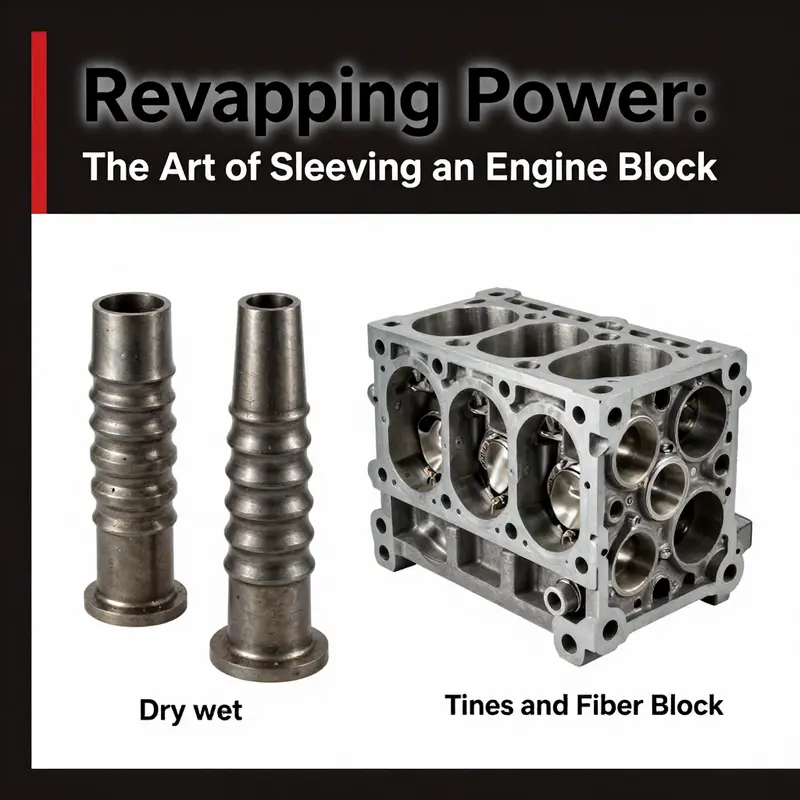
When an engine block begins to show its age in the bore, the instinctive impulse might be to swap blocks or pistons. Yet sleeving offers a quieter, more precise remedy that preserves the original architecture of the engine while restoring or even enhancing its performance envelope. Sleeving a block means introducing a cylindrical sleeve, or cylinder liner, into the bore so that the piston rings ride against a fresh, uniform surface rather than the worn substrate of the original casting. This approach is not just about patching a hole; it is about redefining the hardware’s interaction with heat, lubrication, and load. The sleeve becomes part of the engine’s heartbeat, setting the stage for reliable compression, controlled heat transfer, and predictable wear characteristics. In practice, engineers choose sleeving not only to repair damaged cylinders but also to tailor a block for specific operating goals—whether that means restoring original displacement after wear, enabling higher performance with larger bore diameters, or improving durability under demanding service. The decision to sleeve a block is thus an intersection of metallurgy, precision machining, and a clear-eyed forecast of how the engine will live in the real world.
At the core of sleeving is a simple physical idea: a liner provides a new, clean, hard-wearing surface for the piston and its rings. But the implementation details—how the sleeve is manufactured, how it is installed, and how it behaves under cyclic thermal and mechanical stress—are nuanced. The sleeves come in several families that reflect different design philosophies and service assumptions. Dry sleeves sit snugly inside the block, with the block itself bearing the cooling duty and sealing responsibility. Wet sleeves hang directly in the coolant loop, trading some simplicity for easier replacement and a more forgiving interaction with the engine’s thermal regime. Cast-in sleeves are integrated during manufacturing, offering a metallurgical bond that streams heat and stresses in a favorable way but at higher upfront cost and less post-install flexibility. Press-fit sleeves, the workhorse of many repair shops, rely on controlled interference and precision bore finishing to achieve a stable, overhung fit. Finally, hybrid sleeves attempt to borrow the best of multiple approaches, sometimes weaving cooling passages or surface coatings into the liner’s interior to meet extreme duty cycles.
To understand why a designer might select one sleeve family over another, it helps to imagine the engine block as a living frame that must manage three interdependent relationships: heat, wear, and assembly tolerances. The cylinder walls are the interface between the burning gas and the cooling system, a high-energy boundary where rapid temperature swings induce expansion and contraction. Worn or damaged walls disrupt the seal, degrade compression, increase oil and fuel leakage, and can accelerate piston ring wear. Sleeves address these problems by providing a fresh bore with controlled rigidity and a known surface finish. They also open pathways to performance tuning. In sport-oriented builds, for example, sleeves can be chosen to accommodate a larger bore, yield tighter piston-to-wall clearances for straighter ring seals, or pair with coatings that resist scuffing under high load. In everyday service, a sleeve can transform a tired block into a dependable workhorse, allowing maintenance cycles to be extended, fuel economy to stabilize, and the risk of overheating to be kept within safer margins.
Dry sleeves are the most compact option in terms of overall package. They reside inside the block and rely on the block’s external walls to seal the cooling passages. The outer surface of the dry sleeve is engineered to mate with the bore of the block in such a way that the assembly remains rigid and free of leaks. The advantage of this approach is a lighter, thermally efficient configuration. Since the sleeve’s exterior does not contact coolant, heat can be conducted away primarily through the block, and the absence of a coolant-sealing interface on the sleeve reduces a potential leak path. This can translate into a more straightforward thermal management scheme, particularly in engines designed with a strong reliance on jacket cooling around the cylinder area. However, the downside is that the engine block itself must be machined and finished to exceedingly tight tolerances to guarantee a concentric, leak-free fit. Small deviations in bore diameter or ovality can lead to high local stresses, ring land instability, or oil leakage if the sealing interfaces are not perfect. Consequently, dry sleeves demand precision manufacturing and meticulous bore finishing, which, while technically demanding, can deliver high performance with reduced coolant complexity and a lighter assembly.
Wet sleeves, by contrast, live inside the cooling system themselves. Their external walls are exposed to coolant, and sealing is achieved through dedicated interfaces—often gasketed or O-ring seals between the sleeve and the block. The practical upshot is easier replacement and more forgiving thermal management, since the sleeve carries part of the thermal load directly into the cooling circuit. In high-heat, high-load scenarios—think heavy-duty trucks or high-revving, high-displacement builds—the ability to move heat more effectively through a liquid-filled interface can be transformative. Wet sleeves allow engineers to select liner materials with coating strategies that can reduce wear against the rings while coping with coolant chemistry and flow. The downside is an added layer of sealing complexity and a potential for coolant-related degradation if the sealing interfaces are not perfectly maintained. The sleeves themselves must be chemically compatible with the coolant, resistant to cavitation-induced pitting, and designed to resist fatigue from repetitive thermal cycling. Maintenance becomes a regular concern, because leak paths, gaskets, and seals require periodic inspection and replacement, which adds cost and downtime but can yield long-term reliability in demanding service.
Cast-in sleeves tell a story of consolidation and durability. Cast into the block during the manufacturing process, these sleeves become part of a single metallurgical structure with the block, delivering an exceptionally robust interface. The heat is shared across the bore and sleeve via a metallurgical bond, and the thermal expansion characteristics of the sleeve and block can be matched to minimize dynamic stresses under operation. Cast-in sleeves are not something you swap in the field; they are built in at the design and casting stage, often requiring redesigned blocks to accommodate the sleeve geometry. This approach provides excellent concentricity and alignment, which contributes to superior sealing and long-term durability. The trade-off is a higher initial cost and less flexibility for refurbishment. If a bore wears out or a sleeve becomes damaged, replacing a cast-in sleeve typically means recasting or replacing the entire block, which is not a light or quick operation. For that reason, cast-in sleeves are more common in production engines designed with long service life in mind and in performance applications where the benefits of a bonded, well-integrated bore are valued over post-sale adaptivity.
Press-fit sleeves sit in between the field-friendly practicality of dry sleeves and the robust, long-life aspirations of cast-in designs. The process hinges on precise machining to create a bore that tolerates a slight over-rolling fit—the interference fit—so the sleeve locks into the block under pressure. The illustration here is a marriage of manufacturing ease and repairability: a relatively straightforward installation that can be done with standard tooling, a well-controlled bore finish, and careful heat-treating of the sleeve to prevent creep or relaxation over time. Press-fit sleeves are especially common in repair shops and workshop environments where quick turnaround and cost control matter. They offer the flexibility of selecting a sleeve with a compatible outer diameter to the bore and applying a finish-honing step to achieve the desired piston clearance. But the method is sensitive to the bore’s surface condition and the sleeve’s outer diameter, and its reliability is contingent on uniform force distribution during installation and ongoing service. Poor bore finishing can lead to stress concentrations and early ring wear or even sleeve movement under load, so the process demands disciplined quality control and precise measurement.
Hybrid sleeves push the envelope by combining the strengths of multiple concepts. They might integrate an external dry contact with an enhanced cooling path, or employ interior wear-resistant coatings that reduce friction and scuffing at the piston rings. The goal of a hybrid approach is not to solve every problem with a single trick but to tailor a solution for engines operating under especially harsh conditions or in endurance-focused roles. In practice, hybrids can be engineered to exploit the heat-limiting properties of a dry outer shell while still benefiting from a wet sleeve’s efficient cooling passage. Or they might use a cast-in core with a removable wet-liner segment in high-stress zones to optimize serviceability without sacrificing structural integrity. The design challenge for hybrids is to manage the thermal, mechanical, and chemical interactions across the sleeve, coating, and block with a compatible set of materials and manufacturing steps. When correctly executed, a hybrid solution can extend life, improve reliability, and enable operating regimes that conventional sleeves would struggle to sustain.
The selection of a sleeve type is rarely a token choice. It reflects a deliberate appraisal of the engine’s operating environment, the available maintenance infrastructure, and the long-term economics of repair versus replacement. In performance-oriented builds, the decision might tilt toward sleeves that allow for larger bores and tighter tolerances, or toward coatings and coatings-plus-cores that reduce friction and wear. In fleet or industrial settings, reliability and ease of maintenance can favor wet sleeves for their replaceability and predictable service life, or pressed-fit sleeves for budget-conscious refurbishments that still demand repeatable results. In mass-produced blocks, the alignment of sleeve type with casting process, coolant strategy, and manufacturing tolerances becomes a primary lever in controlling quality and consistency across thousands of engines. Casting decisions, machining capability, and the known behavior of the chosen sleeve in the target engine environment converge to define a solution that can be trusted season after season. This is why sleeving is as much about engineering judgment as it is about machining precision: it requires anticipating how the bore will age, how heat will flow, and how the rings will seal under load.
To appreciate the engineering depth behind sleeve selection, consider how the bore surface quality interacts with piston rings. A fresh liner provides a uniform, smooth surface that reduces the risk of micro-welding and scuffing during the break-in period and beyond. The roughness of the bore after finishing—often described in micro-inches or micrometers—drives oil retention, ring tension, and the likelihood of glazing. A sleeved bore can be finished to a tolerance that optimizes honeycomb friction with the rings, balancing initial oil film formation with sustained contact under thermal cycling. The sleeve’s hardness, its four-quadrant wear behavior, and its compatibility with the piston material all feed into a single performance envelope. The goal is to achieve a stable, predictable ring seal—one that delivers consistent compression and controllable blow-by across thousands of cycles. If the sleeve is too soft, it may wear rapidly; if too hard, it may be brittle and prone to cracking under thermal shock. The right material selection, surface treatment, and finish strategy are therefore central to the sleeve’s long-term behavior.
Machining and installation are the practical stage where theory meets reality. Installing a sleeve—whatever its type—demands careful bore preparation: achieving a true circle, maintaining concentricity with the crank axis, and ensuring the finish is smooth enough to minimize ring wear without sacrificing sealing efficiency. For dry sleeves, the outer surface must mate with the block’s wall with an uncompromising fit, because the block bears the sealing and cooling duties across the joint. For wet sleeves, precision in the sealing interface with the block is equally crucial, as any leakage path can bypass the intended heat transfer route and degrade performance. Cast-in sleeves obviate much of this in-field work because the integration occurs during casting; however, the downstream tolerance stack—how well the final bore aligns with pistons and rings—still governs performance and reliability. Press-fit sleeves, by design, rely on an exacting bore finish and consistent surface quality to prevent micro-movements under load that could lead to premature wear or a loss of concentricity. Hybrid sleeves demand even more disciplined control, as multiple material properties and coolant interactions must be managed in unison. Beyond the mechanics, there is a broader engineering discipline at work: the ability to model, measure, and verify how the sleeve behaves in real operating conditions. Pressure testing, dye penetrant or magnetic particle inspection for cracks, and bore profiling are all part of ensuring the sleeve’s integrity before and after installation. The goal is not simply to insert a new surface but to foster a stable, enduring interface that can tolerate thermal cycling, lubricating film fluctuations, and the mechanical shock of combustion without losing its geometry or sealing capability.
In practice, engineers also think about wear patterns and lubrication regimes. A freshly sleeved bore must live in a world where oil films carry away heat and protect surfaces from metal-to-metal contact. The surface finish of the liner, the presence of any coatings, and the compatibility with the chosen piston and ring materials determine how quickly ring packs seat and how evenly wear progresses over time. The interaction with the coolant is a constant thread. In dry sleeves, coolant flows past the sleeve’s exterior through the block’s jacket, while the sleeve itself remains a sealed internal surface. In wet sleeves, coolant contacts the sleeve directly, which requires careful chemical compatibility to avoid corrosive attack or loss of integrity due to prolonged exposure to coolant additives. These considerations scale with engine duty cycle: a racing application might prioritize coatings and bore finishes that suppress friction and enhance heat rejection, while a heavy-duty industrial engine could lean toward a sleeve structure designed for predictable replacement and minimal risk of coolant leaks even after many thousands of hours of service.
From a lifecycle perspective, sleeving can dramatically extend the usable life of an engine block. It enables existing blocks to be refurbished rather than replaced, preserving core geometries and permitting continued use of the original crank, oiling system, and ancillary parts. Properly chosen and executed, sleeving can also enable performance upgrades that would be impractical or cost-prohibitive with a new block. A larger bore, more robust contact surfaces, or coatings that reduce wear can all be realized without discarding the block’s structural footprint. Yet with that potential comes responsibility: sleeves must be designed with an honest appraisal of how long they will last under the engine’s operational profile and how easily they can be serviced when it matters most. Predictability and reliability are the ultimate currency in engines that operate in harsh environments or under demanding workloads, and the sleeve’s role in establishing those qualities cannot be overstated.
For readers who want to dig deeper into the foundational concepts behind sleeve choice and installation, a detailed explainer can illuminate how the different sleeve families map onto specific service philosophies. See Sleeve An Engine Explained for a practitioner-focused walkthrough of the practical decisions and considerations that underlie effective sleeving. This resource offers a grounded perspective on how sleeves are chosen, how they interact with block castings, and what signs indicate a sleeve may be approaching the end of its service life. While the specifics evolve with materials science and manufacturing capabilities, the core idea remains consistent: sleeves are not mere patches; they are active components that shape the engine’s future operating envelope.
As this chapter links back to the broader question of what sleeving accomplishes, it is worth recalling that the process sits at the overlap of repair and enhancement. It is a calibrated intervention that acknowledges the block’s original design while carefully reengineering the bore to meet new expectations. The mechanics of sleeving—whether dry, wet, cast-in, press-fit, or hybrid—are not an isolated set of techniques; they are a reflection of a philosophy that prioritizes structural integrity, predictable wear behavior, and durable heat management. In the end, sleeving is about giving engines a second life with a first-rate surface. It is about turning tired cylinders into reliable surfaces that can seal, transfer heat, and resist wear under pressure. It is, in short, a precise and principled response to the realities of engine aging, one that keeps the block relevant and the machine performing on its best days and its toughest days alike.
External resource for further reading: Understanding engine block sleeves at the engineering knowledge hub can provide a broader scientific basis for the material choices, coating strategies, and thermal considerations that underlie sleeve design and implementation. https://www.engineer.com/technology/machinery/understanding-engine-block-sleeves
Sleeving for Strength: How Cylinder Liners Restore Integrity, Manage Heat, and Enable Performance in Modern Engines
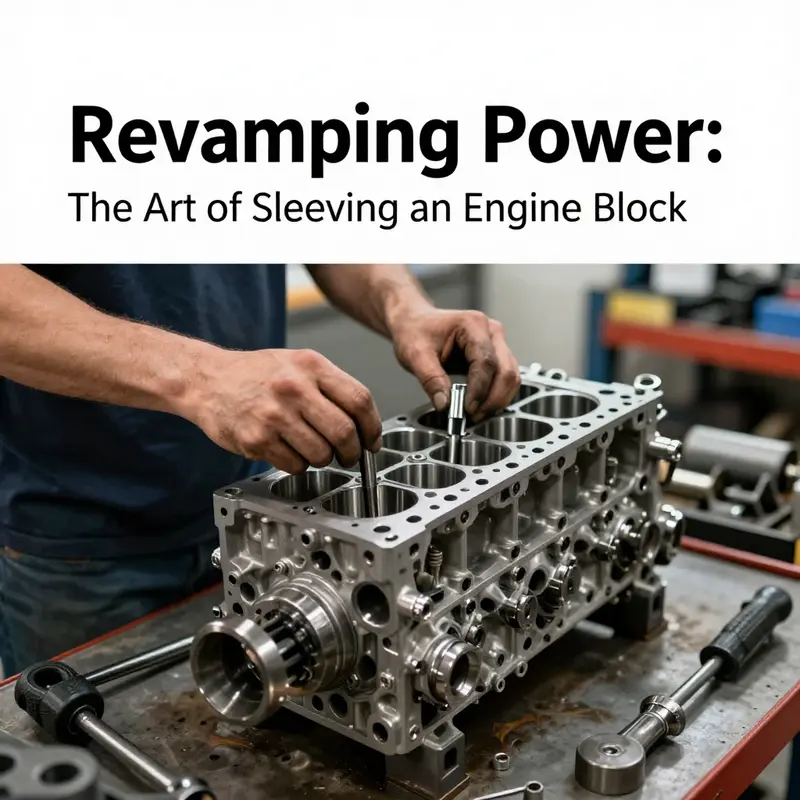
When people talk about sleeving an engine block, they are describing a precise, practical solution for a problem that sits at the heart of an engine’s durability and performance: worn, damaged, or undersized cylinders. A sleeved block is not simply a patched surface; it is the combination of a cylindrical liner and a purpose-built interface with the surrounding block that together reestablish geometry, seal the bore, and, in many cases, improve how heat moves away from the combustion chamber. The concept rests on a straightforward idea with very real implications: cylinders are wear surfaces. Over time, pistons, rings, and the harsh thermal and mechanical cycles inside an engine wear the bore until compression, lubrication, and heat transfer suffer. Sleeving addresses that problem not by replacing the entire block—an often prohibitive or impractical undertaking—but by restoring the interior surface with a new, controlled, replaceable element. The result is an engine block that can recover useful service life, resist future wear, and, when done with care, support higher operating demands than the original bore could comfortably withstand.
To understand sleeving, imagine a cylinder bore that has lost its roundness, developed scoring, or shown corrosion from coolant leakage. The sleeve is a rigid, cylindrical wall that sits inside the bore, forming a fresh, true, and consistent inner surface for the piston rings to seal against and slide within. The sleeve’s outer surface is matched to the block so that heat transfer, sealing, and structural integrity are preserved. There are two broad sleeve families—the dry sleeve and the wet sleeve—each with its own advantages, limitations, and applications, and both depend on careful machining and precise fit to deliver the expected reliability and performance. The distinction between dry and wet sleeves is not a matter of preference alone but of how heat and coolant interact with the cylinder walls, how the sleeve is sealed, and how the engine’s service environment is expected to behave under load.
Dry sleeves, as their name implies, live within the block and do not directly contact the engine’s coolant passages. They rely on the surrounding block material for support, and their outer profile must be machined to a precise interference fit. The installation often requires shrinking or pressing the sleeve into the bore, followed by careful machining to ensure the outer surface is square and concentric with the block’s deck and crank axis. Machining tolerances are tight because any deviation translates into piston ring seating issues, scuffing, or uneven heat distribution. The inner bore of a dry sleeve is honed or finished to the exact diameter and surface finish needed for the piston rings and the chosen piston type. When done correctly, a dry sleeve provides a stable, wear-resistant surface that can be used in engines that operate with moderate to high thermal loads, but with coolant kept away from the outer surface of the sleeve. Dry sleeves are often chosen for engines where the block’s structural integrity and sealing are not designed to accommodate direct coolant contact around the entire sleeve region.
Wet sleeves, by contrast, are designed to be in direct contact with the engine coolant. The sleeve’s outer surface is exposed to the same cooling channels that run through the block, and a reliable seal must be established to prevent coolant from leaking into the combustion space or past the gasket interfaces. Wet sleeves are favored in heavy-duty or high-performance engines where heat rejection is critical. The direct contact with coolant provides superior heat transfer from the inner bore to the coolant, helping to prevent local hotspots that can accelerate wear, distortion, or detonation-related damage. The interfaces around wet sleeves—between the sleeve and block, and between the sleeve and the head or deck sealing surfaces—demand meticulous engineering. Seals, gaskets, O-rings, or specialized silicone/ceramic compounds are used to maintain a leak-free boundary in the face of thermal cycling and pressure spikes. The result is a cooling regime that can be both more efficient and more reliable under demanding conditions, albeit with the added complexity of ensuring coolant integrity and long-term seal performance.
Beyond the basic split of dry and wet sleeves, the sleeve choice is influenced by the engine’s service profile, the block’s design, and the intended operating envelope. If the engine is expected to endure sustained heavy loading, high combustion temperatures, or frequent turbocharged or supercharged operation, a wet sleeve often provides the margin needed for dependable heat management. In applications where the engine block needs to maintain maximum rigidity and gasket integrity in a service environment with less aggressive cooling, a dry sleeve can offer a robust solution with fewer sealing interfaces. Either way, the success of sleeving hinges on a thorough appraisal of the bore’s condition, the material and thickness of the sleeve, the block’s metallurgy, and the assembly clearances that influence combustion dynamics and lubrication.
Restoration and performance gains come from more than just replacing worn walls. Sleeving enables selective, targeted repair. Instead of scrapping a block with one worn cylinder, the repair can address only the affected bore, preserving the rest of the block’s geometry. This “replaceable” approach translates into meaningful cost savings, shorter downtime, and a path to longer engine life for commercial fleets, industrial equipment, and marine propulsion systems where reliability is paramount. As a result, sleeving is not only a repair technique; it is a design strategy that recognizes the block as a modular component capable of renewed life through cylindrical liners. In performance-oriented builds, sleeving supports controlled displacement changes, improved sealing surfaces for higher compression ratios, or enhanced strength to accommodate revised piston and ring dynamics under boost or boosted air charge. In short, sleeving is a versatile tool that aligns the engine’s inner surface with the evolving demands of duty cycles, fuel quality, lubrication regimes, and heat management goals.
The practical steps of sleeving start with a careful assessment of the bore. Technicians measure roundness, straightness, and bore diameter at multiple points, looking for taper, out-of-round conditions, corrosion pockets, and scoring that exceed acceptable limits. They also examine the block’s deck surface, main bore alignment, and the overall integrity of the block walls surrounding the cylinder. Once the assessment confirms that the bore can be restored through sleeving, a decision is made on sleeve type, material, and thickness. Most sleeves are made from cast iron or steel alloys, chosen for their wear resistance and compatibility with the engine’s lubrication regime. The sleeve’s outer diameter is selected to produce an interference fit with the block; the inner diameter is honed to the piston’s final bore size and finish, with a surface texture chosen to minimize friction and wear while promoting reliable ring seal. In wet-sleeve installations, the design includes a compatible sealing scheme that blocks coolant leakage while allowing heat to pass from the outer sleeve surface into the coolant as designed by the cooling system’s geometry.
The installation process itself is a careful orchestration of mechanical fit, surface finishing, and sealing integrity. For dry sleeves, the outer sleeve may be heated or the bore slightly cooled to achieve a tight press or shrink fit. Precision alignment is essential; a misaligned sleeve can distort the bore, leading to uneven ring seal and accelerated wear. After press-fit, the sleeve is flanked by the block walls with careful machining to bring the inner sleeve bore to the final dimension. The next step is honing, which creates the exact crosshatch pattern needed to seat the piston rings and achieve proper break-in behavior. The inner surface is finished for ultimate roundness and smoothness, and the overall bore must be compatible with the piston diameter, ring land dimensions, and piston-to-wall clearance requirements determined by the engine’s intended operating conditions. For wet sleeves, the sealing system receives special attention. Inserted sleeves must sit flush with deck surfaces, and exact tolerances are set for the interfaces where the cylinder head gasket will seal. Any mismatch risks coolant leakage or head-gasket failure under load. The assembler must also verify that the sleeve’s outer surface is contoured to allow the coolant to wash across it with minimal dead zones, ensuring efficient heat transfer.
A critical dimension in sleeving is wall thickness. The sleeve’s wall must be thick enough to resist bore wear, yet thin enough to avoid wasting valuable block space and to preserve piston height and compression ratio. Too thick, and the sleeve may cause clearance issues with the crank and piston; too thin, and it may crack or wear rapidly under heavy loading. Engineers often use precise simulations and empirical data to select a sleeve thickness that aligns with expected bore wear rates, lubrication film thickness, and the engine’s thermal profile. The block’s material also plays a decisive role. A high-strength block that can tolerate aggressive heat and pressure benefits from robust sleeves, while a more modest block may require more conservative wall thickness and a more conservative operating range.
From the perspective of thermodynamics, sleeving reshapes how heat moves from the combustion chamber into the cooling system. The inner surface of the sleeve is where the piston rings seal and where most frictional heating occurs. The sleeve’s material, its surface finish, and how tightly it fits into the block influence how heat travels through the ring-land region and into the sleeve’s outer surface. Wet sleeves gain an advantage here because the coolant directly contacts the outer surface, acting as a large, efficient heat sink. Even so, heat transfer must be carefully balanced with the block’s cooling passages so that no region becomes a hotspot, which could promote detonation or accelerated wear. Dry sleeves, with their more isolated outer surfaces, rely on the block and coolant pathways to extract heat, sometimes necessitating enhanced cooling flow or modifications to the block’s water jacket to maintain uniform temperatures across all cylinders.
Durability is another central dimension. The life of a sleeved cylinder rests on several interacting factors: the sleeve’s resilience to ring-induced scoring, the quality of the pressure and seal around the sleeve-to-block interfaces, the uniformity of the bore finish, and the lubrication regime that minimizes metal-to-metal contact during engine startup and warm-up. A sleeved engine demands attention to lubrication chemistry, oil filtration, and control of contaminants that could abrade the newly surfaced inner bore. When these pieces align, sleeving becomes a catalyst for extended service life, reducing the need for full block replacement, and enabling engines to endure longer duty cycles, harsher environments, or higher operating temperatures without compromising reliability.
An added benefit of sleeving is its compatibility with performance-oriented modifications. For engines that are subjected to higher cylinder pressures or elevated combustion temperatures, sleeved blocks provide a stable, well-sealed foundation for tuned piston rings and forged components. The sleeves can be tailored to withstand higher ring pressures or to maintain consistent seal characteristics under boost. In such scenarios, the ability to increase bore diameter, reduce friction losses, or adjust compression spacing without sacrificing block integrity becomes a practical pathway to more power and efficiency. This is particularly relevant in engines designed for high-load applications where turbocharging or other forms of forced induction demand robust, heat-tolerant cylinder walls. It is not about chasing a single number but about constructing a holistic interface where bore geometry, ring dynamics, lubrication, and cooling collectively maintain engine longevity under intensified operation.
A final consideration is the lifecycle of the sleeved assembly. In many applications, the sleeve can be replaced again if wear becomes evident, rather than replacing the entire block. This replacement capability supports fleets and operators who need predictable maintenance cycles and reduced downtime. Of course, the economic calculus will vary with block design, sleeve material costs, and the complexity of the sealing interfaces. Yet the long-term value tends to accrue from a repair that preserves block integrity, enables continued use of a trusted block platform, and provides a route to higher reliability under demanding service profiles. In parallel, the industry has refined the knowledge around sleeving through practice and experimentation. Techniques for cleaning,Inspecting, and verifying bore quality; for setting proper interference fits; and for achieving reproducible honed finishes have all matured, helping technicians approach sleeving with confidence while maintaining the integrity of the surrounding block. It is this combination of mechanical precision, thermal awareness, and strategic design that makes sleeving a mature, widely used technique in modern automotive engineering.
In summary, sleeving an engine block is a purposeful blend of repair and potential performance enhancement. By re-creating a true, wear-resistant inner surface, sleeving resolves a fundamental problem of cylinder wear. The technology offers tangible benefits: improved thermal management, longer engine life, and a pathway to higher performance under controlled conditions. It also presents challenges that must be managed through careful bore assessment, precise machining, and reliable sealing for wet sleeves. The choice between a dry or wet sleeve is driven by the block design, cooling strategy, and the operating demands placed on the engine. As engines push toward higher efficiency and greater output, sleeving remains a robust tool in the engineering toolkit, used to restore original capability, extend service life, and support targeted upgrades that keep engines dependable under evolving workloads. For readers curious about the foundational concept of engine sleeves and how they fit into block design, a concise explanation of what engine sleeves are provides a helpful baseline reference: What are engine sleeves. This anchor point can guide further exploration of how sleeves influence bore geometry, heat transfer, and long-term durability in diverse engine families.
For those seeking a deeper technical panorama that situates sleeving within broader engineering practice, an external resource offers detailed features, types, and application guidance. Cylinder Block Sleeves: Types, Technical Features, and How They Are Used in Engineering Projects provides a comprehensive overview of the sleeving landscape, including considerations for dry and wet sleeve configurations, material choices, and sealing challenges. See https://www.engineeringtoolbox.com/cylinder-block-sleeves-d-1234.html for the reference material that complements the discussion herein.
The Economic Edge of Engine Block Sleeving: Repair Savings, Performance Potential, and Longevity
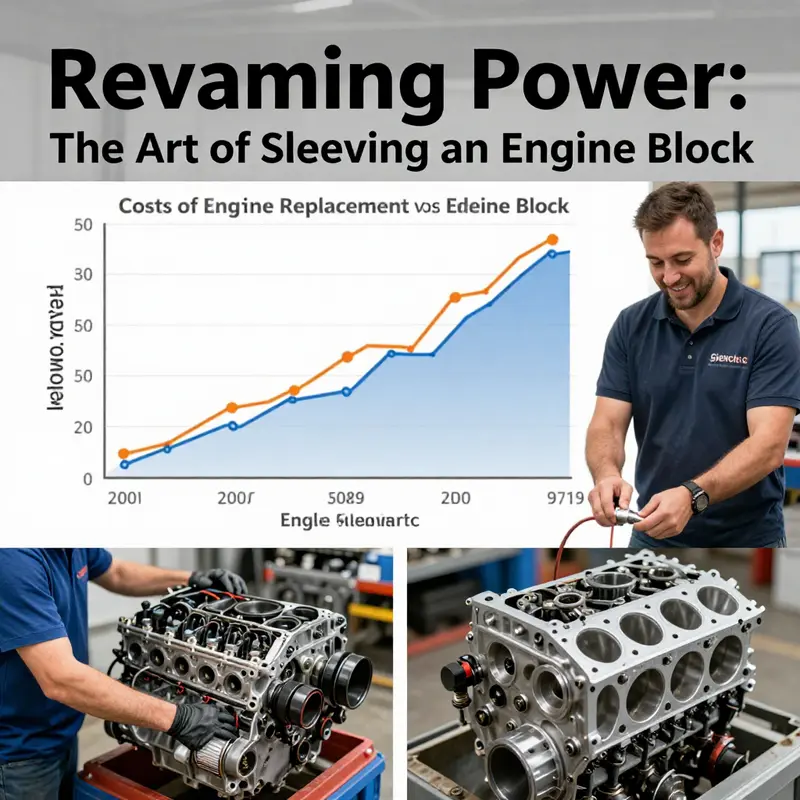
When a shop or a seasoned enthusiast looks at a damaged or worn engine block, the immediate impulse is often to consider a full replacement. Yet the economics of sleeving—installing precision cylinder sleeves to restore or even enhance bore integrity—frequently tilt the decision toward a smarter, more durable financial outcome. Sleeving sits at the intersection where repair meets performance, offering a pathway that preserves the core of an engine block while unlocking reliability, longer service life, and the possibility of higher power potential without paying for an entire new block. To understand why the technique is not merely a repair trick but a strategic financial choice, it helps to walk through the main economic benefits, the conditions under which sleeving makes the most sense, and how modern practice minimizes risk while maximizing long-term value. At its heart, sleeving is a cost-reduction and value-enhancement option that aligns closely with both budget realities and performance goals, turning a worn bore into a robust, seal-ready cylinder that can run clean, cool, and efficiently for many miles to come.
The most immediate and tangible benefit lies in cost-effectiveness. Replacing a damaged block is a substantial investment, involving a new block, machining to fit the new bore, aligning the crankshaft and bearings, and the risk of mismatches that can cascade into additional work. Sleeving, by contrast, allows mechanics to restore the original bore dimensions with precision sleeves engineered for the task. The sleeves themselves are designed to provide the same sealing surface and cylinder geometry as the original walls, while offering a fresh surface that reduces the likelihood of compression loss, oil leaks, or ring land damage. The end result is a repaired engine that behaves like a nearly-new unit in terms of bore integrity, but at a fraction of the price. In many cases, the sleeves themselves represent a fraction of the cost of a new block, and when you add the savings on labor, machine time, and potential downtimes, the value proposition becomes even clearer.
The economic logic becomes more compelling when sleeving is placed within the context of high-performance builds. In engines that push for larger bore sizes, higher compression, or more aggressive intake and exhaust schemes, a standard box of parts can only take you so far. Sleeving provides a controlled platform for displacement upgrades without sacrificing the block’s core rigidity. Rather than choosing between a new block and a high-end aftermarket alternative, sleeving enables a measured increase in bore diameter while maintaining the original block’s structural characteristics. This is especially relevant when a builder wants to balance power gains with durability under demanding operating conditions, such as sustained high RPM, elevated thermal loads, or aggressive boost pressures. The ability to tailor bore diameter and sleeve material to the engine’s intended use translates into a cost-effective route to higher performance without the cost and risk of a wholesale block swap.
Another key economic consideration is how sleeving fits into restoration and salvage scenarios. When a salvaged or older engine block shows wear that would compromise long-term reliability, resleeving can be part of a complete rebuild strategy that preserves the block’s core, keeps replacement parts to a minimum, and focuses expenditures on critical wear areas. In classic or vintage engine projects, preserving the original block is often a matter of authenticity and value. Sleeving allows the project to remain faithful to its roots while delivering modern sealing performance and bore finish. This preserves salvage value and often reduces the overall budget for a build that aims to retain the block’s historic character without sacrificing reliability.
Material costs are the next layer in the economic calculus. Cylinder sleeves are typically manufactured from durable materials such as cast iron or specialized alloys chosen for their wear resistance, thermal conductivity, and compatibility with the engine’s cooling system. Because sleeves are chosen and installed with exact tolerances, the cost of material per cylinder can be predictable, and the overall material expense is distributed over the entire engine rather than concentrated in a single, large purchase. Importantly, the ability to reuse the existing block means the base investment in the block itself stays intact, and sleeves act as a targeted maintenance upgrade rather than a wholesale replacement. The financial savings multiply when sleeves are part of a broader rebuild plan rather than a standalone repair. In such cases, the shop can optimize machining time, select sleeves that fit the existing geometry, and minimize waste, all while delivering a bore that behaves like a high-specification cylinder.
Precision installation underpins both performance and reliability, which are, in economic terms, the long-term savings that reduce lifecycle risk. Modern alignment systems and metrology tools ensure that sleeves are coaxial with the crank axis and perfectly aligned with the piston rings. Proper installation minimizes the chance of sleeve lift, micro-movement, or sealing failure that can lead to costly rework or engine downtime. The upfront investment in precision machining pays dividends in the form of reduced head gasket failures, fewer oil leaks, and more stable compression, all of which translate to fewer returns on the shop floor and less warranty exposure. In other words, precision installation reduces the probability of expensive corrective work in the future, which is a cornerstone of true total cost of ownership thinking.
Long-term reliability and operating efficiency are the quiet but potent drivers of the economic case for sleeving. A cylinder that breathes cleanly, seals well, and manages heat effectively contributes to fewer fuel siphons, more consistent combustion, and cooler operating temperatures. In engines designed to work under high thermal gradients or sustained loads, squeezing every degree of efficiency from the bore translates to tangible fuel savings over the life of the engine. Sleeves reduce the likelihood of capture of combustion byproducts, glaze formation, and scuffing that can degrade compression and efficiency. Even modest improvements in thermal management or sealing can compound into meaningful gains in miles-per-gallon and power delivery, especially on engines that spend a lot of time at the edge of their capability. In this sense, sleeving is not just a repair; it is an investment in predictable performance that holds value across thousands of miles and hours of operation.
The discussion would be incomplete without addressing how sleeving interacts with maintenance costs over the long run. Routine maintenance often focuses on wear parts, lubrication, and timing. With a sleeved bore, technicians can plan maintenance activities around a stable cross-section of the piston rings and cylinder walls, reducing the likelihood of unexpected bore-related issues that escalate labor and parts costs. This stability also supports more accurate maintenance budgeting, enabling fleets or individual owners to forecast expenses with a higher degree of confidence. In practical terms, that means fewer surprise line items, smoother scheduling for labor hours, and a more predictable depreciation profile for the engine asset. The economic narrative, therefore, extends beyond immediate repair costs to encompass ongoing maintenance economics and the engine’s life-cycle value.
From a budgeting perspective, sleeving often changes the cost curve of an engine repair project. A typical repair equation that begins with wear, scuffing, or cracked bore walls can escalate if the block needs major reshaping, additional reinforcement, or even a new cylinder head interface to restore proper sealing. Sleeving introduces a cost component that is predictable and modular. Each sleeved cylinder adds a known incremental cost, and the overall project can be staged. Shops can prioritize cylinders, address the worst wear first, and phase in additional sleeves if needed, all while maintaining a clear cost trail for warranty, customer communication, and project management. The ability to stage work reduces downtime and improves cash flow management for customers who rely on their engines for daily operations or for performance programs that operate on tight timelines.
An often-overlooked economic advantage is the opportunity cost associated with downtime. The downtime required to source a block, arrange transport, and coordinate multiple stakeholders can be substantial. Sleeving minimizes downtime by enabling reuse of the existing block and aligning with standard machining workflows. Technicians can perform the necessary milling, honing, and sleeve installation within familiar shop routines, reducing the risk of extended production delays. For a commercial operation, the downtime savings alone can justify the investment in sleeves, especially when the engine is a critical asset whose absence would disrupt production lines or service schedules. In private builds, time is money, and the faster return to road or track compared to waiting for a new block to arrive and be machined adds a defensible economic premium to sleeving as a repair strategy.
The decision framework for choosing sleeving often boils down to the condition of the block, the desired bore geometry, and the project’s economic constraints. When the block is structurally sound but its bore walls are worn or damaged, sleeving tends to win on cost and reliability. If the block shows cracking, core shift, or core weakness that compromises long-term integrity, a full replacement might be the safer financial choice, despite a higher upfront cost. In performance-focused applications, the math shifts again: if a larger bore is needed to reach target displacement or compression with a durable sealing surface, sleeving enables the upgrade without sacrificing block integrity as a hard limit. In this sense, sleeving becomes a strategic tool in the engineering economy, allowing for optimization of power, efficiency, and service life without forcing a prohibitive block replacement scenario.
In terms of accessibility and skill, the economics of sleeving also reflect the realities of labor markets and machining capabilities. While the sleeving process does require skilled machinists and careful measurement, the cost of skilled labor in many markets is offset by the decreased need for highly specialized blocks or exotic alternatives. The alignment and honing procedures that accompany sleeve installation are highly repeatable, and modern tooling supports tight tolerances with relatively low scrap rates. This repeatability reduces the risk premium associated with complex repairs, ensuring that customers and shops can rely on a predictable workflow. The net effect is a lower uncertainty premium—an important variable in any repair budget—that translates into a cleaner project estimate, clearer milestones, and a stronger warranty proposition for the finished product.
Of course, no chapter on economic benefits can ignore the practical constraint that sleeving is not universally applicable. Not every damaged bore can be rescued by a sleeve. Severely warped blocks, deep pits that undermine sealing surfaces, or blocks with fundamental structural flaws may still demand more invasive interventions. Yet even in those cases, sleeving can play a critical role as part of a staged, economical plan: the block is saved where possible, and sleeves handle the wear or displacement in the cylinders that can still be reliably repaired. This layered approach aligns well with real-world budgets and project scopes, allowing owners to preserve block heritage or rely on proven core components while achieving the desired performance and durability goals. The economic argument thus becomes not a blanket endorsement of sleeving but a careful, conditions-driven assessment that weighs bore health, block integrity, project timelines, and cost against the objective of a dependable engine that can endure the demands of its intended life.
To bring this discussion full circle, consider the reader who wants to understand the core concept behind sleeving and its place in the broader restoration and performance landscape. Sleeving is more than a fix; it is a calibrated engineering choice that preserves a block’s core geometry while offering a renewed surface for the pistons, rings, and coolant interfaces to work together reliably. For a concise, plain-language explanation of what sleeving entails and why it matters, you can explore a source that outlines the concept and its practical implications: what sleeving an engine means. This framing highlights how sleeves reestablish the cylinder’s roundness, compressive seal, and heat transfer characteristics, laying a foundation for the performance and efficiency gains discussed above.
In summary, the economic benefits of engine block sleeving emerge from a combination of cost discipline, upgrade potential, restoration viability, material efficiency, precision reliability, and long-term performance dividends. It is a disciplined, strategic option rather than a blunt instrument: a way to restore, sometimes enhance, and sustain an engine’s life with a cost structure that makes sense for most projects and budgets. The choice to sleeve, when done with careful assessment and skilled execution, translates into faster turnarounds, steadier maintenance costs, and a more predictable path to the power and efficiency targets that drive modern driving and tuning ambitions. In a field where small differences in bore condition can cascade into big differences in efficiency and reliability, sleeving represents a prudent fusion of engineering practice and economic pragmatism that keeps engines running longer, cleaner, and more cost-effectively.
External resources offer deeper technical grounding on the materials and standards involved in bore repair and sleeving. For readers seeking a thorough technical reference on bore repair materials and standards, a detailed guide is available that expands on material composition, compatibility with cooling and lubrication systems, and common applications for sleeved cylinders. This resource complements the narrative above by anchoring the economic discussion in a solid technical foundation and helps practitioners align cost estimates with the engineering realities of sleeved blocks.
External resource for technical standards: Technical Guide on Engine Bore Repair Materials and Standards
Final thoughts
In conclusion, sleeving an engine block is an invaluable technique for motorcycle and auto enthusiasts looking to enhance performance or repair engine damage. By understanding the various types of sleeves, their applications, and economic benefits, owners and repair professionals can make informed decisions that extend engine life and optimize performance. This technique not only promotes sustainable practices by reducing waste but also ensures that vehicles continue to operate at their best, reflecting the dedication of their owners to quality and performance.