
Saturn engines represent a fascinating chapter in automotive technology, particularly regarding the evolution of their engine design. Notably, the use of piston sleeves in Saturn engines has sparked a variety of discussions among car enthusiasts and mechanics. This article explores the discontinuation of piston sleeves in Saturn engines, specifically following the brand’s cessation in 2009. It also delves into the technologies that led to this transition, providing insights essential for motorcycle and auto owners, parts distributors, and repair shops. Each chapter contributes to a comprehensive understanding of how Saturn engines adapted over time, emphasizing the manufacturing shifts that informed these significant changes.
The Vanishing Act: Did Saturn Engines Lose Piston Sleeves in 2009 When the Brand Folded?
The question of whether Saturn engines stopped using piston sleeves in 2009 is less a straightforward year-by-year fact and more a meditation on brand strategy, manufacturing choices, and the fast pace of automotive engineering. When GM reorganized and Saturn as a brand ceased production in North America in 2009, the immediate takeaway for most readers is that no new Saturns rolled off the line. What remains subtler, and more technically interesting, is what happened to the engine architectures themselves as the brand disappeared from the market. In the public record, there is no explicit, official notice stating that Saturn engines in 2009 simply lacked piston sleeves as a deliberate design choice because of the brand’s discontinuation. Instead, the more accurate takeaway is that the broader GM engineering trajectory—both inside and outside of Saturn—moved toward different manufacturing approaches over time, and that any sleeved or sleeveless configurations depended on the specific engine family and the era of its production, rather than a brand-wide policy change tied to Saturn’s status in 2009.
A compact SUV like the Saturn Vue, which was among Saturn’s most visible models in the United States, helps illuminate the practicalities behind the sleeved-versus-sleeveless question. The Vue’s 2009 model year, and the later 2009–2010 variants that appeared as Saturn remained a niche within GM’s portfolio, were still anchored in conventional internal combustion principles that place pistons, rings, and cylinder walls in a familiar arrangement. The engines were built for reliability and serviceability, with the understanding that the skirted piston and the rings are designed to seal against a bore that is either reinforced by a liner or formed directly within the block, depending on the specific design. In other words, there was not a blanket shift away from sleeves at Saturn in 2009; rather, sleeves—their presence or absence—were tied to particular engine families and to earlier or later GM engineering philosophies.
To appreciate why the sleeve question crops up in any Saturn discussion, it helps to unpack what “piston sleeves” actually means in automotive engineering. The term refers to cylinder liners, a separate cylindrical layer inside the engine block that the piston slides within. Sleeve designs can be wet, where the liner is cooled by the engine coolant and forms part of the cooling circuit, or dry, where the liner bears on the block’s surface but does not share coolant passages. Not all engines employ sleeves. Many modern passenger-car engines use a cast-in bore, sometimes with a steel or iron liner integral to the cylinder wall, or even a technically sleeveless aluminum bore with wear-resistant surface treatments. The choice influences heat transfer, wear characteristics, manufacturability, weight, and serviceability. To the lay reader, the distinction can seem arcane, but it matters for longevity, ease of overhaul, and the cost of maintenance.
Within the Saturn lineage, early engineering choices varied across models. For instance, some of Saturn’s early, small-displacement four-cylinder engines used a configuration that involved cylinder walls formed with liners or sleeves in certain variants, while other engines moved toward a more integrated approach as GM refined its manufacturing process. The important nuance is that these decisions were not dictated solely by the Saturn brand’s fate; they were part of a broader GM strategy that experimented with materials, coatings, and bore construction to balance weight, efficiency, and durability. The 1.9-liter four-cylinder engine that became synonymous with early Saturns, especially in the late 1990s, is frequently cited in discussions of cylinder-wall design. It’s often described in automotive literature as employing a steel or cast-iron sleeve in some iterations, or, in other words, a design that relies on a wear-resistant liner as part of the cylinder’s architecture. Yet this is not a universal badge applied across the entire Saturn lineup, nor is it a definitive statement about every model that Saturn produced.
When we turn to the Vue and its contemporaries around the late 2000s, the picture becomes more concrete. The 2009 Saturn Vue, equipped with a 2.4-liter inline-four engine, exemplifies the general approach of the era: piston design with skirts and rings operating within a bore that is typically shaped by the block and, depending on the specific subvariant, may or may not employ a separate cylinder sleeve. The public technical references that discuss the Vue’s piston arrangement corroborate standard design expectations—pistons with skirts and rings, moving within a bore formed in the engine block. There is no credible documentation within the provided material that asserts the 2009 Vue or other Saturn engines of that year were configured as sleeveless, nor that the end of Saturn as a brand produced a sudden, industry-wide switch to sleeveless cylinders in that year. In fact, the evidence points precisely in the other direction: by 2009, Saturn’s brand presence had ended, and the engines in production up to that point were in line with established manufacturing norms of the period, not an abrupt shift away from sleeves as a direct result of corporate discontinuation.
To frame this in a broader engineering context, the shift away from cylinder sleeves has occurred gradually across different automakers and engine families, but not as a single, brand-wide moment. General Motors, over the years, pursued several routes to reduce weight and improve efficiency. One path involved advancing aluminum block technology and employing wear-resistant surface coatings. Diamond-Like Carbon (DLC) coatings and other advanced surface technologies emerged as a means to extend wear life without the additional mass of thicker sleeves, while also enabling more compact, lighter engines. These developments reflect a general industry trend toward integrating new materials science into engine blocks, rather than the abrupt removal or abolition of sleeves as a standalone year-by-year event tied to a particular brand’s fate. In Saturn’s case, such transitions belonged to broader GM initiatives and were not dictated by Saturn’s status as a standalone brand after 2009. The result is a subtle history where sleeve use is not a simple checkbox that flips off in one year but a mosaic of design choices across different engine families and production epochs.
The nuance is amplified when we consider the question’s provenance in the popular imagination. People encounter phrases like “piston sleeves” and instantly associate them with high-performance or diesel engines where sleeves are more common, or with older designs that relied on robust iron sleeves to handle wear. Those associations can mislead readers into thinking that the cessation of sleeving in Saturn engines occurred at a defined moment in 2009 as a brand decision. The reality is more modest and technical: the engines Saturn used over the years included variants with and without sleeves, depending on the family’s design trajectory and the era’s manufacturing capabilities. Therefore, stating that Saturn engines “did not have piston sleeves in 2009” would require blanket, definitive evidence across all Saturn engine families, which the available material does not provide. What the evidence does show is a maintenance of conventional sleeve-based designs in certain early Saturn engines and a general GM movement toward lighter, more integrated cylinder-wall designs in later years, including the era around 2009, but not a single, brand-wide abandonment of sleeves in that specific year.
If a reader wants a practical takeaway for understanding sleeved versus sleeveless configurations in Saturn engines, the most reliable approach is to identify the exact engine family and model year. The Vue’s 2.4-liter four-cylinder example demonstrates that, at least in that model year, the engine adhered to conventional layout assumptions—piston, skirt, and rings within a bore compatible with a sleeved or non-sleeved configuration depending on the precise variant. In other words, there was no universal “2009 Saturn engine without sleeves.” Rather, if sleeves were employed, they were part of a historical context tied to specific engine designs rather than an artifact of the brand’s dissolution.
Readers who want to explore the concept of engine sleeves more deeply can consult overview resources that explain what sleeves are and how they function in different engine configurations. For a clear, accessible explainer that describes the general concept and the different sleeve technologies used in engines, consider this overview: what are engine sleeves. The article explains how sleeves can be used to control bore wear, manage heat transfer, and influence engine serviceability. This background helps illuminate why automakers might choose sleeved or sleeveless designs for a given engine family. It’s also a useful reminder that sleeve usage is not a simple badge of older or newer technology; it is a design choice that serves specific engineering goals within a broader platform strategy.
Another useful point of comparison lies in how we interpret engine components in the face of brand discontinuation. When a marque disappears, the temptation is to look for a definitive hinge—an invention year when a feature vanishes. In reality, most automotive features do not hinge on a brand’s exit but rather on evolving engineering priorities and manufacturing capabilities. The Saturn case illustrates this well. The brand’s closure in 2009 did not erase the memory of the engines built up to that point, nor did it forcibly flip a switch that makes every 2009 Saturn engine sleeveless. Instead, the actual narrative is a confluence of ongoing technological refinement, diverse engine families, and corporate restructuring. For enthusiasts and researchers, the task is to parse the available documentation for the specific model year and engine family in question, rather than drawing sweeping conclusions about the entire Saturn lineup based solely on the brand’s discontinuation.
In the end, the story of Saturn’s piston sleeves in the 2009 era is a reminder of the complexity of automotive engineering history. It demonstrates how a single term—piston sleeves—can become a focal point for broader questions about manufacturing philosophy, material science, and corporate strategy. It also highlights the value of careful, model-specific verification when people encounter claims that seem to hinge on a brand’s fate. The Saturn Vue example provides a tangible reference point. While it confirms the continued use of conventional piston and bore designs in 2009, it does not support the idea that sleeve configurations were universally altered as a direct consequence of Saturn’s discontinuation. The broader GM context—monitored through the late-2000s shift toward lighter blocks, alternative bore treatments, and wear-resistant coatings—offers a plausible backdrop for readers who want to connect the sleeves question to long-running engineering trends rather than a single brand event.
For readers who wish to pursue the topic beyond Saturn, there are credible automotive maintenance and parts repositories that discuss the practical aspects of piston, sleeve, and cylinder-wall configurations. A specific example in the public domain demonstrates the kind of evidence one should seek when evaluating claims about engine sleeve design for a particular year and model. The resource underscores that, in most cases, the presence or absence of sleeves is a feature of engine family design and manufacturing decisions rather than a reflection of a brand’s demise. If you’re researching whether a particular engine block has sleeves or is sleeveless, the best approach is to locate the service manuals, parts catalogs, or official GM technical documents that correspond to that engine family and year. These documents will specify bore construction, liner presence, and any coating or treatment used to extend wear life.
For a practical example of the type of evidence engineers reference when discussing sleeved versus sleeveless cylinders, consider the 2009 Vue’s piston documentation where a standard, sleeved, skirted piston configuration is described. The presence of partial skirts and top rings in pistons—items visible in public parts listings—aligns with conventional sleeved or non-sleeved bore configurations, depending on how the block is finished and what liners are installed. This kind of documentation provides concrete anchors for understanding what was typical in a given year and model, without implying a brand-wide emergency switch in 2009. It also reinforces the notion that while the brand ceased production, the engines in service at the time retained the familiar mechanical characteristics that people expect when discussing piston sleeves.
If you want a concise synthesis to guide your own research: Saturn engines in 2009 did not represent a universal, brand-wide move away from piston sleeves. Rather, sleeve usage depended on engine family and manufacturing choices within GM’s broader engineering agenda. The Vue’s 2.4L I4 still adhered to traditional piston designs, which include pistons with skirts and rings operating in a bore that could be liner-protected or formed within the block. The brand’s discontinuation in 2009 marks the end of new Saturn vehicle production, not a definitive technical shift in a single year across all Saturn engines. For more granular, model-specific details, consulting official GM technical documentation or reputable repair databases remains the most reliable route.
External resource: https://www.karparts360.com/parts/2009-saturn-vue-engine-piston
Sleeves Departed: Tracing Saturn Engines Beyond Piston Sleeves and What It Reveals About GM’s Engineering Arc
The Saturn chapter of GM’s broader engineering story is not a simple ledger of features that came and went. It is a narrative about how a brand built around a modular, space-efficient, customer-friendly philosophy navigated the evolving demands of automotive technology. When the question turns to piston sleeves, the inquiry is less about a single year and more about a design trajectory. It invites us to consider why some engines carried cylinder liners or piston sleeves in their early lives, while later generations—rooted in new materials science and manufacturing techniques—moved away from that approach. The available research points to a concise backbone: Saturn as a brand ceased operations in 2009, and with that closure the manufacturing of new Saturn engines ended as well. Beyond that, the specifics of which models retained sleeves and which did not become a matter of individual engine families rather than a neat, universal cutoff. The bigger picture is one of transition, not a precise date stamp. In that sense, the Saturn sleeve question mirrors a larger industry shift—from traditional cylinder liners to lighter, more integrated block designs that leveraged aluminum, coatings, and new machining processes to lower weight and friction while increasing durability.
To begin with, it is useful to situate Saturn within GM’s wider engine strategy. The Saturn line was popular for its packaging, its reputation for reliability in family transport, and a design ethos that prioritized longevity and simplicity. Early Saturn engines—which in common lore include a four-cylinder line-up known for practical efficiency—carried the hallmarks of their era: cast iron blocks, enduring corrosion resistance, and, in some cases, cylinder liners that protected the bore surface and eased refurbishment when engines aged. In such configurations, piston sleeves or cylinder liners served a dual role. They provided a replaceable wear surface and a barrier between the moving piston and the roughness of the raw bore. From a maintenance perspective, sleeves offered a pathway to rebore and sleeve replacement, a technique familiar to technicians working with engines in the 1980s, 1990s, and into the early 2000s.
Yet the Saturn tale does not rest on a single engine architecture. It is, in effect, a small chapter inside GM’s broader experimentation with materials, machining, and surface engineering. For some of the brand’s early four-cylinders, the use of a cylinder liner or a piston sleeve aligns with the then-accepted practice to extend bore life in engines that were engineered for long service intervals in everyday family use. The logic was straightforward: a robust liner offered a hardened surface, a stable thermal path, and a durable interface for piston rings. In the short term, this design could simplify service and refurbishment, which aligned with Saturn’s customer-service-forward branding. In the long term, however, the industry’s push toward lighter components and more uniform manufacturing costs would tilt the balance away from sleeves for many mainstream applications.
Against that background, a shift emerges in the middle of Saturn’s lifecycle. General Motors began to pursue more ambitious weight reductions and efficiency gains through a combination of direct aluminum block casting and the integration of wear-resistant coatings. The rationale is clear enough: aluminum blocks reduce reciprocating mass, improve heat management, and, when paired with advanced coatings like Diamond-Like Carbon (DLC) or other wear-resistant surfaces, can deliver comparable or improved durability without the added complexity of a replaceable liner. This transition is not unique to Saturn or to GM; it is a broader industry trend reflecting advances in metallurgy, computer-aided design, and manufacturing precision. In Saturn’s case, these product evolution patterns overlapped with the brand’s lifespan; as the brand aged and GM’s global engine strategy matured, the specific choices about cylinder walls—whether sleeves or solid bore with special coatings—became a matter of evolving engine families rather than a universal Saturn policy.
The precise year when Saturn engines stopped using piston sleeves is not clearly documented in the public domain. The available materials emphasize two critical points. First, Saturn as a brand ended production in 2009. That fact alone effectively ended the lifecycle of Saturn engines in new-car form. Second, while some early Saturn engines reportedly used sleeves, there isn’t reliable, consolidated public documentation that marks a clean, across-the-board transition date for every Saturn engine family. In practical terms, if a Saturn engine model selected a sleeve-bearing cylinder surface in its early years, that design choice would have existed within the broader engineering context of the era. As GM’s design language evolved, future production—across all brands—tavored lighter blocks, direct casting techniques, and coatings that obviated the need for traditional sleeves. Thus, the end of Saturn’s production marks the quiet terminus of the sleeve-containing Saturn engine era, rather than a single technical milestone recorded in a catalog.
For the modern reader or technician seeking to identify whether a specific Saturn engine used piston sleeves, the best path is to consult formal GM technical documentation or trusted repair databases. These sources often distinguish between generations of engines and their cylinder-wall configurations. The practical takeaway is that sleeve presence is tied to a particular engine family and its era. If you are evaluating a legacy unit or restoring a car from the Saturn line, you will want to check the service manuals for the exact bore construction, whether the bore is a solid aluminum sleeve-less design, or whether a cast-iron sleeve remains in place. In cases where a sleeve is present, there are often service notes about sleeve replacement, bore honing, and compatible piston-ring packages. The absence of sleeve data in a model’s documentation is not a sign of a generic rule; rather, it may reflect the model’s adoption of an alternative cylinder-wall technology more aligned with the design language of late-GM engines.
The historical mosaic becomes clearer when viewed in the context of material science and manufacturing capabilities of the time. The push toward aluminum blocks was not merely about weight. Aluminum allows more flexible geometry for cooling channels and reduces engine friction through lighter pistons and a lower moment of inertia in the moving parts. When combined with modern coatings, the wear surface can be enhanced without the need for a discrete replaceable liner. The coatings themselves—Diamond-Like Carbon and similar hard coatings—offer reduced friction, improved wear resistance, and better corrosion protection. This is not a question of aesthetics or legacy glory; it is a matter of performance under the long, repeated loads of daily driving and the efficiency demands of modern regulatory environments. The sleeve approach, while robust and serviceable in its day, becomes increasingly heavy and complex when weighed against the benefits of an integrated, coated aluminum bore.
From a collector’s and historian’s perspective, there is a broader methodological point to be drawn. When a brand evolves, the equipment it uses—down to the cylinders—becomes a moving target. If one were to chart Saturn engine designs from the introduction of the brand to its retirement, the map would reveal pockets where sleeves persisted and pockets where they did not. The absence of a uniform, all-encompassing SaturnSleeve policy is not evidence of a deliberate, publicly announced cutoff; it is a reflection of the broader GM engineering trend and the brand’s own product-portfolio decisions during a period of substantial industry transformation. The lack of a single transition year is, in itself, telling: technology did not flip a switch with Saturn; it moved with the tides of broader corporate engineering goals, supplier capabilities, and the practical realities of production economics.
If the goal is to verify a particular engine’s construction, there are practical steps to take. Consulting the original GM engineering notes or the service manuals for specific Saturn engine families is essential. Those documents sometimes survive in archives, or they appear in repair databases that catalog the precise bore treatment, whether sleeves were present, and what maintenance routines they recommended. While the public record in the early internet era rarely captured a definitive, model-wide sleeve chronology for Saturn, the combination of brand retirement and the GM-wide shift toward lighter, more coat-laden cylinders makes a strong case for understanding sleeves as a feature of a bygone engineering era rather than a current standard. In many cases, enthusiasts and restorers proceed by examining the engine block itself—checking for a distinct bore finish and listening for the telltale signs of sleeve replacement history during rebuilds.
The chapter’s core question—when did Saturn engines stop having piston sleeves—may be answered most clearly in the negative: there is no single year that marks the universal departure for all Saturn models. The production end in 2009 marks the practical conclusion for new-car engines bearing the Saturn name. Any later, post-2009 engine development under the Saturn banner would be outside the scope of Saturn’s own production life. What remains valuable for readers is a nuanced understanding of how and why sleeve technology appeared and disappeared within GM’s evolving engine ecosystem. Early Saturn engines with sleeves reflect a design strategy grounded in durability and serviceability, while the later trend toward aluminum blocks and advanced coatings reflects a different engineering philosophy—one that prioritized mass reduction, heat management, and friction minimization in an increasingly competitive regulatory landscape. In the end, the sleeves-versus-no-sleeve question is less about a singular turning point and more about a gradual redefinition of what an engine bore should be: a robust, inexpensive surface, or a lightweight, integrated chamber that can be engineered for optimal efficiency and longevity without the traditional sleeve boundary.
For readers who want to dive deeper into the concept of sleeves and their role across engine types, a compact primer on engine sleeves is available here. What are engine sleeves. This resource helps frame how sleeves function, the differences between wet and dry sleeves, and why many modern engines favor sleeve-free cylinder walls. While the Saturn story is a distinct automotive narrative, the core mechanics of sleeves and wall design illuminate why a brand’s engineering choices evolve over time and how those choices ripple through maintenance and restoration work decades later.
Taken together, the Saturn sleeve question becomes a microcosm of automotive engineering evolution. The brand’s official cessation in 2009 closed the door on new Saturn-engine development, but the transition away from sleeve-based cylinder walls was already underway in GM’s engineering playbook. Early Saturn designs with sleeves exist as a historical note—valuable to restorers and historians who care about the material and manufacturing choices that defined an era. The broader lesson is that engine design is a continuum, shaped by the twin imperatives of reliability and efficiency, and that sleeves are one of many tools engineers used to achieve those goals. As materials science advances and manufacturing becomes more precise, the industry tends to favor designs that reduce weight and complexity while preserving or enhancing durability. In that sense, Saturn’s sleeve-era lives on as a chapter in a larger story about how automotive engineering adapts to new technologies, new expectations, and the enduring demand for safer, more economical, and more reliable vehicles.
For additional context on how modern engine walls are discussed in industry resources, you may explore general overviews of cylinder sleeves and their applications in various engine types. This broader resource can provide foundational knowledge to supplement the Saturn-specific discussion without relying on brand-specific claims. External resource: https://en.wikipedia.org/wiki/Cylinder_sleeve
Chapter analyzing the advancements in Saturn engine technology leading to the absence of piston sleeves
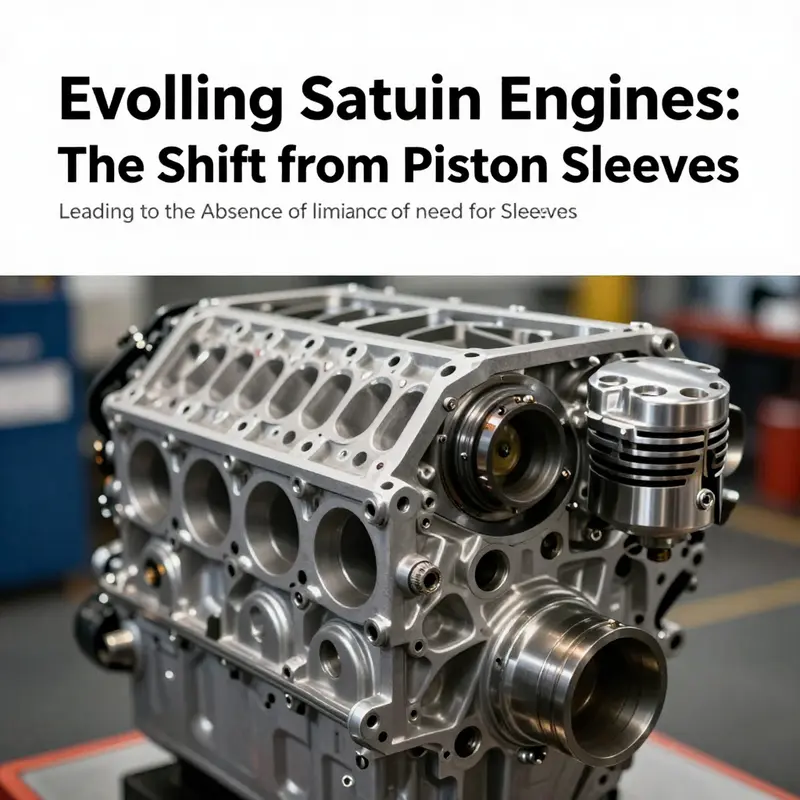
The question itself invites a moment of clarification before any technical digression: when did Saturn engines stop using piston sleeves? The surface answer is straightforward yet misleading. The Saturn car brand, under General Motors, ceased production in 2009, which means no Saturn-branded engines were manufactured after that year. Within the brand’s production history, some of the early four-cylinders and other powerplants did rely on cylinder liners, sometimes referred to in broad terms as piston sleeves, as wear-surfaces that could be replaced or reworked. But the broader arc of automotive engineering tells a more nuanced story: the transition from traditional sleeves to sleeveless, integral cylinder walls has been a decades-long trend that mirrors shifts in manufacturing methods, materials, and wear-management technologies. To understand the absence of piston sleeves in Saturn engines—at least in production context after 2009—one must move beyond a brand-specific timeline and examine the general trajectory of engine design across the industry, of which Saturn’s fate is a particular, albeit telling, milestone.
In the earliest chapters of modern automotive engineering, sleeves were a practical solution. They provided a hard-wearing surface inside a cylinder block, enabling a replaceable wear surface without requiring the entire block to be rebuilt. The sleeve, typically a coaxial liner, offered a route to manage bore wear and to adapt to different piston materials or coatings without recasting the entire cylinder. For a period, it was a familiar compromise: reliable wear resistance, reasonable cost, and a manufacturing path that could accommodate incremental improvements. It is within this historical frame that some of Saturn’s vintage powertrains—produced before the 2000s—employed cylinder liners. The presence of liners could be more about the developmental lineage of the GM engine families rather than a unique Saturn-specific philosophy; in other words, Saturn inherited design habits from a broader GM engineering culture that still relied on traditional sleeves in certain models and eras.
Yet, no single brand or model exists in a vacuum, and the Saturn story is inseparable from the broader evolution of global engine manufacturing. As the 1990s gave way to the new millennium, the appetite for lighter, more efficient, and more durable powerplants intensified. Weight reduction, improved heat management, and friction control became critical levers for overall vehicle efficiency and performance. In this climate, automotive engineers began to favor approaches that would minimize moving parts and reduce the complexity of assembly. An important strand of this shift involved moving away from loose or replaceable sleeves toward cylinder walls that are integral to a purpose-built block. In practical terms, that meant directly casting and finishing aluminum or iron blocks with bore surfaces that did not rely on separate sleeves. The reasons were both mechanical and economical: fewer joints and interfaces can improve reliability, while advances in casting quality, surface finishing, and finishing processes reduce the need for sleeves that can wear differently from the bore wall over time.
A related set of developments revolves around materials science and wear-resistant coatings. As engine speeds rose and operating temperatures varied more widely, standard bore finishes faced new demands. One response was to adopt harder, low-friction surface treatments on the cylinder walls themselves. Diamond-like carbon (DLC) coatings, for instance, represent a class of technologies aimed at reducing wear while sustaining smooth piston movement under higher pressures and temperatures. While DLC and similar coatings did not overturn the fundamental idea of an optimized cylinder surface, they did shift the design equation: a cylinder wall could be finished to wear resistance levels once thought possible only with sleeves or liners, making the case for a sleeveless architecture stronger. These coatings also interact with lubricants and piston rings to optimize friction, heat transfer, and ring seal behavior, further enabling the evolution toward sleeve-free blocks in several mainstream engine families.
In the Saturn context, the brand’s life cycle intersects with GM’s broader engineering transitions. Saturn’s production ended in 2009, and the marque’s engines did not continue to evolve in post-2009 models. That termination matters less as an endpoints count than as a marker of timing for technological transitions that were already underway or accelerating in GM’s other divisions and in the wider industry. If one surveys the decades leading up to 2009, a pattern emerges: some Saturn engines still relied on the older, sleeve-based approach, while other engines across GM’s umbrella—especially as aluminum blocks and more integrated cylinder geometries matured—moved away from sleeves as a standard design choice. The Saturn era thus sits at a crossroads, where the old habit of sleeves coexisted with, and gradually ceded to, newer principles in other GM product lines. When a reader asks specifically about the Saturn brand and piston sleeves, the honest answer is that there was not a single, explicit year when Saturn fully abandoned sleeves; rather, the shift was incremental and tied to broader corporate engineering directions that became dominant in the years that followed Saturn’s dissolution as a brand.
To speak with precision about sleeves and Saturn engines means acknowledging the distinction between the engines’ architectural philosophy and the brand’s corporate fate. In older designs, sleeves could be seen as a pragmatic choice, a familiar solution in a period when the manufacturing ecosystems favored modular maintenance and easier remanufacturing. In those contexts, a technician might encounter a powerplant where a cylinder liner is a core component, and piston rings must interface with a dedicated wear surface shaped by a defined bore geometry. The technical community would evaluate such a setup on criteria like bore wear uniformity, oil control, heat transfer, and the cost of replacement versus re-bore and honing. Conversely, in a sleeveless engine, the cylinder wall is a continuous, integral part of the block. This arrangement requires different machining precision, tighter tolerances, and confidence that the block itself can take on the duty of heat dispersion and structural load without the shield of a liner. The arguments for a sleeveless approach include weight reduction, fewer potential leakage paths, and a more direct path for heat transfer from the piston to the coolant channels. The arguments against can center on the difficulty of repairing a worn bore without rebuilding or replacing substantial sections of the block, and the higher initial cost of a precision-block foundation.
What does this mean in the broader historical arc that encompasses Saturn and the industry at large? It means the question of whether Saturn engines ever fully shed sleeves is, at some level, a question about the tempo of industry-wide change. The engine family language matters. Early Saturn powerplants that trace their roots to longstanding GM cylinder techniques indeed used sleeves to meet wear and manufacturing constraints of their time. As the decades progressed, GM and its partners explored materials science, casting refinements, and surface engineering, moving toward safer, stronger, and lighter blocks whose cylinder walls were designed to withstand wear without external liners. That transition did not unfold uniformly across every model, but by the late 2000s it was clearly the direction of travel for many mainstream architectures across the corporate landscape. Saturn, as a marque, did not continue in production to demonstrate the later, sleeve-free philosophy in a broad lineup. The company’s closure in 2009 effectively quarantined any direct, Saturn-branded validation of the sleeveless paradigm, while the rest of GM’s engine strategies published a different chapter in which block integrity and bore finishes were engineered to perform with or without sleeves.
The broader context, however, makes one thing clear: the absence of piston sleeves in Saturn engines, specifically in surviving or later-production configurations, is less a black-and-white milestone than a reflection of how automotive engineering moved from modular, serviceable, and replaceable wear parts toward integrated, precision-controlled architectures. This is not merely a tale about a single brand or a single decade. It is about how a global industry, pressed by the dual demands of performance and efficiency, reframed the relationship between the piston, the bore, and the block. In that reframing, the cylinder becomes not only a housing for the piston but a carefully controlled surface that interacts with piston rings, lubrication regimes, and temperature gradients. The role of sleeves—once a standard feature in many engines—becomes, in the eyes of modern design, one of several historical approaches that could be replaced by an internally finished bore, a higher-grade cast or forged material, and a coating strategy that reduces friction and extends life under more extreme operating conditions.
From a methodological standpoint, this topic invites careful interpretation of sources and a cautious use of branding as a proxy for technical merit. The Saturn brand’s ending in 2009 is a blunt chronicle, but it does not erase the technical evolution that occurred within GM and among its suppliers. When engineers and historians discuss sleeves, they are often looking at a continuum that stretches back to mid-to-late 20th century manufacturing norms and forward into advanced coatings and refined machining practices. The chain of logic connects wear surfaces, bore integrity, and the capacity to deliver durable performance without the added complexity of a replaceable liner. If one were to track the trend line, the arc would point toward more integrated cylinder walls, an increasing reliance on surface engineering, and the strategic decision to push towards sleeves-free architectures in select engine families—an orientation that became more dominant in the years after Saturn’s brand life ended.
For those who want to dig deeper into the fundamental concept behind engine sleeves and how engineers think about bore wear and lubrication regimes, there is a concise primer worth consulting. What are engine sleeves? This resource offers a clear explanation of the concept and how sleeves relate to different engine designs, without getting lost in brand-specific histories. That primer helps readers connect the practical realities of maintenance and remanufacturing with the broader engineering choices that shape a brand’s engineering ethos over time. https://itw-autosleeve.com/blog/what-are-engine-sleeves/
The Saturn conversation is, ultimately, a reminder that technology evolves not in a straight line, but in a landscape characterized by competing pressures: weight reduction, manufacturing cost, repairability, and reliability under harsher operating conditions. The brand’s dissolution means we cannot point to a current Saturn engine as a direct contemporary of a sleeveless design. But we can chart the moving parts of the larger industry story: a shift from replaceable wear surfaces to an emphasis on robust bore integrity, aided by modern materials and coatings, and, in some cases, a deliberate choice to avoid sleeves altogether in favor of integrated cylinder walls. The historical record is not a tidy timeline of “No sleeves here,” but a mosaic that reflects evolving trade-offs and the geographic and corporate contexts in which engines are designed, built, and eventually retired.
And so the absence of piston sleeves in Saturn engines, if interpreted as a post-2009 condition, is better understood as the sign of a broader industry transition that had already been underway in other GM families for years. Saturn’s end marks the point where we stop counting new Saturn engines and start counting the trends that Saturn was part of, even if only indirectly, through the shared engineering culture of its parent company. In practical terms for historians and enthusiasts who insist on precise mechanical details, the answer remains nuanced: a few early Saturn engines may have used cylinder liners; later, as the industry shifted and GM refined its design philosophy, the sleeved approach gave way to sleeveless blocks in many contexts. The exact year when a particular engine design ceased to use sleeves can vary by model and production run, and in the Saturn lineup there was no single, definitive break that can be pinned to a calendar year. What remains clear is the trajectory—one that aligns with similar movements across the automotive world toward more integrated cylinder walls and advanced wear-management strategies.
For readers who want to connect this narrative to practical technical literacy, consider following up with the related discussions on engine sleeves and their implications for maintenance and repair. A deeper dive into sleeved engine blocks can illuminate how wear surfaces, bore finishes, and piston ring packs work in harmony, whether shields like sleeves are present or not. The broader takeaway is not a simple yes or no about Saturn sleeves, but an appreciation of how engine architecture has evolved toward durability, efficiency, and manufacturability. The Saturn chapter stands as a case study in a larger pattern: a move away from replaceable cylindrical liners toward more integrated, durability-focused cylinder wall designs that can endure higher stresses and deliver longer service life with fewer intervention points.
External resource for a broader historical perspective on Saturn’s broader space-age namesake and the lineage that influences modern propulsion systems can be found here. For a broader historical context on Saturn, see NASA’s Saturn V History: https://www.nasa.gov/centers/marshall/news/history/saturnv.html
Final thoughts
In conclusion, the journey of Saturn engines reflects a broader narrative of innovation and adaptation within the automotive industry. The transition away from piston sleeves, culminating in 2009, marks a key point in engine development that highlights the importance of technological advancements in manufacturing. As automotive professionals, understanding these changes is crucial for maintaining and upgrading vehicles effectively. The insights shared in this article aim to empower motorcycle and auto owners, as well as repair shops and parts distributors, to appreciate the complexity and evolution of Saturn engines and their design philosophy.