

Gastric sleeve surgery represents a viable option for individuals battling obesity, highlighting not just personal health improvement, but also potential financial implications under insurance policies. New Jersey Family Care, the state’s Medicaid program, may offer coverage for this procedure if specific criteria are met. For motorcycle and auto owners, auto parts distributors, and repair shops, understanding this coverage is essential, particularly as healthy weight impacts overall performance on and off the road. This guide demystifies the eligibility criteria, pre-approval processes, financial implications, associated health conditions, and navigation strategies related to NJ Family Care’s coverage of gastric sleeve surgery, enabling individuals to make informed choices about their health and financial responsibilities.
Weight and Access: Navigating New Jersey’s Medicaid Pathway to Gastric Sleeve Coverage

Under the umbrella of patient-centered care, New Jersey’s Medicaid program, NJ Family Care, offers a path for adults seeking substantial weight loss through bariatric surgery, including the gastric sleeve. This pathway is not a blanket approval; it rests on a carefully defined set of medical, behavioral, and administrative criteria designed to identify individuals who will most benefit from surgical intervention and who can sustain the profound changes that follow. The conversation around eligibility begins with the basics of body mass, but it quickly expands to the medical history, prior weight-loss efforts, mental readiness, and the administrative hoops that must be navigated to secure pre-approval. For anyone facing this decision, understanding how the program defines eligibility helps separate hopeful assumptions from actionable steps, and it illuminates the practical realities of accessing care through NJ Family Care. The framework is meant to ensure that the procedure is not only medically indicated but also aligned with the patient’s capacity to engage in lifelong lifestyle changes that a sleeve gastrectomy demands after the operating room lights come back on and life resumes its daily rhythm.
At the heart of eligibility is body mass index, or BMI, the standard measure that translates height and weight into a number. NJ Family Care typically recognizes two primary pathways to coverage. The first requires a BMI of 40 or higher, a threshold that aligns with traditional surgical candidacy for weight-loss procedures when obesity-related risks are significant and immediate harm is likely without intervention. The second pathway is a BMI of 35 or higher accompanied by at least one obesity-related condition, such as type 2 diabetes, hypertension, sleep apnea, or heart disease. This dual-criteria structure mirrors a growing consensus in medicine that certain comorbidities elevate the potential benefit of surgery and, therefore, justify earlier access when non-surgical methods alone have not yielded durable results. These criteria are not set in stone for every patient, which is why individual evaluation remains essential; the exact interpretation can vary slightly depending on plan specifics, the patient’s overall health, and the discretion of the medical team.
Before any pre-approval discussion can take place, NJ Family Care requires documentation of prior attempts at non-surgical weight loss. The program expects evidence that the patient has engaged in medically supervised efforts for a defined period, typically spanning six to twelve months. Such documentation is not merely procedural; it demonstrates commitment to the entire weight-management journey. It also helps the care team gauge whether alternative non-surgical strategies have been exhausted or would benefit from a different approach, such as enhanced medical supervisions or intensified behavioral support. The underlying principle is that surgery should be considered only after non-invasive strategies have been explored and have not yielded lasting results, particularly given the permanence and lifestyle implications of a sleeve procedure.
The path to approval travels through a comprehensive, multidisciplinary evaluation. This is not a single clinician’s opinion but a coordinated assessment that often involves a physician, a psychologist or mental health professional, and a nutritionist. Each member contributes a piece of the readiness puzzle: the physician assesses physical readiness and surgical risk, the psychologist evaluates mental health, coping skills, and readiness to adhere to postoperative requirements, and the nutritionist reviews dietary habits and the feasibility of long-term dietary adjustments. The integration of these perspectives helps identify potential barriers to success, such as unmanaged depression, disordered eating patterns, or gaps in nutritional knowledge, and it informs a plan to address them before surgery is scheduled.
In addition to the clinical evaluation, pre-approval typically requires the patient to be cared for by a NJ Family Care–enrolled provider and to obtain authorization through the patient’s managed care organization (MCO). This process can involve a review by a medical director or similar administrator who weighs medical necessity against program guidelines. The reality of this layer is that approval is not guaranteed solely by meeting BMI and comorbidity criteria. It depends on the alignment of the patient’s documented history, the results of the multidisciplinary evaluation, and the administrative readiness of the MCO to authorize the procedure within the patient’s coverage plan. Some plans also may require a pre-authorization packet that includes the surgical plan, anticipated timelines, and post-operative support arrangements, underscoring that gastric sleeve surgery is a process as much as a procedure.
A notable development in the New Jersey landscape is the broader discussion around bariatric coverage fostered by the expansion of bariatric benefits through some plans, including Blue Cross Blue Shield of New Jersey (BCBSNJ). While this expansion can influence access and the tempo of approvals for patients who hold both NJ Family Care and BCBSNJ coverage, the final determination continues to be governed by the NJ Department of Human Services’ rules and the specific guidelines of each enrolled MCO. For patients, this means the path to coverage can be smoother in some cases but remains contingent on plan-specific criteria and the formal pre-authorization process. It also highlights the importance of clarifying benefits with both NJ Family Care and the individual MCO, as coverage nuances can affect preoperative requirements, post-operative support, and cost-sharing obligations.
Costs are a practical concern for anyone considering bariatric surgery, and NJ Family Care’s involvement can materially alter the financial equation. On the broader market, the typical cost of a gastric sleeve procedure in New Jersey historically falls within a wide range, often between ten and eighteen thousand dollars, depending on the facility, surgeon, and the specifics of the surgical approach. When NJ Family Care coverage applies, the patient’s financial responsibility is typically significantly reduced or even eliminated, though exact figures depend on the individual plan, the scope of services covered, and any applicable deductions or co-pays. Prospective patients should not assume a fixed out-of-pocket cost; instead, they should engage in a detailed benefits inquiry with their NJ Family Care provider and the bariatric surgeon who accepts NJ Family Care, ensuring they understand the financial pathways, preoperative assessment fees, and any post-operative support that is included in the coverage.
The procedural choreography—pre-authorization, multidisciplinary evaluation, and coordinated care with an enrolled provider—also means timing can be a factor. Some patients find themselves navigating a sequence of appointments and documentation to align with scheduling windows for surgical teams and for MCO review timelines. This is where careful planning matters: assembling medical records, imaging results, documentation of prior weight-management attempts, and letters from prescribing physicians or specialists can streamline the process. Given the complexity of these requirements, many patients benefit from a dedicated case manager or navigator within their health system who can translate the medical language into actionable steps and help coordinate appointments, assessments, and insurance communications. The patient’s ability to demonstrate consistent engagement with the process—attending recommended counseling sessions, following a medically supervised diet plan, and adhering to follow-up schedules—often becomes as important as the medical indicators themselves.
Because the criteria can vary with plan specifics, prospective patients should actively reach out to their NJ Family Care provider to confirm current eligibility thresholds and documentation requirements. In addition, consulting with a certified bariatric surgeon who accepts NJ Family Care can provide personalized guidance. The surgeon can offer a clear picture of the expected preoperative workups, the likely sequence of steps, and the practical realities of postoperative life, including nutrition, activity, and ongoing medical monitoring. These conversations lay a foundation for informed decision-making, ensuring patients know what to expect and how to prepare, both medically and logistically, for a pathway that leads from eligibility discussions to real surgical care.
For readers seeking a practical lens on readiness and planning, consider how a framework often used in other highly structured journeys can illuminate this path. Readiness involves a careful balance of medical necessity, patient motivation, and systemic support. It’s about building a durable plan that extends beyond the operating room—one that includes nutritional guidance, behavioral health support, and a postoperative follow-up itinerary designed to maximize weight-loss success and reduce the risk of complications. In this sense, the NJ Family Care eligibility criteria are not merely barriers to access but a screening mechanism that helps align a patient’s goals with the resources and safeguards that can sustain long-term health gains. The more prepared a patient is, the higher the likelihood that the path from eligibility to recovery will be smoother and the outcomes more favorable. For readers who want a tangible sense of preparation, a helpful analogy can be found in the concept of “car maintenance skills”—a reminder that major changes require foresight, inspection, and a structured checklist. See car maintenance skills for a comparative framework about planning, verification, and ongoing upkeep.
Ultimately, eligibility criteria for NJ Family Care coverage of gastric sleeve surgery rest on a balance of quantitative measures and qualitative readiness. A BMI in the 35-to-39.9 range with a comorbidity, or a BMI of 40 or higher, positions a patient within the standard medical threshold for consideration. Yet the navigation continues through documented weight-loss attempts, a comprehensive multidisciplinary evaluation, and an affirmative determination by the patient’s MCO. The landscape is further shaped by evolving plan coverage and state policy guidance, which means that patients should approach the process with up-to-date information and a realistic appraisal of the administrative steps involved. The route to coverage is rarely a single leap but a coordinated journey that requires time, collaboration, and a shared commitment to long-term health outcomes. For ongoing updates and the most accurate specifics, the NJ Family Care official site remains the go-to resource for beneficiaries and providers alike.
External resource: NJ Family Care official site.
Gastric Sleeve Coverage and NJ Family Care: Understanding the Pre-Approval Path
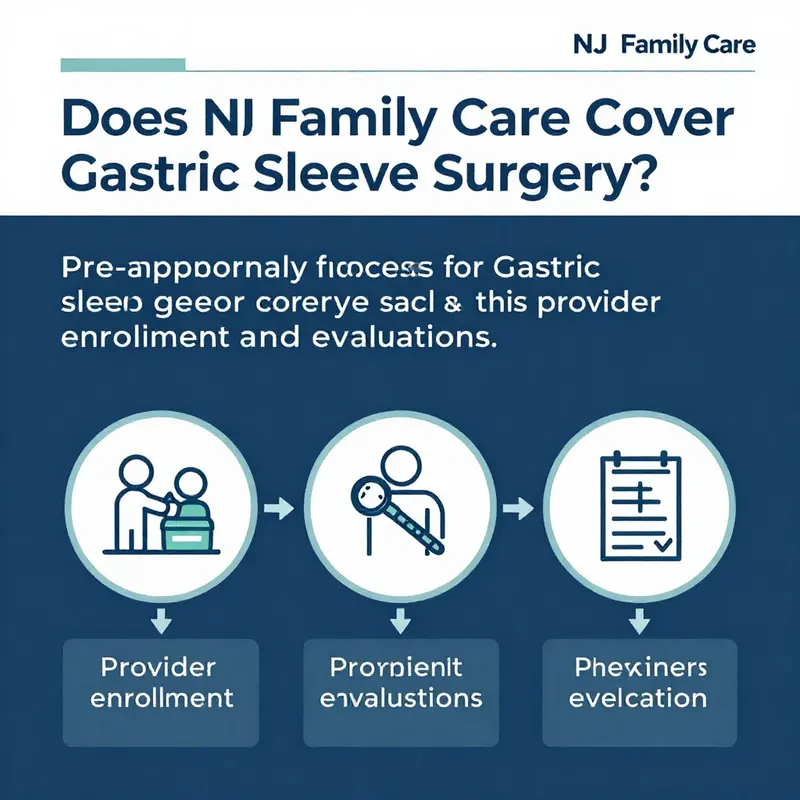
Navigating the pre-approval process for gastric sleeve coverage under NJ Family Care requires more than a medical recommendation; it requires organized preparation and a coordinated plan. NJ Family Care does cover bariatric surgery under defined criteria, and the pre-approval phase serves to confirm medical necessity, readiness, and post-operative support. The journey begins with clear eligibility criteria and a multidisciplinary assessment that aligns medical history, comorbid conditions, behavioral health factors, and the patient’s commitment to long-term weight management. See this as a framework that helps ensure the procedure is medically necessary, sustainable, and integrated into the patient’s overall health strategy. The goal is to turn anxiety about paperwork into a practical action plan that improves the odds of coverage and positive health outcomes.
At the core is medical necessity. Typical BMI thresholds guide the initial screen: a BMI of 40 or higher, or a BMI of 35 or higher with obesity-related conditions such as type 2 diabetes, uncontrolled hypertension, or obstructive sleep apnea. These thresholds reflect a clinical assessment of risk and potential benefit, but they are not the only qualifier. Documentation of medically supervised weight loss attempts is essential. The patient should demonstrate that non-surgical methods have been pursued for a meaningful period (often six to twelve months) without durable weight loss that improves health outcomes. This emphasis reinforces the principle that surgery is considered when less invasive options have not produced lasting results, framing the sleeve as a last-resort option within a continuum of care.
The pre-approval process is not a solo evaluation. It requires a multidisciplinary submission that often includes the surgeon, a nutritionist, and a mental health professional, with input from the patient’s primary care physician. The surgeon outlines the planned procedure and associated risks; the nutritionist maps a postoperative dietary strategy to support weight loss and metabolic improvement; the mental health professional confirms the patient’s readiness, coping resources, and understanding of long-term lifestyle changes. The PCP provides a comprehensive medical history and current health status. Together, this team builds a robust case for medical necessity, patient readiness, and the availability of ongoing support after surgery.
Documentation plays a central role. A well-prepared application includes a detailed medical history, relevant laboratory results, and a signed informed consent from the patient, accompanied by the team’s evaluations. Insurers review submissions for clarity and completeness; missing or inconsistent materials can delay decisions or trigger denials. Thorough preparation up front helps prevent repeated back-and-forth and reduces scheduling uncertainties, while also demonstrating commitment to a careful, evidence-based approach to care.
Communication is also key. After the application is reviewed, the insurer will issue a decision, potentially with a pre-approval number if approved. Denials are possible, and patients have the right to appeal. If a denial occurs, the team can supply additional information—such as more detailed psychological assessments, updated labs, or a revised surgical plan—to support an appeal. The process reflects a balance between clinical data and payer policy rather than a judgment on the patient’s worth or the merits of bariatric surgery.
Timing matters. The pre-approval window can stretch across several weeks, with longer timelines if documentation is incomplete or if the insurer requests clarifications. Proactive planning helps; starting the process after selecting a NJ Family Care–accepting bariatric surgeon and before scheduling surgery can reduce stress and ensure alignment with medical and personal timelines. Patients can use the extra lead time to optimize comorbid conditions, stabilize sleep apnea, and coordinate recovery with work and family responsibilities. These preparatory steps strengthen the likelihood of approval and set the stage for successful postoperative care.
Beyond the clinical and administrative aspects, patient engagement is critical. Medical necessity becomes a shared decision rather than a unilateral ruling. Patients should reflect on the expectations of surgery, including long-term lifestyle changes, ongoing nutritional follow-up, and adherence to mental health support as needed. A holistic approach—where the patient actively participates in planning and care—tends to improve adherence to postoperative follow-up and ultimately supports meaningful, durable weight loss.
Another practical dimension is continuity of care. The pre-approval framework often requires treatment with clinicians enrolled in NJ Family Care, which supports coordinated care, clear communication among providers, and alignment with program standards. This can influence patient choice of surgeons, nutritionists, and behavioral health professionals, steering decisions toward a team capable of navigating the approval process efficiently while delivering integrated postoperative support. While this may feel restrictive at first, the result is typically a more streamlined experience with a unified record and plan for postoperative management.
Regarding cost and financial responsibility, pre-approval does not eliminate all expenses, but it clarifies coverage expectations. If approved, bariatric surgery coverage under NJ Family Care generally reduces out-of-pocket costs, depending on plan specifics such as copayments for outpatient visits or postoperative follow-up. The essential point remains: coverage is substantially improved when criteria for medical necessity are met and pre-approval is completed with thorough, well-documented evidence. This clarity can reshape a patient’s planning and enable access to significant health benefits.
For people navigating this process, a deliberate, stepwise approach is valuable. Confirm BMI thresholds and comorbidity status, assemble a weight-history and treatment-attempts record, and coordinate with a bariatric surgeon experienced with NJ Family Care to manage the multidisciplinary assessments required for pre-approval. Gather laboratory data and medical records in a coherent package that tells the story of medical necessity and readiness, rather than a collection of disparate documents. Be prepared to discuss timelines for weight-loss attempts, the severity of obesity-related conditions, and readiness for postoperative life. The pre-approval is a carefully engineered step in a patient’s health journey, designed to support trusted decision-making and lasting health improvements.
As a final perspective, some clinicians use analogies to describe the pre-approval process. It is a multi-part system where medical necessity, team assessments, and consistent documentation must align to enable the mechanism to function. The sleeve, as a precise component within a larger process, helps determine whether surgery becomes a supported step in health improvement. If you want to explore related technical explanations, see the official NJ Family Care resources and speak with a certified bariatric surgeon who accepts NJ Family Care to confirm current requirements and timelines: https://www.nj.gov/humanservices/njfamilycare/.
In summary, the pre-approval stage for gastric sleeve coverage under NJ Family Care is more than a formality. It is a collaborative, patient-centered process that ensures surgery is medically appropriate, financially feasible, and supported by a comprehensive plan for postoperative care. With organized documentation, proactive communication, and thoughtful preparation, patients can navigate this phase with confidence, knowing the pathway to coverage aligns with evidence-based care and the promise of healthier days ahead. For the most current eligibility details, consult the official NJ Family Care page or a provider who accepts NJ Family Care to confirm requirements and timelines: https://www.nj.gov/humanservices/njfamilycare/.
Beyond Eligibility: Navigating NJ Family Care Coverage for Gastric Sleeve Surgery

An overview of how NJ Family Care approaches coverage for bariatric surgery, including eligibility criteria, pre-approval steps, and potential cost sharing.\n\nIn New Jersey, Medicaid programs consider bariatric procedures medically necessary when certain criteria are met. Typical requirements include age at least 18, a BMI of 40 or higher or a BMI between 35 and 39.9 with obesity-related health conditions, documented medically supervised weight loss attempts, and a plan for long-term lifestyle changes supported by a care team specialized in bariatric care. Pre-approval usually involves a bariatric surgeon evaluation, a behavioral health assessment, and coordination with providers who participate in NJ Family Care. When approved, coverage may reduce or eliminate out-of-pocket costs for the procedure, but patient costs can still arise from deductibles, copayments, and non-covered services, depending on the specific plan and network. The exact figures vary by plan, hospital, and provider, so patients should work with their NJ Family Care administrator and the surgical team to understand the financial implications. Beyond the surgical cost, ongoing postoperative follow-up, nutrition counseling, and potential complications influence total expenses. Long-term benefits—such as improved comorbid conditions and quality of life—must be weighed against the likelihood of continued engagement with a structured care plan. Practical steps for patients include confirming eligibility, gathering documentation of BMI and prior weight management attempts, preparing for the pre-approval evaluation, and asking about coverage for pre-operative assessments and postoperative support. Finally, verify current rules with official NJ Family Care resources and speak with certified bariatric providers who accept NJ Family Care for up-to-date coverage details.
Health Conditions as Gatekeepers: How Obesity-Related Illnesses Shape NJ Family Care’s Gastric Sleeve Coverage

Obesity is a chronic condition that often involves multiple health issues. NJ Family Care recognizes gastric sleeve surgery as a potential intervention for those whose obesity-related illnesses have progressed to a level where surgery is medically necessary. Coverage hinges on objective medical criteria, primarily BMI thresholds and obesity-related comorbidities, rather than on weight loss alone. Common comorbidities include type 2 diabetes, hypertension, sleep apnea, and cardiovascular disease, all conditions that can improve after weight loss surgery. The pre-approval process typically includes a bariatric evaluation, a documented history of weight management attempts, and a behavioral health assessment to understand eating patterns and readiness for long-term lifestyle changes. The goal is to ensure that those who stand to benefit most receive coverage within a framework that supports long-term health outcomes, patient safety, and appropriate use of public funds. While price and access considerations matter, the emphasis remains on medical necessity and sustained commitment to post-operative care, nutrition, physical activity, and follow-up. For specifics, patients should consult the official NJ Family Care resources or certified bariatric surgeons who accept NJ Family Care.
Charting a Path to Weight-Loss Coverage: A Cohesive Guide to NJ Family Care and Gastric Sleeve Surgery
For many adults carrying excess weight, the idea of a gastric sleeve procedure is not just a medical option but a turning point. In New Jersey, the path to obtaining coverage for bariatric surgery through NJ Family Care—the state’s Medicaid program—depends on a precise set of medical and administrative criteria. Understanding these criteria is essential because it frames not only eligibility but also the steps, timing, and potential financial implications that follow. The aim is not to promise automatic approval but to illuminate a process that can feel labyrinthine when first encountered. When a person meets the program’s thresholds, NJ Family Care can cover bariatric surgery, including the gastric sleeve, under conditions designed to verify medical necessity and readiness for a major step in weight management. The criteria are concrete enough to be navigated, yet they require careful preparation and documentation to stand up to pre-approval screening. The core question—does NJ Family Care cover gastric sleeve surgery?—is answerable in the affirmative, with the caveat that coverage hinges on meeting specific BMI benchmarks, related health conditions, prior weight loss efforts, and a formal pre-approval pathway that brings a team of clinicians and case managers into the process.
First, eligibility centers on age and body weight metrics. The program typically accepts adults who are at least 18 years old and who present with a Body Mass Index (BMI) that meets a defined threshold. The primary benchmark is a BMI of 40 or higher. In cases where BMI falls slightly below that level, a BMI of 35 or higher paired with at least one obesity-related comorbidity such as type 2 diabetes, high blood pressure, or sleep apnea can qualify a candidate for consideration. These thresholds are not mere numbers; they reflect the clinical reality that the gastric sleeve can offer meaningful health benefits when obesity has progressed to a level where weight-related conditions threaten overall health. The focus is on medical necessity, not cosmetic reasons, and the criteria are designed to identify candidates who are most likely to benefit from long-term weight loss and improved metabolic health.
Age is a straightforward criterion in this framework, but the path to approval extends beyond biology. In addition to the BMI considerations, NJ Family Care typically requires evidence that non-surgical, medically supervised weight loss attempts have been tried and found insufficient. This means documentation that a health care provider has supervised diet, exercise, behavioral therapy, or pharmacologic approaches without achieving sustainable results. The purpose is twofold: to maximize the likelihood of long-term success with the surgical option and to justify the use of public funds for a procedure that carries significant cost and risk. The exact form this documentation takes can vary, but it usually includes notes from physicians, dietitians, and other health professionals who can attest to the attempts at non-surgical methods and their outcomes.
A crucial element of the pathway is enrollment in a provider network that participates in NJ Family Care. Only patients cared for by a provider who is approved within the system are eligible for pre-authorization and potential coverage. This enrollment requirement helps ensure that the care team adheres to state guidelines and coordinates with the program for ongoing post-operative support. The pre-authorization step itself is not a mere formality; it is a rigorous review that occurs before any surgical plan is undertaken. This process is designed to confirm medical necessity, fiscal feasibility, and readiness for surgery.
The pre-approval process brings together a comprehensive medical and behavioral health evaluation. A bariatric surgeon conducts a thorough assessment to determine the appropriateness of the gastric sleeve for the patient’s anatomy and health status. This evaluation typically examines not only current weight and BMI but also a range of medical history, risk factors, and potential surgical complications. Alongside the clinical evaluation, a behavioral health assessment is conducted to gauge psychological readiness for significant lifestyle changes, including long-term dietary modifications and adherence to postoperative guidelines. The mental health component recognizes that successful weight loss surgery depends as much on behavior, motivation, and coping strategies as on the technical aspects of the operation. Together, these evaluations form a holistic view of whether the patient is a suitable candidate who can maximize the benefits of the procedure while minimizing risk.
Documentation is a central pillar of the NJ Family Care pathway. Prospective applicants should anticipate assembling a robust set of records that captures medical history, treatment attempts, and readiness assessments. A case manager assigned through NJ Family Care can be a critical ally in this phase. This professional helps navigate the bureaucratic steps, ensures that forms are filled accurately, coordinates the timing of appointments, and keeps the process moving toward a decision. The collaborative nature of this process—doctors, behavioral health professionals, and case managers working in concert—reflects a broader aim: to align clinical need with logistical feasibility, so that once coverage is approved, the journey to surgery and recovery proceeds with as little delay as possible.
Beyond eligibility and approval, prospective patients should be aware of financial realities. While the program covers bariatric surgery, the precise cost and any out-of-pocket expenses can vary depending on individual circumstances, the specific services rendered, and the mechanism of the pre-authorization decision. In general terms, the base price for a gastric sleeve procedure in New Jersey has been reported to range from roughly ten thousand five hundred dollars to eighteen thousand dollars in the private market. When NJ Family Care provides coverage, the financial responsibility for the patient is typically significantly reduced or eliminated. That said, families and individuals should still plan for potential ancillary costs—pre-operative testing, anesthesia, hospital stays, follow-up visits, and post-operative nutrition counseling—that may or may not be fully covered under the program. The exact breakdown is contingent on program rules and current policy details, which can change over time.
For people weighing the option, the practical path forward begins with direct engagement with NJ Family Care. Prospective enrollees are encouraged to contact the NJ Family Care Customer Service line or access the program’s official website to confirm current eligibility requirements, forms, and participating bariatric centers. There is value in speaking with a certified bariatric surgeon who accepts NJ Family Care, not only to assess medical suitability but also to understand how coverage operates in real-world terms. The decision to pursue surgery is monumental, and having clear information about coverage nuances helps anchor expectations and planning. The process can feel daunting because it involves medical, behavioral, and administrative components, but it is designed to guard patient safety while enabling access to a potentially life-changing intervention when appropriate.
A chapter in this story is the ongoing relationship with a care team. Once coverage is secured, regular post-operative follow-up becomes essential. Diet, exercise, vitamin and mineral supplementation, and psychological support form a continuum of care that sustains weight loss and improves health outcomes. In many cases, the involvement of a case manager remains active beyond the pre-approval phase, guiding the patient through post-surgical milestones, insurance questions, and coordination with primary care providers. The supportive infrastructure around the procedure matters as much as the operation itself, because sustained success depends on consistent adherence to medically guided lifestyle changes.
For readers considering whether this pathway can apply to their situation, there are practical steps to take. Gather medical records demonstrating BMI thresholds and comorbidities. Collect documentation of attempts at medically supervised weight loss, including dates, programs, and results. Verify that your treating physician is part of an NJ Family Care-affiliated network or is willing to collaborate with a network-approved bariatric center. Schedule a consultation with a bariatric surgeon within the approved network to obtain a formal evaluation and to discuss the behavioral health assessment that may be required for pre-approval. If the results support candidacy, prepare for the pre-authorization submission by ensuring all records are organized, complete, and readily accessible for review. Finally, engage with a case manager who can streamline communications, coordinate appointments, and help you understand the financial aspects of coverage as they apply to your specific plan.
This journey, while demanding, is structured to protect patients and to optimize outcomes. It balances the urgency many feel when confronted with obesity-related health risks with a rigorous assessment of medical necessity and personal readiness. It also acknowledges the essential reality that weight loss is a complex, long-term commitment that extends beyond the operating room. The gastric sleeve is a tool; its ultimate value depends on a patient’s capacity to maintain healthier habits and to navigate the changes in daily life that come after surgery. In that sense, NJ Family Care coverage is not merely a financial gateway but a component of a broader support system designed to sustain health improvements over time.
To stay current, readers should connect with the official resources for the most up-to-date guidance on forms, participating centers, and policy details. While the core principles remain steady—BMI thresholds, comorbidity considerations, prior weight loss attempts, and a prepaid medical evaluation—the specifics can shift with policy updates and program adjustments. Therefore, a proactive approach, anchored by reliable information and supported by a coordinated care team, offers the best chance of navigating the NJ Family Care process smoothly and moving toward a healthier future with a gastric sleeve as part of a comprehensive plan.
External resource: https://www.njfamilycare.org
Final thoughts
Understanding how NJ Family Care covers gastric sleeve surgery is vital for those seeking effective obesity treatments while managing costs. By being aware of eligibility, financial responsibilities, health criteria, and the navigation process, individuals can make informed decisions. Whether you are a motorcycle owner, auto enthusiast, or a health-conscious individual, knowledge about this coverage equips you to advocate for your health effectively. With the right support and understanding, achieving better health and quality of life becomes a feasible objective.