
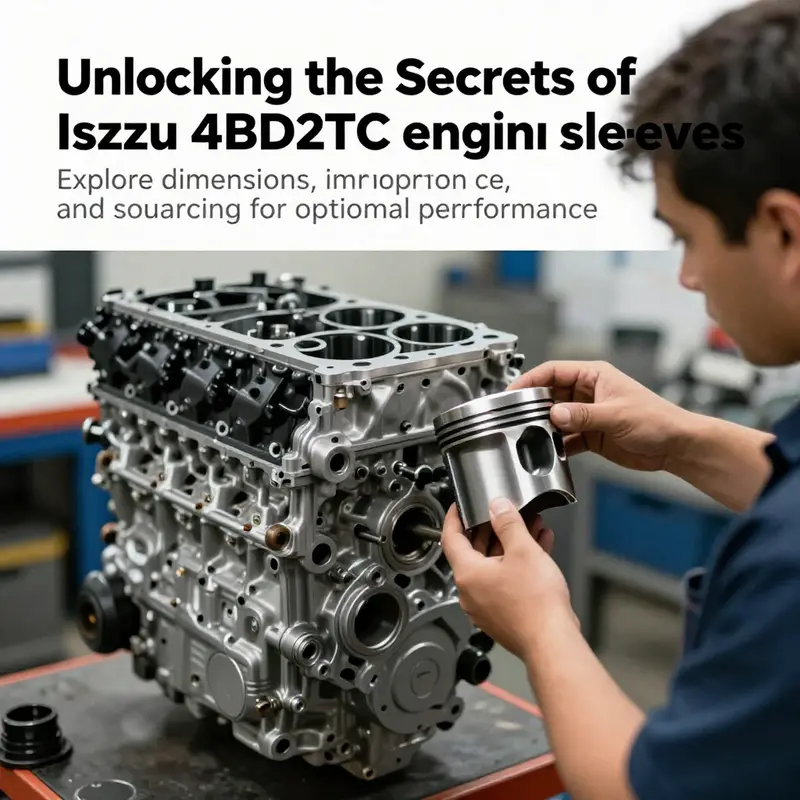
Understanding the piston sleeves for the Isuzu 4BD2TC engine is essential for motorcycle and auto owners, repair shops, and parts distributors alike. With a standard bore size of 102 mm (4.02 inches), knowing this specification ensures that replacement parts will perform optimally and extend engine longevity. This article delves into the critical dimensions of these piston sleeves in Chapter 1, explores the implications of improper sizing in Chapter 2, and finally provides guidance on where to source compatible parts in Chapter 3. Each chapter builds on our understanding of the 4BD2TC engine and reinforces the importance of maintaining the correct specifications for effective engine function.
Exact Sleeve Size and Fit: Measuring the Isuzu 4BD2TC Piston Sleeves and What the Numbers Mean
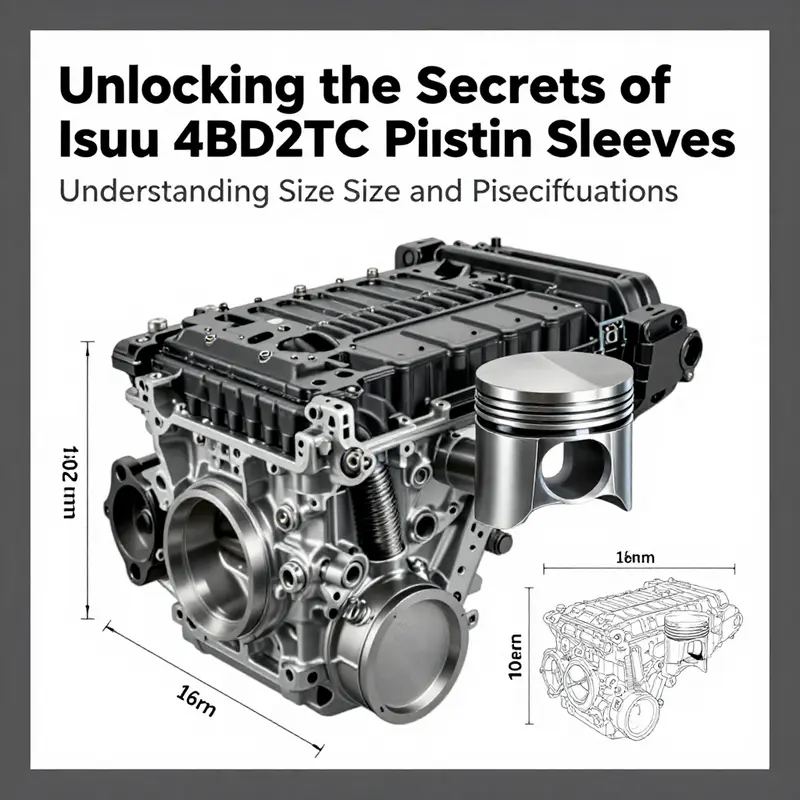
Piston Sleeve Dimensions and Practical Considerations
Understanding the exact dimensions of piston sleeves for the Isuzu 4BD2TC is essential when planning a rebuild, ordering spares, or diagnosing wear. The most critical single figure for the 4BD2TC family is the cylinder bore diameter. For the 4BD2 series, including the turbocharged 4BD2TC, the standard bore is 102 mm (4.02 inches). This diameter is the baseline measurement used by manufacturers, machinists, and parts suppliers when matching pistons and liners. Knowing this number is the starting point, but it must be combined with a clear grasp of related dimensions, tolerances, and installation practices to ensure reliable engine performance.
A correct sleeve fit does more than position the piston. It maintains compression, supports heat transfer, preserves sealing with the head gasket, and stabilizes piston ring wear. For a turbocharged engine such as the 4BD2TC, these demands are higher. Turbocharging raises cylinder pressures and temperatures, which places more stress on sleeves and pistons. As a result, replacement liners and pistons should meet or exceed original equipment specifications. The bore size of 102 mm is commonly used in replacement kits. Confirming that the cylinder liner you select measures 102 mm will prevent misfit and the mechanical problems that follow.
Piston height is another dimension worth noting. The piston for the 4BD2 series is approximately 114 mm (4.49 inches) in height. This is the vertical distance from the top of the piston crown to the bottom of the skirt. Piston height influences deck clearance, compression ratio, and ring end gap under load. A piston that is too short or too tall relative to the sleeve and block geometry can alter the designed compression ratio or change how the ring pack contacts the liner. For the 4BD2TC, where combustion pressures are higher, preserving the original piston height spec during replacement is important to maintain performance and avoid detonation or low compression.
When you order a replacement sleeve, look past the single diameter number and check these related specifications: nominal bore, usable skirt length, shoulder or step dimensions for press fit, wall thickness, and any designed overlap for wet or dry sleeve construction. Sleeves that are removable usually have an external diameter that is machined to press into a bored block. The external diameter must match the block’s sleeve bore to create a secure interference fit. Sleeve manufacturers often supply the sleeve with a recommended block bore size for the correct press fit.
Tolerance talk: factories build to nominal values with specific tolerances, and machining shops usually bet on those tolerances when planning re-sleeving work. A cylinder liner listed as 102.00 mm may have an upper and lower tolerance band. The practical effect is that the installed sleeve must be machined or honed to the target diameter after installation if it is not finished to the final size by the supplier. When you receive a sleeve kit, check whether the sleeve arrives pre-honed to the finished bore or whether it requires final honing. Some aftermarket sleeves may be supplied at nominal size and need a finishing hone in place.
Consider the differences between wet and dry sleeves. Wet sleeves extend to the outside coolant jacket surface and directly contact the coolant. They typically have flange or sealing features to keep coolant from seeping into the crankcase. Dry sleeves are seated in the block and rely on block coolant passages for heat transfer. The 4BD2 engines are generally associated with iron liners integrated in a cast iron block, but practices vary. Whether a sleeve is wet or dry affects installation technique, sealing method, and thermal behaviour. Wet sleeves often make replacement easier but demand careful sealing at the head gasket and lower flange. Dry sleeves require precise press-fit tolerances and careful attention to block bores.
Material choice matters. Most 4BD2 cylinder liners are cast iron or alloyed steel. Cast iron offers good wear resistance and compatibility with forged steel pistons. Some high-performance or rebuilt engines use liners with enhanced surface treatments. These surfaces maintain ring sealing under high loads and reduce oil consumption. If an aftermarket supplier advertises enhanced coatings or special metallurgy, ensure the claimed features are compatible with your piston rings and oil system. Surface hardness and finish affect ring bed-in behaviour and longevity. Too smooth a finish can prevent ring sealing; too rough can accelerate wear.
Wall thickness and skirt support dictate how much repair room a block has for overboring. If a sleeve is damaged, re-sleeving or using an oversized sleeve could be the route forward. However, overboring beyond the block’s allowable thickness can compromise the block. For the 4BD2TC, maintaining proper wall thickness keeps thermal and mechanical stability under turbocharged conditions. A machinist will check minimum remaining thickness and, if required, specify an oversize sleeve and matching oversize pistons. Typical oversize steps are usually small, but each increment changes piston ring end gap and piston-to-wall clearance. These changes must be corrected with appropriate-ring end-gap adjustments and piston selection.
Measuring existing components on a worn engine is a practical step before buying new parts. Use a bore gauge to measure the cylinder at several depths and orientations. Measure at top, middle, and near the bottom to detect taper or out-of-round conditions. If measurements deviate from 102 mm by more than service limits, the block or sleeves need corrective work. Record the smallest diameter reading. That will guide whether to fit an oversize sleeve and what piston oversize to order. Also measure piston skirt diameter and piston height to confirm their fit relative to the liner. If piston height is within the typical 114 mm range, you can focus on bore wear. If pistons are outside spec, consider whether a set replacement is needed. New pistons matched to rebored sleeves avoid mismatched ring gaps.
Tolerances for piston-to-wall clearance are specified by engine designers. Diesel engines often run tighter clearances than petrol engines, but they still need room for thermal expansion. For a 4BD2TC, the final clearance depends on the piston material and the selected operating temperature. When installing an engine back into service, check ring end-gap and piston clearance at ambient temperature. Rings expand with heat and must be able to close properly without locking in the groove. A too-tight end-gap can produce catastrophic failure. Conversely, an overly large gap diminishes compression and causes blow-by. Sleeve manufacturers and piston suppliers often publish recommended end-gap values for each bore size.
Installation technique is as important as dimensions. Press-fit sleeves require correct heating or chilling methods to assemble without damage. The block and sleeve must sit square and produce even contact around the circumference. After installation, final machining is typically needed to true the bore and ensure the 102 mm diameter is within service limits. Final honing produces the recommended surface finish for ring seating and oil control. Many rebuilders use torque plates to mimic the head clamping forces when honing. This ensures the bore geometry under assembly torque matches the operating geometry. Proper torque plate honing reduces issues such as oil consumption and uneven ring wear.
Gasket and head sealing must match liner geometry. Some sleeves have a top flange designed to mate with the head gasket. The step height and sealing face must be correct to prevent combustion gases and coolant from exchanging. When replacing sleeves, confirm whether the head gasket and head deck require surface work. A mismatched deck height due to a different sleeve shoulder can affect compression ratios and timing. The piston height of 114 mm ties into this because it helps determine the piston’s position relative to top dead center when the deck and head geometry are accounted for.
Sourcing parts should be systematic. Seek sleeves and pistons that specify compatibility with the 4BD2 or 4BD2TC series and list the 102 mm bore. Reputable suppliers provide clear dimensional data, tolerances, and guidance on whether the sleeve arrives finished or requires final machining. If possible, obtain technical drawings or data sheets. These documents list skirt length, overall length, external diameter dimensions for press fit, and any flange or groove features for sealing. Always compare these against your block’s measured dimensions before committing.
For users unfamiliar with cylinder sleeves, learning the basics helps. A short primer explains that sleeves are replaceable liners that form the cylindrical surface the piston rings run on. They allow engine refurbishment without replacing the entire block. Sleeves come in designs tailored for different engines and applications. If you want more background on the concept and variations, consult an authoritative primer on engine sleeves to understand wet versus dry sleeves, plating, and installation trade-offs. See this explanation of what engine sleeves are for a solid foundation: what are engine sleeves.
Practical examples highlight how the numbers play out. Suppose you measure a worn 4BD2TC cylinder and find an ellipse with the smallest diameter at 101.7 mm and the largest at 102.3 mm. This indicates out-of-round and taper. If the service limit for bore wear is, say, 0.5 mm worn below nominal, then you may still be within limits. If not, a rebore to an oversize sleeve might be required. An oversize sleeve could take the bore to 102.5 mm as the new finished size, paired with pistons machined to match that oversize. The machinist must adjust ring end gap accordingly. If a wet sleeve is used in replacement, additional sealing features may be needed to maintain coolant integrity.
One more critical factor is surface finish. Honing creates a crosshatch pattern that promotes oil retention and ring seating. The ideal roughness value is specific. Too smooth, and rings do not seat properly. Too rough, and rings and liners wear prematurely. Suppliers often state the recommended finish in microns Ra or similar units. Use those recommendations to ensure rings bed quickly and achieve compression.
Finally, consider the long-term implications of sleeve choice. A sleeve that matches OEM dimensions and material properties will usually yield predictable life. High-performance or reconditioned options may extend life or handle higher loads. But any change in material or surface treatment must be compatible with ring metallurgy and engine oil. In turbocharged engines like the 4BD2TC, thermal cycling is pronounced. A sleeve must cope with repeated temperature swings while maintaining geometry. That is why many rebuilds stick to OEM-style liners unless there is a clear reason to upgrade.
In summary, the single most important dimension for Isuzu 4BD2TC piston sleeves is the bore diameter of 102 mm. But successful sleeve replacement and engine reliability depend on a chain of linked dimensions and practices: piston height near 114 mm, correct wall thickness, precise tolerances, proper surface finish, correct ring end-gap, and careful installation and machining. Measure carefully, choose parts with clear dimensional data, and work with a machinist or supplier who understands diesel turbocharged engine demands. For further technical details and to view a parts listing that aligns with these specifications, consult the external parts listing provided by the parts supplier here: https://www.alibaba.com/product-detail/Isuzu-4BD2-Piston-Kit-High-Performance-Diesel_1600578379895.html
Precision Fit: Why the 102 mm Piston Sleeve Size Matters for the Isuzu 4BD2TC
Precision Fit: Why the 102 mm Piston Sleeve Size Matters for the Isuzu 4BD2TC
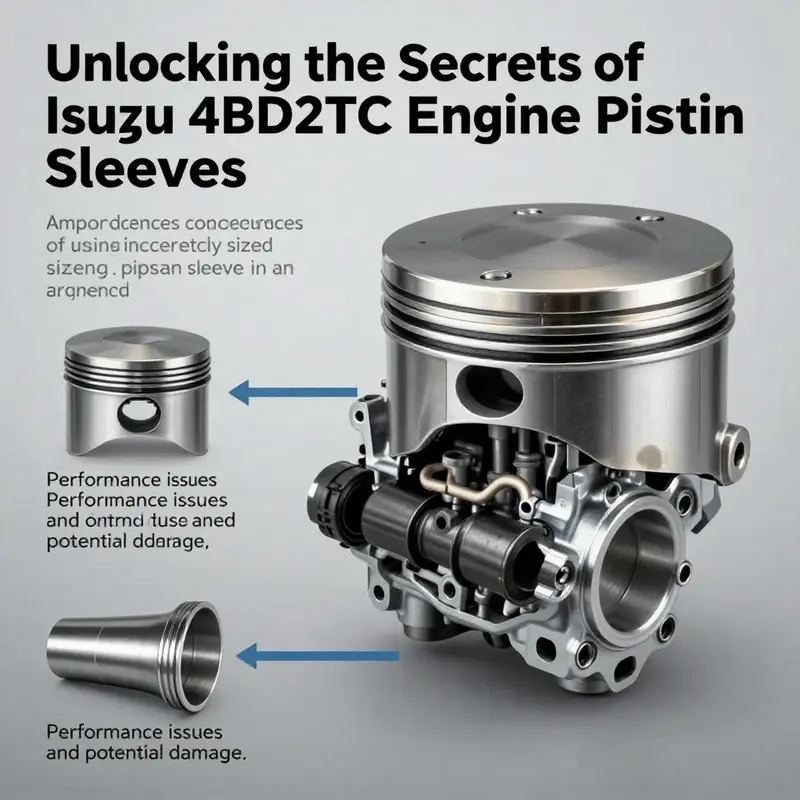
For any diesel engine, the relationship between the piston, cylinder, and sleeve governs how well the engine breathes, seals, and endures. The Isuzu 4BD2TC is no exception. The cylinder liners specified for this family of engines are manufactured to fit a bore of 102 mm (4.02 inches). That single number is deceptively simple. Behind it lies a web of mechanical relationships that determine compression, oil consumption, thermal behavior, and long-term reliability. When rebuilding or repairing a 4BD2TC, using sleeves that adhere precisely to this dimension is essential. Deviations, even small ones, change the dynamics inside the combustion chamber. They alter piston-to-wall clearance, ring seating, and heat transfer. These changes can accelerate wear, raise oil consumption, and even trigger catastrophic failures such as piston seizure.
Understanding why the 102 mm dimension matters requires more than memorizing a number. Sleeves must mate to the block with exacting tolerances. They must provide the right running surface for the piston and rings. They must manage thermal expansion during hot cycles. They must do all of this while resisting corrosive combustion by-products and mechanical scuffing. When a sleeve is undersized, the piston-to-wall clearance tightens. That can increase friction and create high localized temperatures. Tight fits raise the risk of piston rings scoring the liner during transient conditions. When a sleeve is oversized, piston clearance grows. Excess clearance allows rings to flutter and fail to seal. That leads to blow-by, loss of compression, and higher oil consumption. Both conditions reduce efficiency and shorten component life.
Beyond diameter, sleeve geometry and finish play key roles. Cylindrical true roundness, straightness along the sleeve height, and a consistent surface finish determine how well rings seat and retain lubrication. Diesel engines like the 4BD2TC operate under high cylinder pressures and temperatures. The sleeve must therefore provide an even, predictable surface for the ring package to ride on. Variations in cross-sectional roundness, or micro-surface defects, create stress risers. Those risers accelerate ring wear, promote oil breakdown, and encourage localized hot spots that degrade both sleeve and piston.
Material selection and heat treatment matter as much as dimensional accuracy. Cylinder liners are often made from alloyed cast iron or specially treated steels that resist wear and thermal fatigue. The material must accept and hold a micro-finish suitable for ring seating. It must also tolerate the repeated heating and cooling cycles that occur in a diesel combustion chamber. Improper metallurgy or inadequate heat treatment can produce early pitting, scuffing, and ultimately liner failure. For a high-mileage 4BD2TC, especially one used under heavy loads, selecting sleeves manufactured to recognized quality standards is a practical insurance policy for longevity.
Thermal expansion and mechanical stress distribution are fundamental considerations when sizing sleeves. Metal expands with temperature. The piston, sleeve, and block each have different coefficients of thermal expansion. Correct sleeve sizing ensures that, as temperatures rise, clearances change predictably. A liner that fits the block too loosely at ambient conditions may shift or distort under thermal load. A sleeve installed with excessive interference may induce tensile stresses in the surrounding block material. Both scenarios can warp the bore geometry, leading to uneven wear and loss of sealing. Proper sizing balances these thermal responses to keep the combustion chamber geometry stable across operating temperatures.
The interface between the piston and the sleeve is where many failures show their first signs. Piston-to-wall clearance must be compatible with the sleeve bore and the piston’s thermal growth characteristics. Piston rings must maintain radial pressure against the sleeve across the full speed and load range. If the sleeve bore deviates from the nominal 102 mm diameter, ring seating changes. The ring end-gap in the cylinder becomes more important as the bore size shifts. End gaps that are too small in the context of a larger bore risk ring butt contact and catastrophic failure. Conversely, overly large end gaps in a worn or oversized bore produce blow-by and reduced compression.
Honing and final machining practices are central to achieving the correct functional fit. Sleeves are usually finished with a crosshatch honed pattern that promotes oil retention and encourages ring break-in. The depth and angle of the crosshatch pattern influence oil control and ring seating time. When a sleeve is installed, a careful deglazing and break-in procedure helps the rings conform to the new surface. Improper honing, or skipping the recommended honing step when fitting replacement sleeves, compromises oil control and shortens service life. It is essential that the combination of final bore dimension and surface texture match the engine builder’s specifications.
Measuring and validating bore specification must precede installation. Simple visual checks are not enough. A set of precision instruments such as telescoping bore gauges, micrometers, and dial bore gauges should be used to measure true diameter. Measurements should be taken at multiple heights and in orthogonal planes to detect taper and out-of-round conditions. If the sleeve shows taper or eccentricity beyond acceptable limits, installing it will not restore proper compression and piston dynamics. Instead, it may introduce additional problems.
The decision to replace a sleeve with a new one or to machine the existing bore depends on inspection findings. If wear is concentrated and within the limits for reconditioning, re-honing can restore serviceability. However, once wear breaches certain thresholds, a new sleeve sized to the original 102 mm specification is the safer choice. Reconditioning a badly distorted bore can leave residual stresses that promote rapid recurrence of wear. New sleeves manufactured to OEM dimensions bring back the geometry and material properties intended by the engine designer.
Installation technique is another area where correct sizing proves decisive. Dry sleeves are pressed into the block with a specified interference fit. That interference must be controlled within tolerance. Too tight, and the block may crack or distort. Too loose, and the sleeve may rotate or vibrate, undermining sealing. For wet sleeves, sealing and coolant passages must be validated to prevent leaks. Proper doweling, alignment, and seating depth ensure the top ring lands line up with piston position and the head gasket compresses uniformly. Lapping or light machining of the deck surface may be necessary after sleeve installation to restore head gasket sealing geometry.
Quality control does not stop at installation. Post-installation checks include verifying deck height, cylinder concentricity, and head-bolt torque sequences. Compression testing after initial break-in identifies any early sealing issues. Observing oil consumption and smoke characteristics during the break-in period helps detect overstressed rings or poor ring seating due to an incorrect bore. These diagnostic steps are easier and cheaper than correcting a failed sleeve later.
Choosing replacement sleeves should include a focus on traceable manufacturing standards. Suppliers that provide sleeves meeting international quality metrics reduce the risk of dimensional or metallurgical surprises. Documentation of heat treatment, material composition, and dimensional tolerances helps the engine rebuilder make informed choices. For heavy-duty applications, OEM-equivalent sleeves with verified specifications are the practical route to repair confidence.
For the Isuzu 4BD2TC in particular, the standard bore of 102 mm is not an arbitrary number. It is a design parameter that matches the piston, ring pack, combustion chamber volume, and crankshaft geometry. Altering that parameter without recalibrating other components compromises engine function. When a piston sleeve is correctly sized to 102 mm and installed with attention to material quality, finish, and geometry, it returns the combustion chamber to its intended behavior. In heavy-use scenarios, the benefits of restoring proper sizing show quickly: restored compression, normalized oil consumption, and predictable operating temperatures.
Failure modes associated with incorrect sleeve sizing often manifest as progressive symptoms. A slight undersize can present first as elevated operating temperature. Friction heats the piston and liner more than normal. Next comes a gradual rise in oil consumption and a subtle drop in power. If left unaddressed, ring wear accelerates and the engine may begin to knock as clearances change further. An oversize bore tends to show loss of compression, smoke under acceleration, and a steady increase in oil consumption. Both tracks often lead to scavenging and lubrication complications that compound damage. Prompt detection and correct sizing are therefore critical.
Maintenance practices impact how long a correctly sized sleeve will last. Clean air filtration, proper fuel quality, and timely oil changes reduce abrasive and corrosive stresses on the liner surface. Overly lean or overly rich combustion conditions increase ring temperature and degrade oil, which in turn affects liner wear. Adhering to recommended service intervals and using compatible lubricants maintain the conditions under which a correctly sized 102 mm sleeve performs as designed.
In field repairs, technicians sometimes face pressure to use available parts rather than OEM-equivalent components. The temptation to accept an off-spec sleeve to get a machine back in service can be costly. The extra downtime and expense from a premature secondary failure often outweigh any short-term savings. When replacements are chosen, verifying the sleeve’s external and internal dimensions against the 102 mm target must be part of the purchase checklist. Additionally, inspecting for concentricity, material quality, and surface finish will reduce the risk of surprise failures.
Practical measurement protocols are straightforward and reliable. Measure the sleeve bore at three heights: near the deck, mid-height, and near the skirt. Measure at two orthogonal axes at each height. Calculate the average and compare readings to confirm taper and out-of-round conditions. If the maximum difference between any two measurements exceeds the acceptable tolerance for the engine, the sleeve requires machining or replacement. Confirming run-out and concentricity of the sleeve relative to the block boss surfaces also prevents misalignment between the piston and the cylinder axis.
Finally, sourcing sleeves with verifiable quality is a defensible part of a rebuild strategy. Reputable manufacturers and suppliers provide dimensional data and material certifications that align with engine rebuild tolerances. For the 4BD2TC, specifying sleeves cut for a 102 mm bore simplifies matching pistons and rings. When in doubt, factory service manuals and parts catalogs list the required sleeve dimensions and recommended tolerances. Pairing that documentation with measured verification on the bench is the most reliable path to a long-lived repair.
For technicians and rebuilders focused on restoring Isuzu 4BD2TC engines to reliable service, the takeaway is clear: the 102 mm sleeve dimension is central to functional restoration. Match that dimension, confirm material and finish quality, and follow proper machining and installation procedures. Those steps preserve compression, reduce oil loss, and distribute thermal and mechanical stresses evenly. That approach transforms a simple replacement into a durable repair that honors the original engine design and delivers dependable performance over thousands of operating hours.
For more background on the role and types of cylinder sleeves, including practical explanations of how sleeves function in an engine block, see this primer on what are engine sleeves: what are engine sleeves.
External reference: https://www.alibaba.com/product-detail/Isuzu-Cylinder-Sleeves-Durable-Engine-Parts_1600875953187.html
Sizing for Longevity: Understanding the 102 mm Cylinder Sleeves in the Isuzu 4BD2TC
The cylinder sleeve — often called the piston sleeve when it comes to Isuzu’s 4BD2TC diesel workhorse — sits at the quiet intersection of precision engineering and dependable performance. Its job is deceptively simple in description yet exhaustive in consequence: it must provide a perfectly finished bore for the piston and rings, manage heat from combustion, and resist the wear that comes with hundreds of hours of heavy use. In the Isuzu 4BD2TC family, the bore size that commands attention is 102 millimeters, a standard that threads through the lineage of this engine series and underpins compatibility across replacement parts, rebuild kits, and service procedures. When a shop or fleet operator looks to replace piston sleeves, the 102 mm dimension is not a suggestion but a mandate. Small deviations here ripple through compression, oil control, and, ultimately, engine longevity. The 102 mm bore forms the reference point around which every aspect of a sleeve kit is organized, from outer dimensions to the fitment against the block shoulder, from the clearance for piston rings to the retention of proper oil film at high operating temperatures.
That seemingly straightforward number hides a web of considerations. First, the sleeve’s role as the interface between the piston and the engine block means it must be machined to exacting tolerances. A sleeves’ inner diameter must be uniform along the entire length, free of taper, and consistent in cross-section at every cylinder position. Any ovality or out-of-round condition at the bore end would alter ring seal, change the compression ratio, and introduce uneven wear. In turn, ring landing heights and ring gaps are related to the sleeve’s finish; a bore finished to a precise surface roughness lets the rings seat properly, control blow-by, and minimize oil consumption. In practical terms, the 102 mm standard is not an abstract metric; it is the baseline measured against when technicians determine whether a sleeve is suitable as a direct replacement, or whether it requires honing or a remanufactured alternative.
The 4BD2TC version of Isuzu’s 4BD2 line adds a turbocharger to the mix, along with specific cooling and lubrication demands that influence sleeve design. Turbocharging changes the dynamics of combustion pressure and heat flux in the cylinder, which can influence how a sleeve behaves under load. A sleeve intended for a turbocharged variant may emphasize improved heat dissipation channels, a slightly different heat treatment, or a bore finish that accommodates the altered gas composition and higher peak cylinder pressures. For operators, this means that while the bore diameter remains 102 mm, the sleeve kit must be clearly specified for the turbo variant and, where applicable, for the emission standard that the engine is tuned to meet. Euro 3 or Euro 4 configurations, for example, may influence ancillary components that accompany the sleeve set, such as coatings, seals, or compatibility with modern electronic oil pumping arrangements. It is a reminder that spec sheets are not just about the diameter; they are about the entire assembly that makes a rebuilt engine reliable.
With the bore dimension fixed, a second layer of practical filtering emerges around compatibility. A 102 mm sleeve set for the 4BD2TC is commonly presented as a complete rebuild kit, often including four cylinder liners, four pistons, and a set of piston rings. In practice, purchasers should verify that the kit aligns with the specific engine configuration in service. Some engines wear more aggressively in particular cylinders, and that can influence the choice of sleeve and ring dimensions, even within the same 102 mm bore. The inclusion of other common rebuild components, such as gaskets, seals, and appropriate hardware, can streamline the repair process and reduce the risk of mismatched parts at reinstall. The modern workshop or fleet maintenance program benefits from clear documentation that ties the kit contents back to the engine’s serial number, model designation, and the turbocharged status. A robust supplier will confirm that the sleeve set is designed for the Isuzu 4BD2TC variant and will be explicit about compatibility with automatic transmissions and electronic oil pumps if those features exist on the target build.
This is where the sourcing landscape becomes meaningful. The geographic and industrial fabric of supply matters as much as the bore and the kit contents. Specialized automotive parts ecosystems in large manufacturing regions — notably those with established metalworking, casting, and machining infrastructure — produce a steady flow of cylinder liners and rebuild components for diesel engines like the 4BD2TC. Guangdong and Zhejiang, in particular, are often highlighted for their dense networks of suppliers who maintain high-volume production capacity, cost competitiveness, and an emphasis on quality control. For a repair shop or equipment refurbisher, this environment translates into shorter lead times, the possibility of bulk procurement, and a greater likelihood of consistent part numbers across multiple orders. It also elevates the importance of vetting suppliers for technical documentation and traceability, so that the 102 mm specification sits within a broader, verifiable package of data about material composition, surface finish, and coating if any.
Yet the practical decision of where to source should never ignore the subtleties of what the sleeve set must deliver. The 4BD2TC’s cylinder liners must be able to withstand repeated thermal cycling without excessive distortion, sustain adequate lubrication to minimize scuffing, and maintain a precise, consistent bore that supports an optimal piston ring seal. The correct sleeve must also accommodate the engine’s oiling scheme and the lubrication path carved into the block and liner interface. In engines with electronic oil pumps and other modern upgrades, the sleeve’s role becomes part of a broader system that includes feed pressures, filtration, and countdown to failure modes. Suppliers who advertise compatibility with automatic transmissions or with updated oiling architectures are signaling an alignment with a fleet that has seen modernization in its drivetrain and service philosophy. While such features may appear ancillary to the 102 mm bore, they are in fact part of a holistic compatibility story that keeps the engine reliable over longer service intervals and with higher operating demands.
From the purchaser’s vantage point, the verification process is an exercise in cross-referencing. The sleeve kit’s bore must be 102 mm, and the kit should be dimensionally consistent from one cylinder to the next. The installation procedure matters almost as much as the material itself. A repair shop should confirm the cylinder block’s bore alignment, check the deck surface, and ensure the sleeves will sit flush with the block shoulder. The finish on the sleeve’s inner bore typically requires a balance between smoothness for piston ring seating and a certain roughness that aids oil retention and ring seal after installation. In a rebuild scenario, the sleeves should be installed with the block’s alignment imprinted in the kit, including the correct orientation for exhaust and intake porting if the sleeve includes any specialized finish or coating intended to optimize heat transfer.
The sourcing narrative for the 102 mm sleeve is also a story about reliability and accountability. The ability to procure a complete sleeve kit with four liners, four pistons, and the corresponding rings in one order reduces the risk of mismatches and helps guarantee that the replacement configuration mirrors the engine’s original design intent. For operators who intend to keep a fleet in service for many years, the advantages of a well-mitched rebuild kit extend beyond the immediate installation. They translate into predictable maintenance cycles, easier warranty handling, and the possibility of standardized replacement intervals across multiple engines in a single fleet. In practice, buyers should obtain and retain the part numbers, confirm the bore and crown profile of the pistons, and request the exact ring gap specification recommended by the sleeve manufacturer or the engine’s service manual. The goal is not just to replace worn components but to restore the engine to its intended breathing, heat management, and compression characteristics with a sleeve that is truly sized for longevity.
For readers seeking a practical gateway to the deeper technical background of sleeves, a concise primer on what sleeving an engine means can be a helpful entry point. See what-sleeving-an-engine-means for a focused explanation of the sleeve concept, how sleeves interact with pistons and rings, and why bore size remains a primary reference point across generations of engines. This resource helps connect the theory of sleeve sizing with the hands-on realities of selecting a kit, verifying compatibility, and managing a rebuild project in the field. what-sleeving-an-engine-means
The broader takeaway for the Isuzu 4BD2TC sleeper, worn through the lens of 102 mm bore, is that numbers alone cannot guarantee success. The engine’s turbocharged heritage, its emission standards, and the modernization of its support systems all interact with the sleeve to produce a dependable, long-lived result. The sleeve must be more than just a hole through which a piston travels. It must be a precisely engineered surface that tolerates heat, maintains a consistent geometry, and remains compatible with the oiling architecture that keeps the wear in check. In a rebuild plan, the bore figure is the anchor. The surrounding specifications — material quality, surface finish, coating if present, and the completeness of the kit — define whether that anchor will hold under stress or gradually drift as wear and heat cycles accumulate.
In practice, the path from understanding the 102 mm sleeve to a successful rebuild begins with careful measurement and documentation. A technician should measure the block’s bore to confirm it is within the intended tolerance before selecting a sleeve kit. If the block has been previously bored or oversize pistons are being used, the 102 mm standard may no longer apply, and a specialized oversize sleeve option could become necessary. In such cases, the kit presentation often clarifies whether it is designed for a standard 102 mm bore or an oversize variant. The decision should be guided by the engine’s service history, the mileage on the unit, and the operator’s maintenance philosophy. Where available, technicians will seek documentation that links the sleeve’s material composition and finish to the engine’s expected operating regime, thus providing a clear rationale for the chosen kit. The maintenance history, in turn, informs decisions about future service intervals, inspection procedures, and the potential need for re-sleeving after a defined period of high-load operation.
The 102 mm designation thus becomes a language of precision. It communicates compatibility with the larger Isuzu 4BD2 series, the turbocharged 4BD2TC variant, and the fleet’s modernization trajectory. It becomes the metric that aligns the supplier’s capabilities, the workshop’s measurement practices, and the engine’s performance goals. In practical terms, it is the number that makes it possible to source a consistent set of liners and pistons, to verify they will seat and seal correctly, and to ship them with confidence that they match the engine’s original design intent. For the technician hands and the fleet manager watching the clock, that single millimeter makes a measurable difference in how quickly a rebuild can be completed, how reliably the engine will perform after reassembly, and how long it will continue to serve under the demanding conditions of diesel operation.
In closing this exploration of 102 mm piston sleeves for the Isuzu 4BD2TC, the emphasis rests on a triple convergence: precise bore sizing, thoughtful compatibility with turbocharged and modernized variants, and robust sourcing practices that respect the engine’s functional demands. When all three converge, a rebuilt 4BD2TC can resume service with renewed compression, better heat management, and a level of reliability that the heavy-duty operator expects. The bore size becomes a boundary within which quality, compatibility, and long-term value are defined. And as with any serious mechanical rebuild, the quiet, measured care taken in selecting the correct sleeve, ensuring proper installation, and validating fitment before starting the engine pays off in lower maintenance costs, longer service life, and a smoother path toward fleet uptime.
External reference: An external marketplace listing offers a concrete example of availability for cylinder liners. See the eBay listing for the 4BD2 engine cylinder liner to understand current market availability and condition indicators: https://www.ebay.com/itm/156650622397
Final thoughts
To sum up, understanding the specifications and importance of the Isuzu 4BD2TC engine piston sleeves is crucial for anyone involved in auto mechanics or engine maintenance. These sleeves, with a standardized bore size of 102 mm, significantly influence engine performance and durability. Ensuring proper sizing not only enhances overall functionality but also prevents costly damage down the line. With the right information on sourcing and compatibility, motorcycle owners, auto enthusiasts, and repair shops can confidently procure the correct components to ensure optimal engine operation. Don’t underestimate the relevance of a precise fit in ensuring longevity and reliability.