
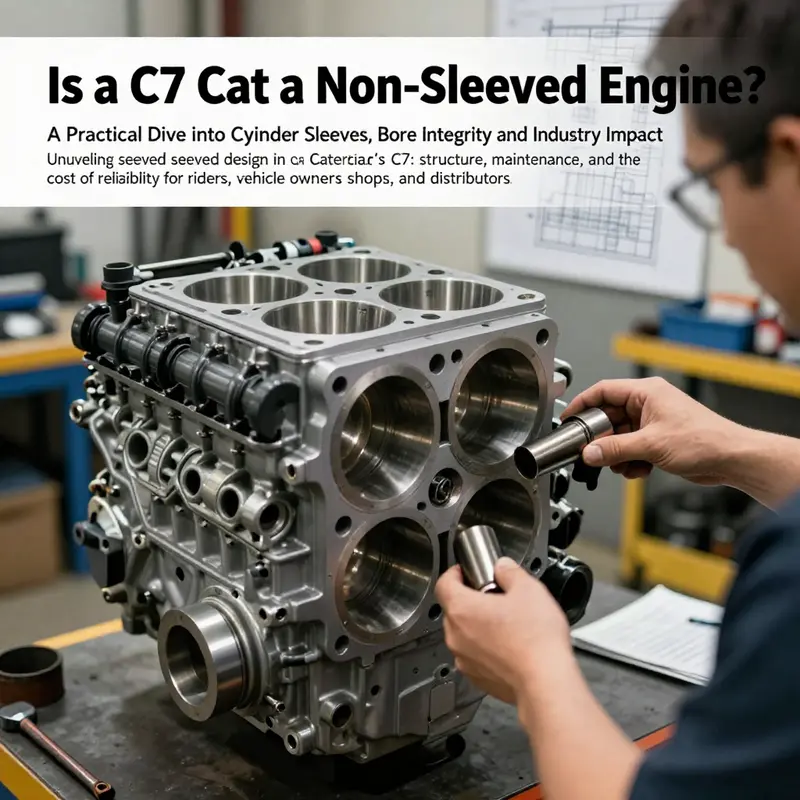
Caterpillar’s C7 diesel engine sits at a crossroads of power, durability, and serviceability. A frequent point of confusion for motorcycle owners, auto owners, repair shops, and parts distributors is whether the C7 uses sleeved cylinders or a sleeveless bore. The reality is clear: the C7 is a sleeved engine, built with precision-engineered cylinder liners that sit inside the engine block to form the bore. Cylinder sleeves deliver tangible benefits: they simplify wear management, enable material optimization for durability, and help preserve bore geometry under high thermal and mechanical loads. For fleets and aftermarket supply chains, sleeves influence maintenance intervals, repair strategies, and total ownership costs. The three chapters that follow connect engineering detail to everyday practice: Chapter 1 examines the structural design and why sleeves matter in the C7; Chapter 2 looks at maintenance, bore integrity, and sleeve materials; and Chapter 3 weighs the industry implications in performance, reliability, and economics. Together, they illuminate how sleeved design in the C7 translates into real-world outcomes for riders, drivers, mechanics, and distributors alike.
null
null
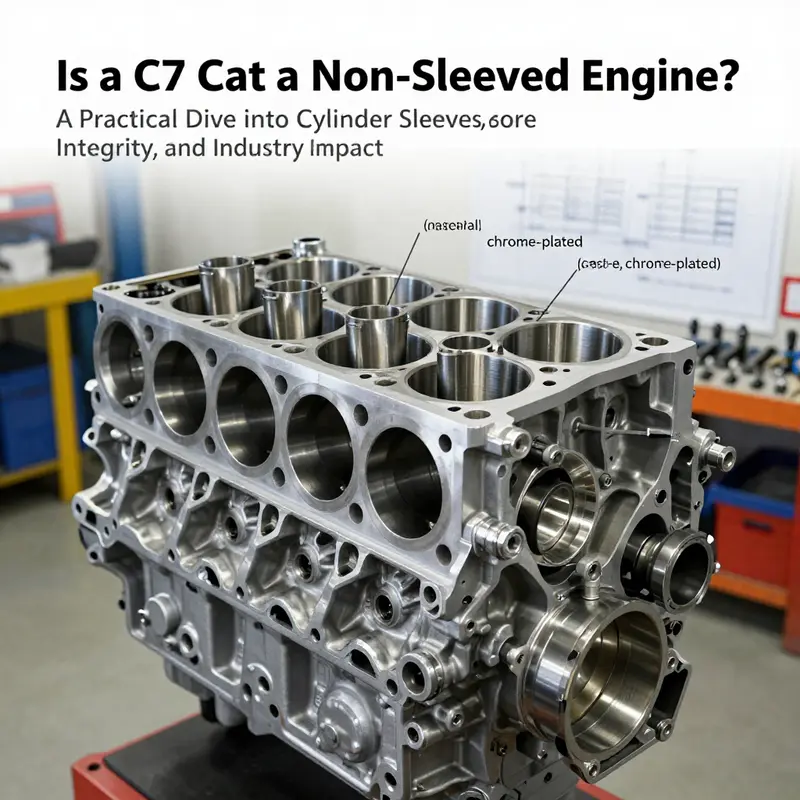
Sleeved Truths: Debunking the Myth of a Non-Sleeved Caterpillar C7 Engine and What It Means for Bore Integrity, Maintenance, and Longevity
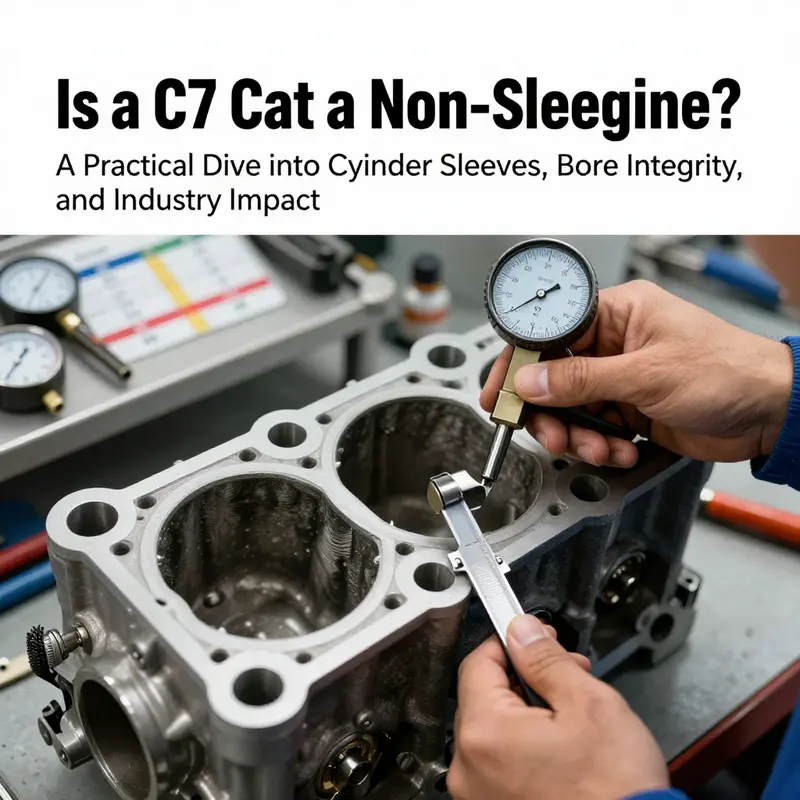
When the question arises whether a well-known heavy-duty engine is sleeved or non-sleeved, the instinct is to answer with a single label and move on. But the truth, especially in the realm of industrial diesel engines, lives in the details of how the cylinder bore is formed, how wear is managed, and how the engineering choices translate into real-world reliability under grueling duty. The Caterpillar C7 family, a staple in mining, construction, and agricultural equipment, sits at the center of this discussion not because it is a rare outlier, but because it embodies the broader trade-offs between sleeved and non-sleeved architectures. The core message is straightforward: for this class of engine, sleeved cylinders are the norm, not the exception. The sleeves form a deliberate, strategic interface between the moving parts and the block, a feature that unlocks predictable wear behavior, easier servicing, and tailored material properties for the harsh environments in which these machines work. Yet there is more to the story than a simple yes-or-no answer. The sleeves themselves—materials, geometry, fit, and the maintenance regime they demand—are a living system that influences performance, longevity, and the cost of ownership over the engine’s life. The journey from bore to boom in this discussion begins with a clear picture of what a sleeve does and why engineers put it where it belongs, inside the cylinder bore, rather than letting the bore be an unlined passage carved directly into the block. The sleeve is more than a wear surface; it is a hard-won engineering compromise that coordinates heat flow, lubrication, and the frictional realities of millions of combustion cycles. In heavy-duty service, where the engine is asked to deliver high torque, sustained RPM, and long hours between overhauls, the sleeve’s role in preserving bore integrity cannot be overstated. It provides a replaceable wear zone that can be swapped or reworked when it shows signs of fatigue, instead of demanding a more invasive repair of the block itself. It also accommodates materials that are optimized for wear resistance and thermal stability, which is a crucial consideration when the engine routinely encounters high combustion pressures, elevated cylinder gas temperatures, and the abrasive realities of soot-laden lubricants in real-world operation. The sleeve’s material composition—typically a high-strength cast iron alloy with alloying elements such as chromium and molybdenum—matters as much as its thickness or its surface finish. The approach is not to create a hard, inert surface and leave the rest to luck, but to engineer a calibrated interface that tolerates micro-scale wear while maintaining geometric fidelity in the cylinder bore. This fidelity is essential for maintaining cylinder pressure and ensuring consistent piston ring seal, which in turn supports fuel efficiency and power delivery. The discussion about sleeved versus non-sleeved designs is not a purely academic one. In practice, operators and technicians confront the consequences of bore wear in the form of oil consumption, power loss, abnormal smokiness, and uneven combustion. A sleeved configuration makes the first three of these issues more addressable because the wear zone can be restored by replacing the sleeve or entire lining rather than reworking the entire block. This is not just about restoring a dimension; it is about restoring a defined, known geometry. The bore must be round and coaxial enough to meet the engine’s tight tolerances, and sleeves are instrumental in achieving that outcome. For the C7 and similar heavy-duty engines, the sleeve is a controlled, engineered interface that supports a predictable thermal profile. The cylinder liner is selected and installed to withstand repeated heating and cooling cycles, to reduce micro-warping and distortion, and to promote even bore wear along the length of the stroke. This is particularly relevant when engines are subjected to peak loads in mining gear or continuous duty in construction equipment, where a small deviation in bore shape can cascade into higher oil consumption, reduced compression, and diminished performance. The sleeve’s material science is part of the story, but so is the way maintenance is conceived around it. The sleeves are designed to be under stable lubrication, with oil films that separate moving parts from the metal surfaces and guard against galling and scoring. Regular maintenance—a discipline that must be embraced rather than treated as an optional procedure—revolves around ensuring the sleeve bore remains within specified roundness and straightness tolerances. In the field, this means scheduled checks using the right gauges and measurement tools, along with a disciplined oil analysis program that helps detect wear particles and changing bulk oil properties before symptoms become serious. The official guidance emphasizes a maintenance pathway that starts with measuring the cylinder diameter and assessing bore roundness and ovality. Any wear that exposes bare metal or accelerates surface fatigue is a signal that bearing down on the problem now with a planned service action is preferable to allowing a creeping loss of performance to mature into a costly repair. It is also essential to use the correct lubricants designed for the engine family. The oil chosen must provide robust anti-wear protection, maintain viscosity under heat, and retain detergents that keep deposits in check. Using sub-standard oil is not merely an inconvenience; it introduces corrosion risks and deposit formation that can accelerate bore wear or alter surface finishes on the inner walls. In practice, the maintenance philosophy around sleeved cylinders dovetails with the broader doctrine of using original equipment or equivalent specifications for replacement parts. When sleeves are replaced, the fit, seal, and bore geometry must be matched to the engine assembly to ensure that the seal geometry at the top and bottom of the liner remains consistent with the piston rings’ seating. This is not an area where improvisation pays off; precision, compatibility, and traceability are the watchwords. To bridge the gap between theory and field practice, it helps to have a concise primer on the sleeve concept itself. For readers seeking a quick orientation on engine sleeves, a compact resource illustrates how sleeves function as modular wear surfaces and how they interact with the block, the piston, and the crankcase lubricating system. The sleeve is thus a critical, technical signal that a modern heavy-duty engine uses to reconcile the competing demands of durability, serviceability, and performance. For a concise primer on the sleeve concept, see What are engine sleeves? (https://itw-autosleeve.com/blog/what-are-engine-sleeves/). The plant floor, the desert of fatigue testing, and the field ring the same alarm: when bore integrity wanes, the consequences ripple through efficiency, reliability, and uptime. The sleeved design acknowledges that wear happens, and it packages a practical strategy for managing wear in a way that minimizes downtime and maximizes return on investment. It is not a claim that sleeves guarantee perpetual perfection, but rather a framework that helps engineers and technicians predict, measure, and address bore wear with a degree of confidence that a non-sleeved design would struggle to offer. The non-sleeved argument—that some engines do not rely on cylinder liners and instead rely on an exceptionally robust block to resist wear—represents a different design philosophy. In those cases, the engine’s cylinder walls are machined directly into the block, and the precision of the bore must hold up under a demanding service regime without an intermediate wear surface. This path demands extraordinary block materials, superb surface finishing, and meticulous control over block casting and finishing processes. It can offer benefits such as reduced parts count and, in some instances, improved heat transfer or weight savings. Yet it shifts the risk balance: maintenance becomes more invasive, because a worn bore may require boring, honing, and potentially re-sleeving or, if repairs are more extensive, replacement of the cylinder block itself. In the C7’s common applications, the sleeved approach remains a robust, maintainable solution that aligns with the service strategies and uptime demands of heavy industry. The sleeve materials, geometry, and the maintenance ecosystem around them are designed to support long service intervals, predictable rebuilds, and a calmer life cycle cost. The sleeve’s role is also intimately tied to the engine’s cooling and lubrication system. In severe-duty conditions, heat removal and oil film integrity are the twin pillars that keep wear in check. The liner’s thermal expansion must harmonize with the block and the piston to avoid scuffing and scuffing-related wear. Oil viscosity and the film strength must resist breakdown in high-temperature zones, where hot gas and combustion byproducts meet mechanical contact within the bore. This is not a theoretical concern. In practice, any deviation in clearance or a reduction in the oil’s protective film translates into accelerated wear patterns that can swallow horsepower and shorten service intervals. Therefore, the maintenance discipline becomes a habit of checking clearances, monitoring oil cleanliness, and ensuring the sleeves maintain their geometry over thousands of operating hours. The broader engineering logic—favoring sleeves as a wear management strategy—rests on the ability to refurbish or replace the wear surface without reworking the entire block. It is a modular approach that supports easier overhauls, more consistent bore geometry, and a clearer path to sustained performance across the engine’s life. There is ample evidence, including official documentation, that enables operators to distinguish whether a given installation uses sleeves or relies on a non-sleeved cylinder surface. The exact configuration can vary by model and by serial number, and the precise specification is found in the engine’s service manual and the relevant technical datasheets. When confronted with the question of whether a particular unit is sleeved or non-sleeved, the prudent path is to consult the manufacturer’s literature and the tag on the engine itself. That tag encodes the model, serial, and option code that clarifies whether the bore wears a lined surface or a direct-bore path. In practical terms, this reduces the guesswork and ensures maintenance procedures align with the engine’s intended design. The maintenance strategy for sleeved cylinders, therefore, includes a deliberate sequence: inspection of the sleeve’s external condition, assessment of bore roundness and straightness, evaluation of oil and filter condition, and verification of the liner-to-block mating surfaces. The replacement cycle is guided by wear indicators, the engine’s running hours, and the operator’s duty cycle. The goal is to preserve the integrity of the bore, minimize oil consumption, sustain power output, and protect the rotordynamic balance within the engine. The sleeves’ materials and their bonding to the block are part of a complex system, but the practical takeaway is accessible: sleeved cylinders offer a path to controlled wear and repeatable maintenance. This is the kind of predictability that heavy equipment operators rely on when every hour counts. For those who want a quick entry path into the sleeve conversation, the link provided here serves as an entry point to the broader sleeve conversation and its implications for engine longevity. It is worth noting that, in some cases, non-sleeved configurations appear in lighter-duty variants or in engines designed for specific markets or applications. These installations emphasize accuracy in block machining and bore finishing, and they may demand different maintenance tactics, including more frequent bore repairs or block-level interventions when wear is detected. The key takeaway is that maintenance, bore integrity, and sleeve materials exist in a living ecosystem—one that hinges on precise manufacturing, careful assembly, and disciplined service practices. The chapter you are reading is about understanding where that ecosystem sits in relation to a well-known, heavy-duty engine and why sleeves are not simply a cosmetic or historical feature but a functional backbone that supports reliability in harsh service. To connect this knowledge to practical reading, consider the lifecycle of a sleeved engine in the field: the sleeve provides a sacrificial but replaceable surface; the block remains the structural support; the piston rings and lubrication system protect the surface against wear; and the maintenance team follows a disciplined inspection and replacement plan to keep everything in tolerance. When truly asked whether a C7 is a non-sleeved engine, the pointed answer, grounded in the engineering and practice of heavy machinery, is that sleeved cylinders are standard in this family. Yet the door remains open for variations driven by model numbering, market requirements, and retrofits. In any case, the prudent path for owners and operators is to confirm the engine’s exact specification from the service manual and to treat bore integrity as a living parameter rather than a fixed datum. This approach fosters longevity, predictable maintenance costs, and dependable performance in the demanding environments where these engines earn their keep. For readers seeking a deeper dive into sleeved concepts, consult the external resource that illuminates official specifications and service guidance for these engines: https://www.cat.com/en_US/products/power-units/c7-1-industrial-diesel-power-unit.html. And for a compact primer on sleeves, the primer linked earlier offers a helpful starting point: What are engine sleeves?. Official guidance reinforces the principle that, when replacement parts are required for this product family, the supplier recommends using original parts or parts of equivalent specifications to safeguard fit and sealing, a principle that applies equally to the sleeve system and its integration with the engine as a whole. In sum, the sleeved approach remains the reliable, maintenance-friendly path for these engines, and the best practice for operators is to align maintenance schedules, lubrication choices, and inspection routines with the sleeve-based design. By embracing this framework, a fleet can sustain performance, minimize downtime, and maximize the long-run value of the investment in a heavy-duty machine that is built to endure. Official documentation and technical manuals provide the definitive confirmation of these configurations, and they should be the primary reference when calibrating maintenance programs or planning overhauls in the field.
Sleeves, Walls, and the Heat of Industry: Reassessing the C7 Engine Design Choice
The question is more than a naming dispute or a clerical label. It sits at the heart of how heavy duty diesel engines are designed to handle heat, wear, and uptime in environments that test every component to its limits. In forums, manuals, and field reports you will encounter competing claims about whether the C7 is sleeved or sleeveless. Those claims matter because the presence or absence of cylinder sleeves changes maintenance strategies, reliability baselines, and the economics of repair. What follows is not a simple yes or no answer but a careful reconciliation of design philosophy, manufacturing practice, and real world operation. It is a narrative that treats the C7 case as a lens through which engineers and operators weigh the tradeoffs between ease of service, heat management, and long term durability.
To begin, it helps to recall what is meant by sleeves in an engine design. Cylinder sleeves are liners installed within the engine block that establish the bore where combustion takes place. In sleeved configurations, the bore can be replaced or refurbished by removing and reinstalling liners, a process that can save substantial costs when wear or scoring occurs. Sleeves also allow for material choices that optimize wear resistance and heat transfer at the bore surface. Engineers often rely on sleeves to tailor a single engine platform to different operating conditions without rebuilding the core block. This capability has long been a cornerstone of maintenance planning in mining gear, construction fleets, and industrial power units where uptime and rapid serviceability translate directly into productivity. For researchers and technicians looking to ground their understanding in the facts, a primer on sleeves can be found in practical guides that describe how the sleeves interact with the block, how they seal, and how wear at the interface is managed. For a primer on sleeves, see what are engine sleeves. (https://itw-autosleeve.com/blog/what-are-engine-sleeves/)
Against that backdrop, the Caterpillar C7 engine sits in a long lineage of heavy duty designs. It is a compact but robust unit that has found its way into a variety of severe duty applications. The debate about its sleeve status has significance because it touches directly on how operators plan maintenance cycles, how workshops allocate spare parts, and how the lifecycle cost of ownership is modeled. The terminology matters as well. Terms like sleeved, sleeveless, direct bore, and linerless are sometimes used interchangeably in casual chatter but can mean different engineering realities. In the more formal literature, a sleeved engine uses a removable liner that forms the cylinder bore. A sleeveless, or direct bore, design implies that the bore is machined directly into the block without a separate liner. The consequences of that distinction are not merely academic; they ripple through heat transfer characteristics, repair procedures, and the risk profile of sudden bore degradation.
In the process of evaluating the C7, several sources converge on a consistent point: the engine family is designed to deliver reliability under harsh duty with an emphasis on stable bore geometry under high thermal and mechanical loads. The sleeves approach offers a straightforward path to machining wear and replacing damaged segments without reworking the entire block. Yet the alternative claim that the C7 employs a sleeveless or direct bore architecture cannot be dismissed out of hand. If the bore is indeed machined into the block, heat transfer from the combustion chamber to the cooling system can be more direct and uniform, reducing hot spots that often become the precursors to localized wear and cracking. A well crafted direct bore can also reduce the areas of potential leakage around liner interfaces and eliminate ring seal issues that sometimes accompany sleeve-to-block joints. Those advantages are not trivial when engines operate in environments where ambient temperatures swing, where dust loading is high, and where maintenance windows are narrow.
What becomes clear when both sides of the argument are examined is that the practical impact of sleeves versus direct bores is not a binary verdict but a spectrum shaped by how the engine is operated, serviced, and rehabilitated. In some operating regimes, the sleeves approach offers resilience through replaceable liners that can be refurbished or swapped in a single shop visit, limiting downtime and extending the productive life of the core block. In other regimes, a direct bore can reduce the number of potential leak paths and can improve thermal conduction, yielding higher peak performance under steady, controlled workloads. The industry reality is that many engine families incorporate hybrid approaches, or evolve their designs over successive generations, so that a single model may exhibit different features across production years or regional variants. The function of sleeves, whether present or absent, is intricately tied to how the engine is used, how the cooling system is managed, and how the service ecosystem is organized.
From the standpoint of reliability and uptime, the non sleeve alternative offers a set of compelling advantages and potential drawbacks that operators weigh against the familiar maintenance pathways of sleeved designs. If cylinder walls are directly machined into the block, the elimination of a separate liner interface removes a sealing datum that can be a focal point for maintenance concerns. This can translate into fewer potential failure points related to liner fitment, liner-to-block sealing, and liner removal damage during overhaul. The improved heat transfer associated with a direct bore also helps to minimize local hot spots, which are a prime driver of micro-cracking and bore ovality under heavy loads. In practice, however, the consequences of damage to a direct bore can be more severe. Once wear or scoring breaches the integrity of the bore, repairs may demand reboring the block or replacing the entire cylinder block. The economic calculus therefore shifts: while routine maintenance might be simpler and less frequent, catastrophic damage can impose higher downtime and greater parts costs than simply dropping in a worn sleeve and reconditioning a liner in place.
A further layer of complexity arises from how manufacturers and service networks document and communicate design choices. In some official materials, the C7 is described as a robust, sleeved platform that benefits from the durability and serviceability of cylinder liners. In other discussions, especially in specialized circles or newer technical notes, there are references to sleeveless or direct bore configurations in the same family, suggesting that design evolutions or regional production variants exist. This is not merely an issue of semantics; it reflects how engineering decisions are revisited in response to field feedback, material science advances, and evolving maintenance capabilities. As a result, the engineering community benefits from explicit, block level documentation that shows bore construction, sleeve presence, and mating surfaces. Without that, operators can unintentionally misinterpret the service implications, assuming that a shorter downtime or cheaper maintenance path exists when, in fact, the block and bore geometry require different tools, different clearance checks, and a distinct set of spare parts.
To navigate this landscape, one can adopt a practical frame of reference. The choice between sleeves and direct bores is not purely an academic exercise; it is a decision point that influences what kinds of machining are permissible during overhaul, what the expected seal life is, and which cooling strategies best preserve bore integrity under the engine heat load. In high wear environments, sleeves can be advantageous by confining wear to replaceable liners and preserving the core block geometry. In steady, high thermal efficiency regimes, a direct bore can minimize interfaces and improve heat transfer, potentially elevating performance margins in routine operation. The real world rarely offers a simple, one size fits all answer; instead, it presents a continuum where design choices are optimized for the operating envelope, the anticipated maintenance cadence, and the available repair infrastructure.
Within this continuum, the C7 case invites operators to examine the interplay between heat management and mechanical wear. When the cooling system is robust and the engine experiences sustained warm temperatures with well controlled heat rejection, the benefits of a direct bore option can become more pronounced. Efficient heat transfer reduces thermal gradients across the bore, lowering the risk of hot spots that lead to localized scuffing and fatigue. Conversely, when a fleet must cope with abrupt load spikes, dusty air, and variable cooling conditions, the predictability of liner wear can be a strategic advantage. Replace a worn sleeve, adjust the liner material, and restore a consistent bore geometry without instituting wholesale block changes. These are not trivial operational choices; they determine how quickly a workshop can bring an engine back into service and how many spare parts must be stocked to handle different failure scenarios.
The tension between these design choices also echoes in the broader discourse about life cycle costs. In the short term, a sleeved design may offer lower pegged maintenance costs through the ability to swap liners and avoid expensive block work. In the long run, a sleeveless design can reduce the number of seal interfaces and eliminate certain maintenance steps, but potentially at the price of higher costs when a major bore issue arises. The industry practice often mirrors the economic realities of the fleet as a whole: maintenance windows, technician availability, and the cost of downtime are not abstract numbers but tangible constraints that determine whether sleeves or direct bores are preferable for a given application.
What does this mean for the C7 and for readers who want to know is it non sleeved or sleeved? The answer rests on careful verification of the specific unit in question. The engine family has historically been associated with a reputation for reliability in heavy duty contexts such as mining, construction, and industrial power generation. That reputation derives partly from a design philosophy that prioritizes consistent bore geometry, durable sealing interfaces, and a cooling system engineered to manage high heat flux. Whether the bore is achieved via a sleeved approach or a direct bore lacks a universal caption that can be applied to every unit without examining the exact block, the year of manufacture, and the refurbishment history. In practice, the most useful stance is to assess the bore architecture directly when disassembling or overhauling a unit, rather than relying on a generic model label. The significance for field technicians is that if a bore shows signs of wear in a direct bore configuration, the options may be more constrained than if a liner could be replaced. Conversely, if a liner is present in a sleeved configuration, replacement can be a targeted, modular procedure that preserves the core block integrity and reduces downtime.
This discussion is not just about what the C7 is, but about how engineers translate a core design choice into actionable maintenance strategies. It also invites a broader reflection on how industry knowledge travels from manuals to maintenance bays. Misinterpretations can propagate when technicians encounter shorthand descriptions, regional variations, or outdated references. When confronted with conflicting statements, the prudent path is to consult the official engineering documents, service manuals, and bore architecture diagrams that show the exact construction of the cylinder bore. It is within these precise, block level details that the true nature of the C7 emerges, and with it the practical implications for reliability, heat management, and cost. In other words, determining if a particular C7 is sleeved or sleeveless is not a matter of sentiment or guesswork but a matter of inspecting the bore and documenting the available refurbishment options in the context of the operating environment. For readers who want to deepen their understanding of sleeves in engines, the primer linked earlier provides a foundational frame that helps translate the jargon into a concrete inspection mindset. See what are engine sleeves for a primer on the underlying concepts. (https://itw-autosleeve.com/blog/what-are-engine-sleeves/)
In this light, the chapter integrates the practical, the technical, and the economic into a single narrative about the C7. The engine is a workhorse of heavy industry, expected to deliver consistent output with minimal surprises. The sleeve versus direct bore question is not a detour from that objective; it is a reminder that maintenance strategy must be aligned with how the bore exists in the actual unit, not just the schematic ideal. Operators who approach the subject with a readiness to verify bore architecture will find it easier to anticipate repair needs, plan overhaul cycles, and balance downtime against the risk of unplanned outages. The literature and the field observations converge on a core principle: the most reliable maintenance plan is one that is informed by the actual bore construction, the cooling system performance, and the observed wear patterns under the specific load profiles the fleet experiences. When these factors are taken into account, the C7 demonstrates the kind of robustness that operators depend on, even as the debate about sleeves versus direct bores continues to spark thoughtful discussions across workshops and academic corridors alike. In that sense the topic remains alive not as a contradiction but as a lens for how engineers and technicians translate design choices into real world reliability.
For readers who are following this chapter within the larger article, the next sections will expand on how these design considerations connect to the broader industry implications. We will examine performance benchmarks under different duty cycles and how heat transfer efficiency interacts with material choices in similar engines. The dialogue between design and maintenance is ongoing, and the C7 case provides a clear illustration of how a single architecture decision can ripple through performance, downtime, and cost metrics across a complete cycle of operation. The thread ties naturally into discussions about how sleeved and sleeveless architectures influence component wear, repair strategies, and the logistics of keeping fleets productive in demanding environments. As a final note, those seeking practical guidance on maintenance and upgrades can consult additional resources on engine sleeves and related topics, including specialized articles that map the costs and benefits of sleeves across a range of platforms. For a broader technical overview, see Caterpillar’s engine documentation on the C7 family. (https://www.cat.com/en_US/products/new-products/c7-industrial-diesel-engines.html)
Final thoughts
The C7’s sleeved cylinder design is a foundational choice that balances performance, maintenance flexibility, and long-term reliability. Cylinder sleeves protect bore geometry under demanding conditions, simplify wear management, and open pathways for material optimization. For motorcycle and auto owners, repair shops, and parts distributors, understanding sleeves helps predict service needs, plan fleets, and select compatible parts with confidence. When evaluating engine options or planning maintenance budgets, acknowledge that sleeved bores are not just a manufacturing detail; they are a practical framework that shapes wear behavior, repairability, and total cost of ownership across a broad range of applications.