
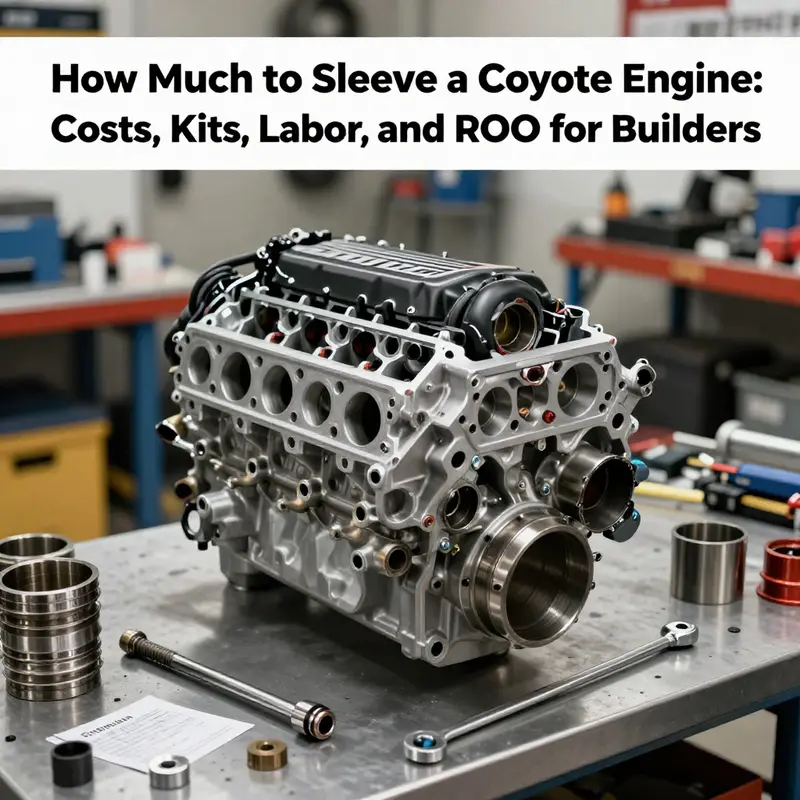
The 5.0L Coyote engine remains a benchmark for performance, durability, and modularity. When power targets demand bore restoration or enlargement, sleeving emerges as a controlled approach to maintain bore integrity while enabling higher performance goals. The cost landscape is driven by scope, component quality, and labor intensity. Typical cylinder-sleeve kits price out at roughly $1,200 to $2,500, reflecting diverse sleeve materials and precision fits for the 5.0L family. Labor to machine the block, install sleeves, hone cylinders, and reassemble the engine generally runs from $1,800 to $3,500, varying with shop rates and project complexity. In aggregate, sleeving a 5.0L Coyote commonly lands between $3,000 and $6,000, with premium shops or highly customized builds potentially exceeding that range. For serious performance programs—where sleeving is paired with forged internals, turbocharging, or supercharging—the total engine rebuild can exceed $15,000. This article dissects the cost structure across four focused chapters, helping motorcycle owners, auto owners, auto parts distributors, and repair shops plan with clarity: kit choices, material considerations, labor expectations, installation realities, and the return on investment (ROI) in real-world builds.
null
null
Sleeving the 5.0L Coyote: The Real-World Cost Map for a Cylinder-Reinforced Heart
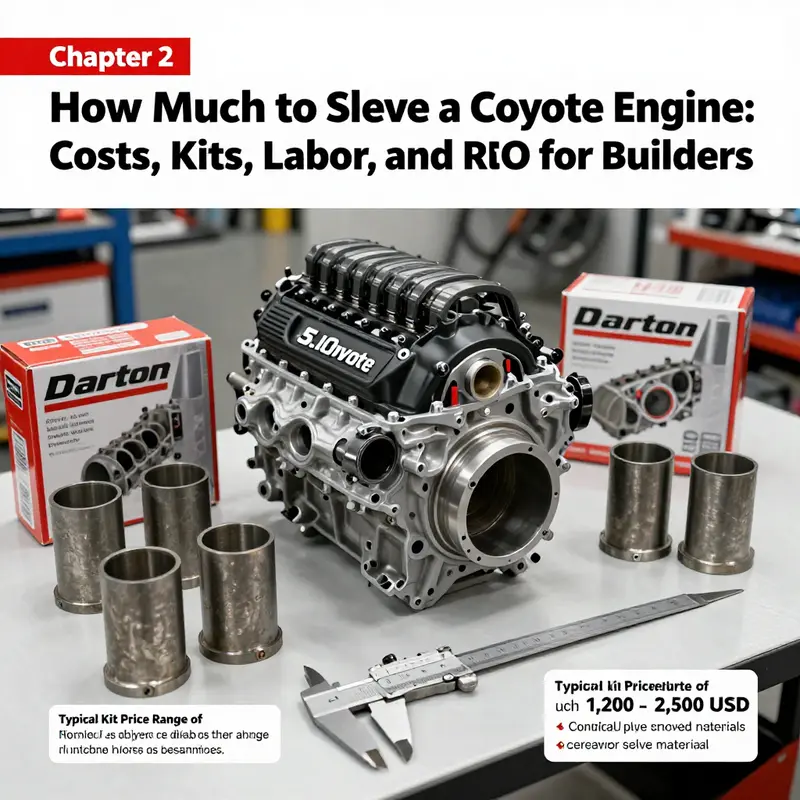
Choosing to sleeve a 5.0L Coyote engine is a decision that sits at the intersection of risk management, performance goals, and the realities of a shop bill that can swell quickly if expectations outpace what the block can reliably handle. The Coyote platform, with its modern castings and tight tolerances, responds well to higher levels of durability when the engine is destined for boosted applications or high-mileage endurance usage. Yet once wear has advanced or bore limits are reached, sleeves become more than a fix—they become a strategic investment in the block’s future. The question of “how much” to sleeve then becomes not just a sticker price, but a clausal negotiation between the engine’s current condition, the target outcome, and the shop’s capabilities. To understand what that price entails, it helps to think in terms of three main lanes: the sleeve kit itself, the machining and installation labor, and the downstream decisions that push the final number higher or lower. In practice, the journey from bare metal to a sealed, reliable cylinder entails a careful balance of material choice, precision work, and project scope that may feel opaque until you see how each piece adds up in the final total.
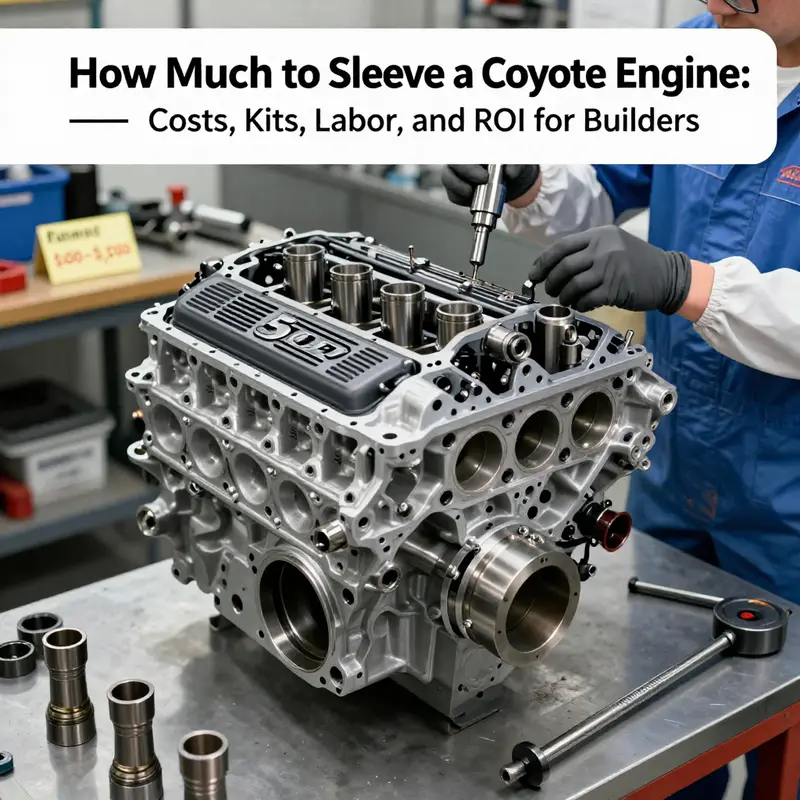
The sleeve kit, at its essence, is the set of new cylinder sleeves that replace or reinforce the worn or damaged walls of each cylinder. For the Ford 5.0L Coyote, the kit typically includes sleeves matched to the bore and the block’s deck height, installation tools, gaskets, and often ancillary items like piston rings or o-rings that ensure a clean seal once everything is reassembled. The ranges you’ll encounter here vary by sourcing and quality, but the fundamental economics often place sleeves in a window from roughly $800 to $1,500. In some market reports, sleeve-only costs can tilt toward the higher end when the sleeve geometry is optimized for specific bore increases or when the supplier includes a suite of machining aids designed to speed up the process or improve fit. It’s easy to see why this part of the bill can feel simple at first glance yet become a focal point later when the block needs precise alignment, or when the sleeves demand tighter tolerances than a standard rebuild would require.
Beyond the sleeves themselves, the machining work drives the majority of the labor cost. The block must be precisely bored, the sleeves pressed or installed to the correct depth, and the cylinders honed to the target finish. In general terms, you’ll encounter machining labor in a range from about $600 to $1,200 for a straightforward sleeve install that sticks to conventional bore targets and clean deck surfaces. However, the real world rarely offers a straightforward scenario. If a block has out-of-round bores, if line honing is required to restore multiple cylinders to a common axis, or if deck resurfacing is necessary to achieve true head-to-block flatness, the labor clock ticks faster and the price climbs accordingly. Shops that offer advanced finishes, such as crosshatch honed bores for racing-grade ring seating, typically bill more per hour, and rightfully so, because the precision work they perform yields reliability that pays off in leak-free starts and consistent cylinder pressure under boost.
When the kit and labor are added together, the commonly cited total for a standard sleeve job lands somewhere in the neighborhood of $1,400 to $2,700 for parts plus labor. That figure reflects the typical sleeve kit price plus machining, with the lower end corresponding to a more conventional, stock-bore aim and a modest level of precision work. The upper end in this range often aligns with shops that insist on tighter tolerances, more aggressive surface finishes, or a scenario in which the customer is pursuing an oversized bore or a block that requires substantial cleanup before sleeves can be fitted. It’s worth noting that broader market data—such as the reports compiled for Mustang and performance builds—sometimes lists a broader spectrum, with total sleeve jobs approaching $3,000 to $6,000 under certain combinations of high-performance targets and premium shop labor. Those higher numbers usually appear when the sleeve job is embedded in a larger program, where the engine is treated as a platform for forged internals, forced induction, or extended reliability at elevated RPMs.
From a materials perspective, the sleeves themselves are typically described as iron or steel, chosen for their wear resistance, thermal properties, and compatibility with engine aluminum blocks in modern platforms. The choice of sleeve material can subtly influence the cost, with some shops advocating iron sleeves for stiffness and heat transfer, while others favor steel for additional strength under high-load conditions. The difference in price between materials is often nestled within the sleeve kit price, rather than representing an entirely separate line item. The kit’s assembly tools and gaskets, sometimes bundled with rings or seals, matter too, but the more decisive cost driver is the machining required to create a perfect landing for those sleeves. The precision needed for a 5.0L Coyote block—an engine that thrives on tight, controlled tolerances—means that even modest deviations in deck height or bore roundness can ripple into extra labor hours, rework, or specialized tooling.
A large part of the decision calculus centers on how the sleeve work aligns with your performance goals. If the plan is a stock bore with modest durability improvements, the project can stay toward the lower end of the cost spectrum. If the goal is a modest displacement increase or a reliability-focused rebuild after track use or high-mileage life cycles, the sleeve configuration must be matched to those targets, which may involve a specific bore size and an associated honing strategy. And if the aim is a race-ready platform with forged pistons, high-pressure rings, and a turbo or supercharger, the sleeve job becomes part of a broader engine build where the total cost can easily eclipse the mid-range estimates. In those high-performance scenarios, the sleeves serve as a foundation for the rest of the build—one that must be both rigid and precisely aligned to support boosted cylinder pressures and aggressive timing maps. That is where sleeving moves from a repair measure to a strategic investment in engine architecture.
The literature and practitioner notes across shops emphasize that accuracy and consistency of the block preparation are the real cost multipliers. A careful engine builder will insist on inspecting the block—checking for core shift, warpage, or any residual damage in the decks or main bearing surfaces—before committing to sleeves. If issues are found, the block may need deck resurfacing or line honing to bring everything into spec. Each additional operation adds days to the project and dollars to the bill, but skipping these steps can compromise longevity and leak-free performance. The real trick, then, is balancing a disciplined approach with a clear sense of your performance ambitions and budget constraints. Even in the best shops, the final numbers reflect not only the sleeves and the install, but the tacit understanding of what the block is expected to endure and how the choices at install will fare under load.
Understandably, many enthusiasts watch for a single figure that tells them how much to expect, but the truth is that the sleeve decision is embedded in a wider decision tree. If the plan involves modest power gains, reliable daily driving, and a block that can be trusted for another few seasons, you’ll be guided toward sensible, repeatable processes that keep costs predictable. If the objective is extreme power with a focus on engine longevity at elevated boost, the path asks for a more robust sleeve specification, tighter tolerances, and a broader suite of supporting parts and services. In addition to sleeves and honing, the shop may recommend a deck finish, precise ring end gaps, and careful valve-piston clearance checks—each a small lever that nudges the total upward. The cumulative effect is a cost landscape that looks simple at one glance and becomes more nuanced as the build depth increases.
The practical takeaway for anyone weighing this investment is to gather multiple quotes after a block inspection, and to understand where each line item originates. The best approach is to ask for a transparent breakdown: sleeve kit price, machining hours, line honing or deck resurfacing, gasket kits, and any contingency allowances for rework or inspection. It’s not just about getting the lowest price; it’s about securing a reliable path to the outcome you want. A competent shop will emphasize the importance of proper break-in procedures, correct torque sequences, and reliable sealing strategies as part of the sleeve project—and they will warn that a misstep in the early hours of startup can undo months of careful planning. In this light, the sleeve job becomes more than a line item; it becomes a commitment to the engine’s future behavior under load, heat, and RPM.
For readers seeking a focused cost perspective that foregrounds the numbers, one can review sources that compile sleeve-cost data for the 5.0L Coyote. The picture emerges consistently: sleeve kits in the broader market sit around the $800 to $1,500 range, with machining and installation driving most of the labor costs toward $600 to $1,200. The resulting total for a typical sleeve job tends to land between roughly $1,400 and $2,700, though a higher-end or performance-focused build can push the total well beyond that. It’s also common to see the complete program framed as a broader rebuild, where total engine costs for a high-power project easily surpass $15,000 when forged components, boosting, and full engine rework are included. Such figures illustrate the spectrum from a measured, reliability-first sleeving effort to a full-on performance platform that redefines the engine’s capability and its budget. When you’re talking about the Coyote family, the sleeve decision doesn’t stand alone; it sits inside a strategy that links reliability, power, and cost into a coherent, build-specific plan. If you want a clearer snapshot of the cost side tailored to your goals, consider the dedicated sleeve-cost guide for the Coyote engine as a practical reference point. Coyote engine sleeve cost.
The broader context for these numbers comes from simple, repeatable market observations: the sleeve kit is the foundational item, the machining is where precision reveals itself, and the total is ultimately governed by how far you want to push the engine’s capabilities. Even within the same block family, shops may price differently because of their internal equipment, their familiarity with the Coyote’s particular block geometry, and the level of post-installation testing they perform. A shop that prioritizes rapid turnarounds might offer leaner labor charges, but with less room for post-installation tweaking. A performance shop, by contrast, may price aggressive line honing and deck work more aggressively because they are committed to a particular standard of finish and a long road test that’s expected to demonstrate repeatable results under race-like conditions. Both paths have merit, but the value you derive from them hinges on whether your project is a daily driver with an occasional track day or a purpose-built powerhouse intended to sustain long sessions at high power.
As you close the loop on the decision, you’ll likely come away with a more nuanced sense of how the numbers flow into a practical outcome. The sleeve kit is a gateway to restoring structural integrity and enabling future reliability, while the rest of the work—block prep, precise fitting, and controlled finishing—determines how faithfully that integrity translates into long-term performance. The sleeve’s role is not just to restore a worn wall; it is to create a predictable canvas on which a tuned engine can operate at the limits its builder envisions. This is why, in real-world practice, sleeve projects are rarely discussed in isolation. They are components of an engineered strategy whose success depends on disciplined execution, honest budgeting, and clear alignment between ambition and capability.
External Reference: https://www.racefab.com/blog/2023/09/06/cylinder-sleeve-replacement-costs-for-5-0-l-coyote-engine
The Price of Performance: Sleeving a 5.0L Coyote V8
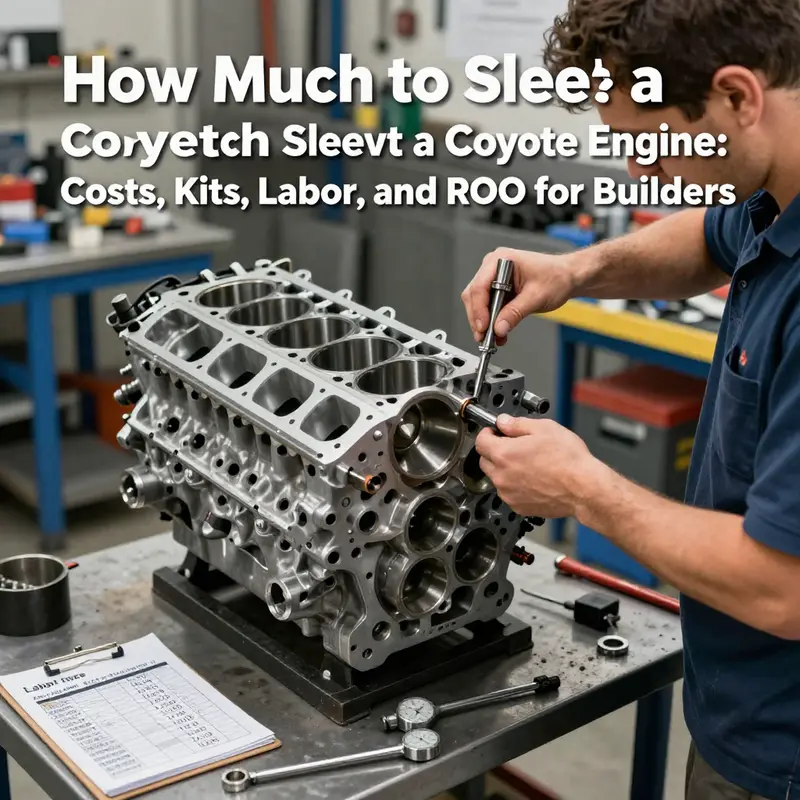
Sleeving a 5.0L Coyote engine is a decision at the crossroads of precision engineering and budgeting. It is not simply about dropping in new sleeves; it is about restoring bore integrity, enabling larger bore diameters when needed, and laying groundwork for higher-than-stock power. The conversations around this work typically revolve around three cost vectors: sleeve kit, installation labor, and ancillary work. The sleeve kit itself often runs from about $1,200 to $2,500, with material choice and bore compatibility shaping the price. Iron sleeves offer strength and economy, while aluminum sleeves can improve heat transfer but demand meticulous machining. The choice between dry sleeves and wet sleeves influences installation complexity and sealing requirements. Dry sleeves rely on a precise interference fit, while wet sleeves sit in a coolant environment and introduce additional sealing considerations. Installation labor is a major driver of cost, commonly ranging from roughly $1,800 to $3,500 depending on regional rates, shop capability, and the scope of work from teardown to reassembly. In high-performance builds, extra machining such as deck resurfacing or related upgrades can push the total toward the upper end of the range. When the plan includes forged internals, forced induction, or advanced tuning, the economy of sleeving shifts and total project costs can rise significantly. Across typical projects, sleeve-related costs often land between $3,000 and $6,000, with premium builds exceeding this range in specialized shops. Sleeving is usually part of a broader strategy: a repaired and sized bore is a platform for reliability and sustained performance, especially when paired with upgraded pistons, rods, and induction systems to meet power targets. A prudent budgeting approach starts with a candid assessment of the engine’s condition and a transparent scope of work from a reputable shop, followed by quotes that clearly separate kit, machining, and any deck or balancing work. For quick reference, a concise sleeve-cost range for a 5.0L Coyote is typically cited as $1,200–$2,500 for the kit and $1,800–$3,500 for installation, with total project budgets commonly in the $3,000–$6,000 ballpark. The sleeve is a tool that enables a broader performance vision: reliability, controlled bore sizing, and long-term durability when paired with thoughtful engineering choices.
Chapter 4: The Real Cost of Sleeving a Coyote Engine—and What It Brings in Power, Longevity, and Peace of Mind
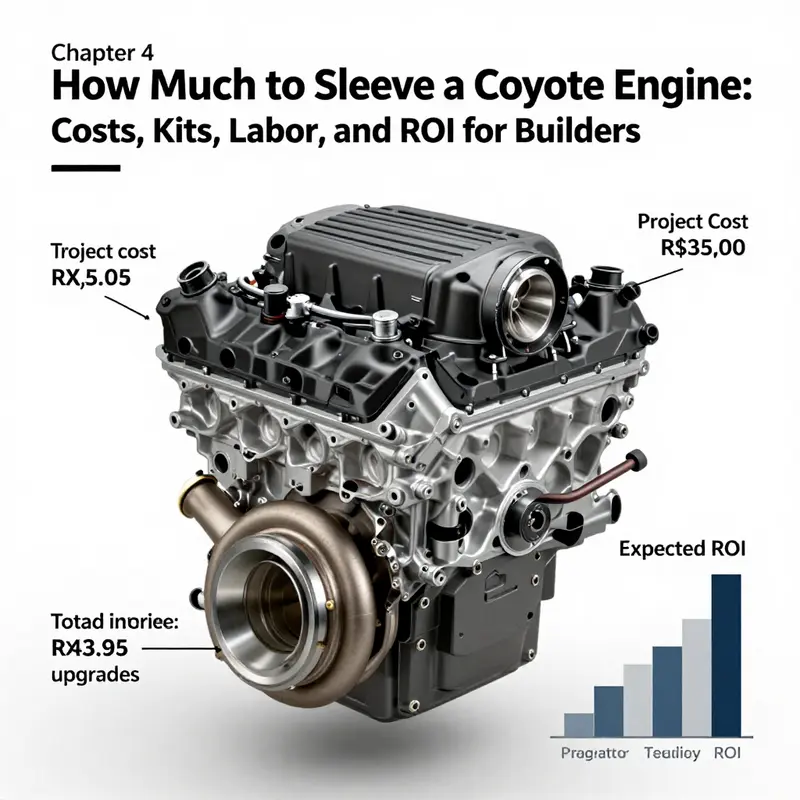
Sleeving a Ford 5.0L Coyote engine is one of those upgrades that sits at the intersection of durability, performance potential, and budget discipline. For enthusiasts chasing higher horsepower, or simply wanting to restore the engine to a state that can handle more stress without a bore-horned future, sleeves are more than a detail. They are a strategic investment that changes the engine’s ability to manage bore wear, maintain tight tolerances, and survive the fatigue of aggressive tuneups. Yet the decision to sleeve, the type of sleeve chosen, and the precise scope of prep work all cascade into a final price that can surprise if you do not parse the components carefully. The numbers that define this path are clear, but the value you derive from them depends on how you frame your goals: reliability for a high-revving, high-load build; or a platform that accommodates forced induction and sustained street or track duty. In practical terms, the cost to sleeve a 5.0L Coyote begins with a line item that is easy to overlook and difficult to optimize: the sleeve kit itself. A complete sleeve kit—meaning the sleeves themselves and the precise fitment for the block—generally falls in a broad range from roughly twelve hundred to two thousand five hundred dollars. That wide spread reflects variation in sleeve material, finish, thickness tolerance, and the engineered compatibility with the exact bore you intend to run after installation. The sleeves are not generic parts. They are precision-fit components designed to align with the deck surface, the bolt courses, and the crankcase geometry so that the piston rings and cylinder walls work together as a system rather than as isolated pieces. In the context of performance builds, where bore increases or reprofiling is part of the plan, the sleeve kit becomes the foundational element around which the entire build must be designed. If the sleeves themselves are a premium offering, the price premium corresponds to the material science and the engineering that ensures a durable seal, even as cylinder pressures rise with boosted configurations. The second major line item is the labor. Sleeving a modern engine is not a simple press-and-bore operation; it is a sequence that requires precision machining, careful alignment checks, and a re-honing of the cylinder walls to match the new bore. Labor costs can vary widely, but the common range sits somewhere between one thousand eight hundred and three thousand five hundred dollars. That spread reflects the shop’s hourly rate, regional cost of living, and the complexity of the block’s existing condition. In many shops, the process includes deck resurfacing or surface refinishing to guarantee a true flat surface, followed by sleeve installation, honing to the correct finish, and a meticulous reassembly with new gaskets and seals. When you add it up, the total cost for a standard sleeve project on a 5.0L Coyote usually lands in the three-thousand to six-thousand-dollar zone. If you’re pursuing a higher-end, custom build that pairs sleeving with forged internals, high-flow headwork, and forced induction, the total can easily exceed this baseline, and in some cases climb past the fifteen-thousand-dollar mark. It is not unusual for enthusiasts chasing big power to view sleeving as a stepping-stone or a backbone that unlocks a broader upgrade pathway. In that context, sleeving is a prudent investment in the engine’s long-term health and performance envelope, not a standalone savings decision. The precise cost picture, however, becomes more nuanced once you start counting the optional or required extras. For example, the sleeve kit itself may be a premium option with a higher wall thickness and tighter tolerances to accommodate higher boost pressures, or it might be a more standard version that is sufficient for a naturally aspirated or moderate boost setup. The difference might appear modest on a single line item, but it compounds when you consider the entire chain—deck resurfacing, a new piston and ring set tailored to the new bore, and perhaps new head gaskets or an updated valve train to suit the altered geometry. In the mid-range, a sleeved build can be financially efficient if you already plan to refresh related components. If your plan includes forged rods, pistons, and a tuned fuel system, sleeving becomes a logical part of a cohesive reinforcement package rather than an isolated upgrade. It is here that the ROI argument often rests on performance consistency and reliability. A sleeved block is more likely to tolerate higher cylinder pressure and sustained high-rev operation than a worn, over-bored block. This translates into a measurable benefit in the form of reduced ring seal loss, decreased likelihood of bore instability under load, and better long-term durability when the engine is driven hard or run at elevated RPM ranges. The ROI discussion shifts from raw cost savings to performance certainty and the peace of mind that comes with a robust, repeatable build. For enthusiasts evaluating the numbers, it helps to anchor expectations around a couple of practical questions. How much horsepower are you realistically targeting, and how often do you intend to push the engine to the limits of its tolerance? Is your plan primarily street-driven with occasional track dates, or is it a dedicated race or high-performance street build? The answers will guide whether you pursue a leaner sleeve option, or whether you invest more heavily in materials and machining to maximize reliability at higher power levels. The decision calculus also benefits from a cost-clarity exercise: break down the sleeves and labor into separate, transparent line items and then examine the ancillary expenditures that will be necessary to match the new bore size. Deck surfacing or resurfacing, for example, is a common requirement in sleeving projects to ensure the top surface remains perfectly flat. Then, you need to account for refining the crankcase and oiling passages to align with the new cylinder geometry, plus the potential need for revised pistons and rings that suit the new bore to maintain correct compression and piston-to-wall clearance. Each of these elements adds a layer of complexity and a potential cost variation. To ground this discussion in practical terms, consider a common reference point for sleeves on a 5.0L Coyote: the sleeve kit price for the cylinders itself can sit in the mid-range of the spectrum—roughly four hundred to six hundred dollars for a typical premium sleeve kit. Those numbers may be surprising because the sleeves themselves are only part of the total equation. Yet they underline a crucial reality: the sleeve is only one facet of a broader, carefully engineered upgrade. In many shops, the labor portion is where the budget truly flexes, with skilled technicians dedicating a significant portion of the project to ensuring the block is correctly prepped, the sleeves are precisely seated, and the cylinders are honed to the precise finish that the rings require for optimal seal and wear characteristics. It is not unusual for the total job to fall into the range of one thousand two hundred to two thousand one hundred dollars when the block is in good shape and the goal is a straightforward sleeving with compatible components. For builds that push the engine harder, the mix of sleeving with upgraded bearings, pistons, rings, gaskets, and an adapted oiling system can push the total into the upper teens in terms of value. In the procurement phase, the choice of sleeve type matters. The community and performance landscape show a spectrum from thicker-walled, robust sleeves designed to handle higher boost pressures to more conventional, serviceable sleeves that restore the original bore geometry. Each option influences not only the price but also the compatibility with downstream components and the required cooling or lubrication strategy. While the specifics of materials and bore geometry are crucial, the practical takeaway for most readers is this: sleeve cost is a blended figure. It reflects the sleeve itself, the precise preparation of the block, and the broader plan for the engine’s architecture. If you want a more detailed dive into the cost drivers and the nuanced geometry behind sleeving for a Coyote, the discussion at the dedicated sleeve-cost resource provides a thoughtful breakdown of how bore size, material choices, and installation techniques affect the bottom line. For a broader sense of the market and the reasoning behind the pricing, see the linked discussion on sleeve costs and geometry. coyote engine sleeve cost. This resource helps frame the conversation by outlining typical cost drivers and why even modest variations in bore or material can translate into meaningful price differences. In terms of external validation, a reputable sleeve-supplier overview illustrates how premium sleeve options begin at a modest level, but the real driver of cost is the precision and the scope of the preparation work required to guarantee that the sleeve’s interface with the block is airtight and long-lasting. The external reference highlights the importance of exacting tolerances and the engineering behind ensuring that the block can safely handle higher cylinder pressures without sacrificing longevity. The sum of all these considerations is a picture of sleeving as an intelligent, staged investment rather than a single-price toggle. If you approach the project with a clear plan for what you want to achieve and a dependable shop that can execute the required steps, sleeving can become the backbone of a build that delivers consistent power, resilience, and the ability to sustain high-rev operation for extended periods. The long-range benefits—improved ring seal at elevated temperatures, reduced bore wear, and the capacity to sustain boost or aggressive tune-ups—are the kinds of returns that many builders count on when evaluating the total cost. In the end, the number is a guidepost. It tells you what to expect, but the value is defined by how well the modification aligns with your performance goals and how effectively your chosen shop executes the plan. Understanding the cost structure helps you distinguish between essential investments and optional upgrades, ensuring you do not overpay for neck-down items or underinvest in the core elements that determine durability. The decision to sleeve a Coyote engine is as much about building confidence in the engine’s future as it is about chasing more horsepower. When done thoughtfully, it becomes a disciplined, predictable upgrade that supports a broader strategy for reliability, performance, and the stability of every mile you plan to put on the car. External resources and the internal reference point both reinforce this interpretation: sleeves are a cornerstone that should be contemplated with the same care you devote to choosing pistons, rods, and a tune. For readers who want to explore further, the external resource provides context on sleeve specifications and the rationale behind certain bore choices that translate directly into the cost. And for those curious about the price breakdown in practical terms, the internal link offers a concise look at how the costs accumulate and where the biggest value lies in a well-executed sleeving project.
Final thoughts
Sleeving a 5.0L Coyote engine is a focused, cost-conscious path for restoring bore integrity or enabling larger bore capacity within a broader performance program. The kit cost typically sits between $1,200 and $2,500, while shop labor commonly ranges from $1,800 to $3,500, yielding a practical project total of roughly $3,000 to $6,000. Real-world builds that push horsepower into the multi-hundred range or incorporate forged internals and forced induction can exceed this, underscoring the importance of aligning sleeve selection with goals, reliability, and return on investment. For motorcycle and auto owners, distributors, and repair facilities, a clear specification, vetted supplier networks, and a disciplined installation plan are essential to achieve predictable results and long-term value.