
Cylinder sleeves, or cylinder liners, are a foundational element in many modern small-displacement engines. For the Kubota D902, a compact diesel engine widely used in light machinery and some vehicle platforms, sleeve presence directly affects wear surfaces, rebuildability, and long-term reliability. The initial evidence points to a D902 that uses cylinder liners, including references to a D902 Liner Kit with Cylinder Gasket and a D902-compatible cylinder liner sleeve. Sleeve technology forms the inner surface that the piston rings ride against, and it is typically replaceable when wear or damage occurs. This article targets motorcycle owners, auto owners, auto parts distributors and wholesalers, and auto repair shops and garages, offering a technical yet accessible view of what sleeves are, why they matter for the D902, how they are constructed, how to source and size them, and how sleeves influence maintenance. Four chapters unfold this topic: confirmation of sleeves and their function, technical specs and materials, replacement and sizing, and maintenance impact and longevity. Each chapter builds toward a practical, actionable understanding you can apply in the shop or at the parts counter.
Sleeves Inside the D902: Confirming Cylinder Liners and the Quiet Longevity They Enable
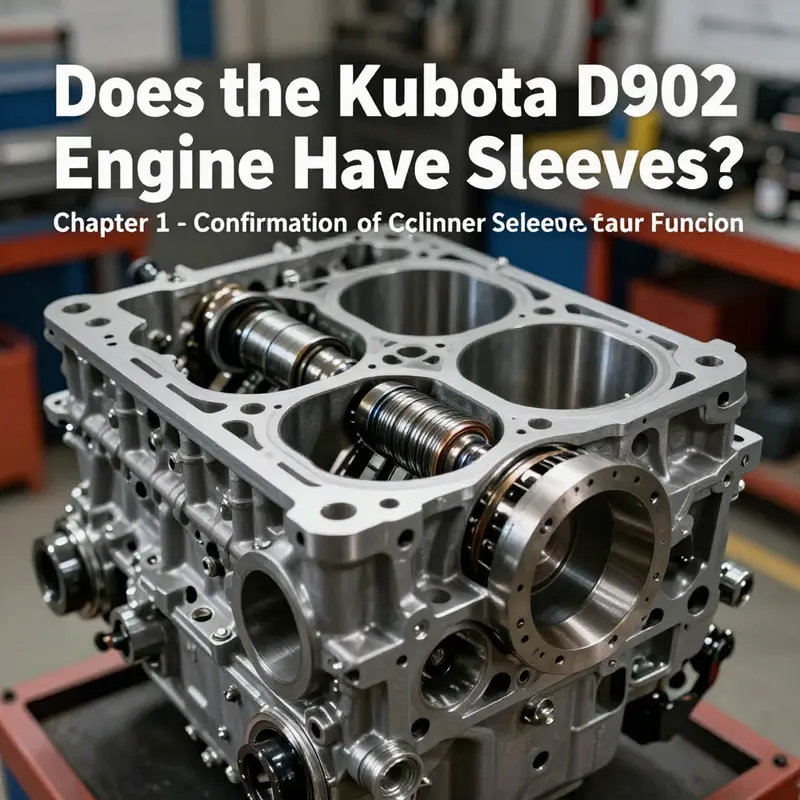
The question of whether the D902 engine uses sleeves is more than a matter of parts catalogs and part numbers. It touches the core of how Kubota designed a compact, durable diesel that could withstand the rigors of work, be rebuilt, and keep downtime manageable for operators across a range of applications. The evidence is clear and consistent: the D902 employs cylinder sleeves, also known as cylinder liners, as the wear-resistant inner surface of the cylinder bore. This design choice is not an abstract detail; it directly affects maintenance planning, overhaul intervals, and the practical realities of keeping a machine in service. You can see this in liner-kit references specifically labeled for the D902, such as a “D902 Liner Kit With Cylinder Gasket,” which explicitly ties sleeves to the D902 family. You also encounter references to a “Cylinder Liner Sleeve” for the Kubota D902 engine used in other equipment, highlighting that the sleeve is a standard wear component rather than a one-off piece unique to a single application. Taken together, these notes establish a measurable fact: the D902 uses cylinder sleeves as the inner surface that the piston rings interact with during each combustion cycle. The sleeves form a replaceable lining that preserves the integrity of the engine block while offering a practical path for refurbishment.
To appreciate why sleeves matter in this context, it helps to understand what a cylinder liner actually does. The inner bore that the piston and rings ride within must withstand high combustion temperatures, abrasive wear, and the relentless motion of thousands of cycles per minute. A sleeve provides a dedicated, wear-resistant surface that takes the initial punishment of the piston rings. Because the sleeve is replaceable, it offers a practical route for overhauls without the more expensive and invasive process of re-boring or replacing the engine block. In small diesel platforms—where the D902 finds its footing in compact machines—the sleeve concept aligns with serviceability and lifecycle economics. When the bore becomes worn or marginally damaged, a sleeve can be refreshed or replaced, and the engine can return to duty with far less downtime than a full block overhaul would require. This is the kind of design philosophy that keeps a machine productive in field conditions, where downtime translates directly into lost work time and potentially higher operating costs.
The existence of cylinder sleeves in the D902 is also reinforced by cross-application references. In practice, the D902 tray of liners and sleeves surfaces in contexts beyond a single machine model. For example, sleeves described for use in other Kubota-powered machinery demonstrate the versatility of the sleeve approach: the same family of liners can be specified for multiple applications that share a platform or a family of small-displacement diesel engines. This cross-compatibility is not merely convenient; it underscores a broader engineering strategy in which a robust, replaceable inner surface can be adapted to various blocks and configurations without redesigning the entire cylinder from the ground up. One consequence of this is that the service documentation you find often points to liner kits and related components such as gaskets, machining references, and protective finishes that accompany the sleeve installation. The presence of phrases like “D902 Cylinder liner half-finished” hints at the manufacturing and finishing steps that precede the final fitment. In practical terms, a liner kit is not just a single part; it is a small, integrated package that enables a controlled refurbishment, with precise bore finishing, proper seating for the gasket and head components, and compatibility with the piston rings and rings-land geometry specific to the D902 family. The implication for technicians is straightforward: when a D902 engine is rebuilt, the work often centers on the sleeves as the primary wear item, with the block left intact while the liners receive the necessary finishing and verification.
So what does this mean in terms of function and lifecycle? The cylinder sleeve in a D902 engine serves as the inner surface against which the piston rings sweep. It must resist the rubbing action of the rings, tolerate heat and pressure, and maintain a consistent, round bore over the life of the engine. The wear mechanism that sleeves address is twofold: mechanical wear from the sliding rings and thermal wear from the high-temperature combustion environment. A well-chosen sleeve alloy and a robust bonding method—whether the sleeve is a wet-type that is immersed in coolant or a dry-type that interacts differently with the block’s casting—provide a durable frontline for the cylinder. In most diesel practice, sleeves are designed to withstand thousands of hours of operation, and their replaceability is what makes the D902 and similar engines rebuildable rather than throwaway blocks with limited service options.
The practical implications extend beyond the technical. For maintenance teams, the sleeve route means a predictable repair path. If the bore shows signs of taper, scoring, or loss of compression due to ring land wear, the sleeve option makes a rebuild feasible without replacing or reworking the entire block. This translates to shorter downtime, controlled costs, and a pathway to restore engine performance with more predictable outcomes. It also means that when the engine is set for overhaul, technicians will verify sleeve condition, bore finish, ring end-gap, and piston-to-bore clearances, ensuring the restored bore aligns with the engine’s designed tolerances. The concept of finishing or machining sleeves—evidenced by references to “half-finished” liners—points to the precision that underpins this approach. The sleeves arrive in a near-net form and require final honing or finishing to fit the block and achieve the exact bore diameter needed for the piston rings in their intended clearance range. This final finishing step is critical; it ensures that the wear surface is perfectly round and evenly finished to avoid hotspots that could accelerate wear in operation.
In discussing the D902 and its sleeves, it is also valuable to consider the broader design logic common to many diesel engines of a similar size. The sleeve approach aligns with a balance between durability, serviceability, and cost. A durable block may be less expensive to produce, but without an interchangeable wear surface, its life becomes tied to the entire block’s longevity. Sleeves decouple wear from the block in a practical sense. When sleeves wear, they can be replaced or refurbished, and the block’s core remains viable for many more hours of service with the right maintenance. This design philosophy matters to operators who rely on steady performance and predictable maintenance windows. It also matters to technicians who perform the service, because the kit-based approach—liners, gaskets, and any needed machining steps—provides a repeatable, standard workflow that can be followed across a range of machines powered by the same engine family.
To connect this historical and functional perspective to the everyday realities of maintenance, consider the broader implications for engine performance. Cylinder sleeves influence compression, heat transfer, and lubrication dynamics within the cylinder. A proper sleeve finish ensures that the piston rings seat and seal correctly, enabling consistent cylinder pressure and efficient combustion. The lubrication regime becomes predictable when the bore surface is stable, minimizing oil consumption caused by excessive blow-by or ring leakage. In service terms, a well-maintained sleeve surface can contribute to reliable starting, smoother idle, and stable torque delivery under load, all of which are essential for machines where the D902 powers a range of tasks—from grading and digging to lifting and transporting. The ability to replace worn sleeves rather than tossing an entire engine is not a cosmetic convenience; it is a strategic capability that extends the productive life of the machine and reduces the total cost of ownership over the engine’s lifecycle.
For readers who want a quick primer on engine sleeves, a concise resource is available that clarifies what sleeves are and why they matter. It provides a compact overview of the sleeves themselves, their functions, and how they fit into the broader engine refurbishment process. You can explore that primer here: What are engine sleeves.
As this discussion centers on the D902, it is useful to keep in mind that sleeve-based design is a widespread approach across many diesel platforms of similar scale. The principle remains the same: the inner surface of the cylinder is protected by a replaceable lining that can be manufactured, finished, and replaced with relative ease compared to other options. The D902’s sleeve strategy aligns with this principle, providing a tangible path to maintain performance, minimize downtime, and support the long-term viability of machines that depend on this engine for daily operations. The exact specifications—whether the sleeves are wet or dry, the precise alloy composition, and the finishing tolerances—are detailed in service manuals and parts catalogs, and they can vary by application. The overarching takeaway, however, is consistent: the D902 uses cylinder sleeves, and these sleeves play a central role in wear management, rebuild practicality, and the continued reliability of the engine across its service life.
For readers who want to explore the broader context of sleeves in related engines, a general reference offers additional perspective on how these components fit into engine design as a whole. See the external resource for a broader overview of Kubota and sleeve-focused machining and maintenance practices: https://en.wikipedia.org/wiki/Kubota.
Engine Sleeves and the D902: Liner Design, Materials, and Fit
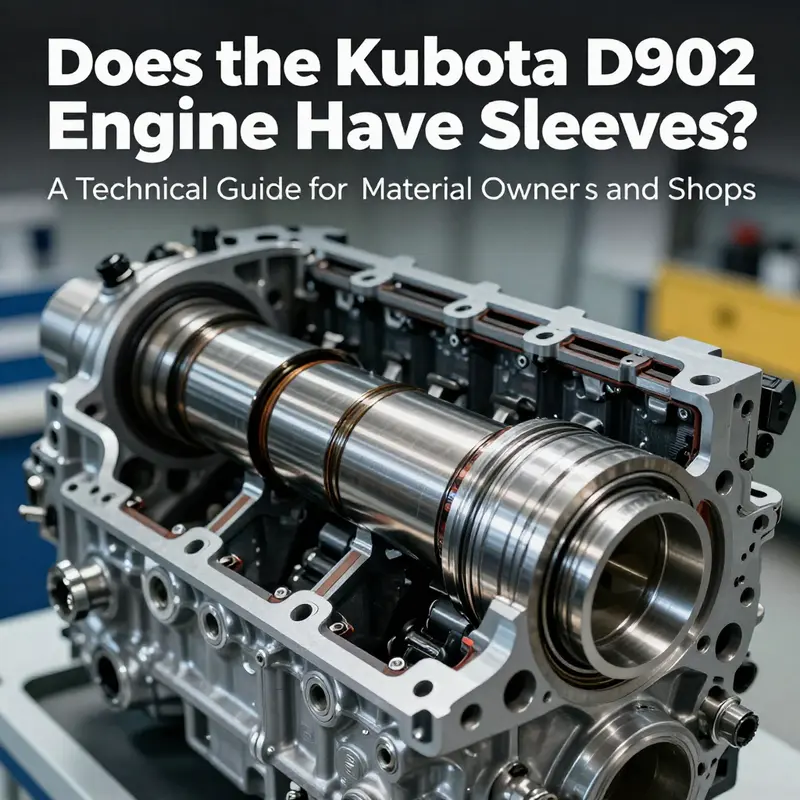
The D902’s wet-type cylinder liners place the wear surface and heat transfer path inside the cooling circuit. The standard bore is 72 mm. The liner is typically ductile iron or gray iron with a cross-hatch honing pattern to promote oil retention and even wear. Tight tolerances around ±0.01 mm ensure a repeatable interference fit when pressed into the block and proper clearance for piston rings. Seals at the top and bottom, usually O-rings or metallic gaskets, prevent coolant or oil leakage and maintain ring seal. OEM liners such as 16224-02310 and 16224-02311 are specified to meet metallurgical and dimensional requirements. In service, liners are often replaced during overhauls along with pistons, rings, and gaskets to restore compression and reliable cooling. The liner’s role is to manage heat, control oil film, and maintain consistent ring seal across temperature and load variations, contributing to long-term engine life in Kubota agricultural equipment.
Sleeves in the D902: Replacement, Availability, and Sizing for Kubota’s Cylinder Liners
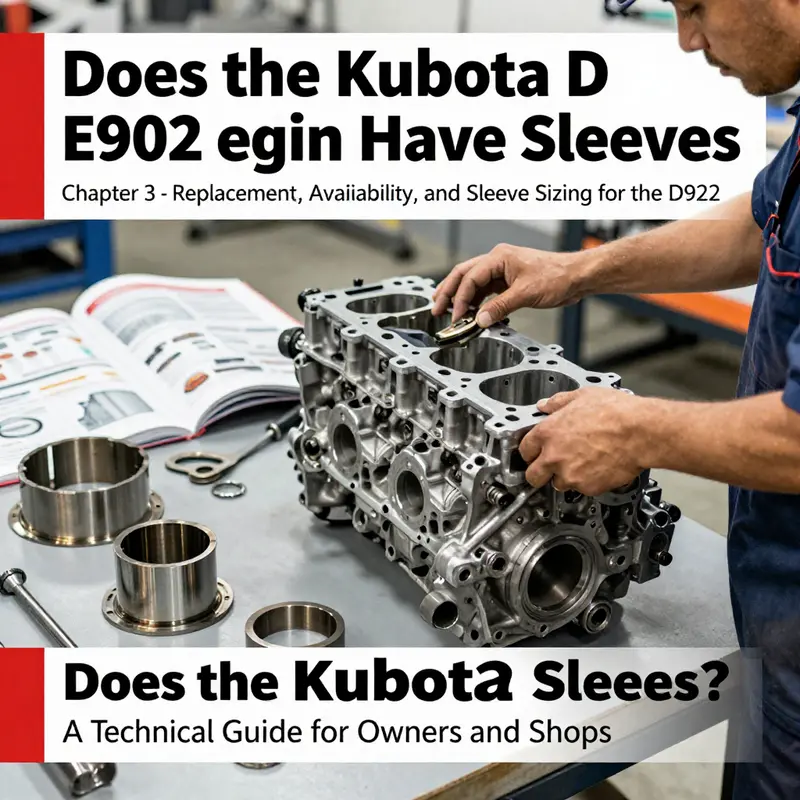
The question of sleeves in the D902 is more than a matter of parts on a parts diagram. It touches the heart of how this compact diesel breathes, seals, and endures under load. In engines of this class, what most technicians call sleeves are the cylinder liners that form the inner surface of the bore. They are not merely wear surfaces; they are engineered interfaces between the piston rings and the cooling system, a marriage of material science and precision machining that determines compression, heat transfer, and long-term reliability. The D902, like many mid‑sized industrial and agricultural engines, uses cylinder liners to establish a replaceable, wear-resistant bearing surface inside the block. When wear or damage accumulates in the bore, replacing the liner becomes a far more practical and economical choice than reworking the entire block. This is the core reason sleeves matter in the D902: they allow restoration of original bore geometry, restore compression, and sustain engine performance without wholesale block replacement. The concept is straightforward, but the execution requires careful attention to spec, fit, and process steps that ensure the new liner seats correctly under coolant pressure and thermal cycling. A correctly installed liner maintains concentricity with the crank, ensures uniform ring seal, and provides the right clearance for piston movement throughout the operating range. In practice, the presence of sleeves in this engine model is confirmed by the availability of liner-related overhaul kits and fresh liners offered by OEM sources and reputable aftermarket suppliers. The practical upshot is that anyone faced with worn bores on a D902 can pursue a rebuild path that preserves the engine’s original bore diameter and cross‑hatch finish, while replacing the vulnerable surface with a fresh, engineered wear layer that has been vetted to OEM or near‑OEM specifications. To navigate this, it helps to keep a clear distinction in mind: the sleeves are the wear surfaces, the liners that define the bore, and the gaskets and seals that complete the seal between liner and block form the airtight envelope required for proper compression and cooling. The right approach to sleeves begins with an accurate diagnosis of bore wear. If the piston rings begin to lose seal integrity, if the cross-hatch pattern is severely worn, or if honing reveals deep scoring, replacing the liners is often the recommended path. The D902’s liner kits are designed to restore the bore to its intended diameter and surface finish, allowing the engine to regain compression and power while maintaining reliable cooling. When you decide to overhaul, you will find that liner kits come in a package that includes the sleeves and the associated gaskets needed to secure them, ensuring a complete, OEM‑compliant reinstatement of the cylinder bore. The presence of a liner kit with a cylinder gasket is a common indicator that the engine is prepared for a major rebuild that includes liner replacement, especially when the objective is to bring a worn or damaged cylinder back to factory specifications. It is worth noting a common point of confusion for many readers: some catalogs refer to a “crankshaft sleeve” as a separate item. In the D902 context, the crankshaft sleeve is a different component from the cylinder liners. The crankshaft sleeve is used to shield or space the crankshaft in specific assemblies, while the cylinder liners live inside the block to form the bore in which the piston operates. This distinction matters because it informs what a practitioner needs to order depending on whether the wear is in the crankshaft area or in the cylinder bore. In a rebuild, you may encounter both categories of sleeves, and understanding their separate roles helps prevent cross‑ordering errors that can stall a repair project. Because the D902 is a compact engine designed for reliability in demanding work environments, suppliers frequently segment their offerings into two primary categories: liner kits for the cylinder bores and separate sleeves for crankshaft areas. The separation aligns with the way technicians approach cylinder repair versus crankshaft refurbishment, and it emphasizes the importance of accurate part identification during the disassembly and reassembly phases. Actual availability mirrors this structure. Genuine and aftermarket liner kits for the D902 are widely stocked by authorized distributors and online retailers. These kits are designed to meet OEM specifications and provide a complete package for overhaul, including the sleeves and cylinder gasket. The kits are often labeled as D902 Liner Kit With Cylinder Gasket or similar designations in catalogs that emphasize OEM‑quality fit. When selecting a kit, it’s prudent to verify the sleeve size and bore compatibility with your engine’s serial number or model variant. The D902 model lineage can span several versions used across tractors, construction equipment, and industrial machinery. The same bore size might be standard in many units, but adapters or kit variants can exist to address minor differences in block Casting or deck height across model variants. Consequently, the rebuild kit’s documentation, including the sleeve dimensions and gasket specifications, should be reviewed before purchase. In many cases, standard sleeve dimensions are appropriate for the majority of D902 engines, but some units may require oversize or undersize options depending on wear state and the results of a precise bore measurement. The process of confirming sleeve size begins with careful measurement of the existing bore after removing the old liners. A skilled technician will check the bore diameter at multiple points, assess roundness, assess taper, and verify the cross‑hatch pattern after cleaning. If the measurements reveal a diameter that deviates beyond factory tolerance, a corresponding oversize or undersize sleeve may be specified. The selection of STD, oversize, or undersize liners is a decision that should be guided by torque specifications, cooling system integrity, and the mating piston dimension. At this point, the practical steps of replacement become a matter of precision and discipline. The liner removal and installation sequence must be conducted with the proper tooling to ensure the liner seats squarely and does not tilt. The coolant passages around the liner must be checked for clearance and cleanliness to prevent hot spots and uneven cooling. The cylinder gasket included in the liner kit plays a critical role in sealing the bottom end of the liner to the block and in sealing the head area around the bore. A proper gasket seal is essential because even a small leak around the liner can compromise combustion pressure and cooling efficiency. The assembling team should follow a methodical approach: install the liners in the correct orientation, verify the seating depth, confirm the gasket alignment, and perform a careful bore measurement after installation to verify that the new surface is concentric and true. Only then should the rest of the rebuild proceed, including the installation of new rings, pistons if required, and the reassembly of the head and cooling system. Availability of these sleeves and liner kits is aided by a robust supply network. Online retailers and authorized Kubota parts distributors typically maintain stock or can source the required liner kit promptly. The broader takeaway for anyone planning a D902 overhaul is that sleeves are not an abstract concept reserved for high‑end engines; they are practical, replaceable components that restore the core bore geometry and performance. By engaging with the right parts catalog, technicians can secure a liner kit that matches OEM specifications and supports a durable seal with the cylinder gasket included in the package. For builders who want a quick primer on the sleeve family, a concise overview is available that explains what engine sleeves are and how they function within the larger system. What are engine sleeves? This resource offers a clear explanation of the sleeve concept without getting lost in model‑specific details, allowing technicians to approach the D902 task with the right mental model before delving into dimensional specifics. In practice, the D902 sleeves represent a blend of established engineering principles and practical repair strategies. The cylinder liner is not simply a wear item; it is part of the engine’s heat management and sealing system. Properly selected and installed, sleeves help restore compression and maintain stable piston ring sealing under the cyclic demands of combustion and cooling. The availability of liners in STD and oversize forms aligns with the maintenance philosophy that many operators value: the ability to return an engine back to service quickly and with confidence that the bore will perform under load for the next cycle of hours. A well‑executed liner replacement preserves the original geometry that the manufacturer designed into the engine, which supports consistent combustion chamber shape, compression pressure, and ring seal. It also minimizes the risk of ring micro‑seizure and the wear patterns that can emerge if a worn bore is left untreated. This is especially important for machines operating in harsh environments where dust, vibration, and heavy loads accelerate wear. The re‑bore and liner installation step should be performed in a clean, controlled workshop environment, with precise measurement tools and proper alignment fixtures. While the exact tools and torque specs can vary by block design and kit version, the underlying principles remain constant: restore roundness, return the bore to the intended diameter, and ensure a clean, uninterrupted coolant path around the liner. After the liners are in place, a careful break‑in and monitoring phase ensures that the mating surfaces, piston rings, and gaskets settle in correctly. Operator vigilance during the initial hours can detect any deviations in compression, misalignment, or unusual temperatures that would indicate routing adjustments or a revisit to the liner seating. In the broader context of engine maintenance literature, the D902’s liner approach is consistent with industry practice for engines of similar size and application. For those who need to corroborate these practices with official guidance, the topic is reflected in technical support resources that discuss cylinder wear, liner replacement strategies, and the role of gaskets in sealing the liner to the block. For readers seeking official guidance on specifications and service procedures, consult the official support portal of the manufacturer, which provides the most up‑to‑date service bulletins and part numbers tailored to specific model ranges and production years. As a closing note on availability and sizing, the takeaway is that while liners are a standard solution for worn bores, the exact part numbers and sizes must be verified against your engine’s serial and model data. The D902’s liner kits, including the cylinder gasket, are designed to fit a wide range of configurations and are accessible through authorized distributors. The practical outcome for owners and technicians is straightforward: if the bore has shown enough wear to jeopardize compression and coolant sealing, a liner kit can deliver a reliable repair path that preserves the engine’s original design intent and performance envelope. External resources and OEM documentation can provide the specifics needed to order the correct kit and confirm compatibility with your unit’s variant, engine hours, and operating conditions. For additional context on official guidelines and model‑specific procedures, refer to Kubota’s official support portal at https://www.kubota.com/support.
Sleeves in Focus: Maintenance, Longevity, and Real-World Performance of the Kubota D902’s Cylinder Liners
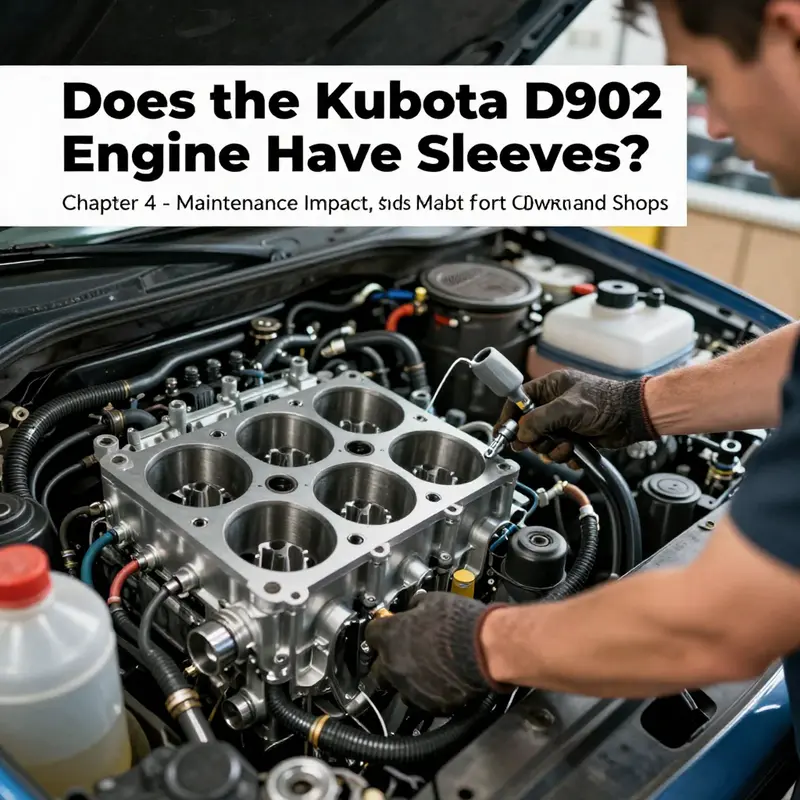
When engineers design an engine for daily work, they weigh ease of maintenance against the demands of reliability. In the Kubota D902, cylinder sleeves play a quiet but pivotal role in striking that balance. The available repair and parts information points to a standard practice in this family of engines: cylinder liners, or sleeves, form the inner surface of the cylinder bore and serve as the wear-resistant interface for the piston and rings. The presence of dedicated liner kits and sleeves marketed specifically for the D902 is more than a catalog note. It signals a deliberate design choice that prioritizes longevity and serviceability. A liner kit with a cylinder gasket, for instance, is not just a replacement part; it is a recognition that the engine’s cost of ownership hinges on the ability to refurbish the heart of the combustion chamber without replacing the entire block. And the mention of a sleeve or liner suitable for the D902 in conjunction with other internal components, such as the crankshaft sleeve or the connecting rod bearings, reinforces the idea of a modular interior that can be refurbished piece by piece. This modularity is not merely technical—it is economic and practical for owners who rely on the D902 for regular tasks, from cultivation equipment to compact industrial machines.
To understand why sleeves matter, one can think of them as the reusable surface that governs how efficiently the engine breathes, seals, and sheds heat. The sleeve provides the piston’s sliding surface, resisting wear produced by millions of combustion cycles, particulate matter, and the inevitable friction that attends every stroke. Over time, normal wear reduces bore diameter, distorts roundness, or changes surface finish. When that happens, compression can drop, oil consumption can rise, and heat transfer can become uneven. In engines that lack a replaceable lining, such wear often translates into more invasive repairs or a complete block replacement. The D902’s liner approach helps keep downtime reasonable and maintenance costs predictable, which is why many technicians and fleet operators look for liner kits and OEM components when the engine records tell of wear.
The documentation around the D902’s sleeves also hints at the practical realities of maintenance. A liner kit paired with a cylinder gasket is not merely a gasket set and a sleeve; it is a curated refurbishment package. The gasket ensures a proper seal between the sleeve and the engine block, a critical factor when you are trying to restore compression and combustion efficiency. A worn sleeve, if left unchecked, can lead to loss of cylinder pressure and a drop in peak torque, which, in turn, affects fuel economy and performance under load. Replacement sleeves are designed to fit the exact bore dimensions and wall thickness required by the D902’s crankcase geometry. This level of precision matters because even small deviations can alter the piston’s stroke clearance, the ring end gaps, and the engine’s dynamic balance—all of which influence reliability and longevity.
Yet the topic of sleeves is not only about parts and replacements. It is about the broader maintenance philosophy that underpins how the D902 can stay productive across many seasons. Cylinder liners are indicative of a broader design principle: the engine is built to be refurbished rather than discarded when wear becomes noticeable. This philosophy is particularly valuable in agricultural and light industrial settings where the uptime of a machine can be critical to productivity. When technicians consider liner wear, they are not merely thinking about the bore’s diameter. They are weighing how well the engine sheds heat, how uniformly it compresses, and how consistently it maintains lubrication across the cylinders. Sleeve wear can interact with cooling system performance, oil quality, and filtration effectiveness. In other words, the sleeves do not exist in isolation; they participate in a system that includes cooling circuits, oil circuits, and fuel delivery paths. The better the sleeves are maintained, the more forgiving the entire system becomes under heavy use or imperfect maintenance intervals.
From a maintenance perspective, inspections that focus on sleeves often accompany routine checks on the engine’s overall health. A careful listening technician may note slight changes in exhaust color, a subtle shift in idle quality, or an increase in oil consumption that could hint at bore wear. While such symptoms could point to multiple root causes, a diagnosis that includes a sleeve inspection tends to be more definitive and cost-effective in the long run. When sleeves are nearing the end of their service life, the most practical remedy is a replacement with an OEM liner kit. The goal is not merely to restore the previous performance but to reestablish a level of reliability that matches the engine’s original design intent. The replacement procedure, while specialized, benefits from the modular design that the D902 exemplifies. Instead of replacing the entire block, technicians can recondition the cylinders by installing new liners and a fresh gasket set, then verifying tolerances and clearances with standard measuring tools. This approach makes sense in a machine that is expected to perform in demanding environments where downtime carries a tangible cost.
The availability of part families linked to the D902—liners, sleeves, and related wear components—also reflects a broader industry pattern. Modern diesel engines, even those designed for compact or mid-size work, are increasingly built around replaceable interior components. The benefit is twofold. First, maintenance teams can extend the engine’s life with targeted refurbishments rather than wholesale replacements. Second, manufacturers and distributors emphasize the importance of OEM parts to preserve performance, reliability, and resale value. When technicians choose a liner kit with a gasket versus an aftermarket alternative, they are weighing not only the cost but the guarantee of fit and the longevity of the sealing surfaces. The literature consistently points toward OEM-based refurbishment as the approach most aligned with preserving the engine’s designed tolerances and heat management characteristics. In practical terms, this means liners that slip into the block with precise interference fits and seals that maintain the integrity of the coolant-side interface.
Operational considerations also come into play when discussing sleeves. The D902, like many diesel engines, relies on robust lubrication and effective cooling to keep bore temperatures in check. Worn or damaged sleeves can disrupt heat transfer between the piston crown and the cooling system, creating hot spots that accelerate wear and alter combustion dynamics. Operators who monitor coolant quality, temperature profiles, and oil condition contribute to longer sleeve life. Clean oil is essential; it carries away friction-generated heat and helps minimize abrasive wear on the liner surface. Debris in the oil or compromised filtration can hasten sleeve wear, reducing the interval between refurbishments. In fleets where hours accumulate quickly, attention to oil change intervals, filter integrity, and coolant cleanliness becomes a practical counterpart to the more technical work of sleeve replacement.
If we zoom in on the practical lifecycle of a D902 sleeve, the refurbishing cycle can look like this: a routine inspection flags rising bore wear or reduced compression. A liner kit is sourced, along with the appropriate cylinder gasket, to reline the engine. The old liners are carefully removed, the block is cleaned, and the new sleeves are pressed or machined into place to a precise interference fit. The cylinder head and valve train are reassembled, and the engine undergoes a careful break-in procedure to seat the new surfaces. After break-in, a precise compression test confirms that the reworked cylinders meet specification. The result is a refurbished engine that maintains much of its original efficiency and power, with the added benefit of reduced risk of catastrophic failure and lower long-term maintenance costs compared with full-block replacement. This kind of refurbishment is especially attractive to operators who depend on consistent output and predictable maintenance budgets.
The cultural takeaway in the maintenance narrative of the D902 is clear: sleeves are not a cosmetic or peripheral feature. They are a core element of the engine’s integrity, a feature that makes planned refurbishment feasible and economically sensible. Because sleeves allow for targeted repair, they help guard against the spiral of escalating costs that can accompany aging machines. The design philosophy here—replaceable internal components—also helps explain why spare parts ecosystems emphasize liner kits and related sleeve assemblies. It is a practical acknowledgment that even well-engineered engines will wear, and the most economical and reliable path forward is to refurbish the core wear surfaces rather than excise the entire core.
From the perspective of someone maintaining a D902 in the field, the practical implications are straightforward. Monitor bore conditions during routine service, regard the liner as a replaceable wear surface rather than a fixed limitation, and plan for periodic refurbishment at intervals that align with operating hours and duty cycles. When the time comes to refresh, source an OEM liner kit and a new gasket to ensure the seal remains trustworthy under pressure and heat. The replacement process, while requiring specialized tools and procedures, is a bounded maintenance event with a predictable cost and a tangible payoff in reliability and performance. In this sense, the D902’s sleeves embody a prudent engineering compromise: durability within reach, serviceable via a well-defined refurbishment sequence rather than expensive, disruptive engine replacement.
For readers who want a deeper conceptual understanding of engine sleeves, a concise primer can be helpful. What are engine sleeves? delivers the fundamental idea of sleeves as wear surfaces and discusses the distinctions among sleeve configurations and their impact on engine design. Exploring that resource can deepen one’s appreciation of why the D902’s liner approach fits its role in light industrial and agricultural settings. If you are curious about the broader landscape of sleeve technology, the linked overview can illuminate how sleeves influence heat transfer, lubrication, and long-term costs across different engines and use cases. What are engine sleeves?
In sum, the cylinder sleeves in the Kubota D902 are more than a component for replacement. They are a strategic design choice that supports refurbishment, extends engine life, and helps keep downtime in check. The existing parts ecosystem—liner kits, cylinder gaskets, and sleeve variants—speaks to a deliberate engineering path that prioritizes modularity and reliability. For operators, the practical takeaway is clear: treat the liner not as a transient wear surface but as a durable, replaceable element that can be refreshed to restore performance. When cared for through appropriate maintenance practices and timely refurbishment, the D902 can sustain productivity and reliability across years of service, reinforcing the relationship between sleeve design, maintenance strategy, and the engine’s overall longevity.
Final thoughts
Understanding whether the Kubota D902 uses sleeves reframes how to approach maintenance, parts sourcing, and long-term reliability. Sleeve presence means the bore surface is a replaceable wear item, not a one-shot cast-bore. That realization informs how you source parts (liner kits and gaskets), how you plan maintenance intervals (cooling system and oil cleanliness), and how you approach overhauls or rebuilds for customers. For motorcycle owners, auto owners, distributors, and repair shops, acknowledging sleeves in the D902 provides a clearer path to accurate repairs, responsible part selection, and durable performance in line with the engine’s intended design. The practical takeaway: verify sleeve presence and specification for your particular D902 variant, use proper installation procedures, and align maintenance schedules with the sleeve’s role in the combustion chamber environment.