

Understanding whether LA Care covers gastric sleeve surgery is essential for those considering this weight-loss option. This article delves into the specifics of LA Care’s coverage policies, the eligibility requirements for obtaining approval, a comparative analysis with other insurance providers, and the steps necessary to verify coverage. Each chapter provides insights tailor-made for individuals in the healthcare landscape while ensuring that motorcycle and auto owners, as well as auto-related businesses, can grasp the critical components that influence insurance coverage for bariatric procedures. By the end of this exploration, readers will navigate the complexities of insurance with increased confidence and clarity.
How LA Care Approaches Gastric Sleeve Surgery: Eligibility, Process, and Practical Steps
How LA Care Approaches Gastric Sleeve Surgery: Eligibility, Process, and Practical Steps
Coverage for weight-loss surgery is rarely simple, and LA Care is no exception. The plan generally views sleeve gastrectomy as an elective or cosmetic procedure. That classification means routine approval is uncommon. Still, there are clear, strict scenarios where LA Care will consider coverage. Understanding those scenarios helps you decide whether to pursue pre-authorization, gather medical documentation, or explore other options.
At the core of LA Care’s approach are measurable medical criteria. To be considered, a member usually needs a documented history of severe obesity. This means a body mass index, or BMI, of 40 or higher. Coverage can also be considered for people with BMI of 35 to 39.9 if a serious, weight-related condition exists. Examples include type 2 diabetes, severe sleep apnea, or uncontrolled hypertension. These conditions must be clearly documented in your medical records and shown to be related to obesity.
Meeting a BMI threshold is necessary but not sufficient. LA Care typically expects a thorough pre-surgical evaluation by an appropriate specialist. That evaluation should cover medical risks, psychological readiness, and a realistic assessment of expected benefits. The insurer often requires evidence of a sustained, medically supervised weight management program. Standard practice is at least six months of documented participation in such a program. The program must show active attempts at non-surgical weight loss, including documented counseling, dietary changes, and exercise plans.
Another common requirement is prior authorization. Approval must usually come before scheduling surgery. That means your provider must submit supporting documentation that proves you meet the plan’s criteria. LA Care reviews these requests case by case. Even when all written criteria are satisfied, approval can still be denied. The insurer retains discretion, and reviews may weigh factors like surgical risk and expected outcomes.
Coverage nuance matters. LA Care may distinguish between traditional surgical sleeve gastrectomy and less invasive procedures. For example, some insurers cover endoscopic sleeve gastroplasty (ESG) under different policies. ESG is a non-surgical, endoscopic approach that shrinks the stomach using sutures. Whether LA Care covers ESG depends on policy language, which can change. Always check which procedures the plan defines as medically necessary versus experimental.
Network status often affects coverage. Many plans require that the surgeon and facility be in-network for full benefits to apply. An in-network bariatric center usually has pre-established price agreements with the insurer. Using an out-of-network provider can mean higher costs or outright denial. For this reason, confirmation of network coverage before scheduling is essential.
Documentation is the single most important element to a successful pre-authorization request. Collect the following: a history of weight measurements and BMI calculations, notes from primary and specialty providers, records from medically supervised weight-management programs, sleep study results if sleep apnea is present, and letters from specialists such as endocrinologists or cardiologists when relevant. Psychological evaluations and clear informed-consent discussions are also frequently required. A well-organized packet makes the insurer’s review faster and stronger.
If LA Care denies coverage, you have options. Start by requesting a detailed explanation of the denial in writing. Insurance plans must provide a reason. Many denials stem from missing documentation or procedural errors in the submission. If that is the case, you can resubmit with corrected materials. If the denial rests on a substantive medical judgment, you can pursue an internal appeal. Most plans allow you to submit additional evidence and statements from treating physicians. An external review by an independent panel may also be possible, depending on state regulations.
Be mindful of related benefits that can affect overall cost. Even when surgery itself is covered, pre-operative tests, nutritional counseling, psychological services, and post-operative follow-up may have separate coverage rules. Coverage for complications and readmissions is another key concern. Some members discover too late that only the surgical procedure was approved, while post-op care faced co-pays and limits. Confirm coverage for the entire episode of care, not just the operation.
Timing and patience matter. The administrative process often takes weeks or months. Prior authorization, program participation, specialist consultations, and appeals take time. Plan your care timeline with that reality in mind. Your care team can help sequence evaluations and paperwork to support the insurer’s standards.
If LA Care coverage is not available, consider alternatives. Some members elect to pay out of pocket, often after obtaining price estimates from several accredited centers. Others look into clinical trials or lower-cost programs. Medical weight-management programs, medications, and behavioral interventions remain valid, effective pathways for many people. Discuss alternatives with your clinician if insurance coverage seems unlikely.
Practical steps make the process manageable. First, call LA Care and ask for the bariatric surgery policy in writing. Request a list of in-network bariatric centers and surgeons. Ask for the specific documentation they require. Second, coordinate with your primary care doctor and a bariatric surgeon early. Secure referrals and begin medically supervised weight-loss attempts if you have not already. Third, assemble your medical records and letters from specialists that demonstrate need. Fourth, submit a complete pre-authorization package and track all communications.
A transparent conversation with your surgical team helps, too. Experienced bariatric programs are familiar with insurance reviews. They can guide documentation, timeline expectations, and appeal support. Many centers designate staff who handle insurance submissions. Those teams can help reduce errors and improve the chance of approval.
One other practical note about terminology: the word “sleeve” can cause confusion in unrelated contexts. For example, mechanical and automotive discussions use “sleeve” for engine parts. While unrelated, that overlap of terms sometimes leads to misdirected searches or mistaken links when researching these procedures. If you need background reading unrelated to health, see what are engine sleeves for mechanical information.
Finally, always verify details directly with LA Care before scheduling any procedure. Coverage policies change. New medical evidence can alter what procedures an insurer deems medically necessary. The plan’s website provides policy statements and contact numbers. Request written pre-authorization when coverage is approved. Keep copies of all paperwork and correspondence.
Navigating LA Care’s coverage for gastric sleeve surgery is often complex. Most members will face a stringent review process that demands objective documentation. Approval is possible under specific conditions, but it is not guaranteed. Using a clear, methodical approach improves your chances. Confirm BMI and comorbid conditions. Complete a documented weight management program. Obtain comprehensive evaluations and specialist letters. Submit a complete pre-authorization request and keep detailed records. If denied, pursue appeals and external reviews where available.
This careful, proactive strategy helps you and your clinical team present the strongest case. It also clarifies whether the procedure is feasible under your plan, or whether alternative paths are the better option.
For up-to-date policy language and contact information, consult LA Care’s official site: https://www.lacare.org
Who Qualifies for a Gastric Sleeve under LA Care: Clear Eligibility Rules and How to Build Your Case
Medical need and eligibility basics
When you ask whether LA Care covers gastric sleeve surgery, the answer centers on medical necessity and documented preparation. Payers that cover sleeve gastrectomy generally require evidence that the procedure is clinically appropriate. That evidence begins with objective measures, primarily Body Mass Index (BMI), and continues through documented attempts at non-surgical weight loss and a multi-disciplinary clinical evaluation. While LA Care’s specific policy details are not provided here, understanding the common eligibility framework lets you prepare a compelling case before you contact them.
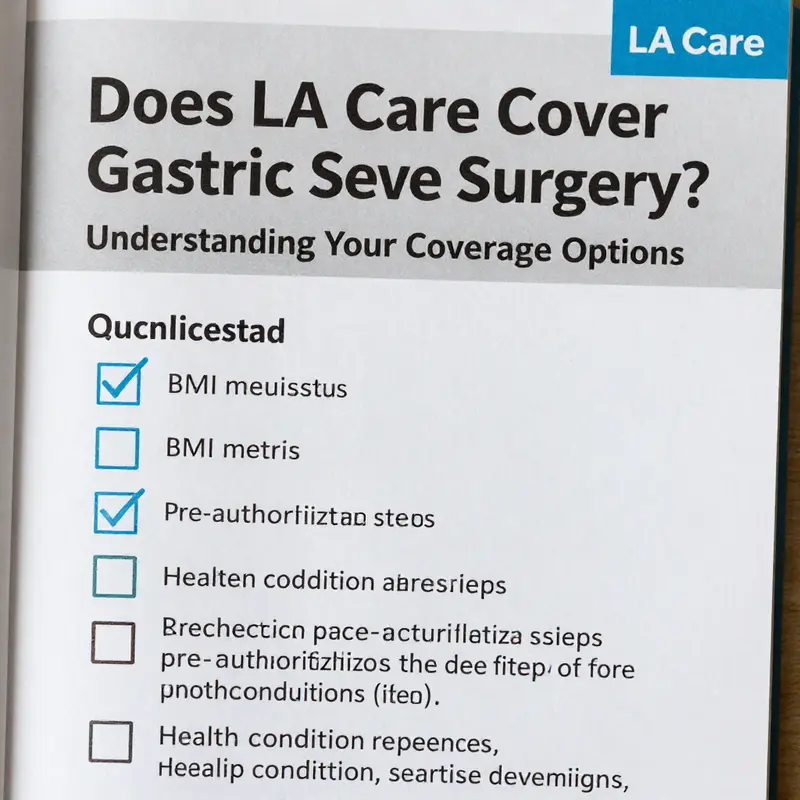
Most insurers set a BMI threshold as the first gate. Traditionally, that threshold is a BMI of 40 kg/m² or greater. Individuals with a BMI between 35 and 39.9 can meet criteria when they also have at least one serious obesity-related comorbidity. Common comorbidities include type 2 diabetes, uncontrolled high blood pressure, severe obstructive sleep apnea, and conditions that materially impair function. These conditions must be documented in medical records and linked to obesity in a way that supports surgical intervention.
Documentation of prior conservative treatment is a near-universal requirement. Insurers commonly ask for records showing that you pursued structured weight loss plans. These programs often include physician-supervised diets, behavioral counseling, or medically monitored weight management over a defined period. The exact duration varies by payer, but the goal is the same: demonstrate that non-surgical approaches were tried and proved insufficient.
Beyond BMI and prior attempts, many plans require a formal multidisciplinary assessment. This typically involves input from a bariatric surgeon, a primary care physician, a registered dietitian, and a behavioral health professional. The team documents medical indications, nutritional status, psychological readiness, and ability to adhere to lifelong changes. A behavioral health evaluation commonly screens for unmanaged eating disorders, untreated severe psychiatric conditions, and substance abuse. Insurance approval often hinges on evidence that these issues are addressed before surgery.
Pre-authorization and in-network requirements also shape eligibility. Insurers usually require prior authorization that confirms the procedure meets coverage criteria. Prior authorization bundles your documentation into a single request and triggers an administrative review. Many plans only cover procedures done at credentialed, in-network centers. If LA Care follows typical patterns, authorization may be denied for out-of-network facilities unless exceptional circumstances exist.
There are additional practical health prerequisites. Smoking cessation before surgery is often mandatory. Active tobacco use increases surgical risk and impairs healing, so plans and surgical programs usually require nicotine-free status for a minimum period. Nutritional deficiencies, unstable medical problems, or recent major cardiac events can delay eligibility until those issues are optimized.
Age and reproductive health factors are considered. Candidates are generally adults, though some programs offer pediatric pathways for severe cases. Pregnancy is a contraindication; plans expect you to avoid pregnancy for a specified time after surgery. Contraceptive counseling and documentation of pregnancy testing before the operation are common elements of the approval package.
Insurance-specific documentation typically lists what to submit. Expect to provide: a detailed history and physical, BMI calculations over time, records of supervised weight loss attempts, a multidisciplinary letter of support, results of sleep studies or diabetes control measurements where relevant, and behavioral health assessments. Some insurers require specific timeframes, such as documentation of weight management efforts within the prior 12 to 24 months.
Understanding the administrative path helps you speed approval. If LA Care requires prior authorization, assemble a complete packet before submission. Work with your surgeon’s office and primary care team to create concise, well-cited documentation. Include objective data, like A1C levels for diabetes, polysomnography reports for sleep apnea, and blood pressure logs. A clear chronology of conservative treatment efforts, with dates and provider signatures, reduces the chance of administrative denial for insufficient documentation.
Anticipate and plan for potential denials. Even when you meet clinical thresholds, insurers sometimes deny on technical grounds. Denials often cite incomplete records, missing signatures, or failure to demonstrate medical necessity in a prescribed format. If a denial occurs, request the specific reason in writing. The appeals process typically allows you to submit additional evidence, including peer-reviewed literature or letters from treating physicians that explain why surgery is the most appropriate option given your clinical profile.
Coverage for less invasive alternatives also affects eligibility and approval strategy. Endoscopic procedures, such as endoscopic sleeve gastroplasty, may be covered differently. Some plans treat them as investigational and exclude coverage. Others accept them when a patient is not a good candidate for surgery or prefers a less invasive option. Ask whether LA Care’s policy distinguishes between surgical and endoscopic approaches. If an endoscopic approach is the recommended clinical choice, include rationale and supporting documentation in your authorization packet.
Cost-sharing and benefit design matter. Even when a plan approves surgery, you may face deductibles, copayments, and coinsurance. Determine whether the procedure is classified as inpatient, outpatient, or ambulatory surgery under your plan. Facility fees and surgeon fees may be billed separately, and out-of-pocket maximums apply. Understanding benefit language ahead of time prevents unexpected bills and helps you plan financially for pre- and post-operative care.
Provider network and credentialing are practical hurdles. Confirm that the surgical center and primary surgeon are in your plan’s network. If not, ask about exceptions or single-case agreements. Some insurers allow in-network benefits at out-of-network hospitals for specialized services, but approval is not automatic. Early conversations with your plan’s case management or surgical benefits coordinator can secure exceptions when medically justified.
Timing and logistics often delay approval more than clinical criteria. Authorization reviews may take several weeks. Appeals add time. Begin the process early when surgery is clinically advisable. Coordinate with all clinicians to ensure documentation is complete and formatted per the insurer’s requirements. Keep copies of everything you submit and log communications you have with insurers and providers.
When you contact LA Care, ask focused, practical questions. Confirm required BMI thresholds and whether they accept a BMI range with comorbidities. Ask for a written list of required documentation and the timeframes for prior conservative treatments. Inquire about their stance on endoscopic alternatives and whether they require procedures to be performed at specific centers. Ask who manages prior authorization and how to escalate decisions. Request the plan’s appeals process details and timeframes.
Prepare to support your case with measurable improvements expected after surgery. Insurers consider expected clinical benefit. Letters from clinicians explaining how sleeve gastrectomy will improve or resolve comorbidities strengthen the request. Data such as expected reductions in A1C, improvements in sleep apnea severity, or decreases in antihypertensive medication can be persuasive.
Finally, involve a patient advocate if needed. Many health plans provide advocacy services or case managers who explain benefit specifics and help navigate the authorization steps. A surgical coordinator at the bariatric center can also act as an intermediary. Their familiarity with insurer requirements often speeds approval and reduces the administrative burden on you.
For an authoritative point of contact, visit the official LA Care website to find current policy language and contact information. This step ensures you obtain up-to-date coverage details and specific instructions for prior authorization: https://www.lacare.org
Gauging Access: How LA Care Shapes Coverage for Gastric Sleeve Procedures
When people consider bariatric surgery, the question of coverage often determines whether the goal stays a plan on the shelf or becomes a real option. Gastric sleeve surgery, formally known as sleeve gastrectomy, sits at a crossroads where medical necessity, personal health goals, and the details of insurance policy collide. In a region like Los Angeles County, where health care needs run wide and varied, the public option plays a unique role. LA Care Health Plan, as a publicly funded program serving residents who qualify for more affordable care, sets a framework that both expands access and imposes specific requirements. Understanding how this framework operates helps a patient navigate not only eligibility but also the often lengthy preoperative process, the documentation required, and the practical realities of costs and access. The broader question—does LA Care cover gastric sleeve?—does not yield a single yes-or-no answer. It hinges on a careful alignment of medical criteria, program rules, and the patient’s engagement with the preauthorization pathway. The result is less a verdict and more a sequence of steps that, if followed, can bring a sleeve procedure within reach for those who meet the program’s thresholds. The path begins with a clear map of what the plan typically requires and how those requirements translate into the real world of clinics, surgeons, and preoperative programs. It also invites constant attention to how coverage may evolve as policy, funding, and medical standards shift over time. In this sense, LA Care’s approach to bariatric surgery reflects a broader truth about public plans: they are designed to ensure access for populations with variable incomes and health needs, but they operate within a tightly regulated framework that emphasizes medical necessity, documented trial of non-surgical treatment, and a clear continuum of care.
LA Care’s coverage framework for bariatric procedures is built on familiar medical criteria that have become standard in many health plans, yet the exact thresholds and steps can feel nuanced for patients new to the system. A central touchstone is body mass index (BMI). For sleeve gastrectomy, coverage decisions commonly hinge on a BMI of 40 or higher, or a BMI between 35 and 39.9 when accompanied by one or more obesity-related comorbidities. The idea behind these thresholds is straightforward: the risks of obesity-related conditions—such as type 2 diabetes, high blood pressure, or sleep apnea—are more likely to be mitigated by substantial weight loss achieved through surgical means when BMI crosses these lines. But BMI alone does not unlock coverage. The plan typically requires evidence that non-surgical avenues have been tried and documented for a meaningful period, often six months or more. This requirement reflects a policy stance that prioritizes a comprehensive, medically supervised approach before moving to a surgical intervention. The patient, therefore, may need to demonstrate participation in a structured weight management program, with notes from physicians, nutritionists, and behavioral health specialists detailing attempts at diet, physical activity, and behavioral modification. The emphasis on prior non-surgical effort is not merely bureaucratic; it is a measure intended to ensure that surgery is reserved for those who will benefit most and who have engaged with all modifiable avenues before surgical options are considered.
But the journey from BMI criteria to an approved sleeve is not a purely clinical calculation. Preauthorization lies at the heart of the process, and it carries practical implications that can shape the patient’s timeline and experience. Preauthorization serves as a gatekeeper, ensuring that the proposed procedure aligns with medical necessity, is performed at an approved facility, and is supported by the appropriate referrals and documentation. In practical terms, this means a referral to a bariatric program or a surgeon who participates in the LA Care network, a scheduled psychological evaluation, and a nutritional counseling session as part of the preoperative preparation. The psychological evaluation is not a formality; it assesses readiness for major surgery, evaluates coping strategies, and helps identify any mental health issues that should be addressed before or after the operation. Nutritional counseling, likewise, is an opportunity to optimize nutritional status, correct misconceptions about post-surgical eating, and establish a sustainable plan for long-term weight management. These steps, while sometimes time-consuming, are designed to build a foundation for success after surgery and to ensure that the patient’s health system supports a comprehensive, ongoing care plan.
Access within the LA Care framework is also strongly influenced by network considerations. Public plans typically operate with a defined network of providers, which can limit where the procedure is performed and which surgeons are eligible for coverage. This network focus has both benefits and drawbacks. On the one hand, it can streamline the process by connecting patients with facilities that are already aligned with LA Care’s standards for preoperative testing, postoperative care, and care coordination. On the other hand, it can constrain the patient’s choice, particularly in a large metropolitan area where top bariatric surgeons are distributed across multiple facilities. For residents who rely on public coverage, this dynamic underscores the importance of early conversations with the assigned plan representative or care coordinators. Understanding which facilities and which surgeons are in-network before starting the preauthorization journey can prevent a costly detour later in the process and help set realistic expectations for scheduling the procedure within the plan’s framework.
A practical reality that often emerges in LA Care’s bariatric pathway is the role of preoperative evaluations beyond medical history. The plan sometimes requires an assessment that extends into preoperative optimization, including nutrition, exercise, and mental health support. The overarching aim of these requirements is not only to confirm medical readiness for surgery but to maximize the likelihood of durable, long-term weight loss and health improvement after the sleeve. It is not unusual for patients to engage with a team that includes a dietitian, a behavioral health professional, and a physician who specializes in obesity medicine. This multidisciplinary approach helps ensure that the patient enters surgery with the knowledge, resources, and support system necessary to sustain lifestyle changes that accompany the new physiological state after a sleeve.
Between the BMI thresholds, the preauthorization, and the network constraints lies a spectrum of cost considerations that can influence the decision-making process. Even when LA Care approves a sleeve, the financial picture may include deductibles, coinsurance, and out-of-pocket maximums that carry real weight for patients, particularly those who are navigating lower income or the complexities of public coverage. While it is possible for LA Care to cover a substantial portion or even the entirety of approved surgical costs for eligible beneficiaries, those figures do not automatically translate into a zero out-of-pocket experience for every member. The patient may still face expenses associated with preoperative testing, nutrition counseling sessions, and postoperative follow-ups that are charged under cost-sharing rules. It is essential to obtain a clear, itemized understanding of the anticipated financial responsibility before the procedure is scheduled. Transparent communication with patient services—asking for a written breakdown of what is covered, what remains out-of-pocket, and how any allowances or caps apply—can prevent surprises that could derail the plan to proceed.
As a public option, LA Care has an explicit mandate to expand access to essential services for underserved populations. This mandate has meaningful implications for weight management, a domain where disparities in access can be stark. The plan’s structure—grounded in criteria that emphasize medical necessity, documented non-surgical attempts, and a coordinated care pathway—reflects a deliberate effort to balance equity with clinical appropriateness. Yet the reality for a patient seeking a gastric sleeve through LA Care often involves navigating administrative hurdles that private plans may resolve more rapidly or with broader provider networks. The trade-off, however, is not simply a matter of speed. It is about ensuring that those who need the intervention most—those with severe obesity and related health risks—have an organized, supported route to care that is anchored in community health considerations and the realities of public funding.
For individuals weighing their options, the comparison with private insurers can illuminate both the strengths and the limitations of LA Care. Private plans may offer more expansive provider networks and faster preauthorization pathways, along with differentiated cost-sharing arrangements that can reduce out-of-pocket costs for in-network care. However, private plans vary widely by state, employer, and policy design, and they are not universally accessible to all residents. LA Care’s public framework ensures coverage for people who might otherwise fall through the cracks, reinforcing the social imperative to provide a safety net for those dealing with obesity-related conditions. In practice, this means that the decision to pursue a sleeve under LA Care is not merely a medical one. It is a decision that involves timelines, care coordination, and a pragmatic assessment of one’s position within the public safety net. The process—while regimented—can be navigated with careful preparation. Prospective patients are encouraged to engage early with LA Care representatives, gather all medical records, and maintain a documented history of weight management efforts. They should also inquire about ESG, a less invasive alternative to traditional sleeve surgery, to determine whether it falls within the plan’s coverage framework or if a different pathway may be more appropriate.
In this intricate landscape, the patient’s agency remains crucial. Understanding eligibility criteria, compiling the required medical documentation, and maintaining ongoing communication with the care team can transform a perceived barrier into a navigable process. It is also wise to consider the broader health strategy: how sleeve surgery fits within a long-term plan that includes nutrition, physical activity, mental health support, and regular follow-ups. Public plans like LA Care often place a strong emphasis on coordinated care, a model that can yield better long-term health outcomes when the patient actively participates in the continuum of care. This perspective helps frame the journey not as a one-off surgical event but as a sustained commitment to health that begins with coverage and ends in meaningful, measurable improvements in quality of life.
For readers seeking concrete steps, a practical checklist can help anchor the process. First, confirm your BMI and comorbidity status, and assemble medical records that document attempts at supervised weight loss. Second, contact LA Care to understand the exact preauthorization requirements and in-network facility options. Third, schedule the required psychological and nutritional assessments through approved providers. Fourth, prepare for potential out-of-pocket costs by requesting an itemized estimate and clarifying what the plan covers post-surgery. Fifth, explore ESG as a possible alternative and verify whether it has any coverage nuance under the plan. Finally, stay attuned to any policy updates, as public plans periodically adjust criteria and procedures in response to evolving medical guidelines and funding realities. While no single article can capture every edge of a living policy, being proactive and organized dramatically improves the odds that a gastric sleeve becomes more than a consideration and becomes a real, achievable intervention.
External resource: https://www.lacare.org
Verifying Gastric Sleeve Coverage with LA Care: A Thorough Path Through Eligibility, Documentation, and Realistic Expectations
Note: This chapter weaves practical steps with the realities of insurance policy variation. It centers on LA Care and how many plans approach bariatric coverage, while acknowledging that individual plans may differ. The aim is to equip readers with a clear, actionable framework to determine whether gastric sleeve surgery is covered under their specific LA Care plan, and what must be prepared to secure pre-authorization if needed.
When people consider weight-loss surgery, they often confront two parallel challenges: the medical need for a procedure that can improve health and quality of life, and the financial and administrative maze that health insurance often presents. For residents in LA Care’s network, the question frequently comes down to one practical, but consequential, query: does my plan cover gastric sleeve surgery? The honest starting point is that coverage is not universal across all LA Care plans, and it can hinge on a constellation of plan-specific rules, pre-authorization requirements, and in-network constraints. Yet there is a reliable, repeatable path to find an answer and, if coverage exists, to navigate the process with greater confidence. This chapter unspools that path, blending the procedural steps with the underlying logic of how bariatric coverage typically works within major U.S. health plans and what that means for a patient contemplating sleeve gastrectomy.
First and foremost, the most direct way to confirm coverage is to contact LA Care member services. The member services team holds the latest information about the specifics of each plan’s benefits, including whether gastric sleeve surgery is categorically covered, conditionally covered, or excluded. A straightforward call to the number printed on the member card or listed on the LA Care website can reveal whether bariatric procedures fall under the plan’s benefits, and whether there are limits tied to the procedure type, the facility, or the surgeon. This initial step is essential because even plans sold under the same umbrella can feature different coverage landscapes depending on the employer group, geographic region, or plan tier. The conversation should be approached with a clear objective: to understand eligibility criteria, pre-authorization requirements, network constraints, and any exclusions that could affect out-of-pocket costs.
When speaking with a representative, it is helpful to have a few specifics ready. One is the plan’s formal terminology for weight-loss surgery, such as “bariatric surgery” or “gastric sleeve.” Insurers often define coverage boundaries in terms of BMI thresholds and related comorbidities, so asking explicitly about these thresholds helps set expectations. A second point to confirm is the pre-authorization process. Most bariatric procedures require prior authorization, a formal confirmation from the insurer that the procedure is medically necessary and eligible for coverage under the plan. This process is not merely a procedural hurdle; it shapes the patient’s scheduling, the surgeon’s documentation needs, and the possible timing of the surgery. A third element is the network status of both the surgeon and the hospital or surgical center. Out-of-network procedures can carry substantially higher costs, even if the procedure itself is technically covered. Understanding the in-network requirement early helps avoid surprise financial gaps and informs discussion about possible alternatives, including referrals to in-network specialists or centers that have established credentials for bariatric care.
Once the basic coverage status is established, the next phase centers on the documentation and medical justification that insurers require to approve a sleeve gastrectomy. In most plans, coverage hinges on demonstrating that non-surgical weight loss methods have been tried and have not achieved durable, clinically meaningful weight loss or health improvement. This typically means a documented history of attempting diet, physical activity, behavioral therapy, or structured weight-management programs over a defined period, often six months to a year. The purpose of this requirement is not punitive; it reflects a medical philosophy that surgery is a final therapeutic option after less invasive measures have been pursued and failed to produce adequate results.
For a LA Care coverage pathway, a bariatric surgeon’s office usually plays a pivotal role in orchestrating the pre-authorization package. The surgeon and the patient’s primary care team should coordinate to assemble a comprehensive dossier that demonstrates medical necessity. Core components commonly needed include the patient’s BMI documentation, including a record of being 40 or higher, or a BMI of 35–39.9 with at least one serious obesity-related condition such as type 2 diabetes, hypertension, or sleep apnea. The documentation should also capture the patient’s documented attempts at non-surgical weight loss, with dates and outcomes, illustrating a pattern of insufficient progress to meet health goals through non-surgical means alone.
Beyond BMI and prior weight-management efforts, insurers often require a bariatric surgery evaluation that includes an objective assessment of the patient’s overall health and readiness for surgery. This evaluation may involve a multidisciplinary team, including a surgeon, a nutritionist or dietitian, and sometimes a psychologist or behavioral health specialist. The psychologist’s input is not merely a formality; it helps assess the patient’s mental readiness to undertake a major surgical procedure and engage in long-term lifestyle changes that follow surgery. The pre-authorization packet also typically includes comprehensive medical clearance. This can mean lab work to screen for metabolic health, cardiovascular risk stratification, and, in some cases, clearance from a cardiologist or other specialists when indicated by the patient’s health profile.
A practical aspect of this documentation phase is to ensure that the surgeon’s office submits everything in the exact format required by LA Care. Plan documents often specify submission channels, whether through an online portal, secure email, or direct fax. The timing of pre-authorization is not merely administrative; a delayed submission can push back surgical dates and complicate insurance coverage windows. Therefore, coordination among the patient, the surgeon, and the insurer becomes a shared project, with each party contributing critical pieces of information in a timely fashion. Patients should be prepared for follow-ups and potential requests for additional information. Insurers may ask for clarifications or updated records, especially if the patient’s weight, comorbidity status, or lab results have evolved since the initial consultation.
Another layer of complexity involves the in-network provider landscape. Coverage criteria are often tied to the use of in-network surgeons and facilities. LA Care’s network arrangement has implications not just for cost, but for the likelihood of approval. If a preferred surgeon is out of network but recommended due to expertise or patient choice, the patient might face higher out-of-pocket costs or even a denial of coverage if the plan limits coverage to in-network providers for bariatric procedures. In scenarios where a patient’s preferred surgeon is outside the network, it becomes essential to weigh the potential financial trade-offs against the perceived clinical benefit. This is not a decision made in isolation; insurer case management teams can help explore alternatives, such as in-network referrals that preserve coverage while still aligning with clinical needs.
A related consideration is coverage for alternative, less invasive bariatric options that fall under the same surgical umbrella, such as endoscopic sleeve gastroplasty (ESG). ESG is a distinct procedure with its own risk-benefit profile and its own coverage criteria. Some LA Care plans may require separate pre-authorization for ESG, or they may treat ESG under a broader “weight management” or “bariatric procedures” category with distinct prerequisites. Because ESG and traditional sleeve gastrectomy carry different clinical pathways, understanding whether ESG is covered—and under what conditions—is critical when a patient discusses surgical options with their surgeon and insurer. If ESG could be an appropriate step in a patient’s treatment plan, the discussion with LA Care should explicitly address whether ESG is within the plan’s coverage and how pre-authorization would differ from the typical gastric sleeve process.
The thread that ties these steps together is medical necessity. Insurance coverage, especially for elective procedures like bariatric surgery, hinges on a robust justification of medical necessity. The evidence packet might include objective measures of obesity-related health risk, such as obstructive sleep apnea severity, insulin resistance or diabetes control metrics, hypertension management status, and liver health indicators. It may also show the impact of obesity on the patient’s daily functioning and quality of life. In many cases, insurers look for a documented history of weight loss attempts and a clinical commitment to post-operative weight management and follow-up care. The post-operative plan—dietary follow-up, exercise prescription, and behavioral health support—often features as part of coverage criteria because insurers want to ensure sustained health improvements after surgery.
Readers should also be prepared for the practical realities that accompany approval. Even when LA Care approves sleeve gastrectomy, coverage is often subject to limits on facility charges, surgeon fees, anesthesia, and ancillary services. Patients may still face deductibles, co-pays, and coinsurance, all of which can add up quickly in the perioperative period. Some plans cap certain benefits or require that the facility and surgeon be within a particular network tier. A careful financial discussion, sometimes with a patient advocate or a medical billing specialist, can illuminate what the patient’s out-of-pocket footprint might look like and how to plan for it in light of insurance approval timelines.
Amid these procedural realities, it is important to maintain a broader perspective on why families pursue gastric sleeve surgery. For many patients, the procedure is a medically indicated step toward reversing or mitigating obesity-related conditions that threaten long-term health. This broader health frame reinforces the necessity of accurate, up-to-date information. Insurance policies can change; plan documents are updated; and the precise language of coverage can shift with new medical guidelines, provider networks, or employer contracts. The strongest approach remains direct, proactive engagement with LA Care, coupled with ongoing dialogue with the medical team about readiness and expectations. A patient who approaches the process with preparedness—documented medical history, a clear non-surgical weight-management record, a formally completed bariatric evaluation, and a well-structured pre-authorization dossier—stands the best chance of a smooth, timely decision.
The dialogue about coverage should also acknowledge that coverage is not guaranteed for every patient or every plan. Some LA Care members may discover that their plan excludes bariatric procedures altogether or that coverage is contingent on stringent criteria that their current health profile could or could not meet. That reality underscores why it is crucial to initiate the inquiry early, not only to understand coverage as a financial matter but to align medical timing with the patient’s overall health strategy. If a plan does not cover gastric sleeve, healthcare teams can still explore alternatives such as medical weight management programs, referral options within or outside the network, or staged approaches that could lead to different pathways for achieving health goals over time.
In closing, verifying gastric sleeve coverage with LA Care is not a single question with a single answer; it is a process that unfolds through direct information gathering, meticulous documentation, and collaborative planning among the patient, the surgeon, and the insurer. The steps outlined—contactting member services, clarifying pre-authorization needs, compiling BMI and comorbidity evidence, ensuring in-network access, and anticipating post-approval logistics—offer a practical framework. They are designed to reduce ambiguity and bring a sense of control to a decision that carries substantial health and financial implications. Patients who approach the process with clarity gain the strongest footing to navigate the complexities, advocate for their health needs, and, when appropriate, pursue a path toward weight-management surgery that is both medically justified and financially feasible.
External resources can provide additional context and data that inform these discussions. For instance, research examining complex cases where surgical interventions intersect with other serious health conditions highlights the nuanced, patient-specific nature of perioperative decision-making and the importance of tailored medical justification in securing coverage. These studies remind readers that the journey to coverage is not merely administrative but deeply rooted in individualized clinical narratives that justify the necessity of intervention.
External resource: https://www.sciencedirect.com/science/article/pii/S1521661622000987
Final thoughts
Navigating insurance coverage for gastric sleeve surgery under LA Care can often feel overwhelming, but understanding the key policies, eligibility criteria, and comparison with other insurers is crucial for informed decision-making. By following the outlined steps to confirm your coverage, motorcycle owners, auto enthusiasts, and those in the automotive industry alike can empower themselves and their clients to secure the necessary support for weight-loss surgery. Awareness of these aspects not only aids personal health journeys but also strengthens customer service in auto-related businesses navigating insurance inquiries.