
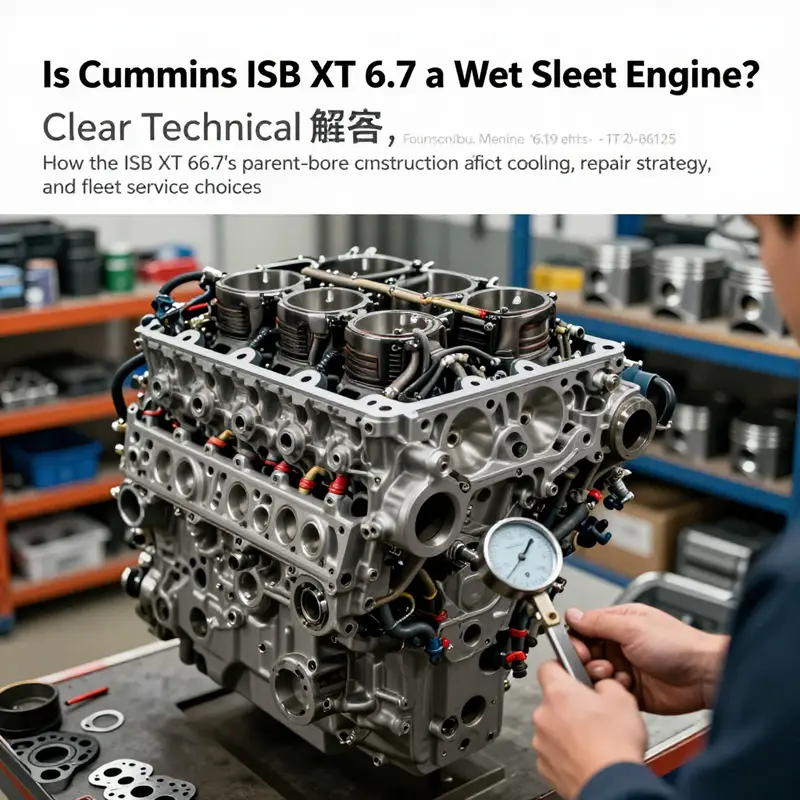
Owners, parts distributors, and repair shops need a clear, technical answer when asked whether the Cummins ISB XT 6.7 uses wet cylinder sleeves. That detail determines overhaul options, parts inventory, and workshop workflows. This discussion confirms the ISB XT 6.7 uses a parent-bore (dry) cylinder construction, not wet sleeves, and explains what that means for cylinder cooling, maintenance tactics, and engineering trade-offs. Chapter 1 analyzes cylinder construction and directly compares the ISB XT 6.7 to wet sleeve designs. Chapter 2 translates the parent-bore reality into practical maintenance and overhaul implications for shops, fleets, and parts distributors. Chapter 3 examines why Cummins chose a parent-bore layout for the ISB XT 6.7 and what that choice means in the marketplace and for component sourcing.
From Block to Balance: Cylinder Construction and the Wet Sleeve Question in the 6.7L Inline-Six Diesel
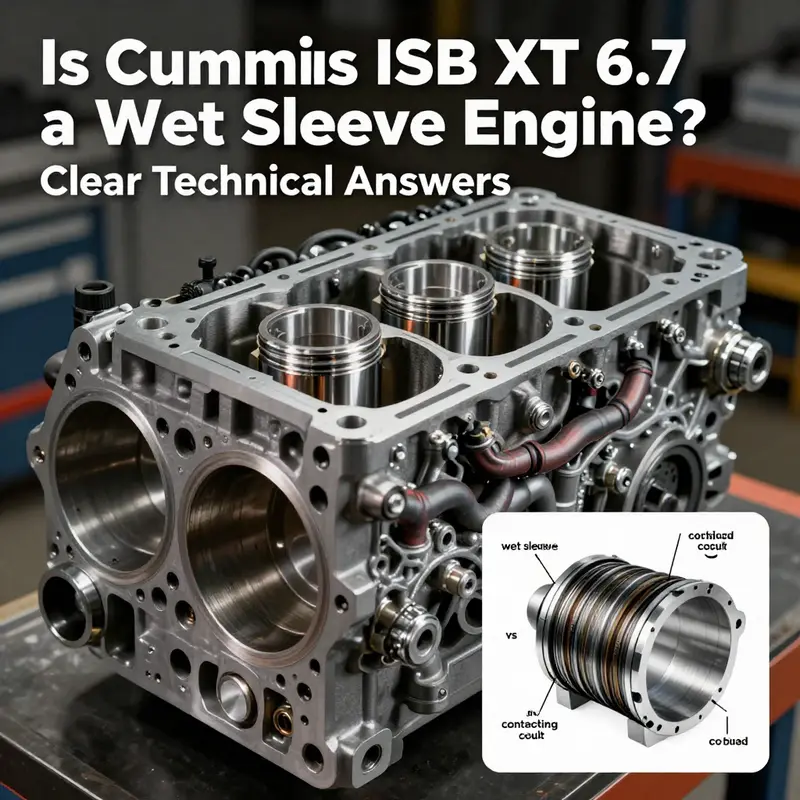
The cylinder block is the living core of a diesel engine, and the question of whether a mid-range 6.7-liter inline-six uses wet sleeves or a fixed, parent-bore design sits at the intersection of cooling strategy, maintenance philosophy, and manufacturing economics. In engines of this size and duty cycle, the choices about cylinder construction are not merely about how many parts sit in a line; they shape how heat moves, how wear is managed, and how operators service and maintain the machine over its lifecycle. As the literature and catalogs converge on the idea of a high-strength cast-iron block with integrated cooling passages, there is also a nuanced, sometimes contested, discussion about whether that block relies on a removable wet cylinder sleeve or whether the cylinder walls are machined directly into the block. The distinction matters because it translates into different realities for overhaul, reliability in harsh operating environments, and the overall cost of ownership for fleets that depend on steady uptime and predictable maintenance budgets.
In a broader sense, the wet sleeve design places a cylinder liner in direct contact with the coolant on its outer surface. This contact promotes aggressive heat removal and can ease a local rebore by swapping sleeves rather than dragging the entire block through a machine shop. The wet sleeve also offers modularity: if a cylinder wears or the bore corrodes, technicians can often sleeve, hone, or replace the liner without reworking the entire block casting. In mid-range, high-demand applications—such as fleet duties with high hours, frequent starts and stops, and a mix of loaded and light-duty cycles—a wet-sleeve approach can be advantageous for in-frame servicing and quick turnaround during scheduled maintenance.
Yet, public-facing descriptions of the 6.7-liter, inline-six family consistently describe a structure anchored in a robust cast-iron monoblock with integrated coolant passages and bore surfaces formed as part of the block itself. In this framing, the cylinder bores are machined directly into the block, with no standard, serviceable wet sleeves that can be swapped in the field. This is what many technicians and engineers refer to when they speak of a parent bore or dry-sleeve configuration: the block’s bore line is the final wall for the cylinder. In practical terms, the repair path for bore wear in such a design tends to involve boring the worn bore, selecting oversized pistons, and restoring proper clearance through machining. This path, while proven and robust, tends to be less modular than a true wet-sleeve repair, where a sleeve can be pressed out and replaced with relatively less invasive machining.
To understand the implications, it helps to connect these architectural choices to the engine’s cooling system, which is designed to keep the combustion process within tight thermal envelopes while preserving structural integrity under high combustion pressures. In the parent-bore configuration, coolant passages are cast into the block and head, and the cylinder walls constitute the primary heat sink. The outer surface of the bore is directly in contact with the block’s metal, and cooling is achieved through shared pathways that surround the bore and connect to a pressurized coolant loop. There is a certain elegance in this approach: fewer moving parts beyond the core engine assembly can yield benefits in block rigidity, reduced assembly complexity, and a reduction in the potential failure points associated with liner seals. At the same time, the lack of removable liners means a larger investment when major overhauls become necessary. If bore glazing, scoring, or excessive wear occurs, the typical remedy is machining for an oversized piston set or, in some cases, a re-sleeved solution that is actually a dry-sleeve alternative—an approach that relies on the block being machined to accept a non-removable liner or an oversized, press-fit insert.
The available research materials present a cautious, evidence-based view: the mid-range ISB family, including variants in the 6.7-liter lineage, has historically favored a parent-bore architecture. This aligns with design goals around block rigidity, thermal stability, and manufacturing efficiency. The advantages of a non-removable bore include consistent material properties in the cylinder wall, reduced risk of coolant leaks through liner seals, and a simplified supply chain for castings and machining operations. The trade-offs, predictably, revolve around overhaul strategy and the economics of re-bore and oversized-piston replacements. If a wear pattern leads to a reduced compression ring seal or abnormal bore geometry, the repair cycle can become more involved, requiring precise machining and potentially larger pistons. This path can be effective, but it is not as modular as dropping in a new wet sleeve would be in several other engine families.
The discussion becomes even more interesting when the XT designation is introduced, as this variant is described as an application-tuned configuration within the same engine family. Publicly available materials do not unambiguously state a different cylinder-block construction for the XT variant. In other words, the underlying cylinder architecture appears to follow the same parent-bore approach that characterizes the broader 6.7-liter family, with the cooling system integrated into the block and without direct, removable cylinders. Yet, a careful reading of parts catalogs and service literature reveals a potential seam line where some related engine variants—especially those derived from larger displacement cousins within the same platform—refer to wet-cylinder components or interchangeable parts numbers associated with wet-sleeve configurations. This is not definitive proof that the XT variant uses wet sleeves as a standard feature; rather, it indicates that some service parts or compatible block assemblies may coexist in a broader ecosystem where wet-sleeve concepts are referenced for related models.
From a practical maintenance perspective, this ambiguity translates into how fleets plan overhaul cycles. If the block is truly a fixed bore with no serviceable wet sleeves, fleet managers must lean toward careful bore wear monitoring, oil quality control, and piston and ring package selection to extend the interval before a major machinist intervention is required. On the other hand, if a wet-sleeve approach exists within the same platform’s ecosystem, the maintenance story shifts toward liner replacement and sector-based repair work that can often be accomplished with selective machining and standard liner kits. In the field, the boundary between these worlds can be blurred by the availability of serviceable cylinders or modular inserts, by the specific toolsets used by regional repair shops, and by the variability in how manufacturers document and present maintenance options for different application segments.
The most relevant public signals come from catalogs and component references that mention cylinder blocks for the family’s 6.7-liter engines. Notably, some part numbers associated with the cylinder block—such as those that appear in catalogs for the 6ISDE QSB6.7 variants—have been cited in contexts that imply wet sleeve compatibility. This cross-reference does not, by itself, establish a universal truth about every XT variant, but it does illuminate a design thread in the lineage. It suggests that while the XT configuration may emphasize certain performance or durability targets for particular fleets, the cylinder-block strategy sits within a family-wide approach that historically balances rigidity and thermal management with manufacturability. In other words, the XT’s existence as a specialized configuration does not automatically rewrite the cylinder-block grammar that has governed the broader 6.7-liter family for years.
To ground this discussion in the specifics that inform everyday decisions on the shop floor, it is important to consider the way cooling, lubrication, and combustion heat interact with bore geometry. A dry, parent-bore design relies on the block’s bore itself as the cylinder wall, with precise honing to establish the correct surface finish for piston rings. The bore’s machining tolerance dictates the achievable clearance and the potential for accurate compression and efficient sealing. In high-load operation, the thermal gradient across the bore becomes a critical variable. A well-designed parent bore block must distribute heat evenly to avoid hot spots that could accelerate liner wear or cause distortion in the block. If a wet sleeve is employed, the liner’s proximity to the coolant provides a different heat transfer dynamic, potentially softening the risk of localized overheating but introducing new points of failure at the liner-to-block or liner-to-head interfaces in terms of leakage and wear.
The literature also hints at broader industry trends that shaped these decisions. Mid-range, medium-duty engines have often aimed for compact packaging and manufacturing efficiency. A block that is machined directly in cast iron can offer high rigidity and a robust structure while reducing the number of replaceable wear parts. This is advantageous in fleets that emphasize uptime and predictable service intervals. In contrast, heavy-duty engines scheduled for extreme duty cycles may benefit from the ease of liner replacement offered by wet-sleeve systems, where in-frame maintenance can replace worn liners without major machining. The XT variant, positioned for application-specific requirements, sits within this spectrum—adjusting calibration, timing, fuel delivery, and perhaps cooling subsystem tuning to align with different duty cycles while preserving the core cylinder-block architecture.
What matters for the reader who plans maintenance or evaluates total cost of ownership is the expected service path. For a block that uses a true parent bore, the maintenance path focuses on bore integrity, piston and ring wear, and the potential need for block re-machining or oversized piston usage when wear limits are reached. The absence of removable liners means one must consider the machining capabilities of the local shop, the availability of oversized pistons, and the precision required to maintain oil-clearance and compression specifications. When a wet-sleeve path is plausible within the same platform, the maintenance calculus shifts toward liner kits, press fits, liner sealing, and a different set of machining tolerances for the cylinder head and head gasket interface. In practice, fleets with the right service partners can leverage wet-sleeve cycles to minimize downtime, whereas fleets operating far from authorized centers may favor a more self-contained, block-based approach that relies on in-frame overhauls and mechanical honing.
This synthesis highlights why the public record remains mixed about the exact nature of the cylinder construction for every XT variant. The absence of a single, definitive public specification means engineers and operators must triangulate from multiple sources: official catalogs, service manuals, and the practical experience of repair shops that handle this engine family across different markets. The reliability of cooling strategies in either path depends on meticulous engineering—whether the wall is a machine-honed bore or a pressed-in liner—and on the long-term performance of the sealing interfaces, whether they are liner-to-block or bore-to-piston rings. In the end, the critical takeaway is that the engine’s cylinder block design is a backbone choice set during the product’s development, with downstream manufacturing, serviceability, and lifecycle costs shaped by that initial decision. The XT designation may signal tuning for specific markets or applications, but it does not, in itself, overturn the fundamental engineering choice that governs how heat, wear, and serviceability are managed in this family of engines.
For readers seeking a concise anchor to primary sources and deeper technical context, consider exploring the broader literature on engine sleeves and cylinder-block interfaces. What are engine sleeves? This resource helps illuminate how sleeve technology works in practice, including the distinctions between wet sleeves, dry sleeves, and parent-bore architectures, and it can clarify how those concepts translate to real-world repair scenarios. While the XT variant’s exact cylinder-block specification may not be fully explicit in public-facing documents, the underlying principles of heat transfer, bore integrity, and repair strategies remain central to understanding why a manufacturer would choose one approach over another in a given application.
In closing, the cylinder construction of the 6.7-liter inline-six family, including the XT configuration, sits at the convergence of engineering pragmatism and serviceability. The evidence points to a parent-bore block as the prevailing baseline in the mid-range segment, with some cross-referencing catalogs suggesting wet-sleeve compatibility in related models or components. Operators, fleets, and service professionals should approach the topic with a practical mindset: assess the expected duty cycle, available skilled labor, and regional repair capabilities. The optimal decision balances block rigidity and cooling efficiency against the cost and downtime associated with major overhauls. As the industry continues to evolve toward cleaner emissions, more compact packaging, and tighter tolerances, the cylinder-block architecture will remain a central thread in how these engines are designed, serviced, and kept in productive service for years to come.
External resource: https://www.cummins.com
Dry-Bore Durability: Maintenance, Overhaul, and Service Realities of the ISB XT 6.7 Engine
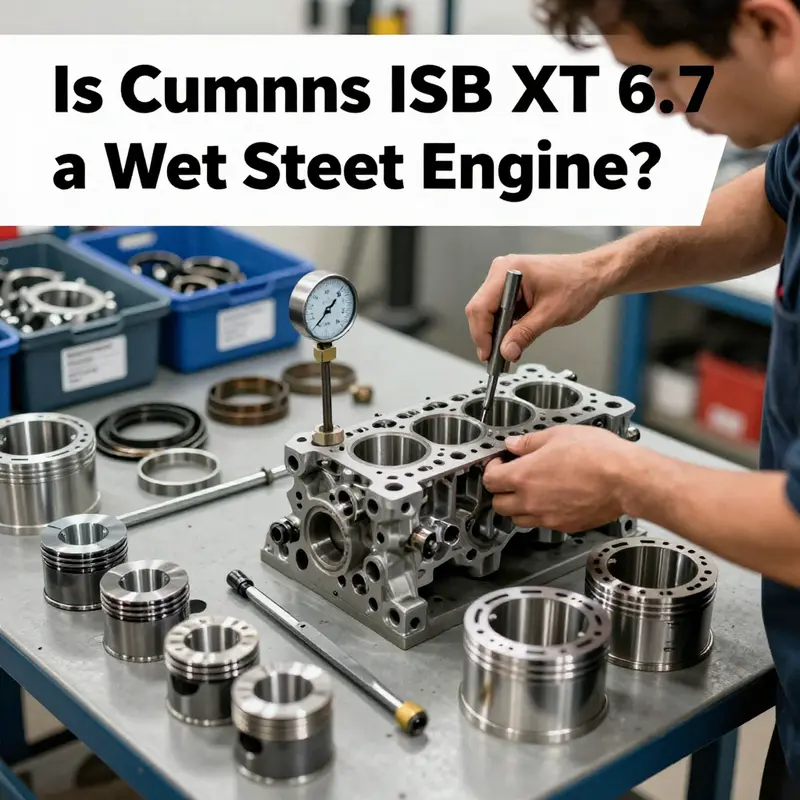
The ISB XT 6.7-liter family represents a deliberate balance between rugged mid-range capability and manufacturing efficiency. In this class of diesel powerplants, the cylinder block is cast as a monolithic, high-strength structure, and the cylinder bores themselves are integrated into the block rather than served by replaceable wet sleeves. That design choice—often described as a dry or parent bore arrangement—shapes every facet of maintenance, overhaul, and day-to-day service. It influences how heat is managed, how wear is addressed, and how a fleet schedules repairs to keep vehicles rolling without costly downtime. In practical terms, the absence of wet sleeves translates into a maintenance philosophy that emphasizes preventive care, precise machining when bore work is needed, and meticulous part quality to preserve engine life across a demanding service life. It also means that when the engine reaches a major service interval, the path to restoration is more about restoring the integrity of the block and its bores than swapping in a modular liner kit. This makes the ISB XT 6.7 both straightforward in its assembly and exacting in its repair methodology, especially for operators who expect long uptime in medium-duty applications.
To understand the nuance of maintenance for this engine, it helps to start with the core cylinder concept. The block, cast in high-strength iron, houses the cylinder walls as an integral feature of the casting. Coolant passages are embedded within the block and the cylinder head, delivering thermal management through a closed, pressurized cooling loop. There are no removable, replaceable liners that can be swapped in the field. When wear or scoring occurs, the repair path is not a liner replacement but a bore repair strategy that may involve honing, re-boring, or, in severe cases, a block replacement or substantial machining to accept oversized pistons. That distinction is not trivial; it governs tooling requirements, shop capabilities, and the timeline for a rebuild. A major overhaul thus centers on the accuracy and wear condition of the cylinder bores, pistons, rings, and the related rotating and reciprocating components, all while maintaining proper oil clearance, piston ring end gaps, and bore roundness within tight factory tolerances.
From a practical maintenance perspective, the ISB XT 6.7 demands rigorous attention to routine service intervals that keep components within spec and prevent wear from progressing unchecked. The manufacturer’s maintenance cadence—often referencing oil and filter changes, fuel system upkeep, and air intake system checks—exists not merely to preserve cleanliness but to mitigate the cascading effects of wear. Oil quality and cleanliness are central because the engine relies on a robust lubrication film to cope with high piston speeds, demanding combustion loads, and the pressure of a modern, turbocharged environment. The high-pressure common-rail fuel system makes fuel cleanliness vital as well; injectors and the rail operate at extreme pressures and depend on clean fuel to avoid premature nozzle wear or deposit formation that can degrade spray patterns. In practical fleet terms, this translates to using high-quality diesel, a disciplined refueling protocol, and, where appropriate, careful attention to fuel additives that help maintain injector cleanliness and protect combustion.
A key facet of maintenance for a dry-bore ISB XT 6.7 is the governance of cooling and thermal cycles. Even without removable liners, the engine’s heat rejection is a function of block design, coolant flow, and the ability to manage localized hot spots that appear under heavy loads. Operators should monitor coolant condition and thermostat performance, ensure proper coolant mixture and pressure, and verify that the water pumps and cooling passages remain free of restriction. Overheating accelerates bore wear and can push the limits of piston ring sealing and bearing lubrication. In the absence of sleeves, precise control of temperature across the bore surface remains essential because the bore’s integrity is the baseline for all other tolerances. This is not merely a matter of avoiding leaks; it is about maintaining the uniformity of the bore surface so that rings seal consistently and wear is distributed rather than concentrated in one sector. In that sense, routine cooling system checks—temperature readings, flow rates, and leak checks—become a frontline maintenance practice for the ISB XT 6.7.
Service work, when it comes, is as much about measurement as it is about part repair. The maintenance discipline for this engine favors precise, metric-driven checks: bore roundness, straightness, and surface finish; piston ring end-gap specifications; bearing clearances; and camshaft and crankshaft runout. The absence of wet liners pushes the service team to rely more heavily on accurate bore measurements and controlled machining processes. Cylinder bore honing, for instance, must be conducted with the right head and tooling; the goal is to restore the bore to a true cylindrical shape with a surface finish that promotes proper ring seating. In practice, this often means engaging an engine shop with experience in dry-bore repair, outfitted with instrumentation capable of verifying bore circularity and taper to the required tolerances. It also means that the standard user-service tools and basic torque wrenches are not enough; skilled technicians use bore gauges, dial indicators, and torque-angle measuring devices to ensure that every stage of the rebuild aligns with factory specifications.
The maintenance routine for the ISB XT 6.7 must also consider the engine’s fuel system and air handling. The high-pressure common-rail system demands a disciplined fuel supply chain and clean filtration to preserve injector integrity. Routine fuel system cleaning or conditioner treatments might feature in some fleet maintenance plans, but these decisions must be aligned with the engine’s fuel system design and the operator’s operating environment. Air intake components, including filters and charge-air cooling, require inspection during regular service visits. Any restriction in the intake path can cause the engine to work harder, raising exhaust gas temperatures, and imposing additional thermal stress on bore perimeter and piston rings. Sparkless, smokeless operation—per emissions standards—depends on meticulous attention to these subsystems, just as it depends on keeping the lubricating oil within spec and ensuring the oil cooler remains effective.
A practical consequence of the dry-bore design is the way overhaul planning is staged and budgeted. In engines with wet sleeves, a failed liner can sometimes be replaced as a field or in-frame service step, which reduces downtime and sometimes cost. In a dry-bore ISB XT 6.7, however, liner replacement is not the built-in path. If a cylinder is scored beyond repair or a bore is out of round, the repair may necessitate boring to a larger size and installing oversized pistons, or, in extreme cases, exchanging the block itself. The implication is clear: preventive maintenance becomes the most economical strategy. Fleet managers frequently emphasize preemptive checks, early detection of coolant in the oil, and monitoring for excessive blow-by—signs that wear is advancing toward a bore that cannot be restored without substantial machining. The careful management of oil usage, fuel quality, and cooling health can delay or even avert a costly major overhaul, keeping the engine on the road longer between expensive block work.
In-service diagnostics are another critical strand of the ISB XT 6.7 maintenance story. Modern diesel engines rely on sophisticated electronic controls, and a disciplined diagnostic program helps identify problems before they become catastrophic. Diagnostic tools and software—such as in-house or dealer diagnostic suites—allow technicians to pull fault codes, monitor real-time sensor data, and assess combustion efficiency. Regular assessment of compression pressure across cylinders is a standard part of a comprehensive overhaul evaluation, as is a thorough check of valve train components, camshaft timing, and endplay in the crankshaft assembly. The absence of sleeves does not reduce the need for precise alignment and timing; it heightens the importance of ensuring that every surface and interface is in spec, because the block’s integrity carries the entire engine’s reliability. Proper torqueing, gasket sealing, and bolt stretch verification can prevent micro-leaks that would otherwise exacerbate overheating, loss of compression, or oil contamination.
Quality standards and parts availability shape long-term maintenance economics. Using genuine components or approved aftermarket equivalents ensures compatibility with the dry-bore architecture. This is especially important for gaskets, seals, pistons, rings, and fasteners whose tolerances must be matched to the block and bore geometry. The service life of pistons and rings is intimately tied to bore condition, lubrication, and combustion cleanliness. A well-documented maintenance history—oil changes at recommended intervals, timely fuel system maintenance, and cooling system service—can be the difference between a trustworthy, predictable uptime and a pattern of expensive, unplanned downtime. In the end, the ISB XT 6.7’s design rewards disciplined maintenance with efficiency and reliability in the field, even as it demands more planning and precision during major repairs than some wet-sleeve alternatives.
For readers seeking a concise primer on how sleeve configurations influence service pathways, consider a brief overview on the topic, which helps frame the ISB XT 6.7’s approach. What sleeve means in engines? Understanding the distinction between dry bores and wet sleeves clarifies why maintenance practices differ. This primer offers a straightforward comparison of modular sleeve replacement versus block-based bore repair, and it illustrates how those choices propagate through overhaul planning, tooling, and downtime. What engine sleeves mean.
The ISB XT 6.7’s maintenance and overhaul story extends into the realm of lifecycle economics. Operators who expect to keep fleets in service for a decade or more will find that the dry-bore design, with its superior block rigidity and thermal stability, can deliver strong long-term durability, provided maintenance is timely and precise. The upfront manufacturing efficiency that accompanies a parent-bore block is complemented by a rebuild strategy that emphasizes bore integrity and piston-ring performance rather than sleeve replacements. The trade-off, of course, is that the major overhaul route hinges on the ability to bore and sleeve, in a sense, the cylinder walls back to spec or to accept oversize pistons. Fleet economists often weigh this against the cost and downtime of a block replacement when wear becomes irreparable. The calculus is guided by service records, shop capabilities, and the overall operating profile of the vehicle fleet.
In closing, the ISB XT 6.7’s dry-bore design embodies a philosophy that values block rigidity, manufacturing efficiency, and predictable cooling, while placing a premium on preventive maintenance and skilled overhaul capability. This engine rewards operators who invest in disciplined service—regular oil changes, cleaner fuel, clean air intake, and a robust cooling system—and who plan for precise bore work when yawning wear appears. The absence of wet sleeves does not eliminate the need for careful maintenance; it reframes it. The chapter’s guidance is simple in principle: schedule dependable service, monitor systems that influence bore performance, and engage qualified technicians with access to the correct tooling and references. In doing so, operators can preserve the engine’s strength across a variable duty cycle and maintain a lifecycle cost profile that aligns with fleet expectations.
For readers who want to explore the service documentation and official repair guidelines directly, start with the trusted technical resources available through the engine manufacturer’s support channel. The official service documentation—covering torque specifications, procedure steps, and troubleshooting—remains the most authoritative reference for any major repair or overhaul. Access to service bulletins, technical data, and downloadable manuals helps ensure that maintenance work aligns with the latest standards and recommended practices. This solid foundation supports the practical, hands-on skills described in this chapter and helps keep your ISB XT 6.7 in steady, reliable service over its operating life. For further reading and official resources, see the provider’s support portal, which hosts the most up-to-date manuals and guidance.
External resource: https://www.cummins.com/support
From Wet to Dry: The engineering and market reasoning behind the ISB XT 6.7’s parent-bore cylinder design
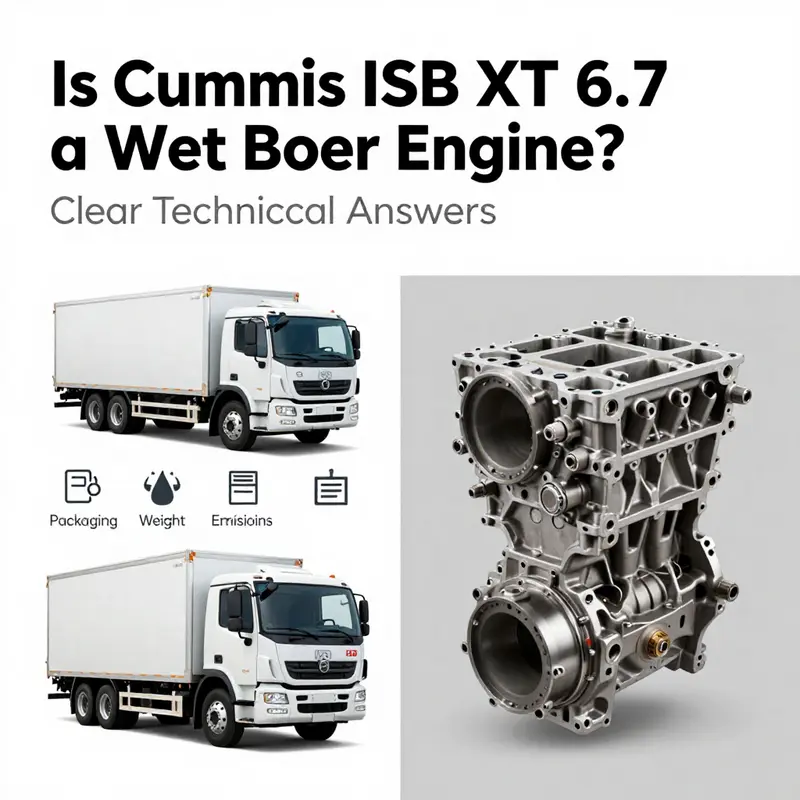
The mid-range diesel segment has long been a proving ground for pragmatic engineering choices. In this space, a cylinder is more than a polished hole in a block; it is a critical equilibrium of stiffness, heat transfer, manufacturability, and service economics. When observers ask whether a given engine uses wet sleeves or a dry, parent-bore configuration, they are really asking about a factory’s calculation of how to balance durability with daily usability in fleets that rack up miles, hours, and cycles of wear. For the ISB family, and the XT variant specifically, the cylinder architecture reflects a deliberate tilt toward robust block integrity, predictable maintenance, and cost-effective manufacturing—all while meeting the demanding emissions and reliability targets that fleets have come to expect. In that sense, the cylinder design is a microcosm of a broader design philosophy that seeks to harmonize performance with long-term ownership economics in a way that aligns with real-world operating profiles.
To begin, it helps to situate the discussion in the broader architecture. The ISB XT 6.7, a member of Cummins’ ISB lineage, is built around a cast-iron monoblock that houses the large-diameter bore with direct cooling channels integrated into the casting. This is not a shallow or purely cosmetic difference; it determines how heat is conducted away from the piston ring zone, how the bore resists deformation under high torque and high cylinder pressure, and how maintenance can be approached when wear or scoring emerges. The absence of removable wet sleeves in this configuration means the cylinder walls are inherently part of the block’s structural matrix, a detail that carries implications across the engine’s life—from initial manufacturing tolerances to the eventual decision points a shop faces during an overhaul. In practice, the design leans into the advantages of a tight, monoblock system: enhanced rigidity, tighter sealing surfaces, and a cooling pathway that is optimized via the block’s own geometry. These attributes are not incidental; they are the hinge points around which other performance and lifecycle considerations revolve.
One of the most immediate technical benefits of a parent-bore design is structural rigidity. In a continuous sense, the bore is a fixed feature of the block, so the surrounding material contributes to a more uniform response to thermal expansion and mechanical loads. In high-load duty cycles—such as buses, medium-duty trucks, and construction equipment—the engine experiences concentrated pressure in the bore region during peak torque transients. A rigid block helps maintain consistent ring seal and controllable bore wear over the engine’s life. The alternative—wet sleeves that can be replaced or overlapped with liners—offers easier patchwork in some contexts but introduces a different set of sealing challenges and more complexity in the sleeve-to-block interface. With the ISB XT 6.7’s approach, the goal is to minimize that interface complexity while preserving a predictable honing and plateaus of wear. In a practical sense, fleets benefit from a design that remains stable across a broad temperature envelope and across multiple cycles of duty and rest, a characteristic that is highly valued in regional haulers and municipal fleets that drive predictable routes with constrained maintenance windows.
Cooling strategy is another essential thread in this narrative. The ISB XT 6.7 relies on a carefully engineered cooling circuit that courses through passages cast into the block and the head. The absence of removable sleeves means that cooling channels can be contoured in tandem with the bore wall, creating a more uniform thermal gradient around the piston crown and ring zone. Uniform cooling helps minimize hot spots that promote uneven bore wear and piston-side scoring. It also contributes to more stable operating temperatures, which is relevant for emissions control systems that demand precise thermal boundaries to achieve low NOx and particulates in modern exhaust aftertreatment. The overall cooling philosophy, therefore, is not merely about preventing overheating; it is about sustaining a consistent cycle of heat removal that supports lubrication regimes, ring seating, and combustion stability across a wide set of operating conditions.
From a maintenance and repair standpoint, the parent-bore design reshapes the repair playbook. When wear or damage does occur in a wet-sleeve engine, mechanics often face the possibility of replacing liners or reconditioning an otherwise modular structure. In a dry or parent-bore architecture, the path to restoration hinges more on machining and oversize components rather than liner extraction and reinstallation. This is not to say the design is less serviceable; it is to acknowledge that the servicing paradigm is different. The bore is meant to be machine-true, and overhauls typically involve reconditioning the bore to a precise oversize and fitting pistons and rings that bring the bore back into spec. The result is a repair workflow that is highly dependent on machine shop capabilities and the availability of oversize configurations. Fleet operators who emphasize predictable maintenance windows and a clear overhaul roadmap may view this as a rational trade-off: slightly more upfront shop involvement, but a robust, predictable reconditioning path that does not hinge on a delicate sleeve-to-block interface. That predictability translates into maintenance planning that aligns with service intervals, downtime scheduling, and available skilled technicians, particularly in regions where wet-sleeve replacement kits and liner services are not as readily stocked as standard engine components.
The economic calculus of the ISB XT 6.7’s cylinder strategy also intersects with manufacturing efficiency and supply chain resilience. A parent-bore approach reduces the number of discrete parts required for the cylinder assembly. There is no separate sleeve installation step to manage during assembly, which translates into lower process variability and shorter assembly times in high-volume manufacturing environments. Fewer parts at installation also means less chance of misalignment or improper seating, which can propagate oil leakage or coolant path anomalies if not correctly addressed. The downstream effect of such simplifications can be pronounced: lower unit cost, improved batch consistency, and a more straightforward inventory footprint for service centers that must cover a wide range of configurations within a single platform family. In mid-range engines, where fleets often run extensive duty cycles with less frequent, but higher-stress, overhauls, the durability and maintenance predictability of a dry/bore approach is a salient selling point. It speaks to a lifecycle perspective in which the total cost of ownership—combines initial manufacturing cost, maintenance expenditure, and downtime penalties—leans toward a design that reduces complexity at both ends of the lifecycle.
Market realities further reinforce the technical choices. The ISB family targets a space where reliability, fuel economy, and total ownership cost matter in equal measure. This is not a premium, high-margin niche but a broad, practical market where fleets value consistent performance and serviceability across a spectrum of configurations—from municipal buses to light-duty commercial trucks and specialized equipment. In such markets, a robust block with integrated cooling and a predictable repair workflow can reduce the risk of expensive, specialized liner service capabilities becoming a bottleneck in regional service networks. The XT designation, while indicating application-tailored tweaks, does not, in this interpretation, imply a drastic deviation in cylinder architecture. Rather, it signals optimization within the established parent-bore framework to accommodate the particular duty cycles, mounting configurations, and emissions-compliance strategies of the target vehicles. In other words, the XT variant leverages the proven cylinder principle but tunes ancillary systems—fuel, turbocharging, intake, exhaust, and aftertreatment—to fit the specific vehicle and mission profile. That alignment is a critical facet of market strategy: engineering choices are not solely about raw thermal performance but about how the engine integrates with a vehicle’s overall architecture and the operator’s maintenance ecosystem.
There is, of course, a spectrum of opinions in the industry about the merits of wet sleeves versus dry/bore configurations. A common misconception, especially among readers who encounter larger displacement, industrial, or marine engines where wet sleeves appear more prevalent, is that dry-bore architecture represents a universal advantage. The reality is more nuanced. Wet sleeves are often favored when there is a clear expectation of high cylinder loading and more frequent in-frame overhauls that require rapid sleeve replacement rather than full block machining. In such scenarios, the modularity and replaceability of liners can offer a convenient maintenance path. For mid-range applications that emphasize compact packaging, build quality, and lower long-term maintenance costs, a dry/bore approach provides a different set of advantages: more rigid blocks, faster assembly, tighter tolerances, and heat management efficiency that suits the vehicle duty cycles and service intervals of regional fleets. The ISB XT 6.7 embodies this strategy, aligning with a product line that seeks to optimize cost-to-performance for the majority of its intended users, while still offering the durability and robustness demanded by heavy urban and regional operations. This is not a denial of the wet-sleeve doctrine but a strategic positioning within a specific market segment where the balance of factors—rigidity, heat transfer, maintenance practicality, and lifecycle cost—appears to serve the intended mission best.
The broader engineering context helps illuminate why the decision resonates with operators who face real-world constraints. Fuel economy, emissions compliance, and driveability are not isolated; they are intertwined with mechanical architecture and maintenance logistics. The ISB XT 6.7’s cylinder approach lends itself to consistent honing practices and a predictable overhauling path that fleets can plan around, given a well-equipped service network. Emissions systems, particularly aftertreatment that thrives on stable operating temperatures, benefit from a block that can maintain thermal uniformity across cylinders. The reduced variability in bore wear in a monoblock design translates to more uniform friction behavior and a steadier ring seal, which, in turn, supports smoother combustion and more reliable fuel economy over the service life. These interdependencies matter to operators who track performance across thousands of hours and miles. The design is, in effect, a system-level compromise that emphasizes durability, manufacturability, and clear maintenance pathways, while still delivering the performance envelope expected from a modern mid-range diesel.
In reflecting on the ISB XT 6.7’s cylinder design, it is useful to return to the practical consequences for technicians and end-users. For technicians, a parent-bore engine means a repair task that relies on precise machining to rebuild a worn bore within spec, often with oversize pistons or sleeves that are tailored to restore circularity and seal. For operators, the consequences are more straightforward: when everything is in spec, you enjoy a reliable torque curve, predictable fuel economy, and a maintenance schedule anchored to a known set of procedures, not a bespoke liner replacement path. In fleet terms, the design supports a straightforward, repeatable service philosophy—one that minimizes the risk of late or underdone repairs during a busy work cycle, and that maintains performance parity across a wide range of vehicle configurations. The result is a propulsion system that, while perhaps less modular on a straight replacement basis than a wet-sleeve alternative, offers a more manageable, scalable approach to maintenance and service.
The accompanying context notes that the ISB 6.7, evolving from the 5.9L lineage, has consistently pursued this approach of a robust, dry or parent-bore cylinder construction. The XT variant, while signaling application-specific adjustments, does not alter the core cylinder architecture. This alignment is not accidental; it reflects a coherent strategy across generations of engines designed to meet mid-range needs with a mindset toward durability, manufacturability, and total cost of ownership. In the end, the decision to favor a parent-bore configuration in the ISB XT 6.7 can be read as a precise answer to a specific set of operating realities: fleets that require reliable daily performance, economical maintenance pathways, and a design that remains straightforward to service across the vehicle’s entire lifecycle. The result is a powerplant that aligns engineering ambition with practical deployment, turning theoretical gains in thermal management and block rigidity into tangible benefits in the shop and on the road.
For readers seeking a concise primer on the functional differences and trade-offs of this arrangement, a helpful starting point is a focused overview on dry sleeves. See dry sleeve engine explained for a clear delineation of how parent bore concepts translate into real-world servicing decisions. The ISB XT 6.7’s design choices, while rooted in a specific market segment, echo a broader pattern in mid-range diesel engineering: the pursuit of a architecture that is tough enough to endure heavy use, but simple enough to keep maintenance predictable and affordable over the long run. The balance struck here is not merely about engineering elegance; it is about shaping a lifecycle narrative in which the engine remains a dependable workhorse rather than a perpetual maintenance burden.
In the context of knowledge sharing and industry dialogue, it is important to acknowledge that exact, line-by-line documentation of every cylinder-design nuance for every subvariant may not be openly published in all public sources. Publicly available literature often emphasizes the general characteristics of common ISB platforms and their evolution rather than every suffix designation. The practical upshot for engineers, technicians, and fleet operators is to understand the core engineering rationale—block rigidity, thermal management, and repair pathways—that underpins the ISB XT 6.7’s architecture. This understanding, combined with the ability to access targeted service literature and manufacturer guidelines, equips practitioners to anticipate maintenance needs, plan overhauls, and align procurement with the realities of service networks. It also explains why a design that favors durability and predictable maintenance can be more desirable in medium-duty fleets than a model that emphasizes modular sleeve replacements in every scenario.
As with any engineering decision that interfaces with commercial realities, there is always room for debate and ongoing refinement. Trade-offs between upfront manufacturing costs, long-term maintenance expenditure, and the speed of component replacement in the field continue to shape similar engine families. The ISB XT 6.7 stands as a contemporary instance of how a well-considered cylinder strategy can support a vehicle segment that values reliability, efficiency, and a clear maintenance path. It is a reminder that behind every technical specification lies a set of practical choices designed to balance performance with the day-to-day realities operators face in diverse regions and markets. The cylinder is, in many respects, the quiet anchor of a propulsion system’s ability to deliver steady work over years and miles, and the ISB XT 6.7’s mature, parent-bore approach is a telling example of how such anchors are selected and integrated into a broader product strategy that aims to serve a broad, demanding audience with confidence and consistency.
External resource: https://www.cummins.com/sites/default/files/cummins-isb-67-engine-specs-overview.pdf
Final thoughts
Short answer: the Cummins ISB XT 6.7 is not a wet sleeve engine. It uses a parent-bore (dry) cast-iron block where the cylinder walls are integral to the block casting and coolant circulates through separate passages. For motorcycle and auto owners, that means the ISB XT 6.7’s cylinder life and repairability follow the parent-bore model: when bores wear or score they are usually machined and fitted with oversize pistons or prepared for dry liners rather than swapped out with removable wet sleeves. For parts distributors and repair shops, this determines inventory (less need for sleeve kits, more need for piston oversize sets, machining services, and head gasket/spares). For garages servicing fleets, it shapes labor planning and cost forecasting: major overhauls require machine-shop work and are less modular than wet-sleeve repairs. Cummins’ selection of parent-bore construction balances block stiffness, thermal stability, packaging, and production efficiency for medium-duty applications—trade-offs that favor long-term durability and compactness over in-frame modular overhaul convenience. Keep this distinction front-of-mind when specifying parts, estimating overhaul costs, or advising fleet customers on lifecycle planning.