
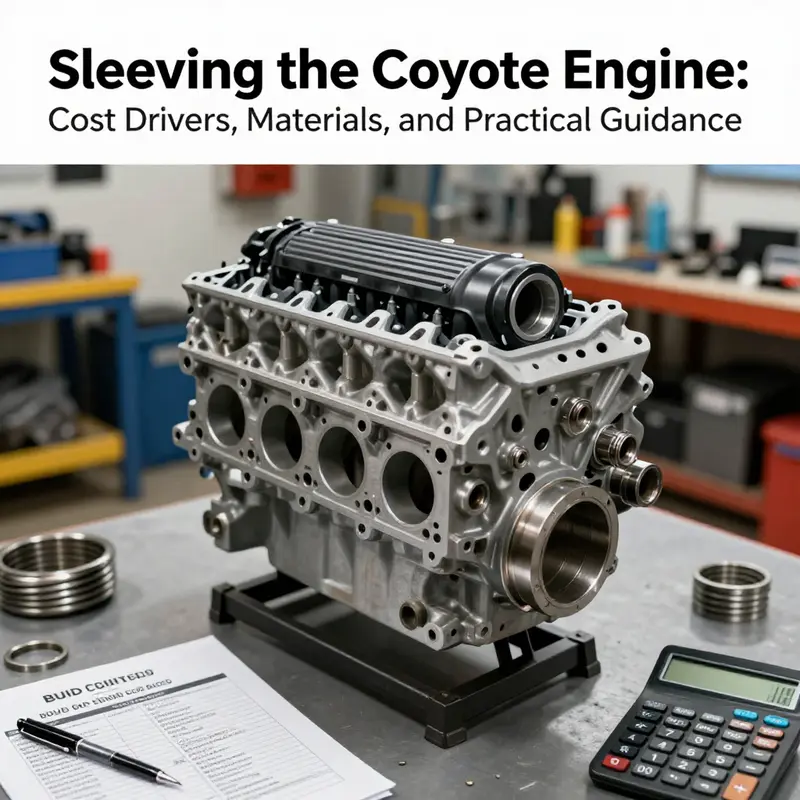
Sleeving a 5.0L Coyote engine is a precision venture where machining, materials science, and performance goals converge. For motorcycle and auto enthusiasts alike, and for shops and distributors, understanding the price landscape helps align budgets with desired outcomes. As of early 2026, professional sleeving work typically ranges from $3,500 to $7,000 for labor and parts, covering removal, block machining for sleeves, installation, reassembly with new rings and bearings, and final balancing and testing. If high-performance sleeves such as forged steel or premium hypereutectic variants are used, or if the build includes upgrades like stronger rods, higher compression pistons, or custom cams, the total can exceed $10,000, especially at respected performance shops specializing in Ford Coyote engines. The presence of extreme builds—such as a Whipple 3.0L supercharged Coyote producing hundreds of horsepower—illustrates how sleeving acts as a critical reinforcement against boost and RPM stresses. This article targets five audiences and breaks down pricing scope, labor and material ranges, sleeve material implications, upgrade-driven cost escalations, and practical strategies for obtaining reliable quotes from certified shops. The result is a clear, actionable view of what sleeving costs entail and how to plan accordingly.
null
null
Sleeving the Coyote: Navigating Labor, Materials, and the Price of Reinforcement
Sleeving a Ford Coyote engine is a precision procedure that sits at the intersection of performance engineering and meticulous machining. It’s not a generic or one-size-fits-all service; the cost mirrors the scope of work, the materials chosen, and the level of power you’re chasing. For builders and enthusiasts, understanding where the money goes helps separate the dream of a stronger, more reliable block from the reality of a hefty bill that reflects real labor and material commitments. In broad terms, you’ll encounter two axes that define the price: labor and materials. But those axes bend in different directions depending on how deep the project runs. A baseline sleeve job, done as part of a rebuild or as a reinforcement to support moderate performance goals, sits in a mid-range corridor. A longer, more aggressive build—one that aims to support very high boost and RPM—with premium sleeves and upgraded supporting components, climbs into a much higher price tier. This gradient can be understood best by walking through what counts as sleeve work, what materials are chosen, and how a shop prices the work across different scales of ambition.
First, the core workflow of sleeving a Coyote engine is a sequence of tightly choreographed tasks that touch nearly every corner of the block. The engine must be removed from the vehicle, properly disassembled, and prepared for the precise fit of new sleeves. The block itself is machined to accept sleeves that fit with exacting tolerances. The sleeves are pressed or installed with careful alignment, and the engine is reassembled with new piston rings, bearings, and seals. Finally, the assembly is balanced and tested to ensure the engine breathes and spins as designed. Each of these phases carries its own labor burden, and each contributes to the total cost in predictable ways. While the steps are standard in concept, the time required and the precision demanded can swing the numbers widely depending on the shop and the desired outcome.
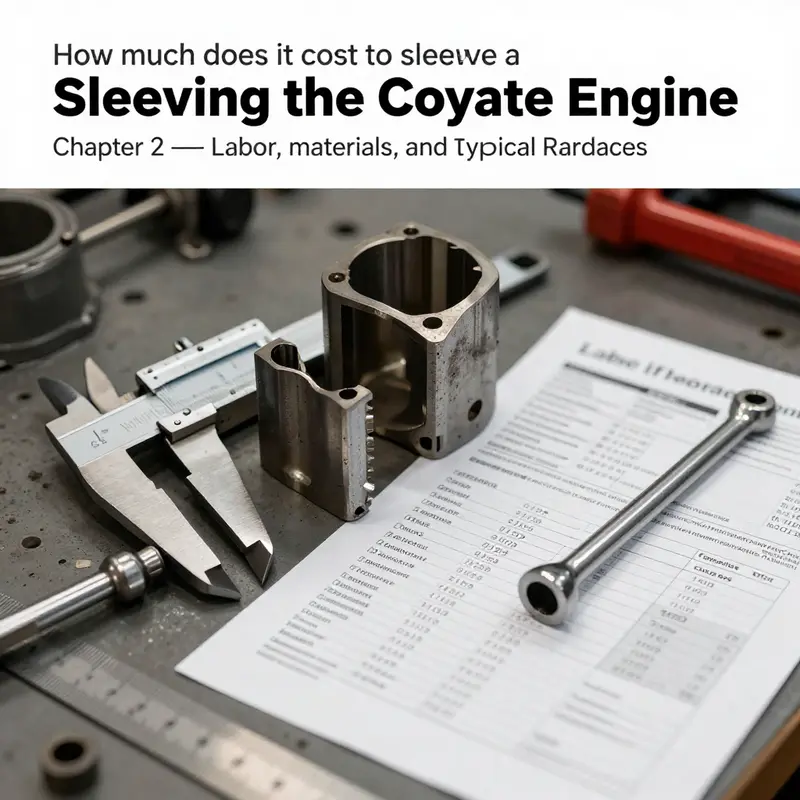
When the discussion turns to numbers, a useful way to frame the conversation is to separate labor from materials, then recognize how the two interact. In typical sleeve work, labor costs tend to fall somewhere in the range of roughly eight hundred to two thousand dollars, depending on the job’s complexity and regional wage scales. That labor envelope covers the physical labor of removing the engine, disassembling it, machining the block for sleeves, installing the sleeves, and reassembling the engine. It also encompasses the meticulous tasks that accompany sleeving, such as deck surfacing, honing within tight specifications, and aligning bores to ensure the sleeves sit true with the crank and pistons. Any step that adds time—whether it’s additional deck work to restore lip flatness, more extensive honing to optimize ring seal, or extra bore alignment checks—will push labor toward the higher end of the spectrum. Regional differences in shop rates can widen the gap even further, particularly for shops that specialize in high-performance Ford engines versus general machine shops that offer sleeving as a service.
Materials are the other side of the coin, and their cost composition can be surprisingly variable. Typical sleeve material choices include a spectrum from cast iron to hypereutectic aluminum variants, with some performance-focused builds pushing toward forged variants. For the majority of reinforcement work, your material costs will typically run roughly seven hundred to two thousand dollars. This range covers the sleeves themselves, plus associated gaskets, seals, and fasteners, all of which must meet the block’s exacting tolerances. The material choice matters not just to price, but to how the engine will behave under load. Cast iron sleeves tend to be more forgiving, with robust heat resistance and dependable wear characteristics. Hypereutectic aluminum sleeves offer reduced weight and improved thermal performance, but at a premium. Forged steel sleeves, while less common in everyday builds, provide exceptional strength for extreme boost and high-rpm operation and can dramatically lift the bill. In short, the sleeve material is a principal lever, directly shaping both the price tag and the long-term reliability of the reinforced block.
The overall cost, then, is the sum of these two streams and the way they interact. A straightforward sleeve job that covers the essentials—block preparation, sleeves, seals, and basic reassembly—can hover around the $1,500 to $4,000 mark when measured across labor plus materials. That range reflects a typical rebuild or reinforcement scope, modest by modern performance standards, and it accommodates a reasonable selection of sleeve materials and standard ancillary work. It’s important to acknowledge, though, that this is a broad band. Differences in shop specialization and local labor markets can push the total outside this window. And when a project migrates toward high-performance territory—say, premium sleeves paired with upgraded rods, pistons, or cams—the total cost can breach the $10,000 threshold. The increase isn’t just for sleeves; it’s a cascade of accompanying upgrades and the added time, testing, and reliability guarantees those upgrades entail. The engine’s service life under higher boost and sustained high RPM depends on a more robust foundation, and the sleeving work is often the anchor that keeps the block from becoming a bottleneck under stress.
To understand just how far variation can stretch, consider the realities of elite builds that push a Coyote engine into serious power territory. A project that aims for high boost and extreme horsepower requires sleeves that can handle elevated cylinder pressures and temperature cycles. The sleeves themselves may be more than just a larger bore to accept new sleeves—they may be designed to resist micro-welding, reduce thermal distortion, and maintain consistent oil control. In such cases, not only does the sleeve material tend to be more specialized, but the surrounding components—like connecting rods, pistons, piston rings, and top-end hardware—are often upgraded in tandem. The result is a comprehensive package where sleeving is a foundational step, but the bill reflects the broader scope of enhancements that support the higher power target. Occasionally, a single phase of a larger program—such as a full rebuild with dedicated performance machining—can, on its own, exceed the mid-range sums discussed earlier, though the sleeve itself remains the central reinforcement decision.
This is why many builders anchor their planning around a staged approach. A client might begin with a sleeve job that supports a reliable, higher-resistance foundation for a specific horsepower target. If the performance goals evolve, the plan can evolve with it, adding high-strength rods, forged pistons, or an optimized cam profile. Each extension adds cost and, typically, a new layer of validation work, including flow testing and engine dyno runs. Such an approach helps keep the project financially manageable while still delivering meaningful gains in reliability and performance. It also aligns with prudent project management, where a detailed, itemized quote becomes essential. A reputable shop will walk through the block’s condition, outline the material options with a clear sense of how each choice translates into performance and durability, and provide a breakdown of where the money goes—from block prep to final assembly and tuning.
For readers seeking a sharper, more granular view of how sleeve material choices map to cost, there is a focused resource that breaks down the math behind sleeve components and pricing. It’s a practical reference point for translating the broad ranges above into something you can discuss with a shop owner. See Engine Sleeve Cost for a concise breakdown of material, labor, and how those elements interact to shape the final number. The link below is useful for understanding the price drivers in a real-world context and for preparing precise questions when you’re meeting with a performance engine specialist.
All of this is anchored in the reality that the sleeve decision does more than reinforce the block. It sets the stage for reliability at increased power and for any further upgrades you might pursue. The shop you choose should be able to translate your goals into a detailed, step-by-step cost plan that documents both the sleeve work and the ancillary tasks that ensure the engine will perform under load across the RPM range. A thorough quote will typically present: the exact sleeve material specified, the surface and bore preparation steps, any deck resurfacing or honing requirements, the number of torque and fastener checks, and a clear schedule for reassembly and testing. The value of such transparency cannot be overstated when you’re investing in a block that is intended to endure higher stress and longer life at elevated power levels.
For readers eager to see how professional engine shops frame these quotes and to compare approaches, consulting official engine-building and rebuilding guidance can be enlightening. While the specific plans will vary by shop, many sources emphasize that quality sleeving is as much about the preparation and verification steps as it is about the sleeves themselves. The broader takeaway is simple: sleeve work is a threshold investment for meaningful reliability at higher performance, and its price reflects the depth of work required to make a reinforced block both strong and predictable in the long run.
External resource: https://www.fordperformance.com/en-us/engine-building-services.html
Sleeve Material Dilemmas: Weighing Hypereutectic versus Forged for a Ford Coyote V8
When you’re planning to sleeve a Ford Coyote V8, the material you choose for the sleeves isn’t just a line item on a bill. It shapes the engine’s future under load, determines how far you can push a build, and quietly steers the total cost from a reasonable project into a higher tier of investment. This chapter dives into the practical realities behind hypereutectic and forged sleeves, not as a catalog of abstractions but as a decision with real trade-offs in performance, reliability, and dollars. If you’ve already scanned the rough price ranges for sleeving—often cataloged as a few thousand dollars for labor and core components—the material choice adds a distinct layer of consequence: it can stretch the final bill by thousands, or it can save you from repeating the work all over again when ambition meets boost and rpm. The dialogue around sleeve material is less about which is “best” in a vacuum and more about which is best for your intended use, your risk tolerance for detonation and heat, and how far you’re willing to take the build in order to reach your power and durability goals. For a quick reference on how sleeve costs generally unfold, you can explore the broader topic of engine sleeve cost as you map out a quote with a qualified shop, and then come back to the material-level decision to see how it alters the long game of maintenance and reliability.
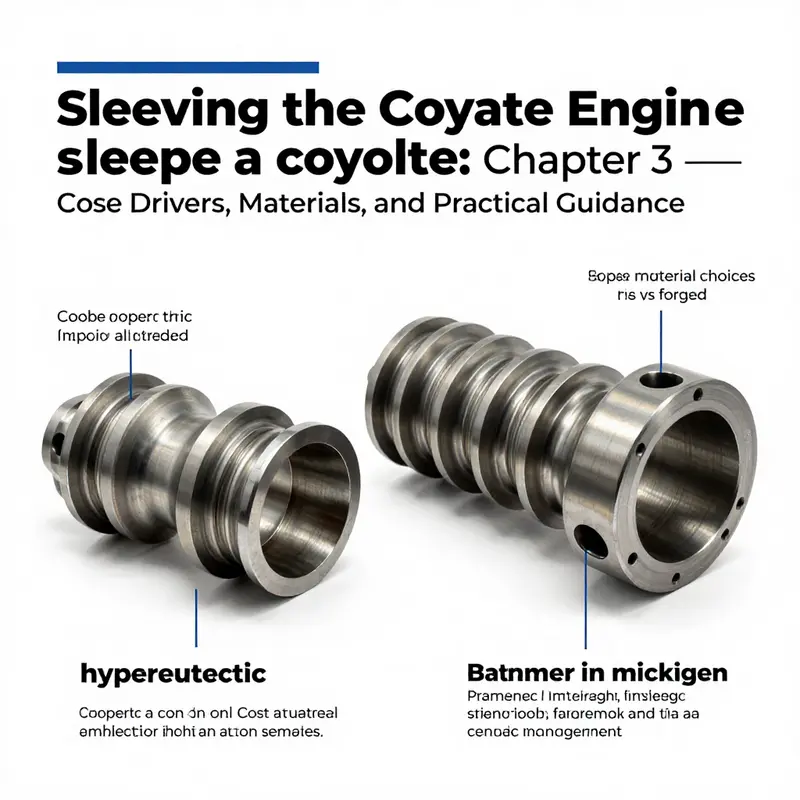
The most common sleeve choices fall into two camps: hypereutectic and forged. Hypereutectic sleeves, typically chosen for standard or moderate performance applications, arrive with the appeal of lower cost and easier machining. The alloys used in hypereutectic sleeves are designed to minimize thermal expansion and improve oil control, which translates to solid performance under normal driving and mid-level boost. In everyday terms, they offer a kinder price tag and predictable behavior when the engine operates within a familiar window of temperatures and power. They also pair well with hypereutectic pistons in many builds, delivering a balanced package that meets the demands of street-driven Coyote engines without nudging the needle toward extremes. But their appeal has its limits. Hypereutectic sleeves are inherently more brittle than their forged counterparts. That brittleness isn’t just a material defect; it’s a property that becomes critical under high detonation risk, extreme boost, or sustained high rpm where heat and pressure swing widely. When a build pushes the envelope—whether through aggressive turbocharging, aggressive cam timing, or sustained track use—the margins that hypereutectic sleeves enjoy shrink. In practical terms, a builder may find themselves at a crossroads: a strong, cost-efficient baseline sleeve that handles a certain level of performance, or a step up into forged sleeves that deliver additional headroom at a higher price point. The decision is rarely about a single factor; it’s about the entire system, and how the chosen sleeve material interacts with pistons, rings, rods, and the engine’s cooling and lubrication strategy.
Forged sleeves, in contrast, represent the premium tier for high-performance and reliability under duress. Forged materials offer superior strength, better resistance to heat, and improved durability when confronted with high-boost scenarios, aggressive cylinder pressures, or extended live-well operation on the track. The mechanical rationale is straightforward: forged alloys tolerate more abuse before yielding or cracking under the same elevated temperatures and pressures that boost engines routinely generate. The payoff is clearer lift in horsepower tolerance, more consistent ring seal under demanding duty cycles, and a broader safe operating envelope before detonation or bearing distress becomes a limiting factor. That said, the added performance envelope comes with a price tag that reflects the higher material costs, tighter machining tolerances, and more exacting quality control required to ensure alignment, concentricity, and long-term stability after installation. The sleeve’s role in heat management is particularly consequential here. Forged sleeves can be larger and more robust, but they also demand precise bore sizing and careful honing to maintain the correct crosshatch, oil clearance, and wall thickness. The net effect is a more labor-intensive process, where skilled machinists and engine builders invest time to achieve the exact cylinder geometry that forged sleeves require to perform as intended under high boost.
The cost implications of choosing hypereutectic versus forged sleeves extend beyond the material price itself. While hypereutectic sleeves generally sit at the lower end of the sleeves continuum, the total project cost remains tethered to the engine’s overall build plan. Sleeving still involves engine removal, block preparation, sleeve installation, reassembly with new rings and bearings, and often balancing and testing. If you stick with a moderate, street-oriented goal, hypereutectic sleeves can keep the project within the traditional range—roughly three and a half to seven thousand dollars when labor, machining, and hardware are considered together. However, when a build includes high-performance aftermarket components or aims for substantial horsepower gains, the cost delta widens significantly. Forged sleeves can push the total beyond ten thousand dollars, especially at a respected performance shop that emphasizes strict tolerances and robust quality control. In practice, many high-horsepower, boosted Coyote builds also favor forged sleeves as a form of insurance against the higher stress that accompanies aggressive tuning. The rationale isn’t just raw strength; it’s a gamble against engine failure under conditions that push the cylinder walls, rings, and bearings to the edge of what the block and cooling system can safely handle.
From a design perspective, the choice between hypereutectic and forged sleeves also shapes how the cylinder block is machined and prepared. Hypereutectic sleeves tend to require less aggressive preparation because the sleeves themselves are less tolerant of misalignment or micro-imperfections in the bore. They can be more forgiving of minor variances and may be compatible with a broader range of piston rings and related components without extensive honing. Forged sleeves, by contrast, demand a higher degree of precision in boring, honing, and alignment. The bore must be executed to tighter tolerances, and the sleeve installation must be executed with careful control of interference fits and interference relief to prevent micro-movements that could translate into noise, wear, or inconsistent seal. This is where the true cost of the material choice reveals itself: the labor hours and the sophistication of the equipment—boring bars, hone stones, and alignment fixtures—scale with the ambition of the build. It’s not merely about placing a thicker wall in the cylinder; it’s about creating a reliable, repeatable cylinder that can hold pressures well above stock without losing oil control or weakening sealing surfaces. The process also often involves additional checks, such as cylinder boring and honing for final clearances, and sometimes even heat-treat steps for certain forged sleeve materials. These steps, while routine for seasoned engine shops, add to both time and expense.
It’s also worth noting how sleeve material interacts with piston and ring choices, because the interplay has practical consequences for both cost and performance. Hypereutectic sleeves are frequently paired with hypereutectic pistons and semi-closed-ring packages designed to maintain reliable oil control and adequate wear resistance under typical boost levels. Forged sleeves tend to be paired with forged pistons and robust ring packs that can resist greater chamber temperatures and more aggressive detonation scenarios. The alignment of material properties across sleeve, piston, and rings helps ensure that the sealing relationships remain stable across a broader operating range. This alignment reduces the risk of premature ring wear, glazing, or scuffing, and it supports longer maintenance intervals in a high-stress application. While it would be convenient to treat sleeve material as a single lever you toggle to gain or lose horsepower, the reality is more nuanced: a forged sleeve is a more comprehensive choice that often necessitates corresponding upgrades in piston and ring design to fully exploit its potential. Those downstream decisions—from piston pin fit and oiling efficiency to rod bolt strength and valve timing strategy—shape the final cost and the reliability profile of the build. This is why a well-constructed quote from a shop that understands how all the pieces work together is essential. If you want a concise frame for understanding the financial implications of the material choice, consider the engine sleeve cost as your reference point and then examine how the rest of the assembly interacts with that choice; you’ll likely see a cascade not only of added materials but of additional precision requirements that eventually translate into labor hours and, ultimately, the final price. For readers beginning to map this out, a solid step is to explore an internal resource that frames how sleeve cost relates to the specific material and build goals: engine sleeve cost.
Beyond the numbers, the decision between hypereutectic and forged sleeves is a statement about risk and reward. If your aim is to enjoy spirited daily driving with occasional spirited sprints, and you’re comfortable staying within a boost and RPM envelope that keeps detonation at bay, a hypereutectic sleeve may meet your needs while limiting the budget. If your intent is to chase high-horsepower goals, frequent track days, or sustained high-load operation, forged sleeves offer a more forgiving platform that can handle higher heat and pressure. Either way, the most reliable path to an accurate estimate is to engage a certified performance engine shop with a track record in Ford Coyote engines. They can assess the engine’s condition, discuss the intended use, and present a detailed quote that accounts for parts, machining, and any ancillary work such as cylinder boring or honing. This approach helps prevent surprises by aligning expectations with the realities of machining tolerances, material properties, and the practical limits of the block. In the end, the sleeve material is not merely a line item; it’s a foundational choice that influences how the engine breathes, seals, and cools during the entire life of the build. Its impact resonates through performance, reliability, and the economics of keeping a highly stressed V8 on the road or track for years to come.
External resource for further reading on piston material choices can be consulted here: https://www.holley.com/tech/articles/piston-choice-hypereutectic-vs-forged
Beyond the Sleeve: How Upgrades Drive the Price of Fortifying a 5.0L Coyote for High-Performance Builds
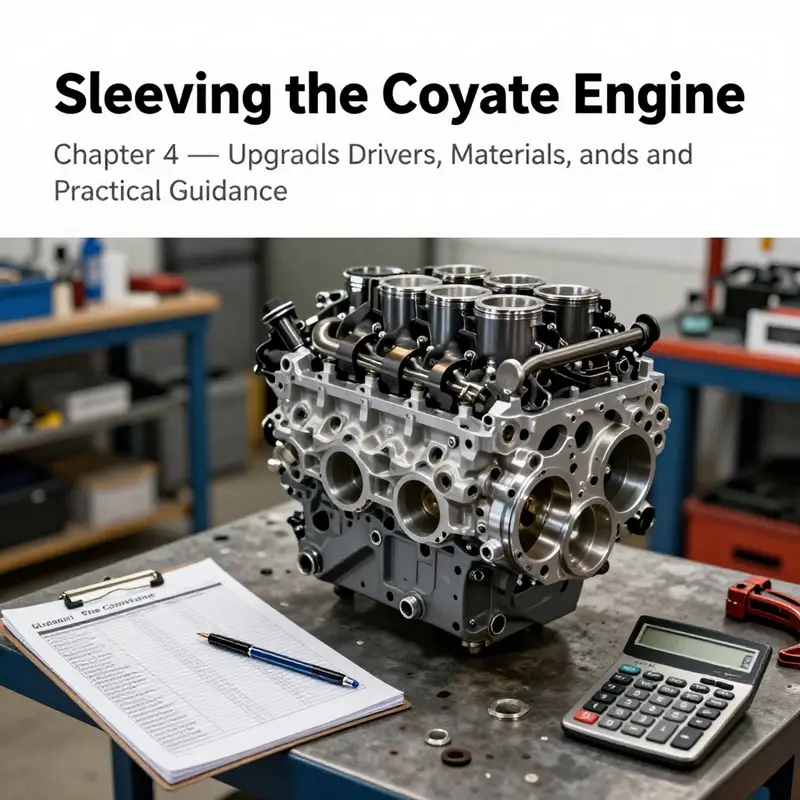
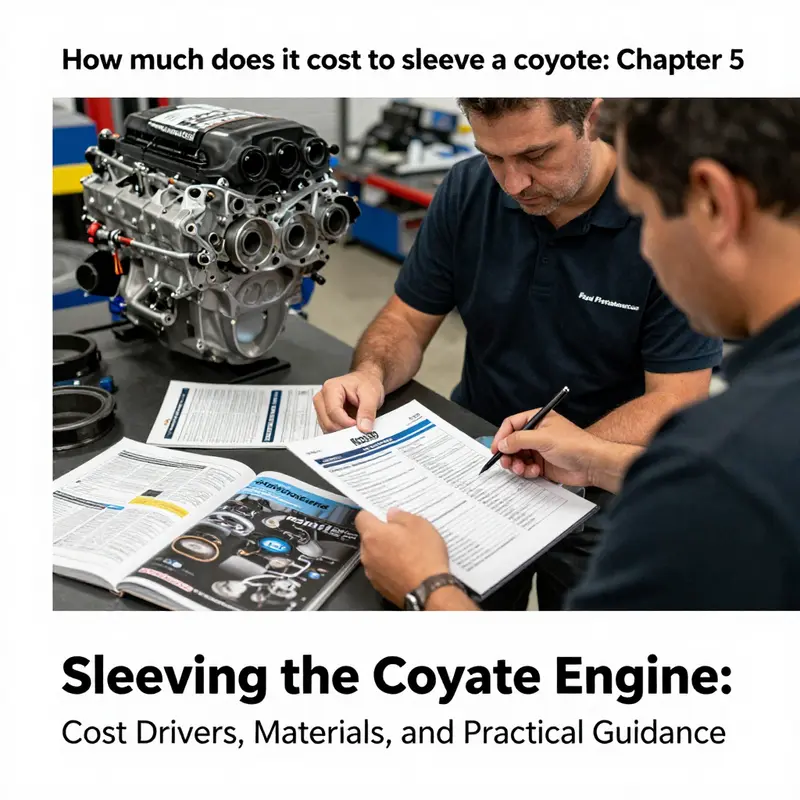
When you start talking about sleeving a Ford 5.0L Coyote engine, the conversation often drifts toward numbers—the base cost of sleeving, the material price of sleeves, the machine work required to true the block. Yet the real story is less about a price tag and more about the trajectory of a build. Sleeving can be a prudent repair, a careful reinforcement, or the opening chapter in a high-stakes performance project. Each path carries its own economics, and as soon as you tilt from a simple maintenance sleeve into an upgraded, high-output configuration, the cost landscape shifts from a straight line to a mountain range. This chapter explores why that happens and how to think about it when you’re planning to sleeve a Coyote with an eye toward power, reliability, and long-term value.\n\nTo anchor the discussion, consider what “sleeving” actually entails in the context of a modern pushrod or double-overhead-cam V8 like the Coyote. The process begins with more than simply drilling out worn walls and slipping in a sleeve. It requires removing the engine, disassembling the block, and preparing the cylinder bores so the sleeves seat true and resist bore distortion under load. The machining step is critical: the block must be bored and honed to precise tolerances, the deck surfaces must be prepared to ensure level head mounting, and the sleeves themselves must be installed with correct vertical and radial fit. In practice, the sleeve is more than a wall-reinforcement; it becomes the foundation for future power and reliability. If the goal is a stock or lightly hot-rodded engine, the sleeve may be sufficient with a measured approach. If the objective is a high-boost, high-RPM machine, the sleeve becomes the anchor point around which a far more aggressive build is organized.\n\nThe numbers tell a story, but they only begin to tell it. Early-2026 market data show that base sleeve work, including removal, machining, sleeve installation, and reassembly with new rings, bearings, and seals, typically lands in a broad band around three to seven thousand dollars for labor and parts. That range reflects differences in shop reputation, regional labor rates, the exact sleeve material, and the level of precision demanded by the build. It’s tempting to treat sleeve cost as a fixed line, but most of what happens next lives in the margin between those lines: the sleeve material, the complexity of the bore work, and what you put in the rest of the bottom end and valvetrain.\n\nMaterial choice is perhaps the most visible lever with real price consequences. Forged steel sleeves, premium hypereutectic aluminum sleeves, or other high-end variants each bring a different combination of strength, thermal management, and wear characteristics. A budget approach might lean on a more conventional sleeve, paired with standard rings, bearings, and seals. A performance-minded plan, however, will often justify forged steel sleeves and a set of supporting ferrous components designed to endure elevated cylinder pressures and higher RPM. The cost delta between these options is not just a few hundred dollars; it can tilt the final bill by thousands, especially when you add upgraded pistons, rods, and a more aggressive cam profile into the mix. When a shop schedules a sleeve upgrade as part of a larger rebuild or a performance overhaul, the sleeve choice becomes a keystone decision that reverberates through the entire build budget.\n\nAnother major cost driver is the decision between a “basic sleeve” project and a full-fat performance upgrade. If the plan is simply to patch wear or minor damage, the process can stay within a relatively contained range—roughly in the low thousands, depending on the local labor market and whether the engine is out of the car or accessible for in-situ work. But as soon as you tilt toward an elevated specification—e.g., forged sleeves, high-strength rods, forged pistons, and a camshaft tailored for boosted breathing—the price climbs quickly. And it is not just the sleeves; the supporting components begin to leave the “reasonable” category and enter the realm of serious investment. Stronger rods, lighter pistons, and upgraded valve gear all contribute to a cascade effect. The engine is no longer a device you simply repair; it becomes a custom-built powerplant designed around your target outcome, whether that’s a reliable daily driver with a serious punch or a track-capable machine that eats boost as a daily routine.\n\nThe maintenance and reassembly phase—though often overlooked in headlines about high-end builds—also matters financially. Sleeve installation demands careful measuring, honing, and sealing procedures. Any misstep here risks the entire build, and the cost of remediation—disassembly, inspection, additional machining, or even new sleeves—can be substantial. The reassembly portion includes new piston rings, bearings, and seals, plus a careful balance and dynamometer testing to ensure that the engine’s rotating assembly runs in harmony. When you combine these steps with the added complexity of higher boost pressure or aggressive cam timing, what could be a straightforward job becomes a multi-day, multi-thousand-dollar operation. The value proposition shifts from “fix this” to “build to survive the next ten thousand miles of managed boost.”\n\nOne practical way to frame the decision is to think about where you intend the car to live on the spectrum—from street-friendly performance to track-focused insanity. A mild upgrade path might emphasize reliable power delivery and strong durability, with an emphasis on balancing cost against expected gains. In that scenario, the sleeve becomes a strategic reinforcement rather than a dramatic performance lever. On the other hand, a high-boost, big-cam, or forged-piston path introduces a different calculus: the engine must tolerate stress well above stock expectations, and everything around the sleeves—pistons, rods, ring packs, and valvetrain—must be sized and calibrated to manage it. In this world, the sleeve is part of a larger, more expensive architecture where reliability has a price tag that reflects the risk of failure at high RPM and high boost.\n\nA critical part of planning is the realization that the base sleeving cost is not a standalone figure. It’s a gateway to a broader bill that often grows with the driver’s ambition. For many enthusiasts, the economic anchor is the willingness to push beyond the base sleeve and to commit to a cohesive, well-balanced package. This means not only better sleeves but a tuned combination of pistons, rods, and a head and cam strategy designed to work with the chosen sleeve material. It also means systems integration—cooling capacity, intake and exhaust flow, and even the engine management strategy. Each choice can add thousands, sometimes tens of thousands, to the total project cost. The decision is rarely about whether the sleeve is technically capable of handling the power; it’s about whether the rest of the build, including the supporting systems, is prepared to support the sleeve’s capabilities without becoming a bottleneck or a point of failure.\n\nIn the course of a project, it’s common to encounter a few milestones that shape the final budget. The first is the quote phase, where a certified performance engine shop analyzes the block, measures bore integrity, and proposes a sleeve strategy tailored to the customer’s goals. In this phase, it’s prudent to request a detailed line-item breakdown, including machining, sleeve material, fasteners, seals, assembly, and quality checks. The second milestone is the compatibility assessment, which looks at how the sleeve choice interacts with the rest of the rotating assembly, the compression ratio you intend to maintain, and the cylinder pressure under boost. If you’re building toward a high-boost scenario, you’ll want to see numbers that demonstrate how the sleeves withstand elevated pressures, heat, and dynamic loads without seeping or distorting. The third milestone, often overlooked, is the post-build tuning and dyno verification. A true performance build does not end at engine assembly; it ends with precision fueling, ignition timing, and airflow optimization. The cost here is frequently underestimated, but it is essential for achieving the intended power and reliability.\n\nIf you’re gathering information and planning, a few practical guidelines help steer the conversation toward a well-considered cost outcome. Start by defining the goal: is this a robust, reliable daily driver with a serious bump in power, or a dedicated performance machine intended for the track? Next, ask for an explicit scope of work that includes a sleeve material choice, bore and hone specifications, piston and rod selections, and a clear plan for testing and validation. Don’t shy away from asking for a detailed warranty profile; a good shop will stand behind their sleeves and the surrounding components for a defined period under operating conditions that meet the project’s intent. Finally, consider the value of building a relationship with a shop that specializes in the Coyote platform. Their familiarity with Ford’s architecture and the typical failure modes at elevated power levels can save you both time and cost in the long run, even if the upfront price is higher.\n\nFor a concise primer on sleeves and their role within this kind of project, you can explore the concept further through a focused explainer that discusses what sleeving means and why it matters in high-performance restorations and upgrades. What sleeving an engine means. This resource helps set expectations about the technical side of the sleeve, which in turn clarifies why the price envelope moves as soon as you add forged materials, stronger internals, or boosted tuning into the plan. With that foundation, the path to a well-executed build becomes clearer, and the numbers start to make sense in the light of your goals and the level of reliability you require.\n\nIn practice, the best way to approach the cost question is to treat sleeving as the first major investment in a broader strategy for the engine. It’s not a standalone upgrade; it’s a gateway into a more extensive plan that requires careful budgeting and partner selection. If you’re on a path toward substantial performance gains, expect the cost to push beyond the base sleeving figure as you assemble a coherent, high-quality set of components designed to operate reliably under higher stress. And if you choose to pursue a high-end route, be prepared to see the total investment climb into four, five, or even six figures when you count the engine, fuel, cooling, drivetrain, and tuning up to a level that matches the power potential you’re seeking. The upside—predictable power, durable performance, and the pride of a purpose-built engine—can justify the commitment, but the decision should be grounded in a clear understanding of the costs and a plan to manage them over the life of the build. For additional context and community perspectives on Coyote-era upgrades, readers often find value in broad discussions across enthusiast platforms, which can offer insight into real-world build costs and outcomes. https://www.fordmuscle.com
null
null
Final thoughts
Sleeving a Coyote engine represents more than a single part replacement; it is a coordinated investment in reliability and performance. The total cost reflects the full scope: engine disassembly, block machining for sleeves, sleeve installation, reassembly, and thorough testing, with significant potential for cost growth when high-end sleeves or additional performance upgrades are included. For motorcycle and auto owners, distributors, and repair shops, a clear understanding of where costs originate—labor, materials, and upgrade choices—helps in informed budgeting and realistic timelines. By using the five-part framework outlined here, readers can gauge price expectations, compare sleeve materials, and engage with qualified shops to obtain accurate, actionable quotes. The practical takeaway is to align performance goals with a transparent cost plan and to prioritize reputable guidance and verified parts to safeguard long-term engine health and reliability.