
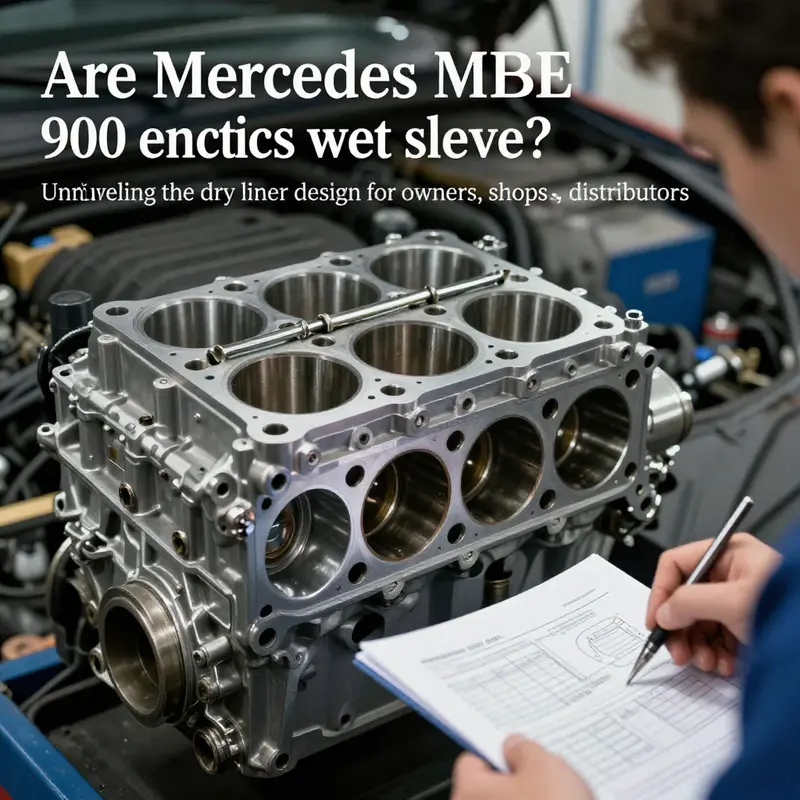
Diesel engine cylinder liners come in two broad concepts: wet sleeves that live in coolant and dry liners that are sealed within the block. The Mercedes-Benz MBE 900 engine, widely used in commercial applications, employs a dry liner design that influences sealing, cooling dynamics, gasket integrity, and long-term serviceability. For motorcycle and auto owners who encounter different engine platforms, for auto parts distributors evaluating compatibility and inventory, and for repair shops that service MBE 900-equipped vehicles, understanding whether the engine uses a wet sleeve or a dry liner is more than a technical footnote—it affects parts selection, maintenance intervals, overhaul strategies, and overall lifetime cost of ownership. This article connects the dots across three focused chapters: first, a technical assessment of the dry liner design and what it means specifically for the MBE 900; second, a comparative look at dry liner versus wet sleeve concepts in terms of performance, cooling behavior, and maintenance; and third, practical considerations for industry players regarding service practices, part sourcing, and OEM versus aftermarket options. By tying design, operation, and supply chain realities together, readers will gain actionable insights for diagnostics, repairs, and procurement in real-world settings.
Are Mercedes MBE 900 Engines Wet Sleeve? A Deep Dive into the Dry Liner Design and Its Implications
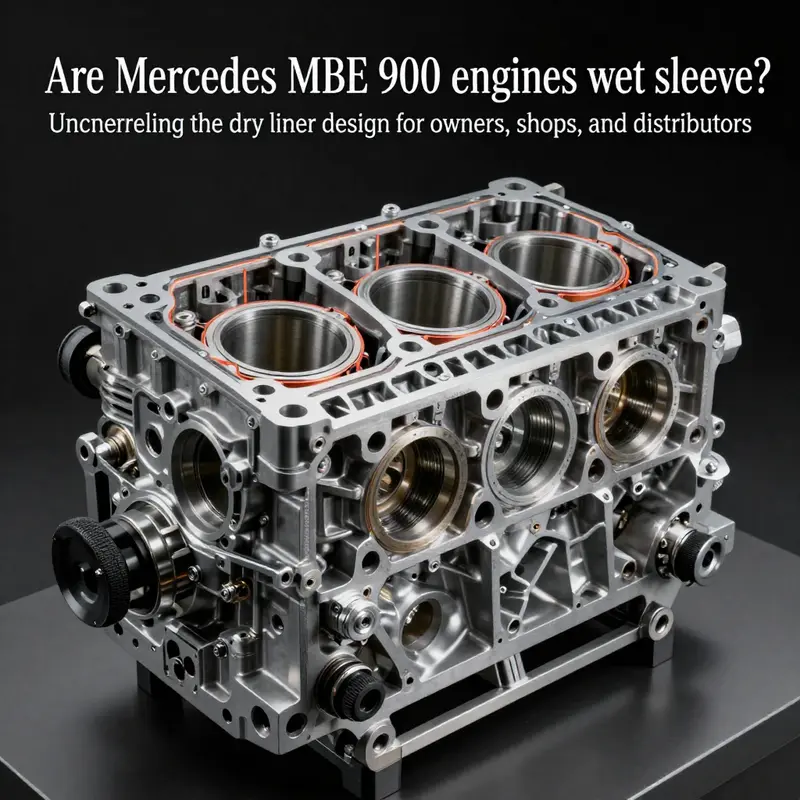
The central question about the Mercedes MBE 900 engine is whether it uses a wet sleeve or a dry liner. The short answer is that it uses a dry liner. A dry liner is a cylindrical insert that sits inside the engine block but does not form part of the coolant jacket. A wet sleeve is in direct contact with the coolant. In practice this difference changes heat flow sealing and service procedures. In the MBE 900 the bore is supported by a robust block and the liner is cooled mainly by conduction into the block and then by the block cooling channels. This design favors block rigidity and stable wear characteristics but also places emphasis on the interface between liner and block and the quality of the gasket seal. The result is a temperature management strategy that relies on precise machining clean mating surfaces and uniform heat transfer away from the wear surface. In a dry liner configuration the heat from the bore wall is conducted into the liner and then into the surrounding block. The block carries the bulk of the cooling load and transfers heat to the coolant through its passages. The direct cooling path that exists in a wet sleeve is not present here so the effective heat removal from the liner wall depends on material choice interface quality and the thickness of the block around the liner. When these factors are optimized the bore remains stable and wear is predictable. If tolerances drift or the seal interface degrades local hotspots can appear and bore geometry can change over time. From a maintenance viewpoint the dry liner requires close attention to the liner to block mating surfaces the flatness of the block bore and the condition of the liner seal. The seal must stay free of corrosion and film buildup and the bore axes must stay coaxial with the crank train. Inspecting bores for taper or out of roundness and verifying the seating of a new liner are common tasks during overhauls. The advantage is a potential simplification of the cooling path during liner service since the liner itself is not part of the coolant jacket. The tradeoff is a higher reliance on precise machining and consistent torque in the gasket sealing interface to prevent leaks. Compared with wet sleeve systems the MBE 900 dry liner approach emphasizes block rigidity and controlled heat transfer rather than the liner acting as a primary coolant path. Wet sleeves can offer excellent heat removal at high load but may introduce more gasket and leak risk at the liner joint and can complicate block repairs. The dry liner strategy aligns with a philosophy of predictable bore geometry shared load between liner and block and a sealed interface that resists coolant seepage at the bore junction. Understanding these tradeoffs helps technicians plan service intervals set refurbishment limits and anticipate the kinds of failures that may arise under sustained heavy use. For engineers and shop technicians the key takeaway is clear. The dry liner in the MBE 900 is a deliberate design choice that supports strong block integrity consistent bore dimensions and reliable sealing when properly built and maintained. It demands exacting surface finishes correct gasket application and attentive maintenance of the cooling system to ensure heat is removed evenly across the block. When these conditions are met the dry liner delivers durability and stability that suit the demands of heavy duty diesel operation. Further reading on sleeve concepts and heat transfer can provide broader context. The official service documentation for this engine family outlines bore inspection liner seating gasket interface and the torque procedures that govern seating force. While specifics vary by model year and emission controls the central themes of clean mating surfaces controlled tolerances and robust cooling remain central to sustaining performance and reliability over the engine life.
Are Mercedes MBE 900 Engines Wet Sleeve? A Deep Dive into Dry Liners, Cooling, and Long-Term Durability
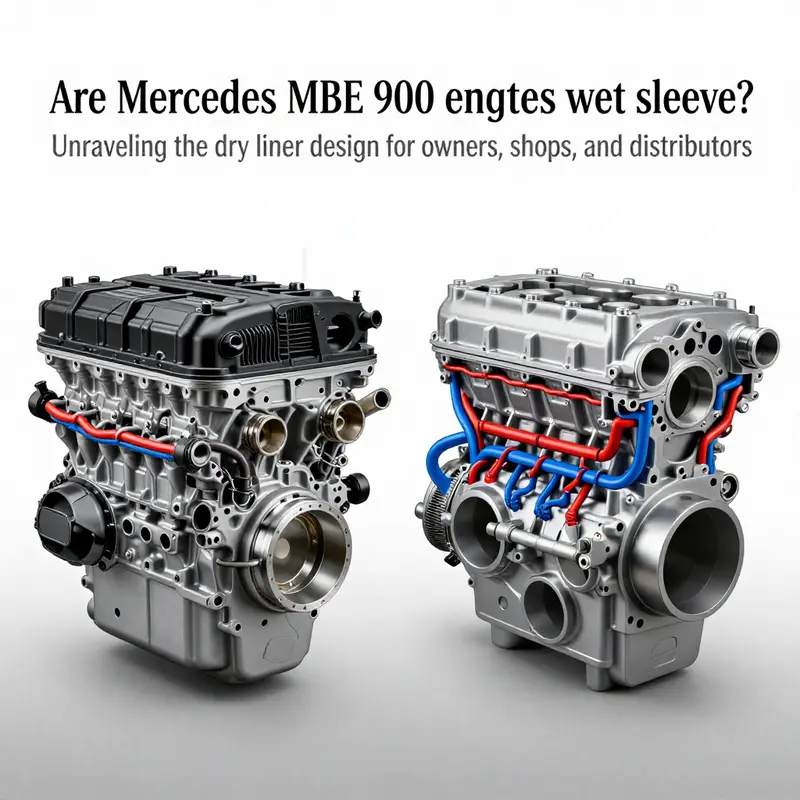
The question of whether Mercedes MBE 900 engines use wet sleeves or dry liners sits at the crossroads of reliability, maintenance practicality, and thermal management in modern heavy‑duty diesel design. What makes the topic compelling is not simply a binary yes-or-no answer, but how the chosen cylinder-bore technology shapes everything from cooling efficiency to service intervals and field practicality under demanding duty cycles. In the MBE 900, the cylinder bore is formed by a dry liner—also called a dry sleeve—embedded within the engine block and sealed by gaskets rather than exposed directly to the coolant. This arrangement means the liner is not a coolant-wetted surface; instead, heat from combustion travels through the liner into the surrounding block and then into the cooling circuit through the block’s own pathways. It is a design choice whose implications ripple through every facet of the engine’s lifecycle, especially when the engine is pressed into long-haul service, city buses with stop‑and‑go duty, or demanding vocational roles where uptime matters as much as raw power. The public-facing documentation from manufacturers and technical references corroborate this dry-liner characterization, and the overall narrative around the MBE 900’s architecture is that of robustness, sealing reliability, and controlled thermal management rather than the direct bore cooling afforded by wet sleeves.
From a first-principles perspective, the dry liner approach is anchored in a core objective: preserve bore integrity and sealing reliability under high cylinder pressures and aggressive duty cycles. In a dry liner arrangement, the cylinder bore is effectively a component pressed into the engine block and then mated with the piston and combustion chamber in a configuration that maximizes structural rigidity. Heat transfer from the hot combustion zone proceeds through the liner wall into the solid mass of the block, where cooling passages draw heat away. The practical upshot is a sealed, dependable interface that resists coolant intrusion into the combustion chamber—a risk that can complicate maintenance and engine performance in sleeve designs that rely on a direct coolant contact with the bore. This reliability is not accidental; it is a deliberate choice in long-running heavy‑duty platforms where downtime is costly and the engine must withstand prolonged exposure to high pressures, elevated exhaust gas temperatures, and frequent cycling between load bands.
To understand why this matters, it helps to compare the two approaches in a way that connects to real-world operation. Wet sleeves present a bore that sits in the coolant bath, so the heat removal path from the bore to the coolant is direct. In many cases, that direct contact allows the bore to tolerate higher peak loads or tighter tolerances because the coolant can actively carry away heat from the bore surface. The trade-off, however, is the need for robust seals at the sleeve-to-block interface and reliable gasket systems to prevent coolant leaks into the combustion chamber or oil passages. Even small leaks can become persistent maintenance headaches in fleet service, where a seemingly minor coolant leak translates into downtime and potential fuel efficiency penalties while technicians address the source. By contrast, the dry-liner technique minimizes those direct-contact seal points around the bore, trading some direct cooling efficiency for a sealed, stable bore geometry that remains less prone to coolant intrusion into the combustion space.
In the MBE 900, the cooling strategy is designed to compensate for the indirect bore cooling inherent in a dry-liner system. The engine block itself is engineered to conduct heat away from the liner and into coolant channels that surround the block. This means that achieving effective thermal management hinges on the overall thermal mass of the block, the distribution of water jackets, and the capacity of the cooling system to remove heat at a rate that prevents localized hot spots within the liner and the piston crown. When cooling is well balanced, the dry-liner configuration can deliver robust durability without compromising engine life under heavy-duty operation. The Risk of overheating is mitigated by careful design of the water jackets and by tuning the cooling circuit to maintain a consistent temperature profile across the bore wall and the surrounding block. The alignment of cylinder head gaskets, liner seating, and mating surface finish becomes especially important in this scheme because all these interfaces contribute to the seal that keeps coolant out of the combustion space and oil passages while still allowing heat to exit via the block dimensions.
From a performance perspective, the dry liner design in the MBE 900 supports strong sealing integrity and bore stability under sustained high pressure. The absence of direct coolant contact at the bore reduces the risk of coolant-induced bore distortion and corrosion-related wear that can accompany some wet-sleeve configurations. This translates into predictable compression dynamics and reduced risk of bore micro-warping under hot‑side transients. For operators and fleet managers, that predictability matters because it underpins longer service intervals and more consistent cylinder pressure profiles across thousands of hours of operation. It is also a factor in how engine management systems modulate fuel delivery, air handling, and aftertreatment interfaces. When the engine is under heavy load—whether pulling a long grade or delivering high torque at low speeds—the MBE 900’s dry-liner arrangement keeps the mechanical bore geometry stable, thereby supporting the reliability that heavy-duty service demands.
Nevertheless, the dry-liner approach is not a magic bullet. The practical considerations that accompany a sealed bore in a dry-liner configuration center on cooling sufficiency and thermal gradients. Because the bore does not receive the same direct cooling as a wet-sleeve bore, heat must be carried away through the liner wall into the block, which then transfers heat to the coolant. If the cooling system is undersized for the engine’s thermal load, or if there are hotspots due to block design, there can be more pronounced thermal gradients across the liner and the head, with potential implications for piston rings, valve seats, and the head gasket in extreme duty cycles. This is why a dry-liner engine like the MBE 900 is paired with a cooling system that is carefully engineered to match the engine’s heat generation profile. The goal is to keep bore temperature within a band that supports optimal ring seating and fuel efficiency while keeping the pistons and liners within their elastic-structural limits over time. In practice, modern materials and precision bore finishing—along with robust block design—play essential roles in mitigating the gradients that could otherwise undermine long-term durability.
Maintenance implications flow naturally from these design choices. With dry liners, the liner is pressed into the block and sealed with gaskets. Replacing or refreshing the liner in a wet-sleeve engine is often a more involved task because you have to manage the sleeve’s interface with the coolant and ensure the O-ring seals and gaskets are intact. In the MBE 900, liner replacement is generally straightforward in the sense that you can address bore wear without disassembling the entire head and coolant-side interfaces. The press-fit nature of dry liners means service procedures focus on ensuring the liner is properly seated, the bore surface finish is within spec, and the block remains true after liner extraction or installation. The absence of coolant-wetted interfaces at the bore reduces the number of gasket seals that can fail due to coolant exposure, which is a meaningful reliability advantage in fleets where maintenance windows are limited and downtime costs are a constant concern. For field technicians, this translates into workflows that emphasize correct press-fit procedures, precise alignment during liner replacement, and careful handling of the block to prevent distortion. These steps, though technical, tend to be more straightforward than reworking a wet sleeve’s O-ring interfaces, especially in engines designed for long service lives and frequent high-load operation.
The implications for long-term durability and lifecycle planning are equally nuanced. A dry-liner design like the MBE 900’s offers compelling advantages in terms of sealing reliability and the reduction of coolant leak points. In heavy-duty contexts, that translates into fewer bursts of coolant-related maintenance and more predictable inspection intervals for bore wear. However, it places a premium on the cooling system architecture and the material science that governs the liner-block interface. To sustain performance, engineers optimize the block’s thermal mass, the liner’s material properties, and the interfacial finish so that heat is conducted efficiently into the block and then to the coolant with minimal thermal lag. When these pieces align, the engine achieves a balance: robust bore integrity, reliable sealing, and serviceability that aligns with fleet maintenance cycles. This is precisely the kind of design logic that suits the MBE 900’s role in heavy-duty fleets where durability and uptime trump flashier, direct-cooling bore features that might demand more frequent resealing or replacement in service.
For operators, the practical takeaways are pragmatic and actionable. Expect maintenance planning to factor in liner inspection and possible wear remediation as part of routine bore health checks, but anticipate easier liner replacement compared with some wet-sleeve configurations—assuming access to the proper tooling and a disciplined procedure. Cooling-system health becomes a focal point of operational reliability, so attention to coolant quality, hose integrity, and radiator capacity is essential to maintain an even temperature field across the block. Energy efficiency and performance should be viewed in light of the dry-liner geometry: the engine can still deliver competitive torque and efficiency for long-haul and vocational applications, while the bore’s structural integrity and sealing reliability help ensure steady performance across thousands of hours under demanding duty patterns. In other words, the dry-liner approach supports a different but equally valuable optimization path—one that emphasizes predictable sealing, durable bore geometry, and maintenance practicality within the bounds of robust cooling strategy.
As readers explore this topic, a concise way to frame the contrast is to consider the chain of consequences from bore design to daily operation. The dry liner in the MBE 900 sets the stage for a bore that remains geometrically stable and well-sealed, even as you push the engine to sustain heavy loads. That stability depends on a cooling system that is sized and tuned to move heat away from the liner through the block with consistent efficiency. In a wet-sleeve engine, you might gain some headroom in bore cooling through direct contact with coolant, but you also gain additional sealing challenges and more complex maintenance interfaces. The Mercedes‑Benz engineering choice reflects a philosophy: prioritize sealing reliability and structural integrity in a system that is still capable of managing heat effectively through a well-integrated cooling solution. This approach is well suited to the MBE 900’s typical life in buses and heavy trucks where uptime, resilience, and predictable service intervals are valued above all.
For readers seeking a quick, technically grounded comparison without breaking the narrative, the takeaway remains clear. The MBE 900’s dry liner design is a deliberate, legacy-informed choice aligned with heavy‑duty durability and maintenance practicality. It reduces the risk of coolant intrusion into the combustion chamber and strengthens bore integrity under high pressures. It relies on a cooling system designed to carry away heat from the bore through the block, compensating for the indirect cooling path. It supports reliable performance in demanding service, while also demanding careful attention to liner fit, block integrity, and cooling-system health to maintain long-term thermal balance. If you want to explore a focused, accessible explanation of how these concepts differ in practice, you can read about dry sleeves and their role in engine design through a detailed explainer that translates these ideas into a digestible form: dry sleeve engine explained. This resource helps illuminate the broader family of sleeve technologies beyond the specific Mercedes configuration and puts the MBE 900’s dry-liner choice into context for engineers and technicians who work across brands and architectures.
In the larger conversation about diesel engine design, the dry-liner versus wet-sleeve decision often comes down to the exact duty cycle, the target life of the engine, and the maintenance philosophy of the operator. For the MBE 900, the dry liner approach dovetails with Mercedes-Benz’s emphasis on robust sealing, dimensional stability under load, and long service life—qualities that fleets value when they are measured in miles rather than minutes. It is not a universal prescription for all engines, and it does not imply that wet sleeves are inferior in every context. Rather, it illustrates how a single design decision can ripple into cooling strategy, maintenance workflows, and field reliability in a way that aligns with a heavy‑duty engine’s core mission: to carry heavy loads, deliver dependable torque, and endure the rigors of continuous operation with minimal downtime.
For readers who want to situate this discussion within broader research and technical literature, the body of work on cylinder-liner behavior, thermal management, and bore-seal reliability provides a useful backdrop. A representative source discusses the nuanced behavior of dry liners and their interaction with block materials, temperatures, and wear mechanisms in high‑load diesel engines, offering data and modeling insights that complement practical fleet experience. While such sources offer quantitative detail, the qualitative lesson remains consistent: the MBE 900’s dry-liner configuration embodies a design philosophy that prioritizes sealing integrity and mechanical robustness in a heavy‑duty environment, with cooling and material choices engineered to keep the bore within acceptable thermal and structural limits over the engine’s life.
The chapter that follows builds on these ideas by examining how the dry-liner concept interfaces with maintenance scheduling, serviceability, and the operational realities of fleets with stringent uptime requirements. It will also circle back to the broader question of how dry liners compare with wet sleeves across different manufacturers and duty cycles, acknowledging that each approach carries its own set of trade-offs. In the context of the MBE 900, the takeaway remains pragmatic: the engine relies on a robust dry-liner architecture that supports reliability, predictable performance, and manageable maintenance within the framework of a carefully engineered cooling system and block design. For technicians and fleet managers alike, understanding this design choice helps in planning maintenance windows, diagnosing bore-related wear, and making informed decisions about cooling-system health and routine inspections. The end result is a more informed perspective on why Mercedes-Benz selected this approach for the MBE 900 and how it translates into real-world durability and uptime on the road.
External resource: https://www.sciencedirect.com/science/article/pii/S0013792822004565
Dry vs Wet: How the MBE 900’s Dry-Liner Architecture Shapes Maintenance, Sourcing, and Service Strategy
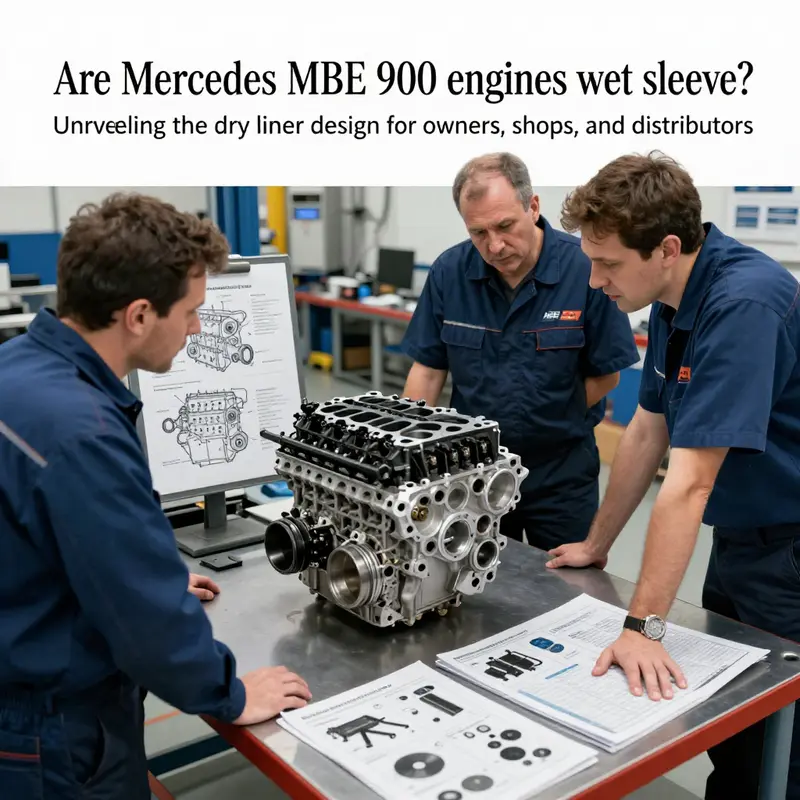
The MBE 900 uses a dry liner architecture rather than a wet sleeve arrangement. This distinction guides diagnostics, maintenance budgeting, and parts sourcing. In a dry-liner engine, the cylinder liner is a discrete insert seated in the block, with coolant circulating outside the liner wall. The liner is sealed to the block by gaskets, and the liner does not form part of the direct coolant path. In a wet-sleeve design, the liner participates in the coolant circuit as part of the heat-transfer surface. This fundamental difference affects piston ring seating, bore geometry, and service workflows. Replacing a dry liner typically requires careful disassembly to remove the liner and reseat or replace sealing interfaces, with strict adherence to OEM tolerances and torque sequences. Diagnostic focus shifts toward bore runout, gasket seating, and liner alignment to preserve compression and cooling integrity. For fleets, the sourcing emphasis is on exact-fit OEM or tightly matched aftermarket liners and gaskets, with attention to bore diameter, wall thickness, and seating geometry. The dry-liner approach also informs tooling needs, torque control, and potential block reconditioning during repairs. Overall, the dry-liner design emphasizes precision, correct fitment, and planned service workflows to maintain long-term durability under high-load operation.
Final thoughts
The MBE 900’s dry liner design is a defining feature that shapes cooling behavior, sealing integrity, and long-term maintenance planning. While it differs from wet sleeve concepts in how the bore is integrated and cooled, this arrangement can offer robust sealing and structural advantages when paired with correct gaskets, block design, and OEM-specified components. For owners, repair shops, and parts distributors, recognizing the dry liner architecture translates into better diagnostic precision, more accurate parts sourcing, and cost-aware maintenance planning. The key takeaway: when dealing with the MBE 900, treat the dry liner as a core design parameter—align service practices, parts inventories, and replacement strategies to the dry liner ecosystem to optimize reliability and lifecycle value.