
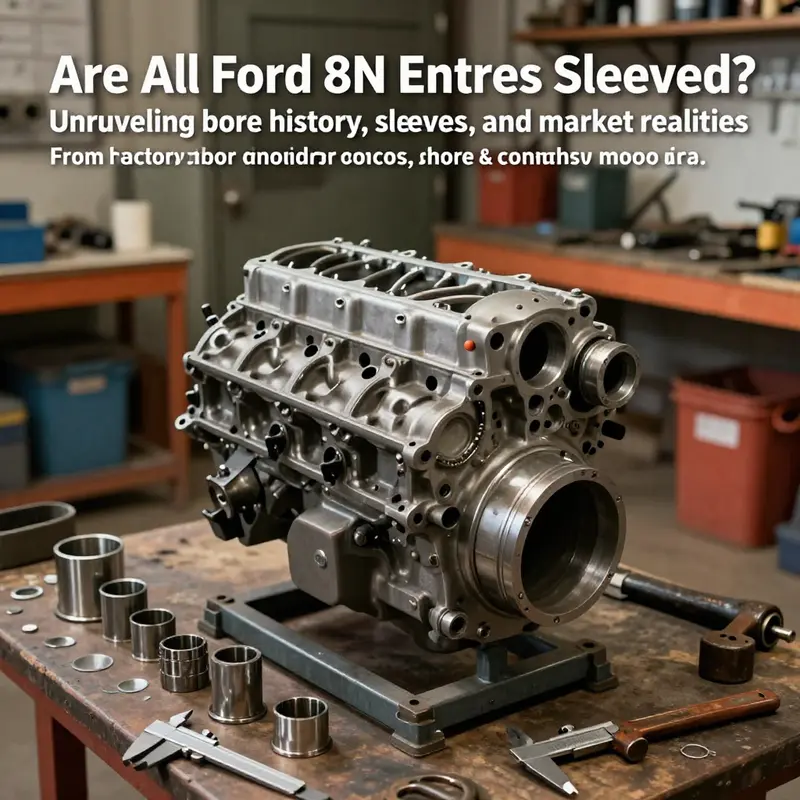
Ford’s 8N tractor engine sits at the crossroads of classic design and practical restoration. The original cast-iron block used standard, non-sleeved bore configurations, intended for rebuild with conventional pistons and rings. Over time, wear, field use, and machining for overhauls challenged the integrity of the bores, leading many rebuilders to insert cylinder sleeves as a repair path. The result is a common misconception: that every 8N engine arrives sleeved from the factory. In reality, sleeving is a repair method that gains prominence during major overhauls or when the bore has exceeded usable limits. This article examines the origins of the design, why sleeving has become a standard practice in modern rebuilds, and what that means for motorcycle enthusiasts, auto owners, distributors, and repair shops. Each chapter builds toward a practical conclusion: sleeves are not universal, but they are a strategic tool for preserving compression, cooling, and reliability in aging blocks. By understanding the engineering, marketplace, and historical considerations, readers can make informed decisions about sourcing sleeves, selecting compatible kits such as APN6055E, and planning effective service workflows.
null
null
Sleeving the 8N: Why Not Every Ford 8N Engine Wears a Sleeve, and How Sleeves Shape Rebuilds
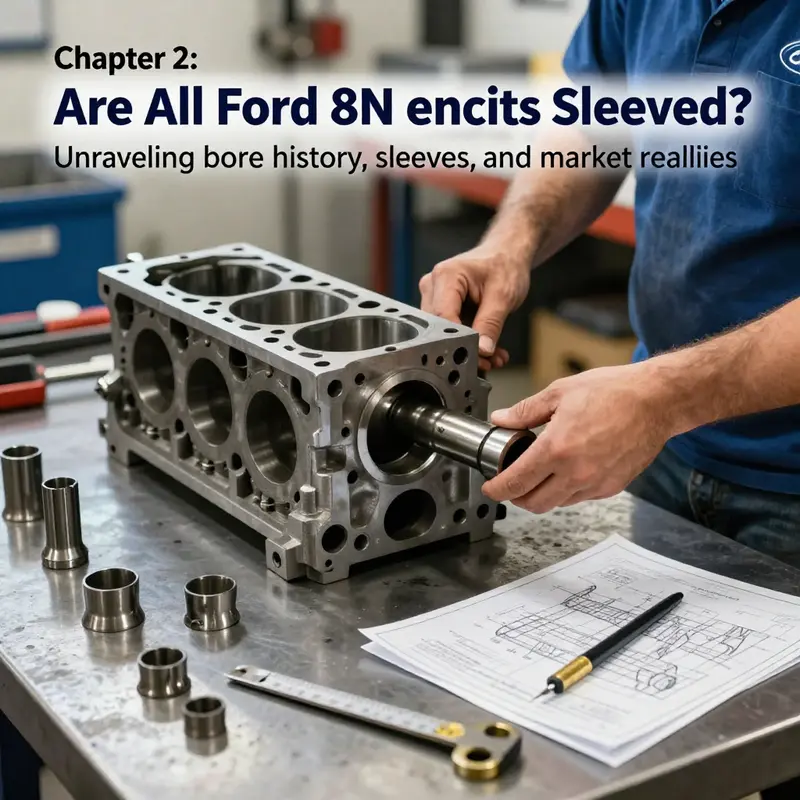
The question Are all Ford 8N engines sleeved? invites a nuanced answer, one that respects both original design choices and the realities of aging machinery. The 8N’s lineage begins with a robust cast iron block whose bore was crafted to accept standard, non-sleeved cylinders. That design aimed at straightforward rebuilds using conventional pistons and rings. Yet, the centuries of farm work, heat cycles, and the occasional hard use mean that many blocks have worn beyond what a simple bore correction can salvage. In those cases, sleeving—the insertion of a replacement cylinder liner into the block—becomes a practical path to restore compression, reduce oil consumption, and preserve the integrity of the original casting. The short answer, therefore, is no: not every 8N engine was sleeved from the factory. The longer, more useful answer is that sleeving has become a staple practice in modern rebuilds for 8N and related Ford tractors, precisely because sleeves provide a reliable way to regain precision without discarding the block itself.
What makes this topic especially rich is the tension between preserving an original artifact and applying a repair technique that brings it back to reliable, usable life. The factory block, when new, did not rely on cylinder liners out of the box. Instead, its wall geometry was machined to a specified bore that the factory considered serviceable for a defined number of hours and cycles. Over time, however, the bore can glaze, score, taper, or become cratered with heat and fuel residue. In many restorations, the choice to sleeve is driven by the bore’s condition rather than by a desire to modify the block. If the wear is consistent and within acceptable limits, a precise honing and the reassembly with standard pistons can be adequate. If the wear crosses a threshold, sleeves offer a controlled path to restore the cylinder wall surface without sacrificing the block’s core geometry or going to a complete block replacement. This understanding aligns with the practical approach observed in the field, where sleeves are often installed during major overhauls or when the original bore has been machined beyond its usable limit.
Sleeving is not a monolithic procedure, but a family of practices designed to match the engine’s original envelope while addressing modern reliability demands. Cylinder sleeves are removable liners that restore a smooth, uniform bore surface. In the 8N and its kin, the sleeves are typically chosen to fit the block’s original cross-section and deck height, then honed to the correct surface finish. A common reason for selecting a sleeve is to allow a slightly larger bore in a controlled way, enabling the use of a modern piston set with proper clearance and ring seating. The oversize concepts that show up in discussions of 8N rebuilding—the idea of adding a small amount of material to the bore in a highly controlled fashion—are purpose-built to preserve compression and minimize oil burning. The practical upshot is that sleeved blocks can continue to serve many more years of service than a worn core would allow, especially when the rest of the machine remains sound and the restoration goal centers on preserving authentic character.
The installation itself requires careful preparation. Inspecting the bore for scoring, taper, and out-of-roundness is the first step. If sleeves are chosen, the correct sleeve size must be selected to match the block’s inner diameter and the intended piston clearance. The block must be cleaned thoroughly, with attention to removing carbon buildup and old gasket material. The sleeve is pressed into the block with a precise force so it seats evenly and remains aligned with the crankshaft axis. In some cases, a small step is machined so the upper edge of the sleeve sits flush with the deck surface. After seating, the sleeve’s outer surface is honed to achieve the exact finish required for reliable ring seating and oil control. This honing step, typically described in restoration guides, is essential to prevent abnormal wear and to ensure that the rings seal properly against the bore wall.
Even the bore dimensions themselves carry a cautionary note. The 8N’s factory sleeve, in one historical specification, is associated with a bore diameter around 3.1875 inches, a length roughly 6.5 inches, and a wall thickness in the vicinity of a tenth of an inch. These numbers matter because the sleeve’s consistency determines how well the piston rings seat and how the oil film behaves under load. Some sources describe other liner configurations for related models, which can cause confusion if one assumes all Ford tractors shared the same liner. The careful builder cross-checks the exact block revision and matches the sleeve to that specification, avoiding mismatches that would compromise compression or oil control.
This is where the craft of restoration becomes both art and engineering. The sleeve choice sits at the intersection of material science, machining tolerances, and historical intent. Some rebuilds aim to retain as much of the original block as possible, which argues in favor of sleeves that preserve the block’s geometry and deck height. Others, seeking maximum reliability with modern materials, may tolerate a larger bore change or adopt a slightly different sleeve thickness after measuring the existing wear. Either path requires precise measuring tools, a clean assembly environment, and adherence to torque sequences and clearance specifications during final assembly. The conversation around sleeves also reflects a broader truth: not all engines are sleeves by default, but sleeves are a widely accepted and often essential option in the 8N restoration toolkit. The decision rests on the engine’s condition, the rebuild goals, and the machinist’s judgment.
For readers who want to situate sleeving within a broader engine-sleeve landscape, it helps to compare the Ford 8N’s experience with general sleeve practices. A widely asked question in engine history and restoration communities is Do all engines have cylinder sleeves? The answer is nuanced: many engines rely on sleeves, but not all do, and even among those that do, sleeve design, thickness, and installation technique vary with make, model, and era. In the 8N’s case, sleeving is often the path chosen when the bore cannot be safely reworked through honing and standard overhauls alone. It preserves the block’s identity while restoring essential mechanical tolerances, enabling owners to keep the tractor running for years to come without resorting to a wholly new block.
For further reading on the sleeve topic and how it is approached across engine families, a survey of practical guides and vendor resources can illuminate best practices. As you explore, consider the broader context of how sleeving integrates with other restoration decisions—deck resurfacing, main-bearing alignment, and piston-ring technology all play their parts. If you want a concise orientation to the sleeve concept and its role in restoration, the discussion linked here provides a solid starting point: Do all engines have cylinder sleeves?.
In sum, the Ford 8N did not come from the factory as a sleeved engine. Yet sleeving has become a defining feature of many modern rebuilds, a testament to the balance between honoring a vintage block and ensuring reliable, long-term performance. The decision to sleeve is as much about the block’s history as it is about the owner’s goals for reliability, maintenance, and the tractor’s role on the farm today. When done with care, sleeving preserves the machine’s heritage while ensuring that a working 8N can continue to turn a plow or a mower with the same dependable rhythm that earned it a place in agricultural lore.
External reference for additional official specifications and repair guidance: https://www.ford8n.com/
Sleeved or Dry: Unraveling the Cylinder Truth in Ford 8N Engines
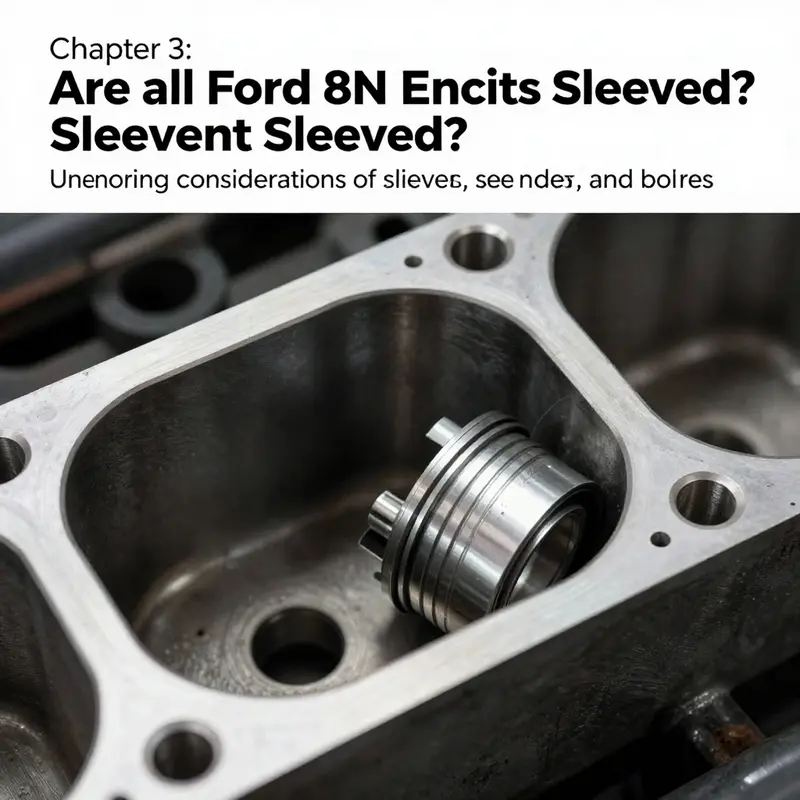
Among vintage tractors, the Ford 8N holds a quiet reverence. Owners debate not only about restorations but about the tiny details that decide longevity: the condition of the bores. The common question—are all Ford 8N engines sleeved?—is a shorthand for a longer story about evolution, wear, and the compromises built into a machine designed for field work and ease of repair.
The original design of the 8N did not include sleeves. From its launch in the late 1940s, the engine block carried the cylinders as integral iron walls, or dry bores, machined directly into the block. This kept the construction simple and allowed rebuilds with standard pistons and rings. Chalk this up as the baseline expectation for restoration projects: a block that wears gradually but remains true to its fixed, cast-iron core.
Yet as production moved into the early 1950s, a shift appeared. The later 8N engines, facing heavier duty use and the pressures of longer operating life, began to rely more on sleeves to improve durability and maintain bore tolerances under heavier workloads. Cylinder sleeves, cast iron or steel-lined and then inserted into the block, offered a separate wear surface and a controlled bore diameter that could be maintained even after substantial wear. When you encounter an 8N, the absence or presence of sleeves is a clue about the block’s production date and its rebuild history. This is not a cosmetic feature but a structural one; sleeves influence how the engine breathes, how it seals, and how a rebuild is planned.
To the untrained eye, the question may sound binary—sleeved or not—and yet the reality is more nuanced. Sleeve installation is a response to wear and bore integrity. In engines that have logged many hours, the original bore can wear unevenly or taper toward the bottom. In those cases, sleeve inserts restore a true cylindrical surface, enabling accurate piston alignment and compressive seal. Sleeves also serve as a buffer against the effects of corrosion, micro-welding, and the inevitable ring deposits that build up over time. For the restorer, sleeves are a practical tool that allows a block to regain its original dimensions without sacrificing the reliability of the piston rings or the geometry of the head and valve trains. If you look at a dressed engine that has responded well to a rebuild, sleeves may be the quiet backbone of that restoration.
For a quick primer on what these sleeves are, see What are engine sleeves? The sleeve itself is not a magical fix; it is a precisely engineered insert, typically made of cast iron or steel-lined materials, engineered to sit over and inside the bore. It is often pressed into the block and then finished with a bore some thousands of an inch different from the deck, followed by honing to true roundness. In the context of the 8N, sleeves are almost always wet sleeves, meaning they sit in the water jacket area and are cooled by the engine’s coolant. That cooling path matters because it affects deformation, thermal expansion, and gasket seating. The result is a bore that, if installed carefully, remains stable under a wider range of operating temperatures and pressures than a dry bore might handle after many cycles.
Block preparation is the hinge of success. Since the 8N was not designed with sleeves in mind, adopting them requires careful block machining: the deck must be surfaced, the bore walls must be trued, and the sleeve seats must be square with the crankcase face. Even a small misalignment can lead to combustion inefficiency, oil leaks, or ring seating problems. The engagement between sleeve, gasket surface, and head is delicate. A proper seal around the sleeve shoulder is essential, and some restorers report that a slightly different head gasket thickness is needed to accommodate the sleeve profile while preserving the intended compression ratio. It is not a universal requirement, but it is a real consideration in any sleeved build.
On the performance and reliability front, sleeves are a double-edged sword. They improve bore wear resistance and permit more predictable tolerances after rebuild. They also add a layer of complexity when it comes to maintenance. The presence of sleeves can influence head gasket seating and fuel-air mixture dynamics. If a sleeve is out of square, or if the deck isn’t machined to the correct spec, the engine can suffer from compromised seal, uneven combustion, and unexplained oil consumption. For some enthusiasts, sleeves enable the machine to operate under conditions that approach higher compression or even modest forced induction scenarios. In the more common, stock-use contexts of the 8N, such modifications are rare and often beyond the typical expectation of a farmer or collector preserving the tractor’s original character.
Another axis of the conversation is the provenance of the block itself. Early 8Ns, built before 1950, typically present dry bores with no sleeves. Later, blocks built or revised in the 1950–1952 window show sleeves as a practical response to service life and the realities of heavy field work. If you purchase or rebuild an 8N, identifying whether sleeves exist helps you plan your approach to pistons, rings, and the next overhaul. It answers questions about available overbore sizes and the feasibility of restoring to factory bore dimensions without compromising structural integrity. Importantly, a sleeved block can be a solid foundation for a long-lived engine if the sleeve installation is done with precision and the rest of the engine is aligned to the same tolerances the machine was designed to sustain.
The pondering of sleeves extends beyond historic curiosity; it informs how restorers source parts, how they approach overhauls, and how they communicate with prospective buyers about wear and history. Documentation matters. The official service manuals, with production-date specific charts, offer the most reliable guidance on bore sizes, sleeve thicknesses, and the correct approach to resealing and reassembly. Those manuals translate the century-old engineering into actionable steps that respect the engine’s original design intent while acknowledging modern rebuild practices. In practice, the decision to sleeve is a judgment born of the block’s history, the intended use, and the builder’s comfort with precision machining. It is not a universal answer but a spectrum that reflects how these legacy machines have lived since new.
For a broader view of sleeve concepts and their place in engine rehabilitation, see the linked resource that outlines how sleeves fit into the larger landscape of cylinder repair and engine compatibility. If you want to dig deeper into the general concept of sleeves, you can explore What are engine sleeves?. That primer helps connect the specific Ford 8N case to universal engine-restoration principles, and it reminds us that sleeves are a response to wear, not a universal feature of every engine family. For those who want to assess the precise condition of an 8N block or determine whether sleeves are present, the restoration practitioner’s eye should look for a consistent bore diameter, a clean shoulder at the sleeve edge, and a gasket surface free of grooves that would indicate misalignment or improper seating.
In sum, whether an 8N engine carries sleeves is not a blanket attribute dictated by the model alone. It is a reflection of the engine’s life, its producer’s choices during its production span, and the thoughtful decisions made by those who rebuild and preserve this venerable tractor. The sleeves, when used appropriately, can extend life and stabilize performance; when misapplied, they complicate maintenance and complicate compatibility with stock components. The chapter that follows will turn toward the ways these choices influence performance options and how to balance authenticity with reliability as you steward a Ford 8N through another era of service.
External reference: Ford 8N Tractor Service Manual – Official Technical Specifications: https://www.fordtracs.com/technical-manuals/ford-8n-service-manual/
null
null
Between Original Cast Iron and Modern Restorations: The Sleeving Dilemma of the Ford 8N Engine
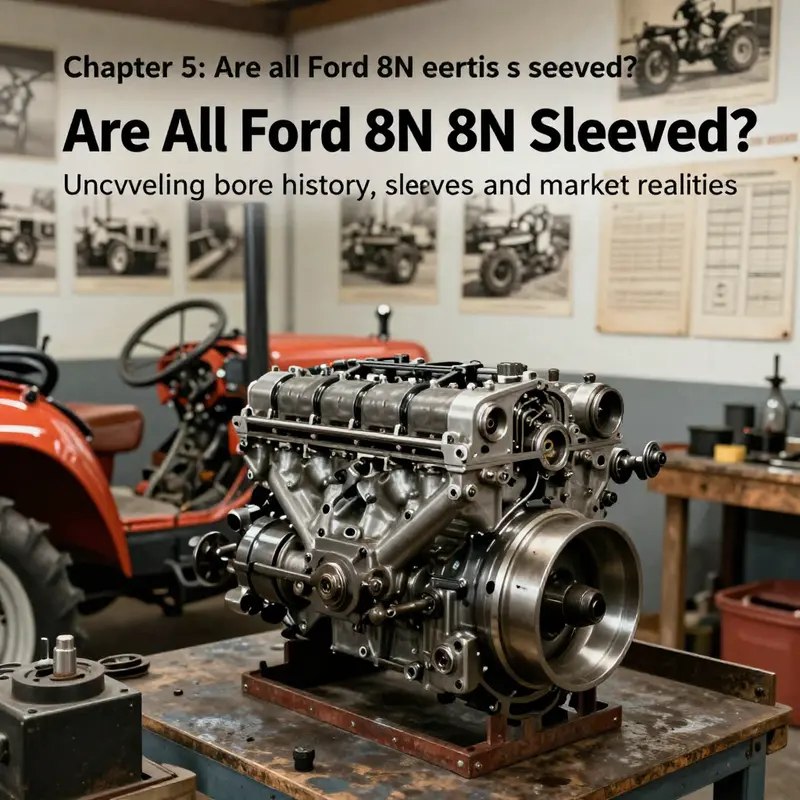
The Ford 8N tractor sits at a surprising crossroads in the story of mid‑century farm machinery. It emerged from a world where engines were built to be sturdy, repairable, and surprisingly forgiving of rough work in the field. The 8N’s heart is a flathead inline-six that embodies a straightforward approach to power and reliability. In its factory form, the block carried the cylinders as an integral part of the casting—no sleeves, no liners, just the bore walls formed from the same mass of iron that defined the block itself. This design choice was not unusual for the era; many engines of the time used similar construction, prioritizing durability and manufacturability over the later refinements we associate with modern cylinder liners. The result was a compact, robust package that could be rebuilt with standard pistons and rings, with a bore geometry that matched its piston set and compression ratio when new. It is a story of practical engineering, not a quest for future flexibility in the field.
Over the decades, though, wear and use carved their own narrative into that original arrangement. The honest truth is that not all Ford 8N engines today are sleeved, but many recoveries and restorations feature sleeves as part of the rebuild. When the cylinder walls wear thin, or when a rebuild must go beyond the usable limit of the bore, mechanics often turn to sleeves—liners that are inserted into the block to provide fresh, uniform bore surfaces. Sleeving can restore compression, improve seal integrity, and accommodate pistons that reflect contemporary manufacturing tolerances. In practice, sleeving is a practical response to age and heavy service, a way to extend life without replacing the entire block. For readers who want a concise primer on sleeves in general, a useful overview can be found at What are engine sleeves.
This adjustment—adding sleeves to a historically non-sleeved, cast‑iron block—has become a familiar step in many restoration and refurbishment projects. The logic is straightforward: when the original metal walls have been fed beyond their designed limits, or when the bore has been overrun by overzealous honing or an adverse combination of wear and heat, a sleeve provides a fresh, dimensionally stable surface. The result is not only renewed rigidity and sealing capability but also an opportunity to work with pistons and rings that conform to modern machining standards rather than the tolerances of the mid‑twentieth century. In practical terms, sleeves allow a rebuild to meet the demands of today’s usage while still honoring the base design that defined the 8N’s reputation for durability.
The separation between historical preservation and practical outcomes is where the sleeving question becomes nuanced. Enthusiasts who prize authenticity argue that an engine that never wore sleeves is a closer mirror of the factory product and, therefore, a more faithful artifact. They insist that originality—an unsleeved bore, the same bore diameter, the same surface finish produced in the era—matters as a touchstone of value and memory. In contrast, owners who plan ongoing operation or frequent use of their 8N prioritize reliability and long‑term service life. For them, sleeving is less a deviation from history than a pragmatic strategy to ensure consistent compression, dependable cooling, and reduced risk of bore failure during work cycles. The tension between these priorities reflects a broader conversation in restoration: should we preserve the artifact as a document of its origin, or should we adapt it to remain functional in a modern working context?
The practical decisions around sleeving are not abstract philosophical debates; they rest on real engineering considerations. Cylinder sleeves come in different designs—some engage with the block through an interference fit and a secure seating height, others rely on a closely controlled slip fit with careful finishing. The technique requires careful block preparation, precise boring to accept the sleeve, and the right approach to sealing and temperature management. The machinist’s goal is to create a bore that is straight, round, and true to the piston axis, with surface finishes that promote good ring seating and minimal wear over thousands of hours of use. A well‑executed sleeving job can yield a block that behaves like a modern engine in terms of consistency and longevity, while still carrying the character of its vintage origins in the iron itself.
Within that framework, the decision to sleeve becomes both technical and personal. If the tractor is part of a show field or a weekend display, the owner may lean toward preserving an original, unsleeved block as a talking point—a tangible link to the 1940s engineering mindset. If the tractor remains a working tool in a rural setting, sleeves can be viewed as a form of insurance, offering a predictable repair path that minimizes risk and downtime. The balance point often hinges on the extent of wear, the availability of accurate, historically appropriate components, and the owner’s tolerance for maintenance complexity. In a historically minded restoration, even small deviations from original appearance and bore finish can be meaningful, and those choices are weighed with care. In a more pragmatic restoration, the same owner may seek the least disruptive path to a reliable engine, with sleeves delivering durable performance and a smoother path to compliance with modern operating expectations.
One consequence of this ongoing dialogue is that sleeved 8N engines have become a common sight in modern restoration communities. Sleeving does not erase history; it reinterprets it. It preserves the fundamental idea of a reliable, six‑cylinder power unit while acknowledging that the wear and tear of decades of use can outpace the tolerance bands of the original block. The conversation also reflects the broader reality that many collectors and restorers value a tractable compromise: an engine that looks authentic in its silhouette and casting marks, yet behaves with the smoothness and dependability of a re‑sleeved bore beneath the head. In this light, sleeved engines on 8Ns tell a story of adaptation and continuity rather than contradiction.
As readers reflect on their own project, it helps to keep in mind that the sleeving choice is not inherently about either keeping things exactly as they were or about discarding history. It is about selecting a path that aligns with goals, resources, and the realities of operation. If the priority is to deliver a tractor that can reliably return to work, sleeving offers a proven route to restoring compression, reducing oil consumption, and maintaining consistent performance. If the priority is to create a faithful museum piece that speaks to a specific era’s engineering philosophy, the unsleeved block can represent a more literal reconstruction of the factory intent. Either path honors the 8N’s enduring appeal: a tractor that earned its reputation through robust design and straightforward, serviceable engineering.
For readers seeking deeper context on sleeves themselves, the following resource offers a focused exploration of what sleeves are and how they function within engine blocks: What are engine sleeves. This reference helps ground the discussion in the broader mechanics of sleeves, keeping the Ford 8N conversation anchored in practical reality while acknowledging the history that makes this topic compelling.
In the end, the question “are all Ford 8N engines sleeved?” dissolves into a more productive inquiry: under what conditions does sleeving make sense, and how does that choice shape the machine’s longevity, usability, and story? The answer remains nuanced. The original 8N design did not require sleeves, and many blocks survive unsleeved in collector circles. Yet the realities of wear, overhauling, and ongoing work continue to push builders toward sleeves as a practical, time‑tested solution. The decision rests on a balancing act between preserving a piece of agricultural heritage and ensuring that heritage remains functional in a modern landscape of demand and responsibility.
External resource: https://www.ford8n.com/
Final thoughts
In the end, the answer to whether all Ford 8N engines are sleeved is nuanced. The factory design featured non-sleeved, standard bores intended for rebuild with conventional pistons and rings. Sleeving entered the practice as a practical solution when bores wore beyond usable limits or when block wear demanded restoration of a true round, concentric bore for reliable compression and cooling. For owners, shops, and distributors, this means sleeves are not a universal attribute of every 8N engine but a strategic option chosen based on bore condition, overbore limits, and service goals. The market for sleeves—including kits compatible with models like APN6055E—reflects steady demand from restoration and field-use communities who need durable, serviceable bores without sacrificing original block integrity. Practically, a well-planned sleeving approach can extend engine life, preserve performance, and simplify maintenance, provided bore-to-sleeve fit, material choice, and honing tolerances are correctly executed. For historical preservation, decisions balance authenticity with reliability, often favoring sleeves when the original bore is beyond repair, and favoring faithful re-ream or non-sleeved routes for pristine restorations. The core takeaway: sleeve decisions should be informed, deliberate, and aligned with the engine’s intended use and owner expectations.