
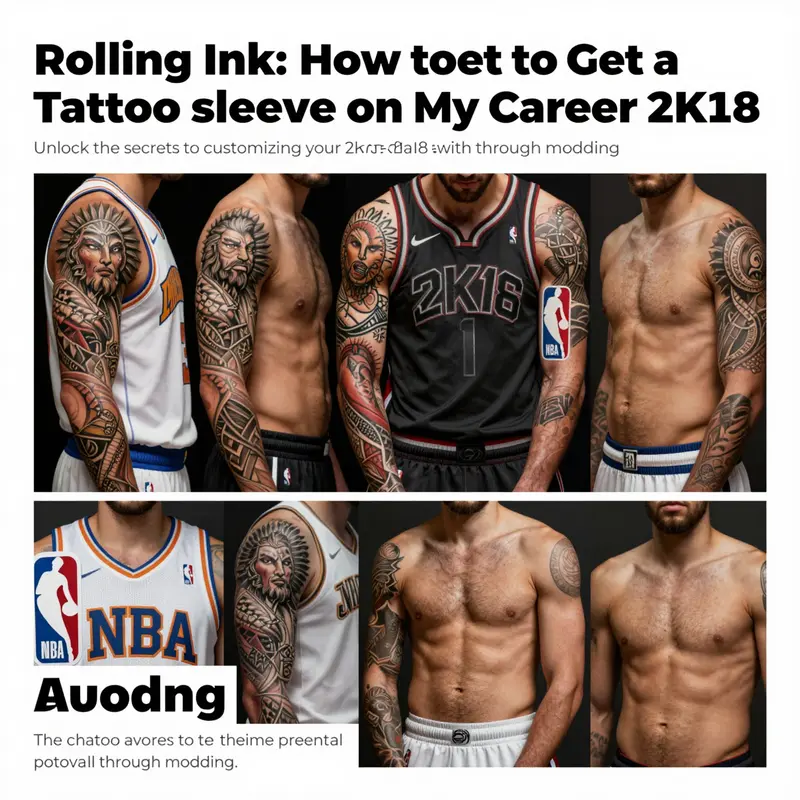
In the world of NBA 2K18, personalization enhances the gaming experience by allowing players to express themselves through their avatars. However, unlike many other games, there is no built-in feature for acquiring tattoo sleeves for your My Career character in NBA 2K18. This guides automobile enthusiasts and others to a creative solution: using mods. This article covers the specific methods to acquire a tattoo sleeve, from understanding game limitations to installing and effectively managing mods. Each chapter will dive deeper into the process, helping you transform your character into a visually striking player with unique tattoos that speak to your personality.
Ink Beyond the Menu: Navigating Tattoo Sleeves in My Career 2K18 When the Official Game Draws the Line
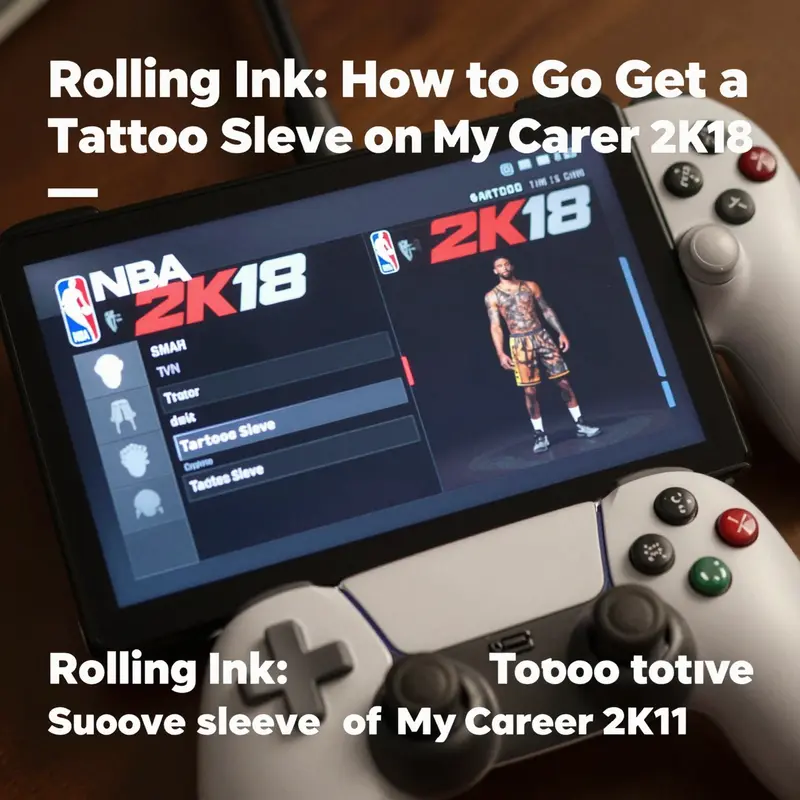
Picture your NBA 2K18 Career Mode avatar stepping onto the court, the crowd roaring, and in the air a bold sleeve of ink that signals your identity before you even touch the ball. For players who crave that aesthetic, the most straightforward path is blocked. The official game, as many players quickly discover, does not support tattoos or full sleeve designs for your avatar. There are no in-game cosmetics that allow you to apply a tattoo sleeve and no menu option that unlocks one through the usual shop or grind. The omission isn’t just cosmetic; it shapes how you approach the build, the presentation, and even how you perceive your own virtual persona as you chase milestones in a career that can stretch for years. This limitation pushes players toward modding—an approach that changes more than just appearance. In community forums and modding hubs, people share files that alter character texture maps, modify arm models, and apply sleeve textures that give the illusion of a tattooed forearm. These mods are typically packaged as asset replacements and may come with file formats like .iff, reflecting how game developers store character parts in a structured way. Without naming specific mod packs, you can know that the process relies on replacing or layering the original assets with fan-made textures designed to show sleeves from shoulder to wrist.
The decision to mod is not trivial. It means embracing a workaround that exists in a gray area between creative expression and the terms of service of the game and platform. For PC players, the path can be more forgiving, because you control the file system and can back up existing assets easily. Console players face extra steps—transferring files via USB and ensuring that the console’s security settings permit the modified assets to load. Yet across all platforms, the core sequence remains consistent: locate a compatible tattoo sleeve mod, verify it aligns with your game’s version, back up the originals, install the replacement assets carefully, and launch the career mode to test the effect. It is the testing phase that often reveals subtle incompatibilities or stability issues. If the mod touches textures or arm geometry, the result might be a flicker on the screen, a misaligned sleeve, or a texture pop that betrays the illusion. In some cases, updates to the game can overwrite the altered assets, erasing the sleeve and leaving you back at square one. This is a reminder that modding is not a one-and-done action; it requires ongoing diligence and a willingness to adapt when the game updates.
If you choose to proceed, you start by confirming your platform and game version. You can then search trusted mod repositories and communities where creators publish their work and provide notes about compatibility, installation steps, and any known conflicts. The files themselves are often archive packages containing texture maps, models, and a manifest that describes where within the game’s asset structure the new sleeve should reside. The .iff extension is mentioned in some mod descriptions because it matches the asset container format used in certain NBA 2K iterations. The absence of an official guide means you must rely on the community’s README files, video tutorials, and forum threads to interpret the steps correctly. When you pull a sleeve texture, you will typically download a set of files that need to be placed into the game’s asset directory, sometimes replacing the original arm textures or arm models entirely. This operation requires precision; a single misplaced file can break the boot-up sequence or cause the game to crash, especially if the mod conflicts with other asset packs or with a current game patch. Backup is non-negotiable. Before you touch a single file, copy the entire directory that contains the player’s arm assets and create a restore point if your system allows it. For PC users, this means duplicating the relevant Documents or AppData folders where NBA 2K18 stores its data. For console users, the equivalent step is to copy the saved data to a secure USB drive, if the console permits such edits and if you have the necessary rights to load custom content in offline mode. The install itself usually unfolds in a sequence: extract the mod package with a standard archive tool, review any installation instructions, then copy the new files into the appropriate subfolder inside the game’s asset tree. It is as much about recognizing where the game expects the skin or texture to reside as about copying the file. After the files are in place, you restart the game and load an existing career save or create a new one, and then check the player’s arm in the wardrobe or in the game world to confirm whether the sleeve appears as intended. If the sleeve shows up but sits awkwardly around the elbow, or if the texture stretches or fails to render at certain angles, you may need to adjust again or try a different mod that better matches your version. In some cases, players discover the sleeves tolerate only offline play well, while online play triggers client checks that may reject the modified assets or trigger an anti-cheat response. This possibility underscores a crucial caveat: modding remains an unofficial choice, and it can have consequences if you rely on online features. The risk isn’t merely a minor glitch; it can be a game-wide block on your ability to access your account or your saved data in the online ecosystem that the game fosters.
To navigate these realities, many veteran modders advise framing the project as an offline or exhibition-type experience. If you plan to compete online, the safer route is to avoid mods and to search for sanctioned cosmetics introduced in later titles or to express your style through real-world alternatives when you’re not in the digital arena. This approach preserves the integrity of your account and keeps the career progression clean from the perspective of the platform’s policies. The moral of the story is straightforward: when you want a tattoo sleeve in a game that doesn’t officially offer one, modding introduces a legitimate-looking workaround, but it also invites a series of technical and policy-related challenges that don’t exist in a fully supported feature set. Even with the caveats, the appeal remains strong for players who want a unique, personal brand on their avatar. The sleeve becomes more than a cosmetic; it becomes a signal of identity that travels through your highlights, interviews, and the pickup games you build in the narrative of a digital athlete. Yet the path to that signal is built on careful planning, careful execution, and a tolerance for risk. When the game is updated, the sleeve may require adjustments, and the modded assets may no longer align with the new textures, skeletons, or shapes the developers included in the patch. It is the nature of a living game and a living modding ecosystem that keeps players on their toes and keeps the conversation about customization in sports simulations lively and evolving. If you are comfortable with that dynamic, the modding route provides a way to claim ownership of your avatar’s image, even if the choice rests in a gray area. If you are not comfortable with modifying game files or if you value absolute stability and policy compliance, the best alternative is to adapt your aesthetic in the real world and in signage or merchandise related to your career rather than in the code of the game itself.
As a practical and grounded takeaway for those exploring the concept, there is also a tangible, non-digital option that can satisfy the craving for a bold, sleeve-like look during events, photoshoots, or social media content. Temporary tattoo sleeves, worn on real skin, give you the drama of a full arm sleeve with none of the risks of altering a game’s code. They are applied with standard skin-safe adhesives and care, lasting through hours of activity and washing with modest care. For enthusiasts who want something more durable without committing to permanent ink, there are skin-safe adhesive sleeves designed to mimic the texture and shading of real tattoos, created with layered designs that appear through the forearm and up toward the shoulder. In practice, these options can serve as a bridge between the digital fantasy and physical reality, especially if you are using the game as part of a broader marketing or content strategy in which your on-screen persona is echoed by your real-world style. When you pair the real-world sleeve with the idea of a virtual sleeve, you create a symmetry between two identities that can enrich your storytelling about your career journey, the risks you take, and the way you interpret your own persona as you ascend in the virtual league and in life. For those who want a concrete starting point for a temporary sleeve, there are practical options and guides that emphasize skin safety, proper prep, and removal. The emphasis here is not on bypassing official channels but on providing an experiential context for the desire to express individuality through ink-like aesthetics, both on screen and off.
If you still want a more immersive approach, consider aligning your digital representation with your real-world style gradually. This can involve working with color palettes, legible designs, and compositional elements that translate well when a sleeve is visible under gym lighting, in headshot portraits, or during game-time broadcasts. The alignment between appearance and narrative—between what the avatar wears on the arm and what you present offline—can reinforce a sense of consistency in your personal brand. In this way, the sleeve, whether digital or real, becomes a storytelling device rather than a mere decoration. The overarching message remains: the path to a tattoo sleeve in a game that does not officially support it is not a simple toggle in a menu. It is a journey that you navigate with technical awareness, policy considerations, and a personal sense of style. And for those who weigh the risks and still choose to pursue it, the potential payoff is a stronger, more memorable player narrative that resonates through game footage, streams, and the way teammates and fans perceive your digital alter ego.
To ground this discussion in a practical alternative that respects both the craft and safety, consider tattoo sleeve stickers for real-world applications. These options provide a tactile, temporary representation of the sleeve look without any code manipulation or risk to your account. They are designed for realistic texture and skin safety, offering a way to test how a sleeve might feel visually in person before you commit to permanent ink. For a tactile, temporary alternative in the real world, consider tattoo sleeve stickers that mimic the look with realism and safety; this option is designed for painless application and removal, and it serves as a practical bridge between the fantasy of your virtual avatar and the reality you present in photos or at events. External resource: https://www.amazon.com/Realistic-Tattoo-Sleeve-Stickers-Adhesive/dp/B0BQX6VZ7T
Ink on the Court: Personalizing a Career Mode with a Tattoo Sleeve Mod
Personal identity finds room for self-expression even in the most algorithm-driven environments. In a career mode that charts a path from unknown rookie to polished veteran, the details players choose to display on their avatars can feel like more than just cosmetic flair. They become a narrative cue, a shorthand for grit, style, or backstory. When a title’s official options fall short of that expressive itch, the mind naturally drifts toward a solution: modify the look yourself. The concept of a tattoo sleeve in a career mode usually arrives as a question with no official answer. The base game, in its pursuit of broad compatibility and clean presentation, does not ship with a full tattoo sleeve option as a purchasable cosmetic upgrade. So the quest for ink becomes a story of constraint meeting creativity, a careful dance between desire and the rules of the game’s ecosystem. The path is not just technical; it is a meditation on ownership—on how we decide to wear our virtual selves when the system refuses to grant that exact badge of identity at the outset. In that tension, a lot of the appeal of modding emerges: the chance to tailor a digital body to mirror a personal vision, deeply and honestly, even when the official channels remain silent on the matter.
To embark on this journey, you begin with a simple premise: if the game won’t give you the sleeve, you will build one. That choice frames every step that follows. You are not only altering a texture or a color; you are stepping into a community practice where artists, toolmakers, and fellow players share a language of asset replacement. The work is codified in file formats, directory trees, and version checks, but its heartbeat lies in the longer, more human question of what this sleeve stands for for you as a player—the story you tell with your avatar when you walk onto the court, the way a sleeve’s design can echo a personal or fictional arc, the way ink can signal a veteran’s scars or a rising talent’s fearless swagger. The chapter that follows is less a quick recipe than a sustained voyage through the space where art, technology, and play meet. It asks you to weigh the thrill of customization against the realities of imperfect tooling, and to accept that crafting a sleeve through community-made assets comes with both risk and reward.
The first movement in this journey is a practical one: sourcing the right materials. In the modding world, the term mod is shorthand for a package that replaces or adds to the game’s existing assets. A tattoo sleeve for a career avatar lives inside a package that’s designed to replace arm textures and models. These packages typically contain files with specialized extensions that the game engine recognizes as arm components. The exact naming conventions can vary, but the core idea is consistent: you need a sleeve that the game can read and display as part of your character’s arm. Finding a reputable package matters as much as the art within it. The community tends to converge around trusted hubs where designers publish their work, feedback is exchanged, and compatibility notes are posted. The thrill here is not just the art itself but the assurance that you are stepping into a space where others have tested and vetted similar changes, reducing the odds that a sleeve will appear as a glitch or, worse, trigger a cascade of crashes.
Once you locate a sleeve mod that seems to fit the game’s aesthetic and your version of the title, the next act is a careful read of the instructions. The files you’ll encounter are not ordinary textures pulled from a paint program. They are asset files—often built around specific formats the game uses to store character geometry and textures. In many cases, you’ll be handling a file type associated with character models, sometimes appearing with cryptic extensions or names that reference the character’s anatomy rather than the ink itself. Experience shows that the best sleeves are designed with the game’s existing armor and limb geometry in mind, so their alignment with the forearm, elbow, and bicep curves feels natural rather than stretched or misaligned. A sleeve that does not conform to the arm’s topology will look off, its ink floating or tearing at the joints during motion. The art is part of the experience; the geometry is part of the physics, and the two must work together for the illusion to be convincing.
With the source in hand, you move to the extraction and inspection phase. The mod package usually arrives compressed, a tidy bundle that hides the delicate components inside. A trusted extraction tool becomes your ally here. You unzip the archive and peek at its contents, noting the files that appear to be the actual sleeve texture or model. In many cases the critical assets will be named with hints like sleeve, tattoo, arm, or model, but the guardrails of naming can vary. You want to identify the precise files that the game will load to replace your avatar’s arm assets. It is essential to confirm that the files are compatible with your platform and your game version. On PC, this often translates into a straightforward file swap, whereas console environments demand more caution and sometimes additional tools because of their stricter file integrity protections. The key point at this stage is clarity: you must understand what each file does and how it fits into the broader asset tree of the game.
Before you touch anything on your system, you back up. This is not merely prudent; it is existential in a modding context. A little slip, a misnamed file, or a wrong folder path can quickly cascade into a corrupted save, a broken career mode, or even a game that refuses to launch. The habit of making a clean, clearly labeled backup of the original assets is the quiet hero of any successful sleeve mod. You might duplicate the entire arm-related asset directory or, at minimum, rename the original files with a backup extension. The act of naming preserves the original state and makes a rollback painless should you need to revert. The narrative of risk and recovery becomes part of your practice: you acknowledge that you are stepping slightly outside the polished boundaries of the game to grant your own vision a chance to exist, but you do so with a safety net stretched tight around your data.
The installation itself is where many players discover the thin line between empowerment and disruption. On PC, the game’s folder is usually within a path that many players know by heart. You will locate the root directory where the game stores its assets. The replacement process is often as simple as copying the extracted sleeve file into a subfolder within that directory and confirming an overwrite when prompted. The act of replacing a file is not merely a technical move; it is a decision to allow a new texture to supersede the original. If you’re following a guide, you might encounter a recommended subfolder structure such as content or characters or players; some mods are written to drop directly into the root, while others want to nest under a precise path. The most important rule remains: do not skip the backup. If the sleeve fails to appear, or if something breaks, you revert to the backup, and you reassess the path or the file chosen. Sometimes the sleeve reveals itself only after you start CAP mode and select the right player, or after you trigger a subtle in-game switch that the mod’s creator notes. In other cases, the mod may require a small adjustment, a second drag-and-drop, or even a restart of the game to ensure the engine recognizes the new asset. The gentle patience required here matters. The art is not just about dropping a file into a folder; it is also about giving the game the chance to re-scan its assets and rebind the new geometry to the correct character slot.
A helpful addition that keeps complexity at bay is a mod manager or loader designed for the game. These tools exist to streamline the process of handling multiple asset replacements. They act as a curator, loading the right set of files when you start the game and keeping track of dependencies, so you do not have to memorize a sequence of manual moves. For a sleeve mod, a manager can be a lifesaver, particularly if you plan to experiment with more than one design over time. It reduces the friction of swapping files, minimizes human error, and provides a cleaner rollback path should you decide to switch ink mid-career. Still, even with a manager, the core discipline remains: reading the mod’s instructions, ensuring compatibility with your edition and platform, and backing up before any change. The charm of a manager is the extra layer of safety it provides, but it does not replace the responsibility of careful preparation and verification.
After you have installed and launched the game, the moment of truth arrives. You head into Create-a-Player or a similar customization hub and inspect your avatar’s arm. The sleeve may appear instantly, or you may need to toggle between different player models, skin tones, or lighting presets to reveal the new ink. Some sleeves are designed to be visible only in certain lighting or under certain camera angles. If the tattoo sleeve is not visible at first glance, a few small tests can confirm whether the asset is loaded correctly: switch to a different model and back, adjust lighting, or reapply the mod through its loader or the game’s file replacement process. There are moments when the sleeve looks almost perfect in still images but behaves differently in motion—ink stretching along the forearm during a quick dribble, or the shading clinging tightly to the biceps as the arm flexes. These moments highlight the intricacies of translating a two-dimensional design into a three-dimensional, animated surface. The sleeve is a dance of texture, lighting, and geometry; when it comes together, it feels less like a cheat and more like a personal piece of wearable art that travels with your character through every cutscene, practice drill, and highlight reel.
A sober thread through this entire narrative is the recognition of risk. Modding is not officially sanctioned content. Developers with a broad audience have to balance accessibility against safety and performance. Modding for a career mode might affect stability, especially if multiple mods interact in unforeseen ways. In online contexts, the risk increases as the game’s terms of service can treat altered assets as a breach or as an enabling of unintended behavior. The responsible approach is to keep mods offline when possible and to separate your single-player or offline career from any mode that connects to the broader online ecosystem. A conservative stance does not diminish the satisfaction; it simply clarifies the boundaries within which you enjoy your personalized sleeve. Because the sleeve is a cosmetic addition, your core gameplay, stats, and progression can remain unaffected by the aesthetic change. Yet you should still save progress frequently and maintain multiple save slots. The goal is to preserve the integrity of your career while exploring the edge of customization, not to risk a corrupted file just to prove the sleeve’s existence.
In the longer arc of this practice, you begin to see how a tattoo sleeve, once considered beyond reach, becomes a symbol of creative agency. You learn to read the asset files the same way a designer reads a palette, recognizing how color, shading, and edge definition communicate mood and movement on the virtual skin. You also learn the pedagogy of constraint: ink has to withstand the arc of the arm, the micro-motions of a suit, and the cinematic lighting of a highlight reel. The sleeve’s design must feel coherent with the character’s identity and backstory. A sleeve that depicts brutalist geometry might suit a grizzled, battle-tested veteran; a delicate, floral arc could imply a younger, more introspective figure; a bold, abstract pattern can declare a fearless approach to risk and performance. The act of selecting and applying a sleeve becomes a small but meaningful ritual, a way to encode your in-game story into a visible, constant motif. You walk onto the court with your ink and your narrative aligned, and the sleeve becomes an unspoken but undeniable element of how teammates, opponents, and fans perceive your avatar.
The practical craft of this process—the download, extraction, backup, file placement, and testing—narrows into a single, enduring lesson. Personalization in a closed digital system often requires stepping outside the publisher’s intended feature set. The path is historically common in many modern games: players request, communities supply, and the faithful adhere to guidelines that keep the experience stable enough to be shared. The sleeve, then, is not just ink on skin; it is a microcosm of digital culture in action. It embodies the collaboration of creators who craft assets, testers who verify compatibility, and players who bring their own stories into the game world. It also embodies a cautious etiquette—the respect for data integrity, the awareness of platform differences, and the humility to revert when a modification threatens the gameplay experience you cherish. The result is a hybrid form of artistry and engineering, a reminder that the interface between art and code can be as expressive as any brush or canvas when guided by thoughtful hands and a patient, methodical approach.
As you close the chapter on installing a tattoo sleeve mod, you may find yourself reflecting on what this act says about your relationship to the character you control. The sleeve is not a mere decoration; it is a tangible extension of your choices, a statement about how you want your avatar to carry its experiences. It is a quiet declaration that within the structured rules of a career mode, there remains a space for personal invention. And if you ever feel uncertain about the path—whether a given sleeve design truly matches the arc you envision or whether the file is stable enough to remain in your save—remember that the community built around these modifications shares a common ethic: care for the player’s experience first, then for the ink. With that ethic in mind, you can pursue further explorations, testing new designs, and refining how your sleeve speaks to your story while staying mindful of the game’s boundaries and your own sanity as a player.
For readers who want to probe deeper into the technicalities or catch up on the most refined, community-validated options, there exists a curated resource that outlines tested sleeves and precise installation steps. It provides a tested mod page with detailed guidance, including compatibility notes and troubleshooting tips. While the world of mods can feel sprawling, this reference helps anchor your exploration in a trusted point of departure, reducing the risk of missteps that can derail progress or stability. The bottom line remains: you can craft a sleeve that feels earned, a mark of your journey through a career mode, and you can do so with an awareness of the fragility and wonder of digital customization. Ink on the court, indeed, becomes a small but resonant chapter in the larger narrative of playing with imagination inside a game that fosters both competition and creativity.
External resource: https://gamebanana.com/mods/407593
Sleeve of the Grind: Crafting a Custom Tattoo Sleeve in MyCareer 2K18 Through Modding
In the world of NBA 2K18 MyCareer, your player’s appearance can feel like a cipher for the grind you’re putting in off the court. A tattoo sleeve isn’t just decoration; it’s a narrative device that can signal resilience, identity, and the chapters of a hard-fought journey. Because the official customization options in 2K18 don’t include a tattoo sleeve, many players turn to modding as a way to personalize their avatar in ways the base game simply won’t allow. Modding involves altering game assets created by the community and can unlock the visual storytelling you crave, but it comes with a set of technical and ethical considerations you should weigh first.
To begin, approach the process as a careful project rather than a reckless hack. You’ll typically source a sleeve-focused asset package—often a texture replacement or a new arm mesh—that is labeled as compatible with your game version and platform. The package will usually come with documentation detailing which files to replace, where they live in the game directory, and how to back up the originals. Backups are essential: they give you a safety net to revert to your untouched state if something goes wrong during installation or testing.
On PC, the path is generally smoother. You’ll back up the original arm texture and model files, extract the downloaded assets with a compatible tool, and place the new textures or meshes into the correct folders. On consoles, the process is more constrained due to platform protections, and success may depend on subtle workarounds or the willingness to accept greater risk. In all cases, closely follow the asset package’s installation steps and consult the creator’s notes for any version-specific quirks.
A sleeve mod typically works by overlaying a tattoo texture on the arm texture or by replacing the arm mesh entirely. You’ll want to choose resolution and style that hold up under the game’s lighting and animation. Test in offline modes first to judge texture alignment and mesh integration before engaging in online play, where mods can be more disruptive and subject to policy considerations. If you encounter misalignment or texture seams, revisit the package documentation or seek guidance from the modding community—experienced users often publish fixes that can save you hours of trial and error.
Beyond the technical steps, consider the storytelling angle of your sleeve. The motif you choose should feel authentic to your player’s arc, whether that’s bold graphic lines, delicate shading, or a stylized graphic approach. A sleeve in MyCareer is a visual shorthand for the character’s journey and personality. It’s also a reminder that, while mods offer a powerful form of self-expression, they exist within the boundaries of the game’s terms of service and its online ecosystem. For online play, many communities recommend avoiding mods altogether or using only ones explicitly permitted by the game’s developers to protect your account and the integrity of matchmaking.
If you decide to push forward, stay engaged with the broader modding community. Forums, tutorials, and troubleshooting threads are valuable repositories of practical knowledge, from file naming conventions to common compatibility pitfalls. And as you gain experience, you’ll begin to see the sleeve not merely as a visual flourish but as a tangible reflection of your work ethic, patience, and commitment to shaping a unique in-game identity. In the end, a well-executed sleeve mod can turn a missing feature into a personal signature on the court, reinforcing your narrative with every jump shot, crossover, and celebration.
Final thoughts
Understanding how to enhance your NBA 2K18 character with tattoo sleeves via modding can elevate your gaming experience significantly. While the game itself offers limited customization options, the vibrant modding community provides creative solutions that can bring your avatar to life. By following the methods outlined in this article, you can easily navigate the world of installation and best practices, ensuring that your character not only performs well but looks distinctive on the court. Embrace the freedom of customization and let your personality shine through your avatar’s tattoos today!