
Sleeve engines are known for their durability and efficiency, but they can present significant issues, particularly when they smoke. The presence of smoke from the exhaust not only indicates underlying problems but also underscores the need for proper maintenance and understanding of engine components. This article examines the common causes of smoke in sleeve engines—addressing oil burning, fuel combustion issues, and coolant leaks. Each chapter delves into technical insights and provides practical recommendations, empowering motorcycle owners, auto owners, parts distributors, and garages. By grasping the intricacies of why sleeve engines smoke, stakeholders can mitigate risks and enhance engine performance.
Oil Burning in Sleeve Engines: Tracing Blue Smoke to Worn Rings, Sleeves, and Seals—and Why It Matters for Performance
Blue or gray smoke curling from the exhaust of a sleeve-equipped engine is more than a visual cue; it is a diagnostic clue about how oil and air interact inside the cylinder and how well the engine is sealing. In sleeve engines, where a replaceable cylinder sleeve forms part of the combustion chamber wall, the path oil takes to the flame is often direct and telling. This chapter follows the thread from the moment oil begins to bypass the nominal sealing line to the consequences this has for performance, efficiency, and environment, and it lays out the practical steps needed to prevent or mitigate the problem. It is a story of how wear, design, and maintenance intersect in a high-stress environment where compression, lubrication, and heat must all stay in harmonious balance. At its core, oil burning in sleeve engines is a symptom of wear and misalignment, but it is also a loss of control over the engine’s most fundamental processes: the timing of combustion, the integrity of seals, and the management of metal surfaces under load.
Oil burning in sleeve engines typically arises when engine oil collects where it should not be and then enters the combustion chamber where it is not intended to burn with the air-fuel mixture. The most common culprits are worn or damaged piston rings and worn or damaged cylinder sleeves themselves. Piston rings are the first line of defense against oil migration; they scrape oil off the cylinder wall and keep it from entering the chamber. When rings are worn, broken, or stuck, they fail to perform that scraping function, allowing oil to cling to the wall and eventually slip past the rings into the combustion zone. In sleeve designs, the interaction is even more sensitive because the sleeve creates a precise interface with the piston rings and the cooling system. If the sleeve is scored, worn unevenly, or improperly seated, micro-gaps can form where oil can seep past the rings and burn. Friction, heat, and high compression only magnify these effects, and the result is a characteristic blue-gray plume that grows stronger during acceleration and at startup when the engine demands more aggressive ring sealing.
Valve guides and seals also play a supporting role in this drama. Crankcase pressure, imperfect cap seals, and worn valve guides can create additional pathways for oil to escape into the combustion chamber. In sleeve engines that operate at high compression ratios or rely on turbocharging, the boundary conditions become more demanding. The same designs that enable superior torque and power can complicate sealing once wear accumulates. The research materials remind us that sleeve systems are designed for robustness and wear resistance, but they also require vigilant maintenance to keep the rings and sleeves correctly aligned and sealing effectively. When oil does enter the combustion chamber, it burns and mists the exhaust with a blue or gray color that can be mistaken for other smoke types in different operating regimes. The color alone cannot diagnose the root cause, but it points to oil ingress as the primary suspect rather than fuel-rich misfire or coolant intrusion.
The consequences extend beyond the color of the exhaust. Oil burning reduces engine efficiency in two ways: first, some of the oil that should stay in the sump is burned, lowering the effective lubrication of moving parts and wasting energy; second, the presence of oil in the combustion chamber can lead to carbon buildup on pistons, valves, and injectors. As carbon accumulates, heat transfer changes, advanced timing or misfire potential increases, and fuel economy declines. The emissions profile shifts as well. Burning oil contributes extra particulate matter and oxidative compounds to the exhaust, elevating the engine’s environmental footprint. This is not merely an emissions concern; persistent oil burning can hasten wear, promoting a feedback loop where smoother operation becomes harder to sustain as the sleeves and rings wear further.
From a maintenance perspective, the path to prevention begins with proactive inspection and careful attention to lubrication strategy. Regular oil changes with the correct viscosity and quality are foundational. In sleeve engines, the viscosity of the oil matters because thicker oil can retain more heat and may not drain quickly enough in older sleeves that carry slightly larger tolerances. Conversely, oil that is too thin may not form a robust film to separate the metal surfaces, increasing wear and the chance of oil migration. The inspection of cylinder sleeves during overhauls or major service is equally critical. Worn sleeves, scoring, or improper seating can create micro-cracks or gaps that become doors for oil entry. A well-timed overhaul that includes verifying sleeve alignment and sealing integrity helps maintain the boundary conditions that keep oil out of the combustion chamber.
Seal integrity is another focal point. Gaskets and seals at the cylinder head, the interface between the sleeve and the block, and the crankcase seals all participate in the oilsolid balance. When any of these seals degrade, oil can leak into the area where combustion takes place. In this context, misalignment during sleeve installation or seating can create gaps that permit oil to bypass the rings and drift into the combustion zone. The relationship between the sleeve design and the cooling jacket also matters. If the sleeve seating compromises coolant flow or creates uneven cooling, thermal stress can accelerate wear and micro-misalignment, further undermining sealing performance. The literature underlines that while sleeves bring high compression and turbocharging capabilities, they also demand rigorous maintenance protocols for optimal performance.
Diagnosing oil burning requires a careful, methodical approach. Operators should monitor oil level and condition as a first line of defense. Abrupt changes in oil consumption, visible blue smoke during throttle response, or startup smoke signal that something is amiss beyond routine consumption. A diagnostic that extends beyond superficial symptoms should include an examination of the piston rings for wear and binding, an inspection of sleeve condition for scoring or misalignment, and a check of valve guides and seals. In some cases, a leak-down or compression test, combined with a borescope inspection of the cylinder with the sleeve in place, can reveal edge wear or micro-cracks that would not be evident from a surface inspection alone. The goal is to distinguish blue smoke caused by oil burning from other sources of smoke—such as black smoke from incomplete combustion or white smoke from coolant intrusion—which are distinct problems with their own diagnostic pathways.
The practical response to confirmed oil burning centers on restoring the integrity of the sealing system and improving the wear management of the sleeve and rings. Timely oil changes and the use of appropriate, vetted lubricants are the starting points. The maintenance log should track oil type, viscosity, and any anomalies in consumption or exhaust color. When wear or misalignment is detected, the repair strategy may involve replacing the rings, re-sleeving or align-boring of the cylinder, and ensuring the sleeve seating is correct. In engines where sleeve integrity is closely tied to cooling, attention to the coolant jacket is essential; any gap in cooling can accelerate wear and undermine sealing reliability.
From a broader perspective, the engine design decisions that enable strong performance through higher compression and turbocharging also demand meticulous attention to maintenance schedules and component compatibility. The cited guides emphasize that sleeves offer enhanced wear resistance and reduced cylinder wall erosion, but they also warn that achieving and maintaining those benefits requires disciplined maintenance and careful monitoring of ring and sleeve integrity. In the context of high-performance or industrial applications, neglecting these maintenance requirements can turn a potential efficiency gain into a larger problem with increased emissions, power loss, and higher total cost of ownership.
For readers seeking a deeper technical foundation on engine sleeves and their role in oil consumption and emissions, the SAE International Technical Paper on Oil Consumption in Internal Combustion Engines provides a rigorous treatment of the mechanisms by which oil is consumed in sleeve-type designs and how this influences emissions and durability. This external resource offers insights into the interaction of lubrication, sealing, and material wear under real-world operating conditions, complementing the practical guidance offered here. As with any complex engine system, the path to reliability lies in aligning design intent with diligent maintenance and regular diagnostic checkups.
If a sleeve engine you depend on begins to show persistent blue smoke, the signal is clear: despite the strength of the sleeve design, oil burning is a wake-up call. It is not merely a matter of aesthetics or an occasional nuisance in cold starts. It is a pointer to the health of the seals, rings, and sleeves, and to the overall harmony of lubrication, combustion, and cooling. Addressing it requires a balanced approach that combines precise mechanical work with disciplined maintenance practices. For those seeking a concise starting point on what sleeves are and how they function within engine blocks, an accessible overview is available at what are engine sleeves. This resource can help frame the discussion for technicians and operators who need to calibrate expectations about sleeve behavior, wear patterns, and the maintenance window required to keep the engine singing rather than sighing under the strain of oil burning.
In summary, oil burning in sleeve engines is a multifaceted issue rooted in wear, sealing integrity, and the interaction of lubrication with high-pressure combustion. It carries tangible costs in terms of performance, efficiency, and emissions, but it is also manageable with a disciplined approach to maintenance, careful inspection of sleeves and rings, and proper alignment during service. By treating the root causes—ring wear, sleeve wear and misalignment, and seal integrity—as part of a coherent maintenance program, operators can reduce the incidence of blue smoke and extend the useful life of their sleeve-equipped engines. The insights from the research materials reinforce the importance of balancing performance gains with robust maintenance protocols, reminding us that reliability in sleeve designs is earned through vigilance and meticulous engineering care.
External resource for further reading: https://www.sae.org/publications/technical-papers/content/2019-01-0468/
The Smoke Signals: Unraveling Fuel Combustion Issues in Cylinder-Sleeve Engines
Smoke from an engine is rarely a simple symptom with a single cause. In sleeve-equipped engines, the interplay between cylinder sleeves, piston rings, and the fuel-air mixture creates a dynamic where misfires, misadjustments, or wear can manifest as blue, black, or white exhaust. The chapter you’re about to read treats smoking as a failure mode of combustion chemistry as much as a mechanical seal issue. It argues that to diagnose and address smoke effectively, one must read the exhaust for what it reveals about the combustion process inside sleeves designed to endure high pressures, tight tolerances, and demanding cooling needs. The central thread is that sleeve engines, prized for high compression and robust turbocharging, demand precise coordination among lubrication, sealing, fuel delivery, and air intake. When any one part diverges from its ideal state, the result is not just a change in color on the tailpipe but a cascade of consequences in wear, efficiency, and reliability. The colors blue, black, and white become meteorological markers, signaling oil continuity, fuel sufficiency, or coolant intrusion, respectively. Understanding these signals requires tracing the path of oil, fuel, and coolant from sump and turbocharger through the sleeve wall into the combustion chamber, and then out again as exhaust. The sleeve wall itself is not a mere barrier; it is a living interface that must accommodate heat, friction, and chemical exposure while maintaining a seal against piston rings that scrub the walls clean as the engine runs. When the sleeve walls wear or misalign, oil can slip past ring packs and into the combustion zone. This results in the familiar blue or gray plume that intensifies during acceleration, when piston speed increases and the dynamic sealing demands rise. The problem is not always a single failing piece but a constellation of subtle issues—worn rings, marginal sleeve seating, or an oil level that nudges the balance toward the wrong place. In such conditions, oil can wick through microchannels and gaps that were never intended to become oil highways. The result is oil burning in the chamber, producing a blue-tinted smoke that serves as a warning that lubrication management and sleeve integrity are not aligned with the engine’s current duty cycle. For readers seeking a quick primer on sleeves, a concise explanation of sleeves and their role can be found here: What are engine sleeves?. But the smoke story extends beyond oil loss. It embraces the fuel system and the air supply as well, especially in engines designed to run with turbocharging. In diesel-powered sleeve engines, the turbocharger breathes life into the charge air, allowing higher compression and more complete combustion at higher power demands. When the turbocharger lags, or when the air inlet path is restricted, the engine can lean toward a too-rich or too-poor mixture depending on the fault, often yielding black smoke. Black smoke is a visible cue that the engine is not burning fuel efficiently. It suggests an incomplete combustion process, typically tied to air supply constraints, fuel delivery timing, or spray quality. Clogged or leaking injectors, for example, may deliver fuel in a way that overwhelms the intake and flame front, leading to excess unburned fuel exiting through the exhaust. The turbocharger’s role in delivering air is central; when airflow fails to match the fuel injected, combustion becomes uneven, and the exhaust carries soot-laden signatures. The palette of causes for black smoke runs from restricted intake paths and degraded turbo performance to injector malfunctions, higher-than-normal engine loads, and mismatched fuel timing. The sleeve design adds another layer of complexity because the sleeves must withstand elevated pressures, manage heat transfer, and maintain a tight seal with the piston rings. If the sleeve wall or mounting deforms, the result can be a marginal seal around the rings, creating a path for extra fuel-rich or oil-laden mixtures to escape into the combustion chamber. In certain circumstances, the engine may draw unfiltered air, or the turbo system may fail to deliver the expected mass flow rate, resulting in a stagnant combustion chamber. The misbalance between mass of air and mass of fuel—whether due to delayed ignition timing, injector spray patterns, or turbo lag—produces black smoke as unburned fuel exits the exhaust. White smoke, by contrast, is a sign that something is intruding from outside the combustion chamber into the mix inside. In sleeve engines, this is often coolant leaking into the chamber through a cracked sleeve or a compromised cooling jacket around the sleeve. While a head gasket can also allow coolant into the cylinder, the physical proximity of the sleeve and its cooling passages makes it a primary suspect when white, steam-like smoke appears. Coolant vaporizes and exits with the exhaust as a white plume, and blue-white wisps can sometimes be mistaken for steam rather than oil or fuel alone. This diagnostic clue underscores the need for careful inspection of sleeves, cooling jackets, and seating during overhauls or post-repair checks. The engine’s design pays a premium for reliability under heavy-duty operation, and a failure of the cooling jacket around a sleeve can quickly escalate to overheating in the region around the sleeve—precisely where the walls meet the piston rings. It is worth noting that the presence of smoke, even when it seems to point to a single system, usually implicates multiple interacting parts. A crack in the sleeve wall may allow coolant to seep into the combustion zone, but this can be exacerbated by a compromised seal at the top of the sleeve or by a head gasket vulnerability nearby. Conversely, oil can enter the chamber not only because of worn rings but also because of misaligned sleeves that alter wall contact and create minor but persistent gaps. In high-performance or heavy-duty duty cycles, the boundaries among these problems shift. The same machine that benefits from high compression ratios and turbocharging becomes more sensitive to tolerances and maintenance. The wear pattern along the sleeve wall may show a different profile if the engine spends hours at high rpm, forcing rings to carve closer to the sleeve’s surface. In such cases, the signature blue smoke from oil burning might appear transiently during startup or acceleration, then fade as the rings seat better, while a persistent black plume could indicate that the air-fuel balance never achieves complete combustion under load. The diagnostic process, therefore, must consider the engine’s routine: oil quality and level, viscosity, and old oil’s tendency to thin under heat; the integrity of piston rings and their ability to wipe the walls clean; the mounting and alignment of the sleeve; and the performance of the turbocharger, injectors, and air intake. A methodical approach begins with a baseline check of oil status and consumption, then moves to a visual inspection of the sleeves for scoring, wear, or seating misalignment, followed by a targeted inspection of rings and ring gaps. It continues with an assessment of fuel delivery systems—the injectors, the return lines, and the spray patterns—and the turbocharging system’s air supply. If coolant-related white smoke is observed, focus turns to the cooling jacket integrity around the sleeve and to the possibility of a coolant leak from joints or seals near the sleeve. This is a reminder that sleeve engines operate at the intersection of sealing integrity, heat transfer, and dynamic combustion. In practical terms, the path to resolution involves a balanced mix of maintenance discipline and targeted repairs. Regular inspections during overhauls should prioritize sleeve and ring integrity, ensuring proper seating and alignment of sleeves. Maintaining oil level and using the correct viscosity helps keep the piston rings effective guards against oil film buildup. Any signs of oil consumption, including blue smoke at startup or during acceleration, should trigger a closer look at ring health and sleeve condition. When smoke leans toward black, it is time to inspect the turbocharger’s health and the fuel system for timing and calibration issues. For white smoke, coolant system integrity takes precedence, with checks on sleeve seating, coolant jacket sealing, and head gasket condition. The overarching principle is that the sleeve’s role in enabling high compression and turbocharging comes with heightened sensitivity to component coordination. To support a broader understanding of sleeve-related concepts and to help readers connect the dots between sleeves and the broader engine architecture, consider the readable primer on sleeves noted earlier. Those who want to widen their view beyond the sleeve topic can access a general overview of combustion performance and optimization techniques in high-efficiency combustion systems, including gas-turbine contexts, here: https://www.sciencedirect.com/topics/engineering/gas-turbine-combustion. The science behind combustion dynamics in turbine-like environments informs how engineers approach stability, fuel/air ratio control, and emission reduction in large-scale, sleeve-assisted engines as well. And for readers curious about how sleeves integrate with engine maintenance practices, a concise exploration of sleeve concepts and their practical implications can be pursued through the linked reference on engine sleeves and their applications. In sum, sleeve engines do not smoke because a single component is defective; they smoke because their components must work together in a finely tuned ballet. Oil, fuel, air, and coolant all have to arrive at the right places, in the right amounts, at the right times, under the right temperatures, with the sleeve walls and their seals performing as the stable stage for the performance. When the curtain falls on a stroke that is out of sync, the smoke signals begin, guiding technicians to the likely culprits—whether that is aged rings, misaligned sleeves, injector trouble, turbocharger lag, or coolant intrusion. The path forward lies in disciplined inspection, precise replacement with properly seated sleeves and seals, and careful adjustment of oil, fuel, and air systems to the engine’s current operating profile. If persistent smoking remains, be prepared to re-check the assumptions and revisit the sleeve’s seating and sealing geometry, since these factors often determine whether a smoking symptom becomes a permanent engine fault or a reversible maintenance item. By recognizing the smoke color as a map rather than a riddle, technicians can trace back to the root causes within the sleeve ecosystem and restore the engine’s performance with confidence.
When White Smoke Means Coolant: Diagnosing and Fixing Sleeve Engine Leaks
Diagnosing and fixing white smoke in sleeve-equipped engines
White, steam-like smoke from the exhaust of a sleeve engine almost always signals coolant entering the combustion chamber. In engines with removable liners, particularly wet sleeves that sit directly in coolant, the sealing interfaces and liner integrity are the most vulnerable points. Recognizing this pattern quickly is crucial. Coolant burned in the cylinder creates dense white vapor that smells faintly sweet and may be mistaken for steam on cold mornings. But unlike harmless condensation, persistent white smoke under load or after warm-up points to an internal leak that will worsen if ignored.
The architecture of sleeve engines explains why. Wet sleeves are surrounded by coolant to manage temperatures and improve heat transfer. That direct exposure is a strength for thermal control and a weakness for sealing. If an O-ring, gasket, or seal at the sleeve-to-block interface fails, coolant can seep past the liner and into the combustion area. Cracks in the sleeve itself offer a direct path as well. Either scenario converts the engine into a steam generator under compression. The resulting smoke is a reliable symptom, but not a complete diagnosis by itself.
Start diagnosing by observing how and when the smoke appears. Light white vapour during cold starts is common and not alarming. Persistent smoke at idle, during acceleration, or appearing intermittently under load is different. Track coolant level and oil condition. A falling coolant level without visible external leaks is a key clue. Dark, milky oil or a foamy, creamy residue on the oil cap or dipstick signals coolant contamination. Excessive coolant consumption together with white smoke points to internal leakage rather than an external hose or radiator fault.
Use simple tests to narrow the fault. A compression test across cylinders finds whether the combustion chambers hold pressure. Low compression in a single cylinder suggests a localized sleeve or head problem. A cylinder leak-down test goes further. It reveals whether pressure escapes into the cooling system, the crankcase, or past the intake or exhaust valves. If you hear bubbles in the coolant with compressed air applied to a suspect cylinder, coolant access is confirmed.
Visual inspection during teardown is unambiguous. The sleeve face may show erosion, pitting, or hairline cracks. The sealing surfaces in the block might be gouged or out of tolerance. Seals and O-rings often show signs of heat damage or compression set if the engine has overheated previously. Overheating accelerates seal degradation. Heat hardens rubber and composite rings. Once seals lose elasticity, even a small pressure differential during combustion can push coolant past the liner. That means overheating is often a contributing factor rather than the sole cause.
Installation and machining matter. Sleeves must be seated to precise tolerances. If the bore is not machined square, or the sleeve is not driven to the correct depth, the mating surfaces will not compress the seal evenly. Even a small gap becomes a coolant path under pressure. Incorrect installation also creates thermal stresses that can form cracks. Attention to machining, correct chilling and heating procedures for fit, and calibrated installation tools reduce the chance of such errors.
Distinguish sleeve leaks from other white smoke sources. A failed head gasket or a cracked head or block can also let coolant into cylinders. But in sleeve engines, the sleeve-seal interface is statistically more likely to be the culprit. This is because sleeves add an extra mating surface subject to wear. Still, do not assume. A holistic approach keeps mistakes and wasted work to a minimum. Inspect the head gasket while you are diagnosing liners. If the head shows warpage or the gasket exhibits signs of blow-by, that could be the true origin.
Immediate steps on finding white smoke depend on severity. If the engine only shows a slight coolant drop with intermittent smoke, identify and repair seals at the next service interval. For heavier leakage, avoid running the engine under high load. Coolant burning quickly corrodes cylinder walls and valves, contaminates oil, and can seize pistons. Continued operation can warp heads and damage turbos or after-treatment systems. When smoke is obvious and coolant loss is measurable, stop and perform a controlled teardown.
Repair strategies vary with the cause and the engine’s intended lifespan. If the sleeve itself has a localized crack or the sealing groove is damaged, replacing the sleeve is the recommended fix. Proper replacement requires certified sleeves, correct machining and assembly methods, and the use of OEM-equivalent seals. In cases where the block or head is the source, more extensive machining or component replacement may be necessary. Reconditioning a block with correct sleeves installed preserves cylinder geometry and sealing surfaces better than patch repairs.
Preventive practices reduce the chance of white smoke from sleeves. Keep the cooling system healthy and controls calibrated. Prevent overheating by maintaining coolant quality and flow, replacing thermostats on schedule, and ensuring the radiator and water pump perform optimally. Monitor oil level and quality; oil diluted with coolant degrades lubrication and increases wear on rings and liners. Follow correct break-in procedures after sleeve replacement to seat rings properly and stabilize the liner-to-block interface under thermal cycling.
When rebuilding or re-sleeving, insist on precise machining and verified sealing components. Use corrosion-resistant sleeves with appropriate wall thickness and material properties for the application. Avoid makeshift repairs that skip machining or rely on aftermarket seals of unknown specification. Small savings on parts or labor can become large costs later when a leaking sleeve damages valvetrain, pistons, and bearings.
Practical diagnostics combine observation, simple tests, and sound decision-making. Begin with coolant and oil checks, then perform compression and leak-down tests. Follow up with a coolant pressure test to see if the system holds pressure. If results point to the sleeve, dismantle carefully and inspect the liner face and sealing surfaces. When replacing sleeves, restore bore geometry and verify seal seating with approved tools. After repairs, confirm success by retesting for compression, monitoring coolant and oil, and checking for any recurrence of white smoke under typical load conditions.
A final note on design choices: wet sleeves offer excellent cooling control but require rigorous attention to sealing and thermal management. For technical guidance on managing sleeve cooling and thermal stress, consult material on wet sleeve thermal management. This reference covers best practices for preventing overheating and seal failure. For a focused discussion on white-smoke diagnostics in heavy-duty engines, see the external diagnostic guide linked below.
External reference: https://www.motortech.com/white-smoke-exhaust-diagnostics
Internal reference: for detailed guidance on sleeve cooling and installation practices, see the article on wet sleeve engine thermal management at https://itw-autosleeve.com/blog/wet-sleeve-engine-thermal-management/
Inside the Smoke: Diagnosing Why Sleeve Engines Emit Blue, Black or White Exhaust
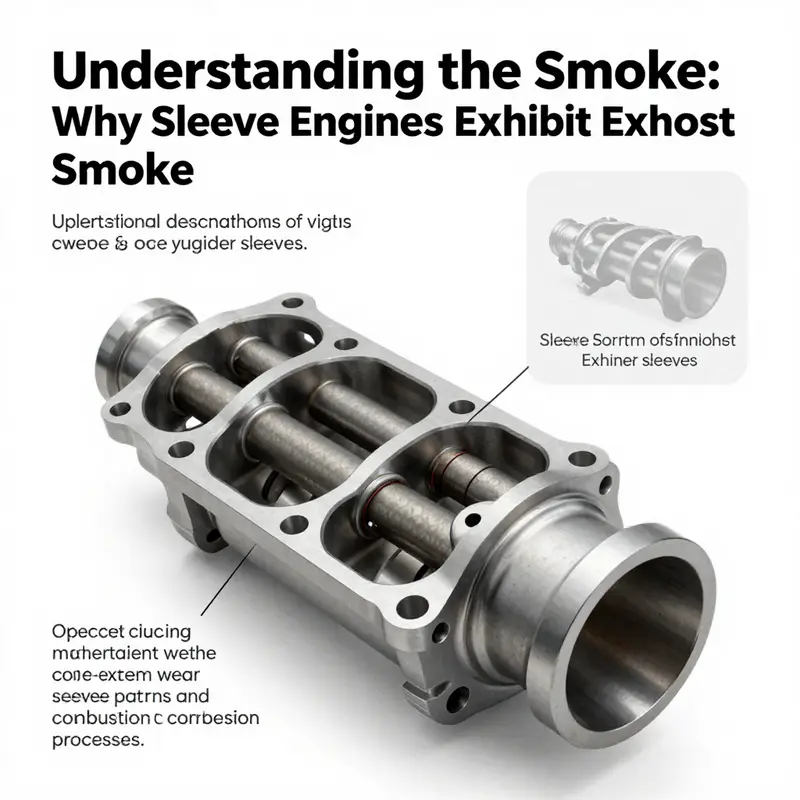
Sleeve-equipped engines can produce three distinct smoke colors, and each points to a different internal problem. Understanding what each color means helps prioritize diagnosis and repair. Blue or gray smoke usually signals oil burning. Black smoke indicates incomplete fuel combustion. White, steam-like smoke most often means coolant is reaching the combustion chamber. These color cues are invaluable because they narrow the inspection focus quickly.
Most sleeve engines use removable or pressed-in cylinder liners to restore bore finishes or adapt blocks to different bores. These sleeves create a working surface for pistons and rings, and they alter how heat and fluid passages behave inside the block. Because sleeves interface with the block, the cooling jacket, and the piston assembly, their condition affects oil control, combustion sealing, and coolant integrity. A sleeve that is loose, cracked, or misaligned changes clearances and passageways. That can let oil or coolant bypass seals, or change how rings contact the bore, so smoking often follows sleeve wear or bad installation.
Oil burning is the most frequent complaint with sleeve engines. When you see blue or gray exhaust, the first suspects are the piston rings and the sleeve walls. Rings wear or stick over time, so they fail to scrape excess oil from the sleeve surface. Micro-cracks or scoring on sleeves reduce the ring seal too. Together, these issues let oil migrate into the combustion chamber where it burns and produces visible smoke. Excessive crankcase oil, or the wrong oil viscosity, aggravates the problem. Too much oil raises internal pressures, pushing oil past worn seals and into the cylinders. Conversely, oil that thins at high temperature loses its film strength, so consumption rises and blue smoke increases under load.
Poor sleeve installation also causes oil ingestion. If a sleeve sits slightly out of square or is not fully seated, ring-to-wall contact changes along the stroke. That non-uniform contact bores thin film pockets where oil accumulates. When the engine accelerates, the trapped oil is suddenly exposed to combustion and vaporizes as smoke. Overhauls that fail to true sleeves or to follow fit tolerances often create this scenario. During assembly, correct orientation, press-fit depth, and registry with coolant passages all matter. If those procedures slip, visible symptoms follow quickly once the engine runs under load.
Black smoke points away from oil toward combustion efficiency. In diesel sleeve engines, the fuel-air ratio must be precisely balanced. A deprived air supply, faulty turbocharger, or worn injectors throws that balance off. If the turbocharger does not supply the designed air mass, combustion runs rich. Worn or clogged injectors spray fuel poorly, producing large droplets that do not vaporize or burn fully. Both cases leave unburned fuel to exit the exhaust as black soot. Heavy-duty operating conditions worsen the issue. Engines under sustained high load can temporarily produce black smoke if intake or exhaust systems are restricted, or if fuel delivery stays high relative to airflow.
White smoke is alarming because it often signals coolant in the combustion chamber. A cracked sleeve that communicates with the cooling jacket will leak coolant past the liner and into the cylinder. Head gasket failure can produce identical symptoms, which is why careful inspection is needed before replacing sleeves. The combustion of coolant generates a white cloud and deposits that can foul rings and valves over time. If the sleeve sealing against the block is compromised, coolant channels may not remain isolated. Improper sleeve seating or a damaged cooling jacket causes leakage paths that present first as intermittent white smoke and later as persistent clouding as damage progresses.
Diagnosis begins with observation and simple tests. A cylinder-specific compression test or leak-down will reveal sealing losses. Blue smoke likely correlates with low ring sealing and increased blow-by. Black smoke appears alongside rich-running conditions, low boost pressure, or injector anomalies. White smoke often accompanies coolant loss, rising engine temperature, or milky oil. Inspecting oil for contamination is a quick check: emulsified oil suggests coolant mixing, while a deep oil hue with burned scent suggests heavy oil burning. A borescope inspection through the spark plug or injector port offers a direct look at sleeve walls, ring condition, and carbon buildup, often revealing scratches, scoring, or cracked liners.
When sleeves are at fault, repair options vary. If wear is moderate and the sleeve is a dry type, re-honing and new rings can restore sealing. Severe wear, cracked liners, or corrosion of the sleeve face demands removal and replacement. Correct removal requires following manufacturer fitment specifications to avoid distorting the block. Wet sleeves, which contact coolant directly, need particular attention to cooling jacket tolerances and seal surfaces when installed. Proper installation restores coolant isolation and bore concentricity. Any repair should include verifying oil control rings, ring end gaps, and piston-to-wall clearances matched to the new sleeve.
Preventing smoke in sleeve engines hinges on maintenance and assembly discipline. Regular oil and filter changes keep contaminants and acidic byproducts low, protecting both rings and sleeves. Monitoring oil level prevents overfill scenarios that can force oil past rings. Air intake and turbocharger health should be checked under load to avoid black smoke. Fuel system maintenance, including injector service and fuel filtration, reduces soot from poor atomization. During rebuilds, insist on correct sleeve heating and cooling procedures, precise seating, and proper torque sequencing to maintain bore geometry. Use certified sleeves and match tolerances for the engine family to preserve thermal and mechanical stability.
Thermal behavior deserves emphasis because sleeves alter heat flow. A sleeve can change the local expansion rates between piston and bore. If thermal management is ignored, cylinder clearance changes unevenly under load, leading to ring gap variations and temporary loss of seal. That increases oil consumption and smoky exhaust. Engine designs that specify specific sleeve materials, wall thicknesses, or cooling jacket spacing do so to control this behavior. Deviating from those specifications risks misalignment, poor heat dissipation, and premature wear.
A measured, methodical approach brings smoky sleeve engines back to reliable function. Use color as a diagnostic shorthand: blue equals oil, black equals fuel, white equals coolant. Then proceed through compression testing, borescope inspection, oil analysis, and system checks for turbo and fuel delivery. When sleeves require intervention, restore proper seating, fit, and cooling integrity. With routine maintenance and correct assembly, sleeve-equipped engines rarely return to chronic smoking. For a concise primer on sleeve basics, see this discussion of what engine sleeves are and how they work: what are engine sleeves.
Further technical reference on sleeve standards and maintenance practices can guide rebuild decisions. Consult the industry sleeve guide for material properties, wear resistance, and installation tolerances to match repair methods to the engine design. https://www.mansystems.com/engineering/cylinder-sleeve-guide
Guarding the Sleeve: Preventive Strategies to Halt Smoke in Cylinder-Sleeve Engines
Smoke from a sleeve-equipped engine is not merely a nuisance; it is a diagnostic signal that the balance between wear, lubrication, cooling, and combustion has shifted. In engines that use cylinder sleeves, the wall between lubrication and combustion is delicate. Sleeves are chosen to enable high compression ratios and turbocharging, but that design also raises the stakes for maintenance. When smoke appears, it often indicates one or more subsystems are out of harmony. The most common colors—blue, black, and white—each point toward distinct, treatable pathways. Understanding these pathways is the first step in preventing recurring smoking and the more serious damage that can follow if smoke is ignored. To grasp the preventive mindset, it helps to keep a mental map of how sleeves operate. A sleeve acts as a replaceable liner inside the engine block. The piston rings ride against its bore, scraping oil off the walls and sealing combustion. When everything is aligned, the rings ride cleanly, oil control is precise, and the cooling jacket around the sleeve maintains a stable thermal envelope. When this balance is disturbed, oil can slip into the combustion chamber, fuel can fail to burn completely, or coolant can breach the chamber. Each disruption manifests as smoke, with distinct colors guiding the diagnosis. For a foundational view of engine sleeves, it helps to start from the basics: What are engine sleeves. See the overview here: What are engine sleeves.
Blue or gray smoke, the most common in sleeve engines, usually arises when oil finds its way into the combustion chamber. That path can originate in worn or damaged sleeves, mis-seated or damaged piston rings, or misalignment during installation. Even a sleeve that seems to sit correctly can create a marginal gap if the seating surface is compromised or if the sleeve’s wall geometry has altered due to wear. The seal between the piston rings and the sleeve wall is where the magic happens—oil is meant to cling to the walls and be scraped away by rings, not burn in the chamber. When wear exceeds the tolerance, oil begins to court combustion, and the exhaust shows a blue-gray plume. Preventive measures here start with rigorous overhauls and careful verification of sleeve condition. During rebuilds, technicians measure wall thickness, assess ring land integrity, and check ring end gaps. The goal is not only to replace worn components but to restore the original geometry that ensures that the rings can peel oil away from the walls without allowing it to slip past and burn. Oil level and oil quality also play a critical role. Too much oil in the crankcase can overwhelm the system and push oil into the combustion zone. Using the correct viscosity and monitoring oil condition helps keep the boundary between lubrication and combustion clean. The maintenance plan should align with a culture of regular inspection. In engines using cylinder sleeves designed for high compression and turbocharging, monitoring wear is essential because the combination amplifies heat and mechanical stress. A well-documented guide emphasizes that improved wear resistance and reduced cylinder wall erosion are benefits of modern MAN cylinder sleeves, but these gains come with a demand for precise maintenance protocols that monitor ring and sleeve integrity. A preventive mindset should thus include scheduled ring seat inspections, sleeve seating verification, and strict adherence to installation tolerances. Moreover, oil control is not a one-time fix. It requires ongoing attention to oil quality, filtration efficiency, and proper oil level management. A small change in oil viscosity or contamination level can alter the oil film behavior inside the bore, nudging the system toward leak paths that increase blue smoke.
Black smoke signals incomplete combustion, often a byproduct of air-fuel imbalance rather than lubrication alone. In diesel-sleeve engines, turbocharging raises the challenge: when turbo performance decays or lags, the engine may run richer than the combustion chamber can handle. The result is excess fuel that the available air cannot burn completely, producing visible black smoke. The preventive path here focuses on ensuring air supply keeps pace with fuel delivery. Turbochargers must maintain clean, unobstructed intake paths, efficient bearing systems, and responsive wastegate or variable geometry controls. Clogged or sluggish turbos reduce airflow, tipping the mixture toward rich combustion. Injectors are the other common culprits. When injector nozzles clog or fail to spray correctly, they can flood a cylinder with fuel or create uneven fuel distribution among cylinders. In a sleeve-equipped engine, irregular fuel bursts can overwhelm the rings’ ability to separate oil from the burn, contributing to soot-laden exhaust. Regular injector testing, calibration, and timely cleaning or replacement are critical preventive steps. In addition, the engine’s operating regime matters. Repeatedly running heavy loads for extended periods can push the fuel system past its optimal operating window, resulting in a short-lived but telling surge of black smoke. The preventive takeaway is clear: maintain clean air pathways, ensure precise fuel delivery, and avoid chronic overloading. When combined with a well-maintained turbo, healthy injectors, and good oil management, the risk of persistent black smoke drops significantly. The science behind these relationships is not exotic; it rests on balancing mass air flow, fuel delivery, and combustion efficiency—an equilibrium that is especially delicate in high-compression, turbocharged sleeves.
White smoke, which resembles steam, usually means coolant has found its way into the combustion chamber. In sleeve engines this is most often linked to a cracked sleeve or, less commonly, a failed cooling jacket seal around the sleeve, allowing coolant to bypass the intended cooling path and enter the combustion space. A head gasket failure can also mimic white smoke by letting coolant leak into cylinders. When coolant burns, it creates a white vapor that is readily mistaken for steam rather than a true exhaust contaminant. Preventive measures here hinge on protecting the cooling loop and the integrity of the sleeve seating. Proper sleeve installation is crucial; if a sleeve sits out of true alignment or if the cooling jacket around the sleeve is compromised, coolant flow can be disrupted. Regular dye-penetrant or leak tests of the cooling system, careful inspection of the sleeve seating surface, and verification of gasket integrity during rebuilds form the core preventive approach. In engines with thick-wall sleeves intended for compromised block integrity, as some premium sleeves are designed to handle, the cooling jacket geometry must be preserved by design. That precision helps prevent coolant leakage paths. Maintaining a robust cooling system—radiators, pumps, thermostats, and intercoolers where present—also reduces the thermal stress that can crack sleeves or warp seating surfaces. The research sources emphasize that sleeve geometry and cooling jacket spacing are critical to performance; when those design aspects are respected, the engine handles high combustion pressures without introducing coolant into the chamber. Yet any deviation due to wear, improper seating, or subpar gasket integrity can create the white-smoke signal that signals a cooling breach and potential sleeve path issues.
A preventive culture for sleeve engines must blend diagnostic vigilance with disciplined maintenance. Regular engine overhauls provide the most reliable opportunity to assess the sleeve’s condition alongside the rings and seating surfaces. The practical aim is to restore the original tolerances that keep the compression, lubrication, and cooling systems in quiet balance. The recommended actions are straightforward in concept and demanding in execution: precisely measure bore wear, confirm sleeve height and alignment, verify piston ring gaps and end gaps, confirm that oil channels remain clear, and ensure that the cooling jacket around the sleeve remains intact and properly sealed. The broader maintenance program should also include oil and fuel system health checks, because dirty fuel injectors or degraded turbo performance can quickly convert a well-built sleeve into a smoking engine if the other supports are not in place. The goal is not only to stop current smoking but to prevent its return by addressing root causes before they snowball into major damage.
In practice, the preventive approach reads like a continuous diagnostic loop. Observe exhaust color during steady-state and transitional operation. If blue smoke appears during startup, focus attention on ring sealing and sleeve wear; if black smoke persists under load, inspect the turbo and injectors; if white smoke appears during warmup or under pressure, verify coolant paths around the sleeve and the integrity of cooling-jacket seals. Documentation matters as much as diagnostics. Record oil level and condition, track fuel quality, and log operating temperatures and boost pressure. These data points create a pattern that helps technicians distinguish transient anomalies from systemic wear. The philosophy is simple: sleeves are not lifetime parts, but with careful attention, they can be managed to minimize the likelihood of smoke and protect the engine’s health over time. The best practice is to integrate sleeve care into the standard overhaul cycle rather than treating smoking as an episodic fault.
The narrative here is not a call for guesswork but for disciplined, design-informed maintenance. Recognize that sleeve engines demand precise coordination among ring sealing, sleeve seating, lubrication, air and fuel delivery, and cooling. Regular inspection of cylinder sleeves and piston rings during overhauls, ensuring correct installation and alignment, monitoring oil level and viscosity, and promptly addressing turbocharger and injector performance all contribute to a preventive trajectory. If a vehicle or vessel operates in demanding service, the stakes rise: early diagnosis can prevent the cascade of damage that smoking can herald. In the end, the goal is not merely to stop smoke in the short term but to preserve cylinder integrity and engine longevity by maintaining the delicate balance that sleeve architecture requires. For a condensed primer on sleeve fundamentals, consider taking a deeper look at the engine-sleeve overview linked above, which frames the relationship between sleeves, high compression, and turbocharging.
External reference: https://www.mansystems.com/engineering/cylinder-sleeve-guide
Final thoughts
Understanding the causes of smoke in sleeve engines is crucial for maintaining performance and reliability. With insights into oil burning, fuel combustion, and coolant leaks, motorcycle and auto owners can take proactive steps to mitigate these issues. Regular maintenance and prompt identification of problems ensure that engines operate efficiently and safely, extending their lifespan and enhancing their performance. As stakeholders in the automotive and motorcycle industries, staying informed about these technical aspects not only benefits individual vehicles but also contributes to greater industry standards and practices.