
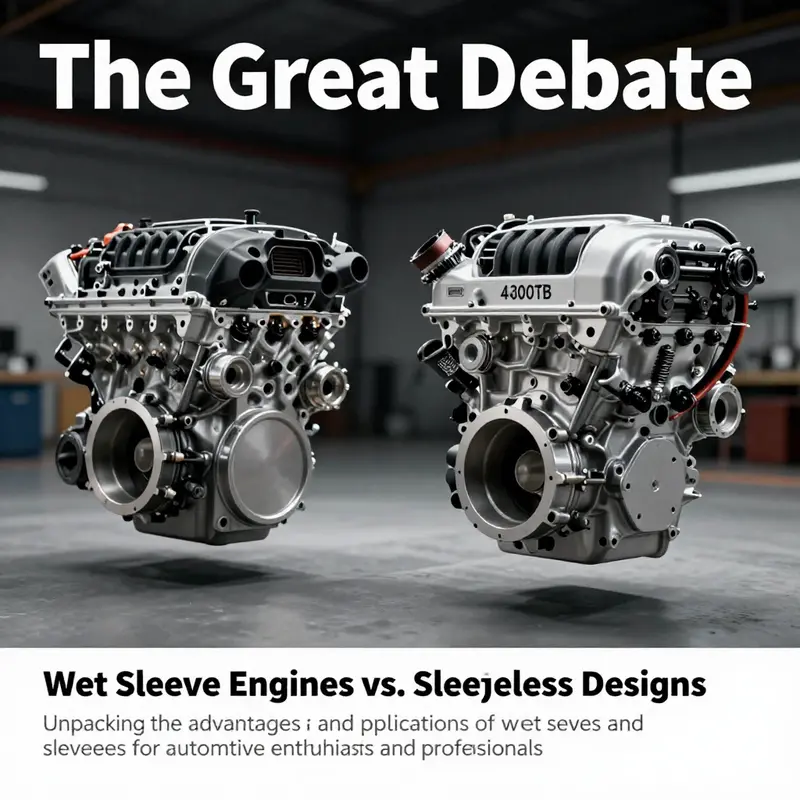
In the ever-evolving automotive landscape, the choice between wet sleeve and sleeveless engines has become crucial for motorcycle owners, auto enthusiasts, and industry professionals. Understanding the fundamental differences can shape buying decisions and influence performance across various applications. This article delves into five key areas: the specific advantages of wet sleeve engines, their superior thermal management, economic considerations for manufacturers and consumers, durability and repairability aspects, and the suitability of each design based on specific use cases. By the end, readers will be equipped with a clear perspective on which engine design meets their needs best.
null
null
Wet Sleeves vs Sleeveless Blocks: Trade-offs in Cylinder Design
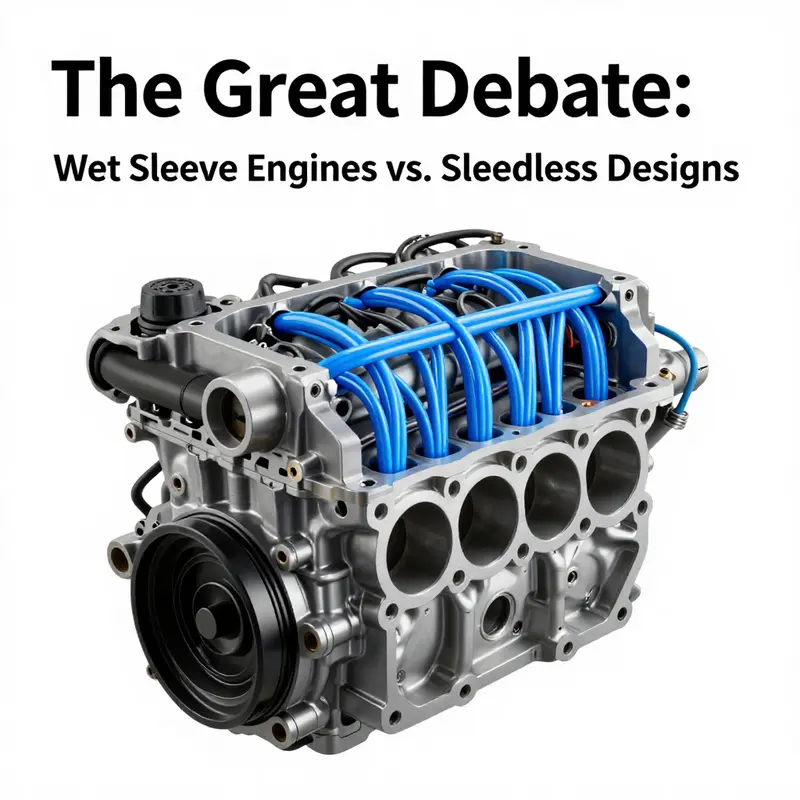
A concise comparison of wet sleeves and sleeveless engine blocks. Wet sleeves provide direct heat transfer via a replaceable liner, enabling more uniform cylinder temperatures and easier refurbishment. Sleeveless blocks reduce part count and weight, potentially lowering manufacturing costs but relying more on bore surface integrity and block material for wear resistance. The choice depends on duty cycle, thermal load, maintenance strategy, and cost targets. Wet sleeves suit heavy-duty, high-temperature applications with long life, while sleeveless designs align with mass-market production and weight-sensitive goals. Designers balance heat transfer, wear tolerance, production costs, and serviceability to select the approach best suited for the intended lifecycle.
null
null
Durability by Design: Why Wet Sleeves Outlast Sleeveless Blocks in Demanding Engines
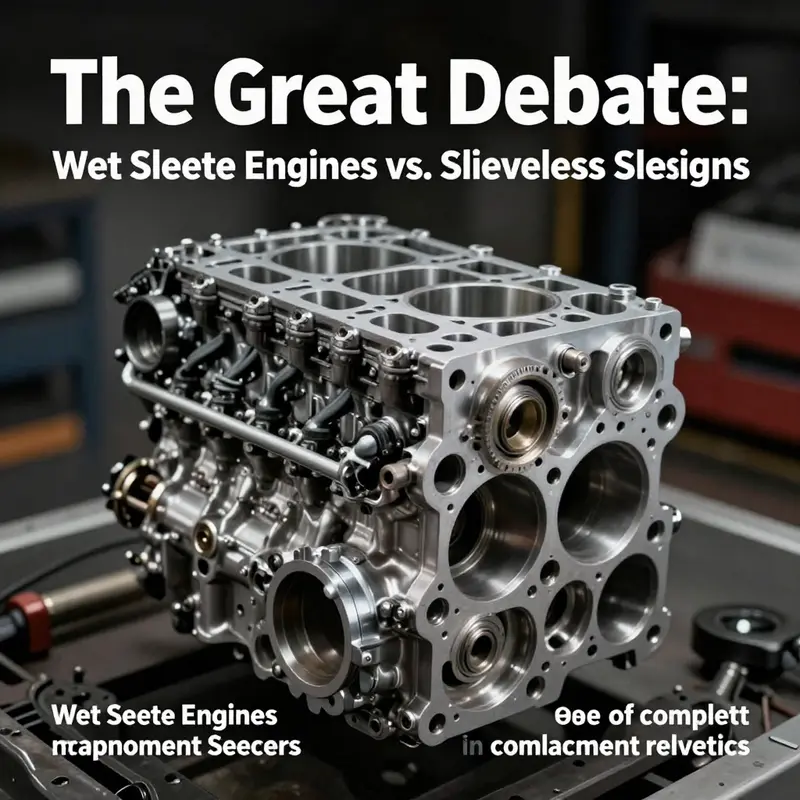
When engineers choose between a wet sleeve and a solid, sleeveless block, they are not debating novelty. They are weighing how heat moves, how wear is distributed, and how maintenance will unfold across years of operation. The decision cascades into materials, casting or forging processes, and the tempo of a machine life—from a cold-start idle to a sustained high-speed pull. In the end, durability and repairability hinge on one simple truth: the cylinder bore is both a wear surface and a heat sink. How well it handles that job determines whether a machine shrugs off thermal fatigue or wobbles under repeated loading. This chapter explores that design crossroads with a focus on durability and repairability, revealing why wet sleeves often become the preferred choice in demanding contexts while sleeveless blocks offer advantages in mass production and efficiency when the duty cycle remains moderate.
Wet sleeves bring a dedicated solution to a common challenge: keeping the bore cool under strain. The key advantage is direct contact with engine coolant. Because the sleeve sits inside the block and the coolant flows around it, heat can be carried away quickly from the bore, reducing the likelihood of hot spots and thermal gradients that promote distortion and wear. In engines that routinely work hard—diesels, heavy haulers, or equipment that runs continuous cycles—the ability to maintain a stable temperature across cylinders translates into longer service intervals and more predictable power delivery. The coolant-lubricated interface acts as a thermal regulator, and that regulation is not a cosmetic benefit. It directly affects endurance, fuel efficiency, and the engine’s ability to sustain high-output operation without compromising longevity. In practice, the design also supports a practical form of modularity: if a cylinder wears or is damaged, a new liner can be installed without pulling the entire block from service. This modularity reduces repair time and cost, especially on engines that accumulate thousands of hours between major overhauls. A liner can be replaced, the bore rehoned to spec, and the engine returned to service with far less downtime than a full block replacement would require. Engineers also have flexibility in material selection for the liner itself. Cast iron liners, renowned for wear resistance, can be paired with a lighter aluminum block, delivering a favorable balance of durability and weight. The result is a robust, serviceable architecture that can be tuned for specific environmental or use-case demands. When fleets depend on consistent uptime, the ability to address wear on a cylinder level rather than the entire engine becomes a decisive capability.
In contrast, sleepless or integral bore designs emphasize simplicity and weight savings. Fewer parts mean fewer potential leak paths and often a cleaner manufacturing flow. The absence of a separate liner reduces the total part count, which can lower production time and initial costs. A direct metal-to-metal interface can, in well-engineered cases, provide excellent thermal conduction from the combustion chamber into the block itself. If the block is manufactured from a material with high thermal conductivity and the bore is finished to a precise, smooth diameter, heat can spread evenly and quickly away from the hot zone. The concept aligns with the goals of mass-market engines: affordability, lighter components, and fewer potential failure points that arise from joints and seals. However, the flip side is perceptible. The bore must endure the same piston movement and wear without a readily replaceable surface. Any meaningful bore wear usually carries heavier repair consequences—the entire block or substantial machining becomes necessary rather than a targeted sleeve swap. Downtime may rise because the repair path is more invasive, and the cost structure shifts toward restoring the block itself rather than de-slivering a worn cylinder.
The practical implications of these differences show up in real-world duty cycles. In heavy-duty operations—construction, mining, long-haul trucking, or maritime work—the engine faces sustained high temperatures and frequent peak loads. Wet sleeves excel here because the coolant pathway controls thermal stress and keeps the bore within safe limits longer. When a wear issue arises, technicians can sleeve a single cylinder, bring that bore back to spec, and keep the rest of the engine in service. The ability to replace one wear surface instead of the entire block translates into lower maintenance bills, reduced downtime, and a serviceability consistent with fleets that cannot tolerate prolonged outages. The modular repair approach also allows for strategic optimization: if wear is more pronounced in a subset of cylinders due to uneven cooling or fuel distribution, targeted sleeving can restore uniform performance without a wholesale engine rebuild. Materials selection further supports this strategy. The liner can be tailored to resist scuffing, corrosion, and abrasive wear under the engine’s specific fuel, lubricant, and operating temperature. The marriage of liner material and coolant design becomes a crucial lever for durability and lifecycle cost. Conversely, sleeveless designs can shine where production speed and economy are paramount. In compact, high-volume applications intended for reliable daily transport and reasonable fuel efficiency, the absence of liners reduces weight and part count, streamlining assembly lines and enabling lower upfront costs. The block itself must then be engineered with a bore surface finish and coating strategies that compensate for the lack of a separate liner, ensuring that wear resistance remains high and that the bore stays round and smooth for the engine’s lifetime. Precision machining, surface finishing, and material selection become the heart of the sleeveless approach, demanding tight tolerances and robust quality control at scale. The challenge is to achieve the same predictable wear characteristics without a modular sleeve, which can be a meaningful design and manufacturing hurdle.
From a design perspective, the decision also involves sealing dynamics and coolant management. Wet sleeves introduce additional sealing interfaces where coolant must be kept from entering the combustion chamber and from leaking past the liner into lubrication pathways. These seals require meticulous design and assembly practices, but the payoff is a known and controllable leakage path with a repairable surface. In sleeveless designs, the emphasis shifts toward sealing integrity within a single, integrated bore and ensuring the bore finish remains consistent under thermal cycling. Either path demands a careful balance of tolerances, lubrication strategies, and reliable materials to avoid rapid wear or leakage. The choice often reflects a broader product strategy: if a manufacturer’s service network thrives on modular maintenance and rapid turnaround, a wet-sleeve pathway aligns with that ecosystem. If the emphasis is on rapid production, lightweight design, and cost containment, a sleeveless architecture may be favored, provided the bore life is engineered to endure without a liner under the expected duty.
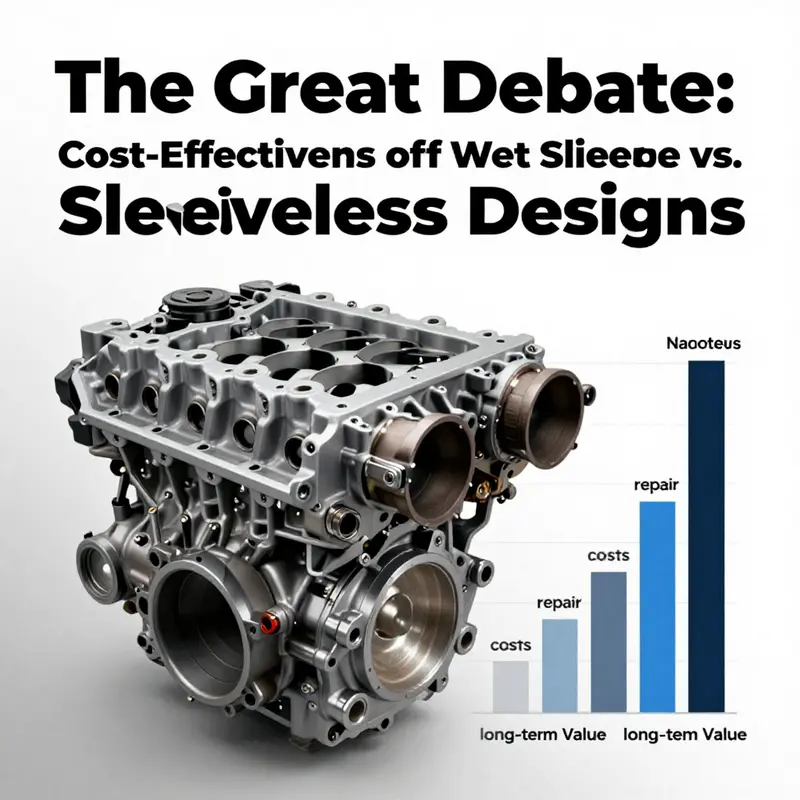
The central takeaway is not simply which path wears better in isolation, but which path aligns with the engine’s intended life, the expected maintenance cadence, and the value placed on uptime. Wet sleeves offer clear advantages when durability and repairability are paramount. They permit targeted, affordable maintenance and better thermal management in demanding environments, reducing the risk of catastrophic bore failure under sustained load. Sleeveless blocks can be compelling when production costs, weight, and assembly speed dominate the equation, and when the engine’s operating profile stays within bounds that the bore surface can sustain with high precision. For engineers and fleet managers, the optimal choice emerges from a holistic view of duty cycles, climate variability, fuel and lubricant choices, and the capacity of the maintenance network to perform the needed interventions. The reality is that there is no universal winner; instead, there is a best-fit answer tailored to the engine’s life story.
For readers who want to see how modern engines balance those principles, consider the basic description of sleeves as the replaceable wear surfaces that sit inside the block, contrasted with the integrated bore that forms part of the block itself. This distinction shapes not only repair options but also how manufacturers approach manufacturing tolerances, quality control, and lifecycle costs. For a concise primer, you can explore a resource that defines sleeves and their functions: What are engine sleeves?. That primer helps anchor the discussion in practical terms, bridging theory and workshop realities.
Ultimately, the choice is not a matter of a single metric but a composite of heat management, wear tolerance, repairability, and total cost of ownership over the engine’s life. Wet sleeves deliver dependable cooling and flexibility for repairs, which matters when engines encounter relentless loads, variable climates, or long service intervals. Sleeveless blocks shine where production speed, weight, and upfront cost define the product’s value. In the spectrum of engine design, the wet-sleeve solution is the safer bet for durability when the engine must hold up under harsh conditions; the sleeveless path is the leaner bet when the design must scale, cheapen, and simplify. In the end, for remotely demanding or long-life applications, wet sleeves reveal themselves as a prudent investment in thermal control and repairability. For further technical insight into cylinder sleeve design and performance, see the detailed discussion at https://www.engineerexcellence.com/nissan-td27-cylinder-sleeves/.
null
null
Final thoughts
Ultimately, the decision between wet sleeve and sleeveless engines revolves around specific requirements, such as performance, cost, and expected engine life. While wet sleeve engines offer considerable advantages in thermal management and extendable lifespans through easier repairs, sleeveless designs present a lightweight and cost-effective alternative for lighter applications. Understanding these traits allows motorcycle and auto owners, alongside repair shops and distributors, to make informed choices that align with their performance needs and budget constraints.