
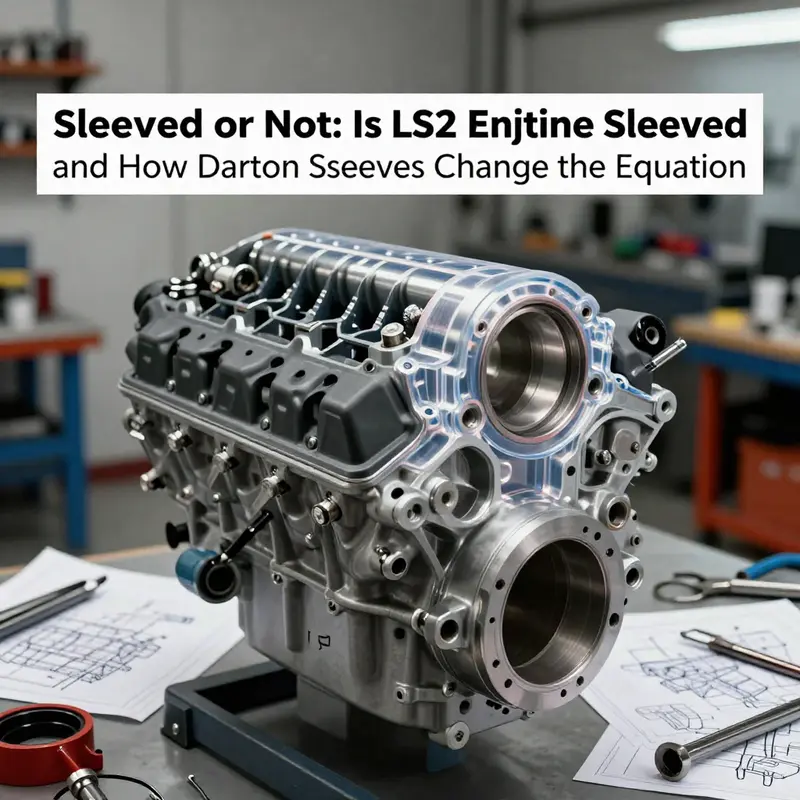
The LS2 engine sits at a crossroads for enthusiasts and professionals: its stock design favors a robust iron block with bore walls machined directly from the casting, meaning there are no factory sleeves installed. That original architecture has implications for how far you can push the engine before encountering bore wear, finicky head gasket sealing, or cylinder pressure limits under boost. For performance builds, sleeving becomes a strategic option rather than a given. In this three-part guide, you’ll learn how the stock LS2 block design influences sleeving viability, what aftermarket Darton sleeves bring to the table, and how to make practical sleeve decisions that balance cost, reliability, and power goals. The content is written with motorcycle owners, auto owners, distributors and wholesalers, and repair shops in mind, so you’ll find both a conceptual framework and actionable considerations for planning, sourcing, and executing sleeving projects. Chapter 1 sets the hardware context by detailing the stock block design and why it matters for sleeving decisions. Chapter 2 introduces Darton sleeves and the performance implications of adding sleeves to an LS2. Chapter 3 translates those insights into a pragmatic decision framework, including limitations, bore sizing, and workflow guidance for choosing the right sleeve path. Together, these chapters provide a coherent view of when sleeving makes sense, how to implement it, and what tradeoffs to expect in real-world applications.
Sleeving the LS2: A Practical Look at Block Integrity and Performance
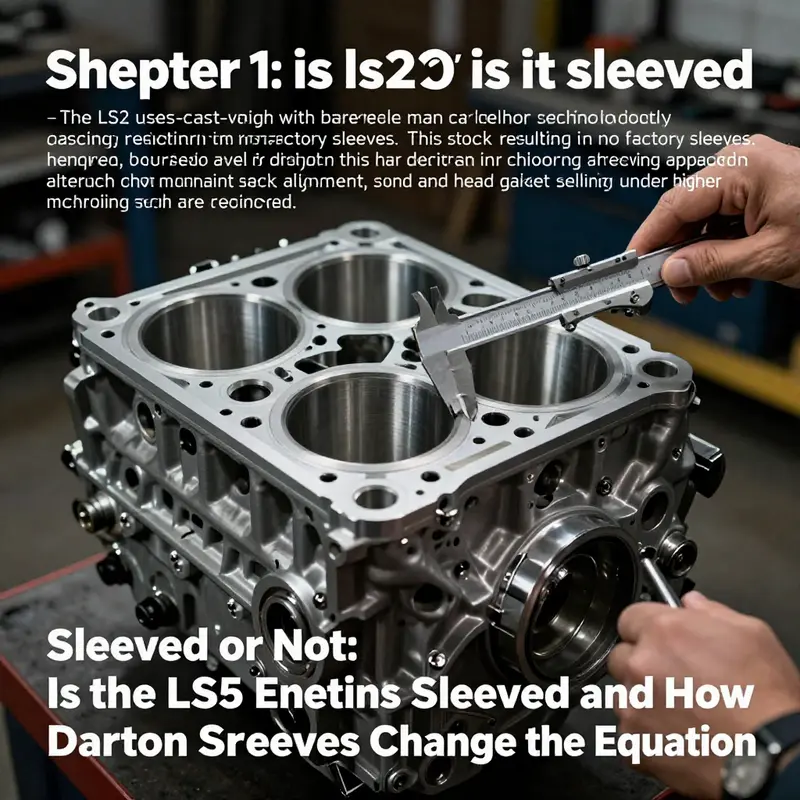
The LS2 block is a robust foundation for modern high-performance builds. It is not sleeved by factory design, so the bores are machined directly from the cast iron block. That approach keeps the architecture simple and strong, but it also means bore life and concentricity under high boost depend on preserving geometry under load. Sleeving introduces a controlled inner lining that can maintain a uniform bore surface even as cylinder pressures rise. A correctly installed sleeve acts as a dedicated bore wall while preserving the block’s core mass and heat paths. It is not a cosmetic patch; it is a precision component paired with skilled machining.
From a materials perspective, sleeves are usually high-strength ductile iron designed to resist wear, thermal expansion, and micro-welding at elevated temperatures. Typical specifications emphasize tensile strength around 110 ksi or higher, with exact values varying by alloy and supplier. The key idea is that the sleeve must be considerably tougher than the bore it replaces to keep ring seal stable under boost and rpm.
The practical benefits include improved bore stability, the possibility of running a larger bore or tighter tolerances, and a more predictable ring seal across a broader operating envelope. Sleeving does not magically add horsepower; it expands the durability envelope and supports more aggressive tuning.
Installation is a careful sequence: machine the block to accept the sleeve, press the sleeve into the bore, and hone the bore to final size. The deck surface, coolant passages, and head-gasket interface must be preserved or redesigned to fit the new geometry. Coaxiality and bore roundness are essential; slight misalignment can lead to head-gasket leaks, oiling issues, or cooling problems. Budgeting for the machining and sleeve components early in the planning process helps avoid surprises later.
For builders seeking higher performance from the LS2 without sacrificing long-term reliability, sleeving remains a well-established path within the toolkit of high-horsepower LS builds. For deeper conceptual reading on what sleeving means, see resources that frame the sleeve as a dedicated bore lining rather than a patch. External discussions emphasize that sleeve technology is about maintaining bore integrity, deck sealing, and cooling compatibility as tunes move higher.
External resource: https://en.wikipedia.org/wiki/Cylinder_sleeve
Sleeving the LS2 for the Next Level: Aftermarket Sleeve Solutions and Performance Considerations
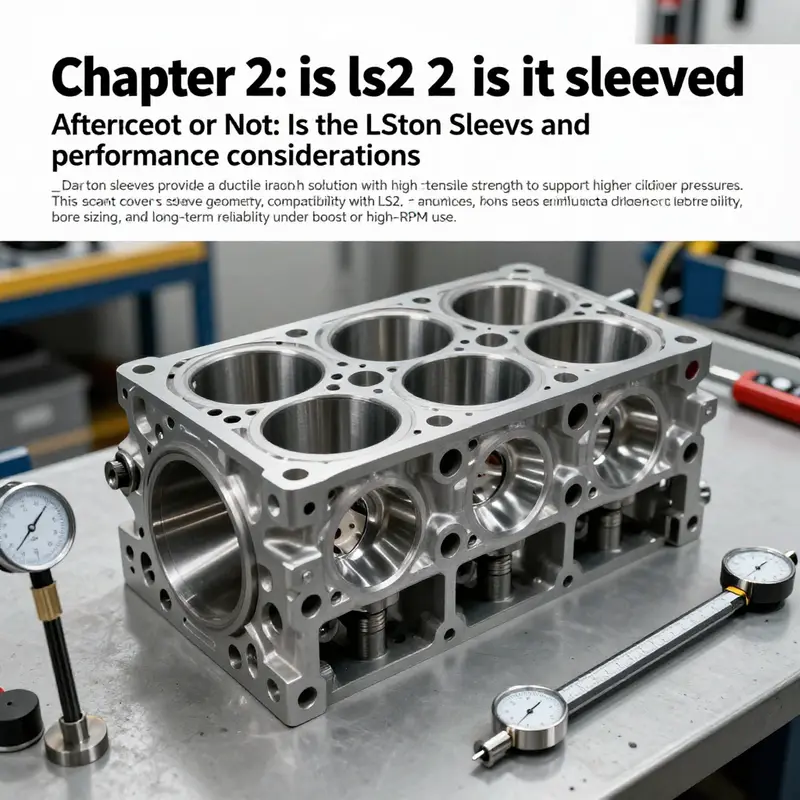
The GM LS2 block stands as a robust platform in the LS family, prized for its torque and broad compatibility with modern fueling and induction strategies. Yet like many factory designs from the mid-2000s, the LS2 block was not delivered with removable cylinder sleeves. Its cylinders are machined directly from a cast-iron bore, a choice that keeps the casting simple and rigid but can limit the long‑term durability when pushing the limits of stock bore sizes, pressures, or temperatures. In the world of high-performance builds, sleeve technology offers a strategic route to strengthen the cylinder walls, control bore wear, and open the door to bore enlargements that translate into meaningful displacement gains. This chapter takes a focused look at the concept of sleeve upgrades for the LS2, emphasizing the practical aspects of using a high-strength ductile iron sleeve with a bore around 3.875 inches, and why such a sleeve is often singled out as a viable path for enthusiasts chasing reliability and power in forced-induction or other demanding applications. It is not merely a matter of fitting a thicker wall; it is about engineering precision, material science, and the subtle balance of geometry, sealing, and heat transfer that makes a sleeved LS2 build survivable at elevated levels of stress.
To understand what sleeves do and why they matter, it helps to first picture the sleeve as a dedicated cylindrical lining that sits inside the parent block. The sleeve provides a new, stable surface for the piston rings to seal against, while also acting as a barrier to heat and wear that would otherwise erode the original bore. In practice, a sleeve must bond or fit into the block with careful tolerances, align perfectly with the crank and cam bore, and accept a precisely honed bore that matches the target piston diameter and ring package. When well executed, the result is a bore that can sustain higher cylinder pressures and reduced bore distortion, especially under the thermal and pressure loads generated by turbocharging, supercharging, or aggressive nitrous applications. While the stock LS2 is perfectly serviceable in many scenarios, the sleeve option becomes compelling when the goal shifts toward higher boost levels, tighter cylinder-wall wear resistance, and more consistent ring seal across a broader range of operating conditions.
A practical way to frame this approach is to think of the sleeve as a high-strength, ductile-iron cylinder insert designed for LS2/LS3-type blocks. The material choice matters: ductile iron combines a favorable strength-to-weight balance with enhanced toughness, making it well suited to resist the micro‑cracking and bore fatigue that can accompany repeated high-pressure cycles. A sleeve in this class is typically specified with a bore dimension around 3.875 inches, a size that unlocks meaningful displacement while remaining compatible with common piston platings and ring packs used in many performance builds. The bore size determines the ultimate piston diameter one can pair with the block, and the sleeve’s surface must be engineered to minimize friction, yet hold a tight, uniform cross-section as temperatures swing and the engine cycles through thousands of revolutions per minute. The ability to realize a larger bore without sacrificing deck integrity hinges on the sleeve’s geometry and the precision of the installation.
One of the most intriguing features of these sleeves is their installation geometry. The sleeve is designed to sit in the block with very precise concentricity and depth. Many sleeve designs incorporate a single flat on the sleeve to prevent rotation once seated. This simple feature helps ensure that the sleeve remains correctly indexed with the deck surface and the oil and coolant passages align as intended. The installation philosophy emphasizes a precision-fit approach that often requires only modest machining of the block—enough to accommodate the sleeve’s outer diameter with a clean, uniform seating surface, but not so aggressive that the block’s core integrity is compromised. That balance matters because it preserves the strength advantages of the original block while offering a durable, re-sleeved bore that can withstand enhanced service loads.
From a performance standpoint, the appeal is twofold. First, you gain a surface that is harder-wearing and better suited to stand up to higher cylinder pressures. The stronger surface reduces the risk of bore distortion and micro-welding or scuffing under hard use, especially when boost or nitrous is in the mix. Second, the bore enlargement enables larger-displacement builds without sacrificing the block’s structural envelope. In practical terms, moving from a stock bore to a 3.875-inch bore with a robust sleeve can translate into more room for piston diameter, increased compression capacity with proper piston and chamber design, and, crucially, improved heat handling under demanding duty cycles. A sleeved LS2 can be plated and protected for long-term reliability where a bare block might otherwise encounter fatigue or rapid bore wear when pushed beyond stock specifications.
Of course, with any aftermarket approach there are tradeoffs to weigh. The first is cost and time. Sleeving a block is a more involved process than a routine rebuild. It requires careful block preparation, precise sleeve installation, and meticulous honing to achieve the correct bore finish and roundness. The process demands a high level of machining accuracy, and it is essential that the deck surface, bore alignment, and sleeve seating depth are all controlled to tight tolerances. These steps help ensure that the sleeve is effectively bonded, or precisely friction-fitted, depending on the chosen technique, and that the bore remains concentric with the crank axis. Any deviation can lead to ring seal issues, uneven wear, or gasket sealing challenges that undermine reliability. Engine builders who pursue this route usually partner with machine shops experienced in sleeving methodologies to minimize risk and maximize the chance of a successful, durable outcome.
A second consideration centers on compatibility and long-term behavior. The LS2 has its own set of lubrication, cooling, and head-gasket interface requirements, and adding a sleeve changes the dynamic of those interfaces just enough to demand attention. The sleeve adds a new surface for heat transfer and ring interaction, so the heat flow path must be considered in the cooling strategy and oil film management. In forced-induction scenarios, the elevated cylinder pressures place additional demands on ring seal and bore integrity. The sleeve’s material, its finish, and its interference fit all influence how well the engine can sustain those loads without losing seal or experiencing wear acceleration. For this reason, aftermarket sleeves are typically specified with careful attention to the sleeve’s finish, the bore’s surface roughness, and the sealing interface with the piston rings. In some installations, honing and final clearance checks take on even greater importance because the sleeve’s presence introduces a slightly different bore reality than a bare cast-iron cylinder.
Another aspect worth noting is the broader design ecosystem around the sleeved block. When the bore is enlarged and a sleeve is introduced, the piston and rod combination must be recalibrated to preserve the engine’s compression ratio and quench behavior. A larger bore can alter dome volume or dish geometry, and the piston must be matched to the new bore with appropriate pin height, ring pack, and deck clearance. This is not simply about displacing more air; it is about maintaining the balance between combustion efficiency and mechanical reliability. While the sleeve provides a tougher surface, the surrounding assembly must be engineered to work in harmony with it. This means considering head gasket thickness, deck surface finish, and even the potential need for altered cam timing or fueling strategies to clear the new breathing envelope. In sum, a sleeved LS2 build is a system upgrade rather than a single component modification, and its success hinges on a coordinated approach across block preparation, cylinder installation, piston selection, and the engine’s overall breathing and cooling strategy.
From a reliability perspective, the sleeve route offers tangible upside when well executed. The high-strength ductile-iron sleeve resists common wear pathways, particularly under elevated cylinder pressures and high thermal loads. This translates into a more predictable bore geometry over time, smoother ring seal behavior across a broad operating window, and reduced risk of sleeve-locating issues such as rotation or tilting during hot, high-load cycles. The sleeve’s robust surface also provides a durable canvas for the piston rings to seal against, which is especially important when the engine operates at high rpm or under boost where the number of thermal cycles is amplified. Importantly, sleeve installations are not a guarantee against failure; they shift the failure modes. The block must still be properly cored and aligned, the sleeve must be installed with controlled tolerances, and the entire assembly after sleeving has to be finished and tested to confirm concentricity and sealing. Those who undertake sleeving typically approach the project as a disciplined engineering task, treating it as a measured risk with a well-planned verification phase—pressure testing, leak checking, and precise bore calibration are essential pillars of a successful outcome.
For readers exploring the concept in more depth, a concise overview of what engine sleeves are and how they function can be found here. This resource addresses the fundamentals of sleeves, material choices, and general installation principles that underpin sleeved cylinder designs and provide a useful foundation for more specialized LS2 discussions. engine sleeves overview
In practical terms, those pursuing an LS2 sleeved build should approach the project with a careful plan. Start with a clear performance target—whether it is sustained boost, high-rpm durability, or a combination of both—and then map the path from block preparation through bore finishing and assembly. Ensure the block is inspected for any microfractures or core shift that could compromise sleeve seating. Confirm that the bore is concentric and round to a tight tolerance, and verify that the sleeve depth is controlled so that the final bore height aligns with the piston crown height and ring package. Plan for the necessary refinishing operations: a precise hone to the final bore size, a clean, stable deck surface, and a verified seal path with the chosen head gasket. In this context, the sleeve is not a magical fix; it is a precision enabler that unlocks higher reliability under demanding conditions, provided that every step—from machining to assembly—is executed with care.
As a final note, the sleeve path is one of several strategies for upgrading the LS2 block. Other routes—such as strengthening the bottom end, upgrading the fuel and ignition systems, and optimizing the cooling circuit—work in concert with cylinder-wall enhancements to deliver a robust, reliable platform for the power levels you target. The sleeve decision should be driven by a holistic assessment of your intended use, your maintenance plan, and the level of risk you are prepared to accept in pursuit of increased output. The core takeaway is straightforward: with a well-executed sleeving program, the LS2 block can be prepared to handle larger bore sizes and higher cylinder pressures than its stock configuration would comfortably tolerate. This can translate into meaningful performance gains, but only when matched with precise installation, verified tolerances, and a disciplined approach to engine assembly and testing.
External resource: https://www.darton.com/products/300-023-sf
Chapter 3: Sleeving the LS2 — Practical Guidance, Limits, and the Sleeve-Choice Dilemma for a Modern GM V8
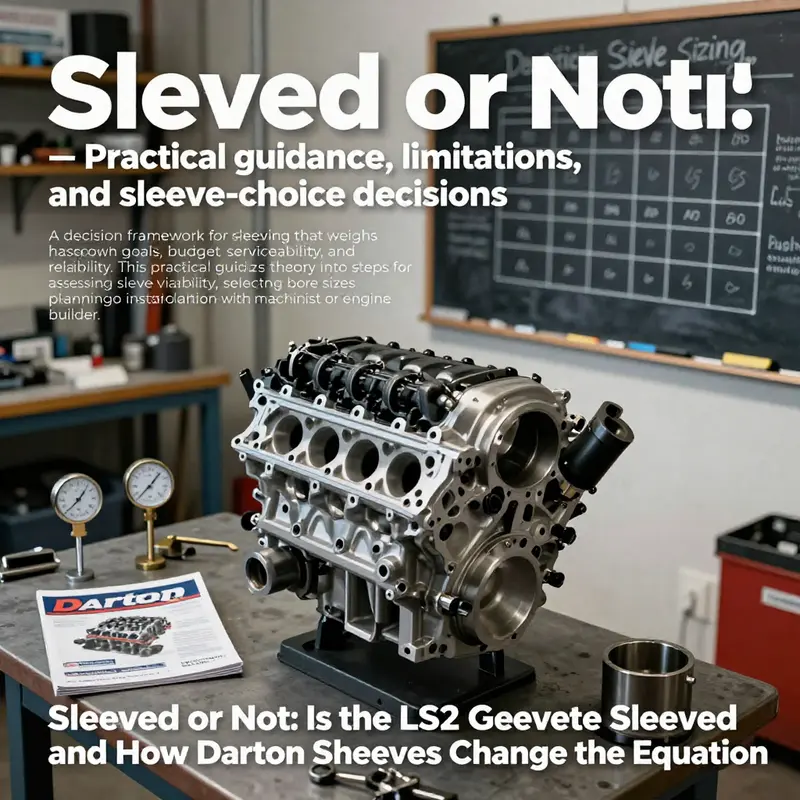
The LS2, like many engines in the GM LS family, sits at an interesting crossroads for enthusiasts who push performance beyond stock specifications. In stock form, the LS2 is built around a cast-iron block whose cylinder walls are machined directly from the casting. In other words, the bore walls are integral to the block, a setup often described in the industry as dry-sleeve construction. This configuration is compact, efficient for production, and reliable under the daily demands of a factory-spec engine. It also means there isn’t a simple, serviceable sleeve that you can swap in and out with typical maintenance tools. When sleeves are discussed in the aftermarket world, they are usually about either restoring worn cylinders or enabling specific bore dimensions in engines that were not designed to accept aftermarket sleeves at the factory. For the LS2, that distinction matters because it frames what sleeving can realistically accomplish and what compromises may accompany the process if a builder decides to pursue it.
To understand the sleeve question, one must first acknowledge the plain fact: the LS2’s original configuration does not use removable sleeves in the traditional sense. The bore walls are created through careful precision machining of a solid block cast from iron. In many discussions among builders and hobbyists, this is described as a dry-sleeve arrangement, where the sleeve is not a separate, replaceable component, but rather an integral part of the block’s internal geometry. This reality has a cascading effect on decisions related to sleeving. If the goal is simply to restore an worn or damaged bore, the practical options change. You can, in some cases, bore the cylinder and insert a sleeve as part of a larger rebuild. This is not a routine, consumer-level upgrade; it requires specialized capabilities, a precise understanding of the block’s deck surface, and the right assortment of tooling, including honing equipment and sleeve installation fixtures that can maintain the correct concentricity, wall thickness, and surface finish.
When enthusiasts begin to discuss sleeving an LS2 for performance purposes, the conversation often moves beyond wear repair into the realm of durability under higher cylinder pressures. Modern performance builds—especially those that breathe through forced induction or seek larger displacement within the same block family—demand cylinder walls that can withstand greater heat, higher pressures, and more aggressive ring-pack considerations. In this context, a bore sleeve is not merely a thin insert; it is an engineered interface designed to preserve bore geometry, manage heat, and provide a robust, predictable surface for the piston rings to seal against. The sleeves used in these scenarios are typically manufactured from high-strength steel or ductile iron, materials chosen for their hardness, wear resistance, and ability to conduct heat away from the combustion event. A standout characteristic in this realm is tensile strength. For sleeves designed to handle elevated loads, a minimum tensile strength around 110,000 psi is a common specification among reputable sources. That kind of strength helps the sleeve resist deformation under boost, detonation pressures, and the thermal cycling that accompanies hard running in high-performance contexts.
The decision to sleeve a particular LS2 block hinges on a careful assessment of several factors. The first is the condition of the existing bores. If the cylinders show wear, corrosion, or pitting that cannot be feasibly corrected through conventional honing and boring within standard oversize ranges, a sleeve can restore roundness, wall integrity, and a consistent cross-section for the rings to follow. However, this is only viable if the block walls around the bore maintain sufficient wall thickness and deck rigidity after the sleeve is installed. A sleeved bore introduces a new interface between materials, and that interface becomes the locus of heat transfer, lubrication demands, and mechanical stress. The builder must ensure that the sleeve’s outer diameter seats correctly against the block and that the sleeve’s inner diameter aligns with the piston and ring package to maintain proper sealing and oil control.
Another critical factor is the desired displacement and bore size. In many performance paths, builders seek to increase bore capacity to allow additional compression space and, in some designs, to free up space for larger pistons, which can improve breathing and combustion efficiency. A sleeve can accommodate larger bores by providing a fresh, undisturbed bore surface. Yet this benefit comes with the responsibility of managing the sleeve-to-block compatibility. The sleeve’s wall thickness must be balanced against the block’s original bore height and the available deck thickness. If the block’s deck or cam bore passages are compromised by aggressive machining, the risk of head-gasket sealing failures or oil passages becoming misaligned rises. The practical reality is that sleeving is not a costless or risk-free path; it demands a precision mindset and a willingness to accept new tolerances and manufacturing constraints.
The LS2’s present-day sleeve conversations often lead builders toward two broad avenues. One is a repair-oriented approach: when a bore is out of round or the cylinder surface is damaged beyond the point of reliable honing, a sleeved solution might be employed to bring the cylinder back to standard or slightly oversize dimensions. The other, more performance-driven path, involves selecting a sleeve that creates a stable platform for modest to moderate increases in bore diameter, enabling a refinement of the engine’s displacement and possibly allowing for enhanced cooling and ring seal under boosted conditions. In either case, the process is not plug-and-play. It requires a machinist with exacting standards, equipment calibrated to micro-level tolerances, and a plan that considers surface finish, oiling, and the sleeve’s integration with the block’s coolant passages. The machinist must guarantee that the deck surface remains true, that the sleeve’s outer diameter is concentric with the bore, and that the assembly maintains consistent ring-end gaps across the entire cylinder bank when the engine is assembled and run under load.
From a materials standpoint, the choice between steel sleeves and ductile-iron sleeves represents a trade-off between ultimate strength and thermal behavior. Steel sleeves offer superior strength and wear resistance, making them attractive for high-boost builds or engines subjected to sustained high cylinder pressures. Ductile iron, on the other hand, provides a compelling balance of strength and machinability, along with favorable friction and wear characteristics under specific lubrication regimes. In either case, the sleeve is designed to work within a broader system that includes proper oiling, coolant flow, and piston-ring technology. The goal is to ensure that the sleeve remains firmly anchored and that the heat generated by combustion can be adequately conducted away from the bore wall into the block. This is essential, because if heat concentrates at the sleeve-wall interface, it can lead to differential expansion, stress concentrations, and ultimately seam leakage or ring land damage. The successful sleeving solution, therefore, relies not only on the sleeve itself but on the holistic integration of the block, the sleeve, and the engine’s thermal management strategy.
When a builder approaches a sleeving project, the machining discipline is a defining factor. The cylinder must be bored true and perfectly round, with the bore’s finish suited to the ring material and the piston’s taper. The sleeve installation, whether it is pressed in or shrunk into place, must be performed with controlled interference and a careful approach to heat and lubrication during seating. Afterward, the bore is honed to achieve the final surface finish and crosshatch pattern required by the rings and lubrication regime. The deck surface must be preserved, and the top of the block must retain its integrity to maintain head-gasket sealing. Many builders also pay close attention to how the sleeve interacts with the block’s water jackets and oil passages; misalignment can lead to cooling inefficiencies or lubrication challenges that manifest as accelerated wear or elevated operating temperatures. All these considerations underscore that sleeving LS2 blocks is a high-skill, high-stakes undertaking that is best reserved for cases where a precise and well-supported reason exists for deviating from the factory approach.
In a broader sense, the sleeve decision is a balancing act between reliability, cost, and performance goals. If a build’s objective is a daily-driven machine with modest upgrades and a willingness to maintain high-quality lubrication and cooling, sticking with a no-sleeve approach and focusing on reliable component upgrades that respect the factory architecture can be a sound path. If, however, the project aims to push the engine into higher-power territory or to return the block from a significant wear situation with the prospect of longer-term endurance under challenging conditions, a sleeved solution becomes more attractive. The crucial point is that sleeving LS2 blocks is not an automatic upgrade; it is a specialized pathway that demands a clear rationale, a rigorous plan for surface finish and tolerances, and a confirmation that the chosen sleeve material and thickness will harmonize with the block’s geometry and the engine’s planned operating envelope.
For readers seeking a concise primer on the concept of engine sleeves, a quick reference can help establish a baseline understanding of what sleeves are, how they function, and why certain sleeve types are selected for particular applications. What are engine sleeves?
As this discussion of LS2 sleeving unfolds, it’s helpful to recognize that the landscape of aftermarket sleeves is shaped by the realities of machine shop capability, the tolerances required by modern high-performance pistons and rings, and the long-term reliability expectations for an engine that will operate under a range of temperatures and pressures. The LS2, in its stock form, benefits from a robust, well-understood architecture. The sleeving option, while viable in capable hands, introduces a level of complexity that demands careful planning and a willingness to invest in precision workmanship. When a builder weighs sleeving against other approaches—such as selecting a different block, refining the existing bore surface, or pursuing a complete displacement increase through alternative, recognized paths—the choice becomes a strategic one. The decision is driven not only by the current condition of the block but also by the envisioned operating regime, the fuel and boost strategy, and the overall balance of durability, response, and driveability that the project seeks to achieve.
In closing, the LS2 does not come from the factory with replaceable cylinder sleeves. It begins as a robust, dry-sleeve-style design whose strengths lie in production efficiency and structural stability. Sleeving is nonetheless a legitimate option for ambitious builds or restoration work, provided that the block can accommodate the process without compromising deck integrity or alignment with the engine’s lubrication and cooling systems. The choice to sleeve should be grounded in a well-considered plan, backed by precision machining, high-quality sleeve materials, and a clear understanding of how the sleeve will interact with the block under real-world operating conditions. For those who pursue this path, the payoff can be a durable, high-performance platform capable of handling higher power outputs, while still maintaining the reliability and predictability that make the LS-based platforms durable favorites in both street and race applications. This is the essence of the sleeve decision: not simply a hardware upgrade, but a carefully engineered strategy that redefines what the LS2 block can endure—and what it can become when the right sleeves meet the right build intentions. For readers who want to dive deeper into the material properties and the kinds of sleeves available for high-stress builds, the ongoing discussion continues to evolve with new tooling, new alloys, and refined installation techniques that keep the LS2 relevant in an ever-advancing performance landscape. External resources that catalog the latest specifications and options can provide the most up-to-date guidance as a project moves from concept to execution: https://www.dartonsleeves.com/products/ls2-ls3-cylinder-sleeve-3-875-bore-4-325-od
External reference for technical specifications and sleeve options related to LS2/LS3 engines: https://www.dartonsleeves.com/products/ls2-ls3-cylinder-sleeve-3-875-bore-4-325-od
Final thoughts
Sleeving the LS2 engine is not a given at the factory; it is a deliberate engineering choice driven by performance goals, durability needs, and the realities of a block with integral bore walls. The stock LS2 block design provides a solid, high-strength platform, but it also imposes constraints that sleeves can mitigate when upgrades demand higher pressures or larger bore sizes. Darton sleeves offer a proven path to enhanced bore integrity, particularly in builds that push boosted horsepower or sustained high-RPM operation. However, successful sleeving hinges on precise machining, correct sleeve sizing, competent bore preparation, and a clear understanding of how the sleeved bore interacts with head gasket sealing, coolant flow, and lubrication. For motorcycle owners, auto owners, distributors, and repair shops, the takeaway is practical: if your goals include higher power, improved reliability under load, and more aggressive bore sizing, a sleeved LS2 can be a robust option—but only with careful planning, quality parts, and skilled machine work. Use the decision framework outlined here to evaluate whether sleeving aligns with your project, budget, and long-term maintenance plan, and work with trusted machinists and sleeve providers to realize a durable, repeatable result.