
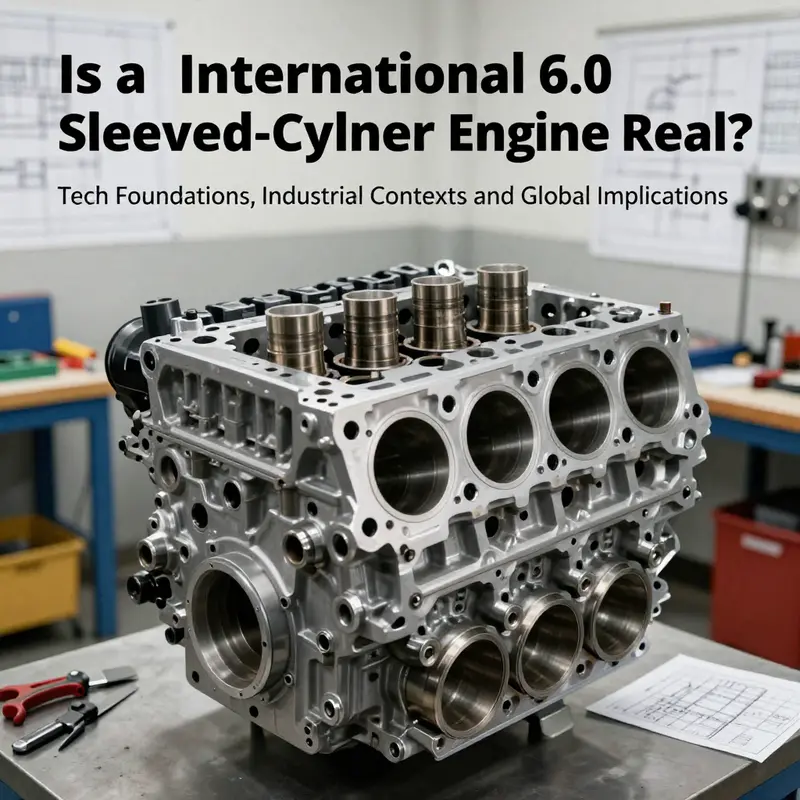
is a international 6.0 a sleeved cylinder engine is a topic that blends nameplate history with core engineering concepts. Publicly documented evidence does not reveal a formal, officially recognized model named “International 6.0 sleeved cylinder engine.” However, sleeved cylinder technology—where cylinder liners or sleeves separate the bore from the engine block—appears across many heavy‑duty and industrial engines and informs design choices, maintenance strategies, and remanufacturing workflows. The closest publicly discussed 6.0L platforms include Ford’s Power Stroke 6.0L diesel, which embodies modern high‑pressure fuel systems, EGR, and serviceable components, illustrating how 6.0L architectures can incorporate sleeve technology in practice. This article lays out three tightly integrated perspectives: (1) the technological foundations of sleeved cylinders and why they matter in 6.0L contexts, (2) a comparative view of industrial engine architectures—using the Power Stroke 6.0L as a reference point—and (3) the economic, geopolitical, and societal implications of sleeve technologies for owners, auto repair shops, and distributors. Each chapter builds toward a practical understanding of whether a true “International 6.0 sleeved cylinder engine” exists, and what sleeved cylinder design means for maintenance, sourcing, and performance in today’s market.
Imagining an International 6.0 Sleeved-Cylinder Engine: Foundations, Materials, and Enduring Power
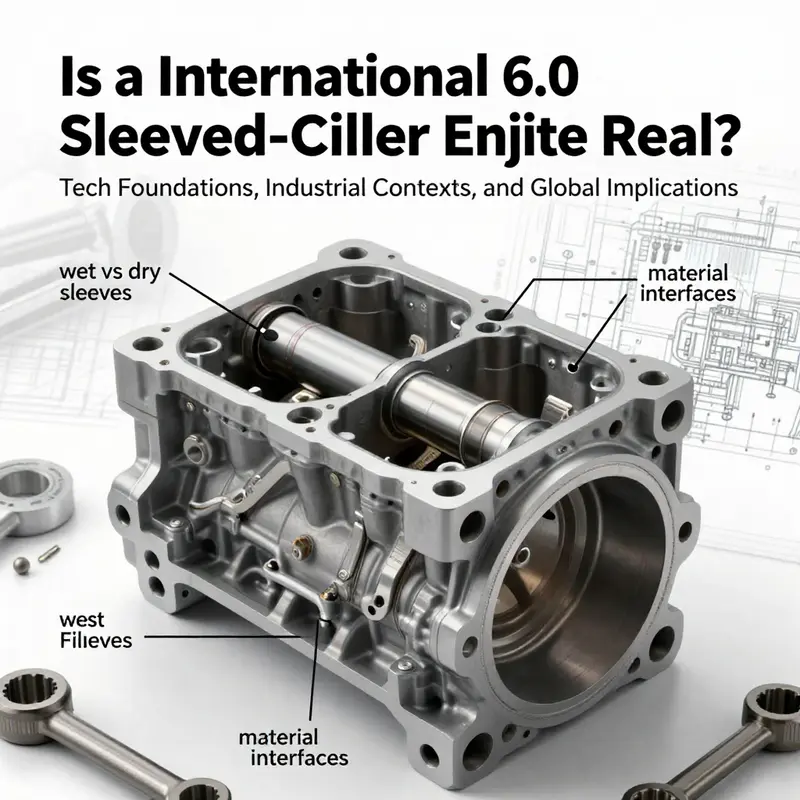
The phrase International 6.0 sleeved cylinder engine evokes a fusion of scale, durability, and a class of engineering that has grown out of the needs of heavy-duty work. To approach such an engine in a thoughtful way, it helps to begin with the most fundamental component: the cylinder liner. A sleeved cylinder, at its core, is a precisely engineered sleeve inserted into the engine block to form the inner surface of the bore where the piston travels. This liner serves as a wear-resistant surface that interacts directly with piston rings, helping to maintain sealing, compression, and smooth motion under intense thermal and mechanical loads. In a 6.0-liter displacement scenario, the cylinder bore remains a critical determinant of efficiency and longevity. The bore must strike a balance between sturdy walls capable of withstanding rapid expansion and contraction, and an inner surface that promotes low friction and predictable wear. The sleeved approach offers a modular pathway to achieve that balance, enabling repairs, material choices, and reengineering without the need to sacrifice a large, monolithic block.
The choice to integrate sleeves is not simply a matter of replacing a worn surface. It is a deliberate architectural decision that shapes the engine’s entire lifecycle. In engines designed for heavy use, liners can be manufactured from materials optimized for different roles: cast iron for wear resistance at the piston ring surface, steel for strength in the bore wall, or composite configurations that blend properties to manage heat, friction, and deformation. The compatibility between liner and block is not incidental; it rests on a precise bonding process that must endure thousands of thermal cycles and high combustion pressures. In many modern engines, the liner is not merely placed inside the block but is bonded through a robust interface that resists movement, maintains concentricity, and preserves bore geometry across the engine’s service life. The result is a foundation that keeps tolerances stable even as the engine experiences the harsh realities of high-load operation, frequent starts, and extended idling.
To understand why a 6.0-liter sleeved design might be favored in certain contexts, it helps to consider the pressures and thermal gradients that develop inside large displacement engines. A larger bore and longer stroke can generate higher peak pressures and more substantial heat flux through the cylinder walls. Sleeves offer a controlled surface that can be engineered to manage heat transfer more predictably than a single solid block in some configurations. A sleeve that is thermally optimized—perhaps through a geometry that increases surface area or a material with superior thermal conductivity—can help regulate piston temperature, reduce thermal fatigue, and maintain stable lubrication regimes. The liner may also be designed to tolerate short periods of overload without suffering long-term deformation, a characteristic that matters in fleet operations where engines frequently operate near their performance limits.
The manufacturing path for sleeved cylinders often hinges on the method by which the liner is attached to the engine block. Friction-welded cylinder liners, for example, are commonly associated with robust, high-wall-thickness configurations. The bond created by friction welding yields a durable interface that resists creep under high combustion pressures and elevated coolant temperatures. Such a bond is not only about strength; it also preserves concentricity between the bore and the crankshaft axis, a prerequisite for uniform piston travel and even wear across all cylinders. In a hypothetical International 6.0 sleeved engine, the selection of a friction-welded liner would reflect a strategy to maximize long-term reliability, especially in environments where maintenance cycles are extended and downtime can be costly. The thick-walled liner augments stiffness and resists deformation as the engine accumulates miles, while the bonding process ensures that the liner does not loosen or migrate during intense operation.
But sleeves also introduce a spectrum of maintenance considerations that must be anticipated in both design and service. The piston–cylinder liner connection is a focal point for wear and serviceability. Over time, the surface of the liner experiences wear from the piston rings, while the bonding interface can be influenced by temperature cycling and coolant chemistry. Theoretically, the concept of intergroup interchangeability—where pistons and liners from different engine sets could be mixed within specified tolerances—offers a pragmatic path to reduce downtime and simplify field service. In practice, achieving interchangeability requires tight control of bore diameter, taper, ovality, and ring groove alignment. It also demands careful lubrication planning. For heavy-duty engines, a well-managed sleeve strategy means that a worn liner in one cylinder can be replaced or re-sleeved without sacrificing the entire block. This modularity is a cornerstone of fleet maintenance philosophies that prioritize uptime and predictable maintenance budgets over the life of the vehicle.
The materials science behind sleeved cylinders is equally pivotal. A sleeve must resist galling, maintain a proper surface finish for bore sealing, and withstand corrosion and erosion from combustion byproducts. Cast iron remains a common choice for wear resistance and compatibility with a broad range of piston ring materials, while steel liners can offer higher strength and stiffness where the bore must resist deflection under high loads. The decision can hinge on the specific fuel type, combustion chamber design, and lubrication regime. In some heavy-duty applications, engineers pursue composite or layered liners that combine the best attributes of different materials. The manufacturing reality is that these liners must be produced with extraordinary precision, ensuring that the inside diameter is uniform along the entire height of the bore and across multiple cylinders. Any deviation can lead to uneven ring contact, oil consumption, or compromised sealing.
A sleeved architecture also interacts with cooling strategies in meaningful ways. The coolant jacket surrounding the liner must extract heat efficiently without creating thermal gradients that provoke distortion. In a dry-sleeve design, the liner itself forms part of the block wall and may interact with cooling in a different manner than a wet-sleeve system, where the liner is in direct contact with coolant in more extensive regions. The choice between wet and dry sleeves has implications for coolant flow paths, the ease of reconditioning when liners are replaced, and the potential for coolant-induced corrosion at the liner interface. In any case, the goal is to prevent hot spots and keep the piston’s thermal expansion within the tolerances that the rings and skirt geometry can accommodate. For a 6.0-liter engine destined for strenuous service, a carefully engineered cooling strategy becomes as essential as the liner material itself, preventing the cycle-to-cycle variability that can otherwise erode cylinder reliability.
Within the broader engine architecture, the sleeve becomes part of a larger dialogue about reliability, maintainability, and service life. The bore geometry—its diameter, roundness, and alignment with the crank axis—must be preserved to sustain consistent ring seal across thousands of heat cycles. In this sense, sleeves can be viewed as a strategic tool for extending the life of the block by providing a replaceable, high-wear surface. When a liner reaches the end of its service life or exhibits unacceptable wear, it can be re-sleeved or replaced, depending on the engine’s design and the service environment. This capability translates into reduced downtime and lower total cost of ownership for fleets that require robust, predictable performance from engines that routinely operate under heavy loads. The friction-welded, thick-walled liner design, in particular, offers a margin of resilience that aligns with the demands of long-haul or vocational use, where engines may encounter sustained high load, variable duty cycles, and limited opportunities for comprehensive servicing.
The idea of an International 6.0 sleeved engine also invites reflection on maintenance practices and the human expertise that sustains such platforms. Skilled technicians must understand how sleeves influence bore geometry, how to assess wear with precision instruments, and how to select the appropriate reconditioning strategy for the liner and piston rings. The process may involve honing the sleeve to restore crosshatch patterns and to re-establish a uniform bore surface that supports proper ring seating. It may also involve selecting compatible piston rings and ensuring that the oiling system delivers the right amount of lubrication to the liner’s interface with the piston. While modern engines employ a suite of sensors and diagnostic tools to monitor wear and heat, the enduring truth is that the workmanship surrounding sleeves remains a decisive factor in whether a machine will meet its life-cycle expectations. In a world where downtime can translate into significant financial impact, a robust sleeved-cylinder strategy offers a concrete path to reliability and steady performance even as other components age.
A final facet of this discussion concerns the public record about a specific model named as an International 6.0 sleeved engine. The available technical literature—while extensive on many engine families—does not document a widely recognized, official model with that exact designation. This absence is not a setback for understanding the concept but rather a reminder of how engineering practice evolves through a constellation of parts, processes, and configurations that may be cataloged in different ways across manufacturers and fleets. The lack of a canonical entry in public documentation invites careful interpretation: if an engine is described as “6.0 sleeved” in some contexts, it is likely a description of a design approach rather than a formal, marketed product name. In an investigative sense, this distinction matters because it shifts the focus from chasing a label to understanding the engineering choices that define sleeved-cylinder engines: the liner material, the bonding method, the cooling strategy, and the maintenance practices that sustain performance over the long haul. It also underscores the value of consulting official technical specifications for any given platform if the goal is to understand exact bore, stroke, liner type, or service intervals. For readers seeking a practical entry point into the topic of sleeving—beyond brand names—the available explainer on what engine sleeves are and how they function offers a solid foundation: What Sleeving an Engine Means.
If the broader objective is to connect this discussion to real-world engines used in heavy work, it helps to consider how sleeved cylinders support engines that must balance power, durability, and ease of maintenance. Sleeved designs have become paradigmatic in applications where engines are expected to endure long service lives with high efficiency. The modular nature of liners supports targeted maintenance: worn cylinders can be rehabilitated without a full reblock, and liners can be swapped with minimal disruption to the engine’s timing and fuel delivery systems. The technology thus anchors a philosophy of repairability and longevity that resonates with fleets facing high utilization, variable duty cycles, and the logistical constraints of maintenance at scale. In such environments, the sleeve’s role extends beyond a simple wear surface; it embodies an operational promise: that a machine designed for endurance can be serviced, reconditioned, and returned to service with confidence.
As a closing reflection, the notion of an International 6.0 sleeved-cylinder engine serves as a lens through which to examine the deeper questions engineers ask when shaping large, durable engines. What materials will endure the most cycles without deforming? How can bonding methods guarantee a life-long alignment between liner and block? Which cooling and lubrication strategies will keep the bore surface stable under continuous heat input? And how can service practices be designed to enable rapid, cost-effective overhauls without compromising core tolerances? The answers to these questions do not hinge on a single product name; they emerge from a family of decisions that collectively define an engine’s character. Sleeves are a technology that speaks to foresight—anticipating wear, valuing recoverability, and embracing modularity as a core design discipline. In the end, a sleeved 6.0-liter engine—whether or not it bears a particular label—stands as a compact testament to how precision, materials science, and maintenance culture converge to create machines capable of long, steady service in the most demanding contexts.
For a broader technical reference on the landscape of heavy-duty engine specifications and how manufacturers document these systems, see this external resource: https://www.internationaltruck.com/technical-specifications/.
Rethinking the 6.0: Industrial Realities, Sleeved Cylinders, and the Architecture Traceable Between Power Programs
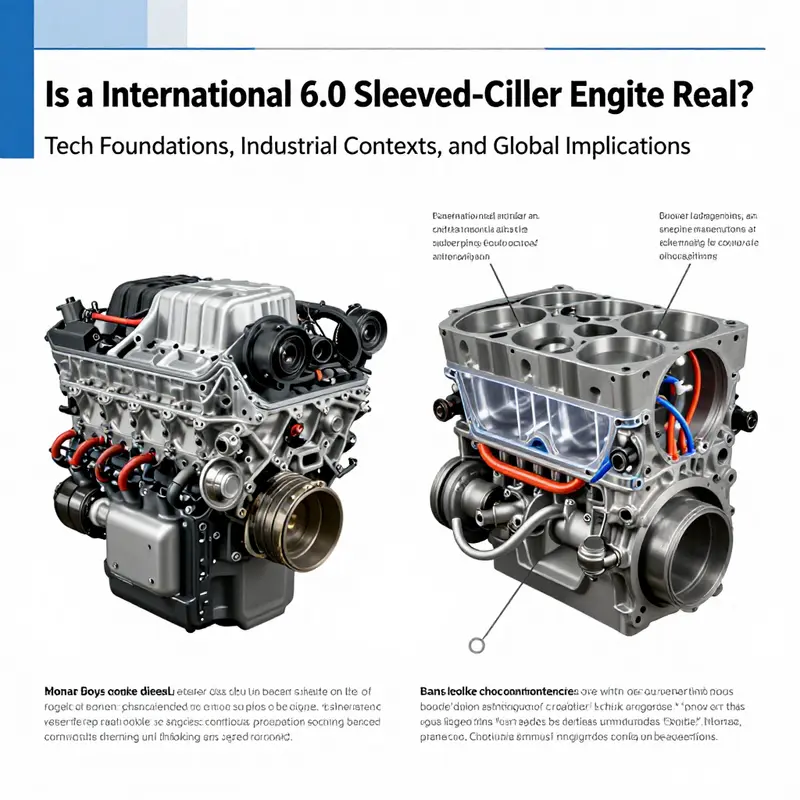
The phrase “International 6.0 sleeved cylinder engine” conspires to conjure a precise image of a big‑displacement, rugged power unit tucked into a heavy‑duty platform. In the spectrum of industrial and commercial engines, the naming conventions often blur between brands, displacement figures, and the fundamental architecture that determines service life, repairability, and reliability. The initial question—whether there exists a standardized, “International 6.0 sleeved cylinder engine”—points toward a larger, recurring theme: the tension between sleeve-based cylinder walls and integrated liners, and how that tension plays out in real‑world engines used for work, transport, and energy conversion. The most persuasive and clarifying path through this topic is to anchor the discussion in a concrete, well‑documented reference point and then extend the comparison to broader industrial practice. In this sense, the closest public reference to a “6.0” in the heavy‑duty diesel space is Ford’s Power Stroke 6.0L—not as an International product, but as a representative case study of how a large‑displacement diesel block can be conceived, built, and then experienced in service when the engine block is formed with integrated liners rather than removable sleeves. From there, a broader narrative emerges aboutSleeved versus non‑sleeved cylinder architectures, their implications for maintenance and repair, and how operators weigh a design’s trade‑offs when engines must shoulder sustained loads, demanding duty cycles, and variable climate conditions.
The Ford 6.0L Power Stroke diesel, widely deployed in heavy‑duty pickups and commercial platforms around the early 2000s, is a useful foil for understanding the practical differences between sleeved and non‑sleeved cylinder designs. The architectural heart of this engine centers on an aluminum block that houses cylinder bores precision‑machined into the block itself, with cast iron liners that are integral parts of the casting rather than separate, removable sleeves. In other words, its liners are not sleeves in the conventional sense that can be removed, bored, and replaced. This integrated liner approach supports a compact engine profile and a clean assembly that reduces the number of discrete parts that must seal and align across the bore surface. Yet it also introduces a set of reliability considerations that about a decade later would be discussed with remarkable candor in enthusiast and professional communities alike.
To fully appreciate the significance of this architecture, it helps to step back and map the design choices against the environments in which these engines operate. A sleeved cylinder is, by definition, a replaceable wall inserted into a block that can be bored out and re‑slowed or replaced as a discrete maintenance item. That fundamental modularity yields clear benefits in terms of long‑term bore repairability in harsh use cases. In industrial settings, where fleets endure high hours, extreme cycles, and the potential for debris or coolant contamination, sleeves can be inspected, exchanged, or bore‑lined with a degree of surgical precision. The sleeve itself can be selected for durability, heat resistance, or specific wear characteristics: steel sleeves for rigidity, ductile sleeves for resilience, or special alloys tailored to high‑EGR environments. With sleeves, technicians can manage wear and eccentricity without scrapping the entire block. This is a common thread in certain Caterpillar, Cummins, and other heavy‑duty platform engines where field repairability and the prospect of overhauls are historically central to fleet economics and uptime.
Against that, the pressed reality of integrated liners—like those in the 6.0L Power Stroke—has its own virtues. An integrated liner approach can reduce the overall weight and complexity of the block and can yield tighter tolerances because the liners are machined in the same process as the block itself. The result is robust bore geometry and, potentially, improved thermal contact between the bore and the cooling system, which matters as engines push the envelope of power, torque, and efficiency. In practice, however, the same characteristics that raise confidence in production tolerances can also magnify vulnerability when failures arise. The 6.0L platform has earned a reputation for certain failure modes—head gasket challenges and EGR cooler leaks among the most cited—issues that have a lot to do with how heat, combustion byproducts, and coolant circuits interact under sustained stress. The combination of an aluminum block with cast iron liners creates a pairing of materials with different coefficients of thermal expansion. When operating at elevated temperatures and under irregular thermal cycles, this mismatch—though carefully managed during design—can become a vector for seal fatigue, gasket creep, or leak paths. In environments where coolant or oil contamination enters the interface, the effects can propagate and demand costly repairs.
To readers steeped in practical maintenance or fleet management, the distinction between “sleeved” and “integrated liner” engines is not merely academic. It translates into real differences in how engines are serviced, how easily cylinders can be restored, and how downtime translates into business costs. Sleeved engines offer a straightforward path to re‑bore and re‑sleeve—an operation that can restore cylinder finish and pressure integrity without overhauling the block itself. This modularity matters with a fleet that expects high reliability, predictable maintenance windows, and repair work that can be scheduled with minimal disruption. In contrast, an integrated liner design often ties the repair paradigm to block‑level work. If cylinder bore damage is extensive or if the liner surface has suffered cracks or heat‑related distortion, the practical remedy is typically more invasive: substantial machining, or in some cases, replacing the block or the entire engine assembly. The cost calculus then shifts from a single cylinder bore repair to a broader assessment of the engine’s remaining life, overhaul cost, and the availability of replacement blocks or remanufactured assemblies.
This narrative is not to cast one approach as universally superior. Instead, it is to highlight how engine architects and fleet operators balance trading off ease of field service against compactness, weight, and thermal efficiency. The integrated liner design can deliver tighter tolerances and a lighter, stiffer block that supports high power density—an attractive combination when weight, packaging, and center of gravity matter. On the other hand, sleeved designs preserve a highly modular repair pathway, offering the possibility of targeted replacements that can extend a platform’s life in demanding service conditions. The decision depends on the expected duty cycle, the availability of skilled technicians, the ease of executing a major overhaul in the field or shop, and the total cost of ownership over the engine’s lifecycle.
Scholars and practitioners alike have long noted that the choice of cylinder wall architecture is a fundamental determinant of an engine’s behavior under heat, pressure, and wear. In the discussion of a 6.0‑liter Diesel’s architecture, the integrated liner approach places the engine in a family of blocks where the cylinder walls are a fixed, integral part of the casting, requiring precise alignment and robust sealing strategies at the interfaces. The cylinder walls themselves are typically formed from cast iron and are then integrated with the aluminum block to achieve a blend of strength and weight efficiency. This arrangement reduces the number of discrete interfaces that must seal during assembly, potentially increasing production reliability and reducing leakage paths at assembly time. Yet the same fixed interface can become a focal point for gasket and coolant interaction problems once the engine experiences heavy heat cycles and unexpected contaminants—scenarios that are not unfamiliar in real‑world trucking or industrial duty cycles.
In the broader landscape, many heavy‑duty engines in heavy trucks and industrial machinery still rely on classical sleeve technologies. These sleeves can be swapped in and out as wear dictates, a process that can be completed with a well‑equipped workshop. Sleeves offer a degree of independence between the bore surface and the block’s structural elements. If the bore wall shows wear, technicians can re‑line the bore by replacing sleeves, which can restore the intended bore finish and compression characteristics. This modular repair concept is part of a lineage of engine maintenance that predates modern electronic fuel management and high‑pressure common‑rail injection. Although a sleever approach may impose a slightly greater engine height or a marginally longer block, the practical upshot is a repairable cylinder surface with known, replacable components. In a market where uptime and rapid repair can be decisive, the sleeve approach remains an important tool in the operator’s toolkit.
The conversation about sleeves versus integrated liners also intersects with the technical grammar of the term itself. The word “sleeve” in engine talk often implies a thin wall of steel or iron that forms the boundary of a cylinder, inserted into an opening in the block. The sleeve is a replaceable element; it can be bored and re‑sleeved as wear accumulates. Yet, the way sleeves interact with the coolant jacket, oil passages, and the block material is a complex topic that demands careful attention to fit, thermal expansion, and the potential for leakage at sleeve joints. In contrast, an integrated liner is a fixed part of the block, formed by the same casting process that shapes the block’s outer geometry and internal coolant channels. The liner’s continuity with the block helps minimize potential leak points at a sleeve seam, but any failure path now tends to emerge from the interfaces between the block, liner, and head gasket—points that are mounted on the engine’s hottest surface arena. Both strategies have their rightful territory in the industrial ecosystem, and the choice is often shaped by manufacturing philosophy, service ecosystems, and the economics of fleet maintenance rather than a universal “best” design.
From an industrial perspective, the practical implication is that designers and buyers must think in terms of lifecycle cost and uptime, not just peak power. A sleeved cylinder engine can be more forgiving in the field, especially in regions with limited maintenance capabilities, where a block can’t readily be replaced or rebuilt with advanced machining equipment. A non‑sleeved design, conversely, might be favored in manufacturing facilities where tight tolerances, efficient heat transfer, and a lighter block lead to better fuel economy and performance under standard conditions. The trade‑offs become even more nuanced when you consider emissions control, turbocharging strategies, and fuel quality. As high‑pressure fuel injection systems evolved and EGR cooling became more integral to emissions compliance, the thermal load on the cylinder walls grew more intense. These stress factors interact with the chosen cylinder architecture in predictable, yet sometimes surprising, ways. A design that handles heat onset well in one service cycle might reveal weaknesses in another, underscoring why a single “best” approach rarely exists across all engine classes and use cases.
The scholarly and tradesman discourse surrounding the topic is not merely a chase for terminology. It is a practical inquiry into how engines are put into service and how their architecture shapes the risk, cost, and consequences of failures. For the 6.0L Power Stroke example, the integrated liner design’s real story is not simply about a blocking decision at the factory; it is about how the engine ages under the rigors of daily work. The head gasket, a sometimes fragile centerpiece of high‑pressure diesel operation, can become a frequent failure point when the block‑liner interface encounters thermal cycling, coolant leak pathways, or contamination. EGR systems, intended to reduce NOx emissions, add further complexity when heat is already a burden on the cylinder walls. In effect, the engine becomes a system where many subsystems—fuel, air, cooling, exhaust aftertreatment, lubrication—interlock. A single weakness in one subsystem can translate into a cascade of failures that magnify the consequences of a design choice that, in other contexts, might have delivered outstanding performance.
The takeaway from this comparative examination is not to declare sleeves universally superior or integrated liners universally inferior. Rather, it is to recognize that the cylinder wall architecture becomes a lens through which other design decisions—materials, casting methods, cooling circuit architecture, lubrication strategy, and maintenance philosophy—are filtered. In industrial practice, a fleet’s operating profile, service intervals, and repair capabilities guide the selection of engines whose cylinder wall design aligns with that profile. Short service windows, a high density of maintenance events, and limited access to skilled labor tend to tilt toward modular sleeve solutions. Environments that can leverage precise manufacturing, robust quality control, and predictable maintenance protocols can benefit from the compactness, weight savings, and thermal performance of integrated liners. The lesson, ultimately, is that the term “sleeved engine” cannot be tossed into a one‑size‑fits‑all conclusion about an engine’s suitability. Context matters: duty cycle, maintenance infrastructure, climate, fuel quality, and fleet economics all determine whether sleeves or integrated liners deliver the best overall performance.
That context also helps explain why the notion of an “International 6.0 sleeved cylinder engine” remains, at present, more a matter of interpretive visualization than a cataloged model. The historical record and publicly available sources show a robust, well‑documented instance of the 6.0L Power Stroke inside a block with integrated iron liners, a testament to what a modern, heavy‑duty diesel architecture can accomplish in terms of weight, packaging, and thermal management. The absence of a published, standard “International 6.0 sleeved cylinder engine” in mainstream catalogs does not erase the broader engineering conversation about sleeves, liners, and how those choices shape service life. Instead, it highlights how industry narratives can drift toward shorthand labels that oversimplify a much more nuanced reality. For readers who want to ground their understanding in a concrete reference, the literature and community discussions around the 6.0L Power Stroke block design offer a clarifying lens. They illuminate how a seemingly simple discriminator—whether a cylinder wall is a removable sleeve or an integral part of the block—actually unfolds across materials science, manufacturing processes, and the economics of maintenance.
This chapter therefore charts a path that is both descriptive and interpretive. It draws a line from the practical realities of a widely deployed engine architecture to the broader question of how sleeve technology has evolved, and how modern engines balance competing demands: power density, reliability, serviceability, and the realities of after‑sales economics. The central theme remains: when engineers speak about sleeves, liners, and the architecture of the cylinder wall, they are describing a critical interface where mechanical integrity, thermal management, and repairability converge. The story is not limited to a single model or a single brand; it is a reflection on the engineering principles that govern how engines survive in the real world, where load, heat, and time relentlessly test every seal, joint, and bore. In this sense, the inquiry into the “International 6.0 sleeved cylinder engine” is less about cataloging a product and more about tracing the lineage of a design choice through the cycles of manufacture, operation, and maintenance that define industrial powertrains.
For readers seeking a more technical dissection of engine sleeve concepts, one can consult detailed explanations that articulate how sleeves function, their fabrication, and how they are implemented or removed in different block architectures. The embodied knowledge in those discussions helps illuminate why some engine families retain sleeves as a deliberate design choice, while others pursue the efficiencies of integrated liners as a default path. In the end, the chamber where sleeves matter most is the workshop floor—where discussions about bore wear, sleeve replacement, and block remanufacturing translate directly into decisions about fleet uptime, maintenance budgets, and the long‑term viability of a power source in demanding environments.
For readers who want to explore the sleeves topic further, consider the resource that asks and answers: What are engine sleeves? This guide provides foundational insights into sleeve design, material choices, and the practical implications for maintenance and repair. What are engine sleeves?
External reference for extended architectural discussion of a representative 6.0L block design and its sealing‑interface challenges is available in community forums and technical threads that detail the specific block‑liner relationships in the Power Stroke lineage. While these discussions are not official manufacturer documentation, they illuminate how practitioners interpret and respond to the realities of cylinder wall design in the field. For a focused external perspective on the block design and its reliability narrative, see the in‑depth engineering discussion here: https://www.fordtrucks.com/forums/1238556-6-0l-powerstroke-engine-block-design.html
Sleeved Cylinders at Six Liters: Economic Currents, Geopolitical Ties, and Societal Impacts of Sleeved Cylinder Technologies in 6.0L Engines
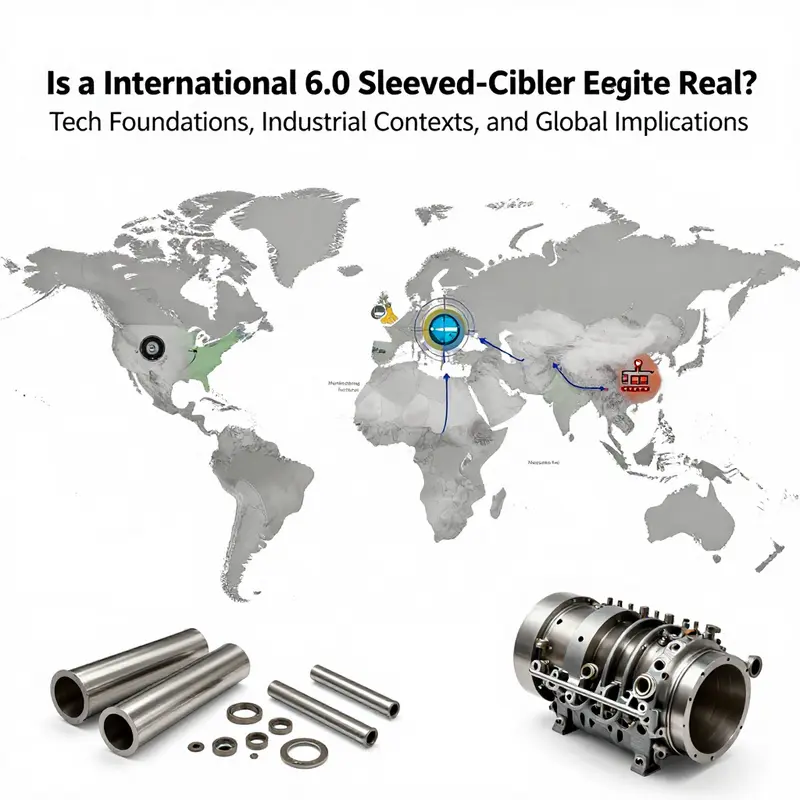
The idea of a six-liter engine with sleeved cylinders sits at an unusual crossroads. It sits between the pragmatics of large-displacement power and the austerity of everyday reliability. Sleeved cylinders—wet liners that run in a water jacket and interface with the cooling system—offer a way to manage heat, absorb combustion shocks, and allow targeted maintenance without rewriting the entire engine block. In the broader arc of the article, this chapter traces how such sleeve technology, when scaled to a 6.0-liter class, becomes not just a mechanical choice but a thread connecting economics, geopolitics, and the daily lives of countless vehicle operators around the world. The discussion does not hinge on a single brand or model. Instead, it follows the logic of sleeved cylinder technology as a family of engineering decisions that shape performance, serviceability, and resilience across continents and industries.
Heat is the quiet conductor in this conversation. A six-liter engine—by virtue of its large displacement, frequent turbocharging, and the thermodynamic realities of diesel or high-compression gasoline variants—demands robust thermal management. Wet sleeves make a clear difference. They place the heat path not just through the block walls but directly into a coolant loop that can be tuned by the designer to match the combustion cadence. The sleeve and water jacket form a composite heat exchanger around the combustion chamber. When the engine is under heavy load, the sleeves transmit heat to the coolant with a speed and uniformity that helps prevent hot spots, warping, and detonation precursors. The result is a system that can tolerate high mechanical stress without sacrificing reliability. Yet the same feature that makes sleeves appealing also introduces seals and interfaces that require vigilance. The marriage of sleeve to block relies on precise sealing surfaces, O-rings or gaskets, and dependable coolant contact. If any link in that chain weakens, a leak path can emerge, and the entire engine’s breathing becomes a casualty of a cooling failure. This is the delicate balance that designers and maintenance teams navigate over the engine’s life.
Beyond the physics of heat and seal integrity lies a broader terrain of manufacturing philosophy and lifecycle economics. Sleeved cylinders imply a block that must be machined with precision during assembly and, when necessary, disassembled and serviced with an eye toward preserving the integrity of the seals and the liner seating surfaces. This is not merely a matter of swapping parts; it is a question of maintaining a delicate interface between liner, gasket, and head with predictable tolerances. The maintenance logic changes with sleeves. In some configurations, the removal or replacement of sleeves can be performed without a total block refurbishment, enabling cost-effective repair in field service or regional shops. In others, the sleeves are part of a more integrated assembly that may call for specialized machining steps to restore sealing surfaces. The practical takeaway is straightforward: sleeve design elevates the importance of service readiness and the availability of skilled technicians who understand the nuances of wet liners, their mounting hardware, and their interaction with cooling circuits.
The six-liter class represents a space where performance demands meet durability requirements. Engines in this category tend to inhabit fleets—work trucks, agricultural machinery, and industrial equipment—that keep critical logistics moving. The sleeves’ robustness directly translates into uptime, a factor with cascading economic implications. In contexts where downtime carries substantial opportunity costs, sleeves can be a strategic choice. They enable focused maintenance: replace a worn liner, re-seal the interface, restore coolant pathways, and return to service with minimal disruption. This modular mindset—treating the cylinder liner as a replaceable wear item within a robust cooling system—extends the service life of the engine as a whole. It also frames the sleeve as a practical bridge between rapid maintenance needs and the harsh realities of heavy workloads in diverse environments.
From an industrial perspective, the sleeves also carry implications for supply chains and manufacturing footprints. The materials and tooling required to produce wet liners, seal rings, and compatible head gaskets create a cascade of dependencies. The sourcing of corrosion-resistant alloys for liners, compatible elastomer seals, and precise machining capabilities for seating faces becomes a matter not only of engineering success but of procurement resilience. Regions with established foundries, a mature machining ecosystem, and reliable supply of compatible materials may enjoy smoother service trajectories than regions where production ecosystems are still developing. In this sense, sleeved-cylinder technology becomes a case study in how a mechanical feature can magnify or mitigate the effects of global supply dynamics. The importance of regional training programs, aftermarket distribution networks, and local remanufacturing capabilities grows in parallel with the engine’s adoption rate across different markets.
Geopolitically, sleeved cylinder technologies reside at a nexus of engineering autonomy and vendor ecosystems. The materials, tooling, and know-how required for sleeves and their seals often travel along established industrial corridors. Countries rich in skilled machinists and precision engineering capacity can more readily sustain fleets that rely on six-liter sleeves, while regions facing import constraints may see longer downtime or higher costs for maintenance. This is not a story of a single engine family overcoming a universal challenge; it is a story of how sleeve-based designs interact with national priorities—energy security, industrial policy, and the resilience of commercial transport networks. In places where the transport backbone is dense and the maintenance infrastructure is robust, sleeved cylinders become a practical path to longevity and predictable performance. In areas where fleets operate far from maintenance hubs, the same sleeve design—by enabling modular, targeted repairs rather than full-block overhauls—can be a lifeline that keeps essential services moving.
The societal dimension of sleeved-cylinder technology emerges most clearly in the everyday reliability of vehicles that people depend on. Consider the role of large-displacement engines in regional logistics, in field work, or in community services that require durable, serviceable machinery. The sleeve’s potential to be serviced in regional workshops rather than centralized facilities can reduce downtime and support local economies. A maintenance event that might require specialized equipment in one setting can, in the right conditions, be accomplished with more readily available tools in another. This portability of service capability can democratize maintenance access, helping smaller operators and rural fleets stretch their operational life without forfeiting reliability. Yet it also raises questions about standards and training. If the same sleeve design is offered by multiple suppliers or adapted to various regional manufacturing ecosystems, the potential variability in seal materials, liner dimensions, and coolant interfaces grows. That variability, while mitigated by OEM specifications and industry standards in many markets, remains a practical concern for field technicians who must interpret wear patterns, inspect sealing junctions, and decide when a liner needs replacement rather than rework. In short, sleeves intensify the relationship between the machine and the people who keep it running—the mechanics who must translate design intent into reliable, on-the-ground performance.
In a global context, the 6.0-liter sleeved-cylinder concept also engages with environmental policy and the regulatory frameworks that govern emissions and fuel efficiency. A sleeve design that better manages heat and reduces detonation propensity can support higher brake thermal efficiency, more consistent combustion, and, potentially, lower particulate or NOx emissions when paired with appropriate fueling and exhaust aftertreatment strategies. However, the environmental advantage hinges on a system-level optimization. The sleeved cylinder does not act alone; it exists within a network of sensors, fuel delivery strategies, turbocharger dynamics, and exhaust management. The EGR system, high-pressure fuel rails, and cooling architectures must be harmonized to avoid unintended consequences like coolant leaks or lubricant entrainment. The regulatory environment, in turn, shapes the economic calculus of sleeve adoption. Regions with stringent emission standards and strong aftermarket support may incentivize sleeve-based designs as a means to meet targets while maintaining serviceability. Regions facing cost pressures may scrutinize the balance between initial investment in sleeves and the long-run savings from improved uptime and easier maintenance.
The internal narrative here is not that sleeved cylinders are a silver bullet for every six-liter engine, but that they embody a design philosophy. They offer a way to distribute thermal management across a modular interface, allowing targeted maintenance and potentially simpler field service. They require, in return, a disciplined approach to seal integrity, coolant management, and precision assembly. They invite a broader conversation about how maintenance ecosystems—training, tooling, supply chains—are aligned with the engineering choices that define modern, high-displacement engines. They also anchor us to a broader, ongoing inquiry: how do we balance powerful, reliable machinery with the realities of global markets, environmental expectations, and the everyday needs of people who rely on those machines? In that sense, the sleeved-cylinder approach becomes a microcosm of industrial modernity—a technology designed to solve heat and wear while challenging the people and systems that sustain it.
For readers who want to explore the sleeve concept more directly, a common question concerns how widespread the sleeve solution is across differentInternational engine families. The sleeve, in this sense, is not a proprietary feature of a single maker, but a technique that has found footholds in multiple regional and industrial contexts. The dialogue around sleeves is not just about the metal or the gasket; it is about the entire ecosystem that supports a large, durable engine—from the machinist pairing of liner to block, through the supply chain for gaskets and seals, to the service networks that interpret wear and plan maintenance windows. It is about how communities of practice—technicians, engineers, suppliers, and operators—upgrade their collective capabilities to handle high-heat, high-load, long-life machines.
As this discussion moves forward, it is useful to acknowledge how sleeve technology intersects with the broader topic of “international” engine development. In a world of cross-border supply chains and a global market for heavy machinery components, sleeved cylinder designs offer a practical, scalable path to durability and serviceability. They are compatible with modular assembly concepts, enable regional remanufacturing strategies, and support training programs in places where the workforce is growing but the infrastructure to overhaul a monolithic block is not yet mature. They also invite, deliberately or not, comparisons across engine families and regions—how sleeve choices, sealing technologies, and cooling architectures reflect different design philosophies, regulatory pressures, and user expectations.
Within this framework, the reader can further explore related discussions about engine sleeves and their place in modern engineering by consulting resources that address the core questions of sleeving in engines. For example, the topic of whether a given International engine family uses sleeves and how their sleeves are implemented is explored in depth in dedicated technical discussions. See: Does an International C I35 engine have sleeves. This page helps connect the general principles described here to concrete regional engineering choices, without tying the analysis to any one manufacturer or product line. It underscores how sleeve decisions emerge from a matrix of mechanical performance, maintenance logistics, and market expectations.
In closing this examination of six-liter sleeved-cylinder engines, the central takeaway is not a verdict on whether sleeves are universally superior, but an appreciation for how this design strategy matters in a modern, globalized automotive and industrial landscape. Sleeves reframe the conversation about heat management, maintenance economics, and supply-chain resilience. They invite attention to the human dimensions of engineering—workforce training, local manufacturing capability, and the second-order effects of a technology that enables longer service life and faster field repairs. They remind us that in the realm of high-displacement engines, the boundary between a machine and the society it serves is not fixed; it shifts with material choices, logistical capabilities, and the shared intent to keep critical systems running when they are needed the most.
External resource: https://www.ford.com/vehicles/trucks/f-150/technical-specs/
Final thoughts
The term “International 6.0 sleeved cylinder engine” does not map to a publicly confirmed production model. Yet, the sleeve concept itself shapes how 6.0L engines are designed, repaired, and remanufactured across brands. For motorcycle and auto owners, this means recognizing sleeve integrity as a factor in long‑term durability and serviceability, especially for heavy‑duty or diesel‑powered 6.0L platforms. For auto parts distributors and repair shops, sleeve lifecycles influence parts sourcing, warranty considerations, and the economics of remanufactured blocks. In short, sleeves remain a practical, widely used technology that informs reliability and serviceability in 6.0L engines, even if the exact branded model name may not exist in public catalogs.