
Engine terminology can blur quickly when a “C-I35” tag appears in catalogs or chatter. For motorcycle owners and auto professionals alike, understanding whether the designation refers to a sleeve-equipped block or a sleeve-free design matters for maintenance, parts compatibility, and service strategy. This article focuses on the sleeve question, anchored by the Infiniti I35’s VQ35DE configuration and a contrasting diesel example with replaceable cylinder liners. By examining nomenclature, real-world hardware, and verification steps, readers across the motorcycle and automotive spectrum can assess when sleeves are relevant, how to confirm their presence on a given engine code, and what maintenance implications sleeves (or their absence) imply for repair shops and parts distributors. Each chapter builds toward a practical framework you can apply in shop manuals, parts databases, and customer conversations, ensuring the topic remains concrete and actionable for technicians, hobbyists, and procurement teams alike.
Decoding the C-I35 Nomenclature: Sleeves, Blocks, and the Real Anatomy of an Engine Design
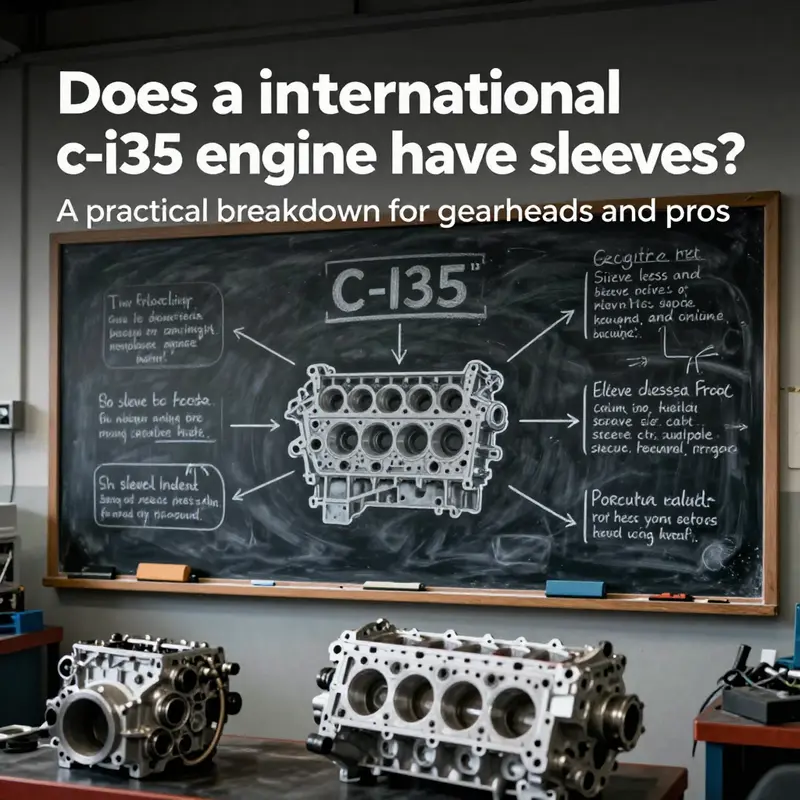
In discussions about engine design, a string like C-I35 tends to surface not from official catalogs but from a tangle of rumors, shorthand, and memory gaps. The moment a reader encounters a label that sounds plausible yet has no solid reference, the mind fills in blanks with familiar words—cylinder, intake, pistons, and sometimes sleeves. But the reality is more disciplined: there is no standard, widely recognized engine designated as C-I35 in credible catalogs or manufacturing lineups. The confusion often arises not from a mysterious, proprietary engine but from a misinterpretation of how engines are named, how sleeves fit into the picture, and how different design philosophies arrive at the same end goal—durable, reliable combustion surfaces that tolerate wear, heat, and the pounding of pistons. The crucial question, then, is not whether a particular misnamed designation exists, but what the sleeve concept means in practice and how it applies to real engines. When we peel away the label, the answer becomes a matter of engineering choices rather than a single, fixed verdict.
At the core of the sleeve question is a fundamental distinction in block design: some engines wear a bore that is part of a monolithic block, while others rely on removable or replaceable sleeves to form the cylinder walls. Cylinder sleeves, also called liners, are cylindrical segments that can be inserted into the engine block to form the wear surface that the piston rings contact. They are not universal; their presence depends on the engine’s architecture, material choices, cooling strategy, and the expected service life of the bore. In engines designed around a modern, seamless aluminum block, the bore is machined directly into the alloy, and the wear surface is produced by a specially engineered coating or finishing process rather than a separate sleeve. In other engines, especially those subjected to severe thermal or mechanical loads, a sleeve—either dry or wet—becomes the practical solution to maintain bore integrity, enable serviceable wear surfaces, or simplify oversized repairs.
To understand how sleeves fit into this landscape, it helps to consider the two broad categories of cylinder bore construction. A dry-block approach treats the cylinder bore as an integral feature of the block, honed to a precise size and finished with a wear-resistant surface. In many cases, the wear layer is a coating—something like a nickel-based or ceramic-inspired deposit—that reduces wear on the aluminum or cast-iron substrate. This design emphasizes a near-seamless integration: no sleeves must be pressed in, no heat transfer path is interrupted by a liner, and maintenance focuses on restoring the bore’s surface through honing and coating reapplication rather than replacing a liner. The downside, if there is one, can be a more challenging repair path if wear progresses beyond the designed limit, since the bore must be re-surfaced or the entire block reworked.
A different route is the sleeve-based approach. Here, a cylindrical liner is inserted into the block to form the cylinder surface. Depending on the sleeve’s connection to the cooling system, sleeves can be categorized as wet or dry themselves. Wet sleeves are in direct contact with the coolant jacket; they are designed to carry the heat away from the bore through the liner wall into the surrounding water passages. This design is common in heavy-duty diesel engines where the loads on the bore are high and the option of replacing a worn liner is cost-effective compared with repairing a large cast-iron or aluminum bore. The sleeves themselves are usually made from wear-resistant steels or cast irons and are often removable, meaning a worn sleeve can be replaced without replacing the entire block. Dry sleeves, by contrast, behave more like a finely machined insert: they provide a wear surface while being surrounded by the block’s metal. The term “dry sleeve” can get nuanced in practice, but the essential idea is that the sleeve’s contact with the coolant is minimized and the heat transfer path is managed through the block walls rather than through the liner interface.
The decision between a sleeved design and a sleeve-free design is not arbitrary. It rests on a matrix of factors: expected engine life, maintenance philosophy, manufacturing costs, and the anticipated operating environment. For engines intended for long service in demanding conditions—where maintenance intervals are generous but downtime is expensive—wet sleeves offer a pragmatic path: their replaceability lowers overhaul costs and allows the engine to return to service after a worn liner is swapped. For passenger-car engines designed for high-volume production and a shorter service cycle, a dry, un-sleeved bore with a hard-wearing surface can deliver clean, predictable wear characteristics and a simpler manufacturing flow. The trade-off is not a moral one but a practical one: sleeves can add complexity and cost to the block and assembly, but they unlock replaceability and resilience under high thermal loads or unusual operating conditions.
When these general principles are applied to the question implied by a label such as C-I35, the answer becomes a cautionary tale about nomenclature. The label itself does not reveal whether the engine uses sleeves or not; it merely signals that the name lacks a reliable cross-reference. A responsible analyst will cross-check the engine code against a service manual, a parts database, or the manufacturer’s official documentation to confirm the bore design. And here the broader lesson emerges: the presence or absence of sleeves is an attribute of the specific engine family and its era of production, not a universal feature assigned to an arbitrary code. Two engines with near-identical cylinder counts and configurations can diverge sharply in their bore strategy because one family uses a dry, integral bore while the other leans on wet sleeves for maintenance flexibility under heavy-duty use. In other words, sleeve design is a design decision informed by mechanical loads, thermal management, and anticipated maintenance cycles rather than a simple function of a model-like label.
With that framework in mind, it’s useful to anchor the discussion in practical signs engineers use to identify whether an engine has sleeves. One tells-tale cue is the service manual’s bore section: if it describes a “bore” or “cylinder dimension” with references to a single plated or coated surface, and to honing or re-boring of the same surface, that is a dry-bore scenario. If the manual discusses “cylinder liners,” “sleeves,” or the procedure to replace worn liners, that is a wet or dry-sleeve design. The maintenance implications are concrete: a sleeved engine typically offers a path to restore the bore without resorting to a full block repair, whereas a sleeveless design prioritizes a high-precision finish and a coating which, once worn beyond its capacity, may require more extensive restoration or block replacement. In a broader historical sense, engines designed for heavy machinery and marine or industrial use are more likely to employ sleeves because wear resistance under sustained loads is the critical factor and replacement is more economical than a major block overhaul. By contrast, many modern light-duty engines in everyday vehicles favor a solid, integrated bore with advanced coatings to optimize efficiency, emissions, and manufacturing cost.
The research literature and industry overviews emphasize this dichotomy without naming particular brands or models. They describe two orthogonal paths: durability through a robust, integrated bore that relies on coatings or hard finishes to survive wear, and durability through a modular path that embraces sleeves so that a worn liner can be swapped in a maintenance cycle compatible with fleet utilization. The choice of path is seldom about clever labeling; it’s about aligning the engine’s thermal management, lubrication strategy, and maintenance philosophy with the expected operating profile. When readers encounter a label like C-I35 and ask if it has sleeves, the responsible conclusion is to check the engine’s technical code against a trusted reference. If no credible reference exists for that exact designation, the prudent stance is to treat the question as hypothetical and to study the sleeve concept in its general forms rather than pinning it to an uncertain label.
For readers who want to ground their understanding in a practical, anchored resource, a concise explanation of engine sleeves and their purposes is available in literature that outlines what sleeves are and how they function within different block designs. A helpful starting point is the article that explains the basics of engine sleeves, their material considerations, and the scenarios in which sleeves are favored or avoided. This resource clarifies the core idea that sleeves are a structural option within an engine block and that their presence is not guaranteed across all designs but is instead a response to specific engineering requirements. To explore this topic further, you can consult a focused discussion on engine sleeves here: what are engine sleeves.
Beyond the conceptual, the practical takeaway for anyone investigating a questionable label like C-I35 is this: confirm the exact engine family and code, and then examine the cylinder bore design. If the bore is described as a finished, integral surface on an aluminum or iron block, with a surface treatment geared toward wear resistance, that points to a sleepless, dry-block approach. If the documentation points to replaceable liners, with explicit references to liner materials, coolant interaction, and liner removal procedures, then sleeves are part of the design. This distinction is not merely academic; it informs maintenance strategies, overhaul costs, and long-term reliability under varying duty cycles. In the end, the sleeve decision is a story of matching engineering pragmatism to operating reality, not a fluffy attribute attached to a name.
For writers and researchers who are assembling chapters about this topic, it is essential to weave the nomenclature narrative with the engineering rationale. A reader who finishes this chapter should come away with a clear sense that mislabeling can create confusion, but that sleeve technology itself follows a straightforward logic: the presence of a sleeve is a design choice driven by loads, cooling, and maintainability, not by a mnemonic that looks plausible on a spec sheet. The next chapter can extend this conversation by examining one concrete engine family and tracing how its bore design evolved—from earlier generations that relied on traditional sleeves to later iterations that pursued high-strength, sleeveless bores with advanced coatings. That progression highlights how manufacturers balance performance, cost, and serviceability while navigating the evolving demands of emissions, efficiency, and durability in a changing automotive landscape.
For readers seeking a concise anchor in the broader discussion, consider this practical takeaway: when evaluating whether a specific engine uses sleeves, rely on the official documentation for the exact engine code rather than name-based assumptions. This approach prevents conflating a misnomer with a real design attribute. The sleeve question, stripped of mislabels, becomes a study in how engineers tailor cylinder-bore strategies to the job at hand—whether the job demands ease of repair, robust heat management, or the simplest path to a reliable, production-ready block. And in an industry where the line between success and failure can hinge on a few microns of bore finish or a sleeve’s material composition, that disciplined approach makes all the difference.
External resource for further reading on engine block designs and cylinder sleeves provides a broader context for these considerations: https://www.engineer.com/technical-articles/understanding-engine-block-designs-and-cylinder-sleeves. This external reference offers a technical overview of how block design, sleeving strategies, and cooling interplay to determine engine longevity and serviceability. Readers are encouraged to consult it to deepen their understanding of the mechanical trade-offs discussed above. Additionally, an accessible internal reference on engine sleeves can provide a quick, topic-focused primer: the article on what engine sleeves are and how they fit into different block designs, available at what are engine sleeves.
null
null
Dry-Block Truths: Sleeve-Less Cylinder Walls and the Sleeve Question in Compact Diesel Engines
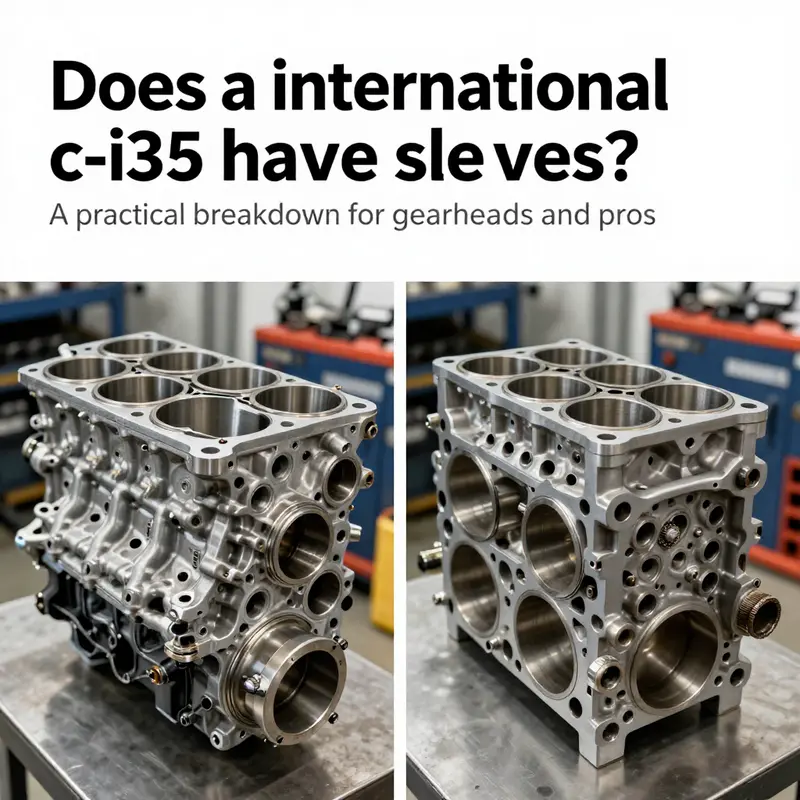
The question of whether an international C-I35 engine has sleeves invites more than a simple yes or no. It opens a window into how modern compact diesel engines are engineered, how they manage heat, wear, and maintenance, and how the design choices influence serviceability over the long life of a vehicle or machine. In many engines, the bore that houses the piston is lined with a removable sleeve. These sleeves, often called cylinder liners, can be wet or dry depending on how they are cooled and integrated with the block. The literature surrounding the engine family discussed in this context consistently describes a dry-type cylinder block. In practical terms, that means the cylinder walls are machined directly into the block itself—whether the block is cast iron or an aluminum alloy—and there is no separate, replaceable sleeve pressed into the bore. The distinction between a dry-block design and a wet-sleeve approach is not merely semantic. It shapes heat transfer, wear patterns, repair strategies, and the economics of maintenance. When the bore is a built-in feature of the block, the engine’s heat path from the piston top to the cooling system follows a direct route through a wall that is integral to the engine’s core structure. The absence of a removable sleeve reduces potential leak paths and eliminates one component in a cooling loop that can fail at worst in dramatic fashion and at best in stubborn, slow leaks. In the context of the engine family under discussion, the dry-block architecture is presented as a fundamental characteristic that guides both performance and service philosophy. If you want to explore the general concept of sleeves and how they influence engine maintenance, consider this primer: What are engine sleeves?. It provides a broad overview of how sleeves function, the difference between dry and wet designs, and how sleeve-related decisions affect disassembly and reassembly in practice.
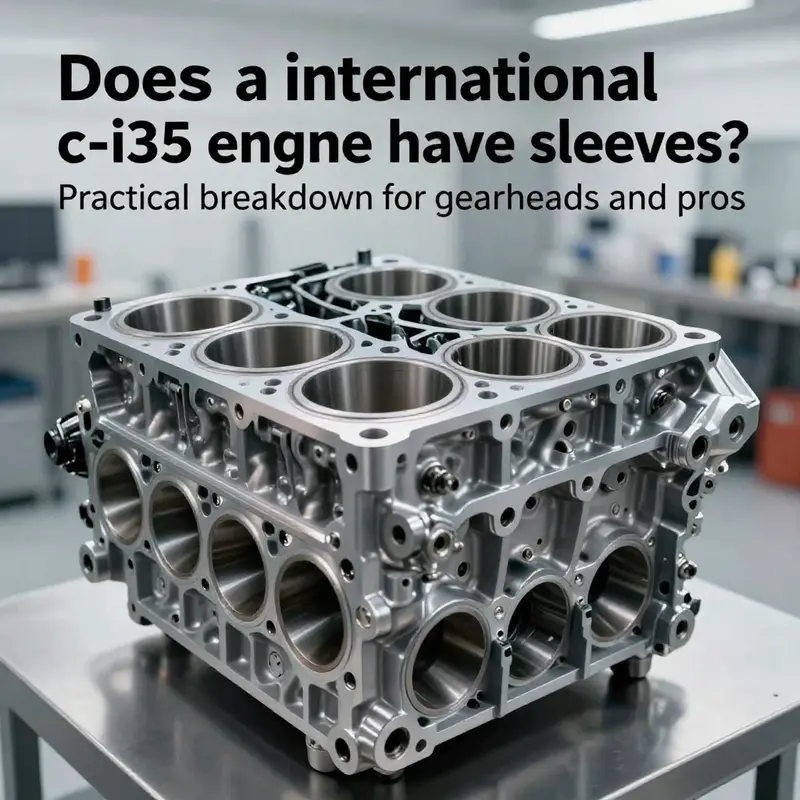
To understand why this matters, it helps to step back from the nomenclature and visualize what a bore actually looks like inside the engine. In a dry-block design, the bore is produced by precision machining of the cylinder walls within the block’s own material. If the block is cast iron, the bore is a feature of the ironwork; if the block is an aluminum alloy, the bore is still a machined cavity within a stronger substrate. The surface finish, hardness, and wear-resistant coating on that bore become crucial for piston rings to seal effectively and for heat to travel away from the high-temperature zone around the combustion event. In this sense, the cylinder wall itself is the wear surface, not a sleeve that can be replaced when it wears thin. This approach has several practical consequences. It often translates to improved heat transfer because there are fewer interfaces that can insulate or trap heat, and it reduces the number of potential leak points in the cooling system. It also means that the maintenance and overhaul workflow centers on machining, honing, or resurfacing the bore as a single, integrated component of the block rather than removing and installing a separate liner. The net effect is a system that tends toward durability and reliability in steady-state operation, with a costlier and more involved process when the bore requires refurbishment, since the entire block needs to be machined to restore the correct diameter and surface finish.
The alternative approach—cylinder sleeves that sit inside the bore—has its own logic. In many heavy-duty or high-load diesel engines, wet sleeves or dry-wet combinations offer a modular solution: a replaceable liner that can be swapped when wear, scoring, or corrosion become problematic. Wet sleeves are cooled by the engine’s coolant, which means the sleeve exists as a discrete barrier between the hot bore and the cooling circuit. The advantages of sleeves are clear in applications where the bore experiences significant wear or where reliability of the sealing surface is at risk, because a worn sleeve can be replaced without reworking the entire block. However, this design also introduces more potential leak points at the interface between the sleeve and the block, requires more precise alignment during assembly, and may complicate heat transfer pathways. In many engines designed for lighter duty or broader reliability, manufacturers favor the dry-block concept for its simplicity, fewer parts that can fail, and its direct heat path. The trade-off is that when wear occurs, the reconditioning steps are more involved and can be more expensive because the bore must be restored within tight tolerances without the convenience of swapping a shrink-fit liner.
The chapter’s focal point—the dry-block approach in a compact diesel engine family—reflects a deliberate engineering balance. The dry design emphasizes efficient heat management and structural integrity in a compact footprint. It aligns with a philosophy that prioritizes fewer interfaces, tighter leak control, and robust long-term durability under typical operating conditions for light- to medium-duty applications. But it is not a universal rule across all diesel engines. The industry still maintains a spectrum of designs, from well-proven sleeve-based configurations to modern, integrated, sleeve-free blocks. Each choice serves a particular class of service, operating environment, and maintenance reality. The practical reading for technicians and enthusiasts is that, in this specific lineage of engines, the sleeve is not present as a removable component, and that drives how problems are diagnosed, how maintenance is planned, and how the engine’s lifespan is managed.
From a diagnostic perspective, confirming the absence of sleeves requires attention to the components that accompany the bore. When sleeves are absent, you will not find the typical sleeve scrolls, retainers, or sealants that often accompany a sleeve installation. Instead, you will focus on the bore’s diameter, its roundness, its surface finish, and the condition of the surrounding block structure. If a mechanic suspects bore wear or wants to restore a worn surface, procedures will involve honing or honing and reconditioning the bore and possibly resizing cylinders to restore the correct cross-sectional geometry. In a sleeve-based engine, the path to repair can be more modular: remove a damaged sleeve, install a new one, and service the piston rings and seals with the assurance that the liner has been replaced and re-lapped to proper tolerances. The sleeve-based path can sometimes be more forgiving in terms of material replacement, but it also introduces more moving parts at the component level, which can influence maintenance timing and costs over the engine’s life.
The chapter’s sources reinforce these design distinctions in practical terms. They describe a dry-block engine concept that shares a core design philosophy with the broader small-diesel family to which it belongs. The dry-block design is celebrated for heat transfer efficiency, reduced leak points, and streamlined maintenance relative to some sleeve-based architectures. Yet to a technician with hands-on experience, the most reliable answer to whether a specific engine model has sleeves is to consult the engine’s official service manual or trusted parts database using the exact engine family code. The code is the key to unlocking precise specifications, including whether sleeves exist, whether they are standard or replaceable, and what sequence of steps a rebuild or major repair requires. The nuance matters because even within a single family, regional variants or production years can introduce subtle differences in how the cylinders are finished, what coatings are applied to the bore, and what aftermarket kits are compatible with a given bore geometry.
For readers who want a more general primer on sleeves without getting lost in nomenclature, the linked resource above provides a broad, accessible overview. It helps connect the practical questions of sleeve presence to the broader concepts of engine design. The point to retain is simple: in the dry-block architecture described for this engine family, there is no replaceable sleeve within the bore. The absence of sleeves is a defining feature of that design, with important implications for heat transfer, wear behavior, and repair strategy. When considering a rebuild or a long-term maintenance plan, the distinction between a sleeve-less bore and a sleeve-based bore informs decisions about machining, coatings, and the expected cost of overhauls. It also clarifies why some engines are simpler to service in principle yet require more meticulous precision in practice when reconditioning occurs.
Reading the wider literature also highlights a broader context for engine design decisions. Some engines in other segments prioritize sleeve-based configurations to ease overhauls on high-mileage, heavy-load applications. Others push toward sleeve-free, dry-block configurations to optimize heat dissipation and minimize leak paths. Each choice is a reflection of the operating envelope the manufacturer intends for the engine, including expected temperatures, pressures, fuel quality, and maintenance access in the field. In this sense, the sleeve question is not an abstract debate but a practical lens through which to view the engine’s life cycle, its reliability profile, and the expectations of whoever maintains it.
For readers interested in confirming the general principle in authoritative terms, consult the official technical documentation from the engine’s manufacturer, which provides the most definitive guidance on whether sleeves are part of a given bore. The documentation also outlines the engine’s maintenance intervals, reconditioning requirements, and the tolerances necessary to preserve performance within design limits. In parallel, credible industry summaries emphasize the same point in broader terms: dry-type bores are a hallmark of many compact diesel designs, delivering certain performance and reliability benefits that suit lighter to mid-range duty cycles. The convergence of these sources strengthens the understanding that, in the particular engine family under discussion, sleeves are not part of the bore architecture.
In closing, the sleeve question for this engine family comes down to a singular architectural choice: the bore is integrated into the block as a dry feature, not a removable sleeve. This choice shapes the engine’s heat path, wear patterns, and repair approach. It explains why service manuals describe honing and bore restoration in the context of the block, rather than sleeve replacement, and why the maintenance narrative for this family tends to emphasize precision machining over liner swaps. The nuance matters for anyone planning a rebuild, ordering parts, or simply trying to understand why an engine behaves the way it does under heat, load, and age. For those who want to delve deeper into the general concept of sleeves and their role across engines, the linked primer provides a solid starting point and can serve as a bridge to more specialized resources.
External resource: https://www.navistar.com/technical-support
Sleeves, Wet Liners, and the C-I35: What It Means for Maintenance
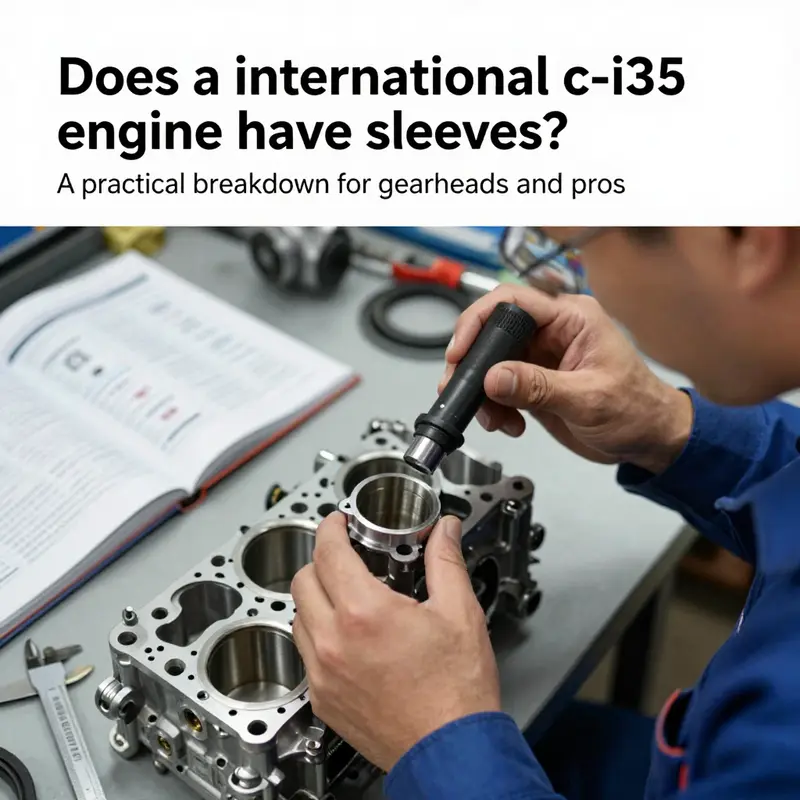
Sleeves, wet liners, or a dry-bore engine design represent two broad approaches to cylinder-wall construction. A dry-block has the bore machined directly into the block, often with a treated surface to resist wear. A wet-sleeve design uses replaceable cast iron or steel liners that sit inside the block and form the piston-wear surface. The practical difference shows up in maintenance, overhaul options, and long-term durability, especially at high mileage or under high load.
For the C-I35 engine family, variation exists by market and year. Some configurations use a true dry bore, while others rely on sleeves or liners. Because the exact arrangement is engine-code specific, owners and technicians must verify the engine code and consult the official service manual or a trusted parts database to confirm bore type and any liner presence. If a liner is present, reconditioning or replacement may be more straightforward and can preserve deck height and bore centerlines; if the engine is dry bore, overbore and honing to restore the finish are the typical path, with potential block replacement in extreme wear.
In a rebuild decision, measuring the bore, checking the cross hatch, and confirming any liner edges with proper equipment is essential. The choice between sleeve and dry-bore affects tool requirements, tolerances, heat transfer, and sealing strategy for head gaskets and oil control rings. The main takeaway is engine-code verification and reference to the service manual and parts database for the exact bore configuration.
If you want a quick primer on engine sleeves, consider a reputable automotive reference that explains wet sleeves, dry blocks, and integrated liners. Finally, when in doubt, confirm the exact engine code and consult the manufacturer documentation for definitive confirmation.
Final thoughts
Understanding whether an engine uses sleeves or a dry-type block informs inventory decisions, repair strategies, and maintenance planning. The Infiniti I35’s VQ35DE exemplifies a sleeve-free, prestressed block with machined cylinder walls, while other designs—such as certain ISF2.8 diesel configurations—employ replaceable cylinder liners to handle higher loads and maintenance cycles. By recognizing nomenclature nuances, confirming engine codes with service manuals, and applying targeted verification methods, shops and distributors can avoid misaligned parts, reduce downtime, and tailor service approaches to the actual hardware at hand. The key takeaway: always verify the engine code and block design before ordering sleeves or liners, and use hands-on inspection when documentation appears ambiguous.