
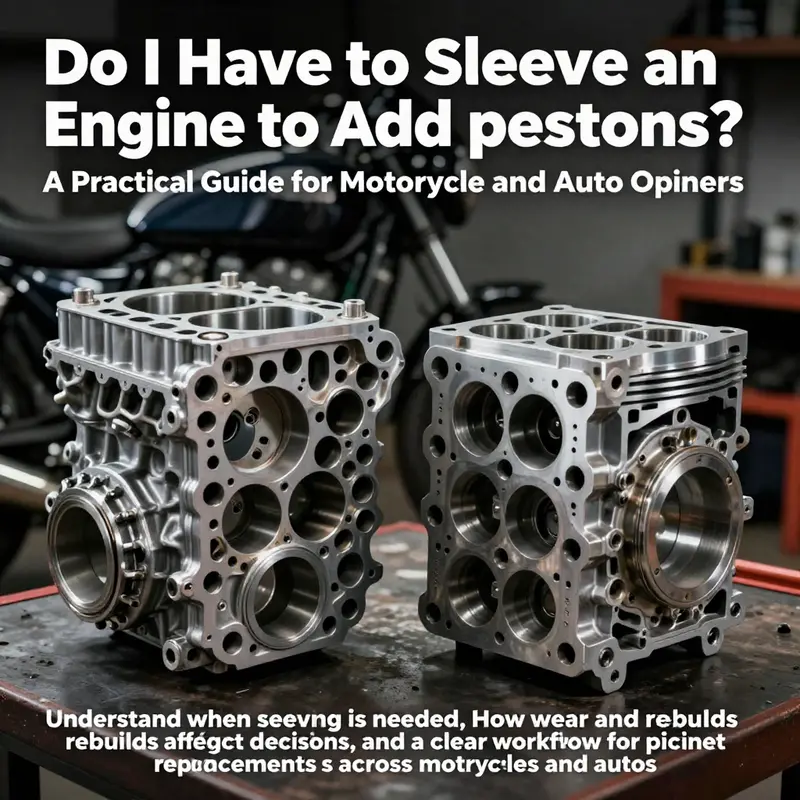
Adding pistons is a common consideration during routine maintenance and engine rebuilds. Engines are designed with cylinders that house pistons as a standard feature, and many piston replacements can proceed without sleeving when bore wear is within specification. Sleeving the bore—installing a metal liner—enters the discussion in select scenarios: worn or damaged bores, increases in displacement through a stroker-like approach, or high-mileage/high-performance applications where wear resistance and heat management are critical. This article links core engineering principles with practical workflow, showing when sleeving is truly necessary and when it is not, so motorcycle and auto owners, repair shops, and distributors can make informed decisions. Each chapter builds on the central question, tying bore condition, modification goals, and cost considerations into a coherent path. By the end, readers will have a structured approach to piston work that protects reliability, performance, and budget across both motorcycle and automotive platforms.
Pistons, Bores, and the Sleeving Question: Navigating When a Sleeve Is Really Needed to Add Pistons
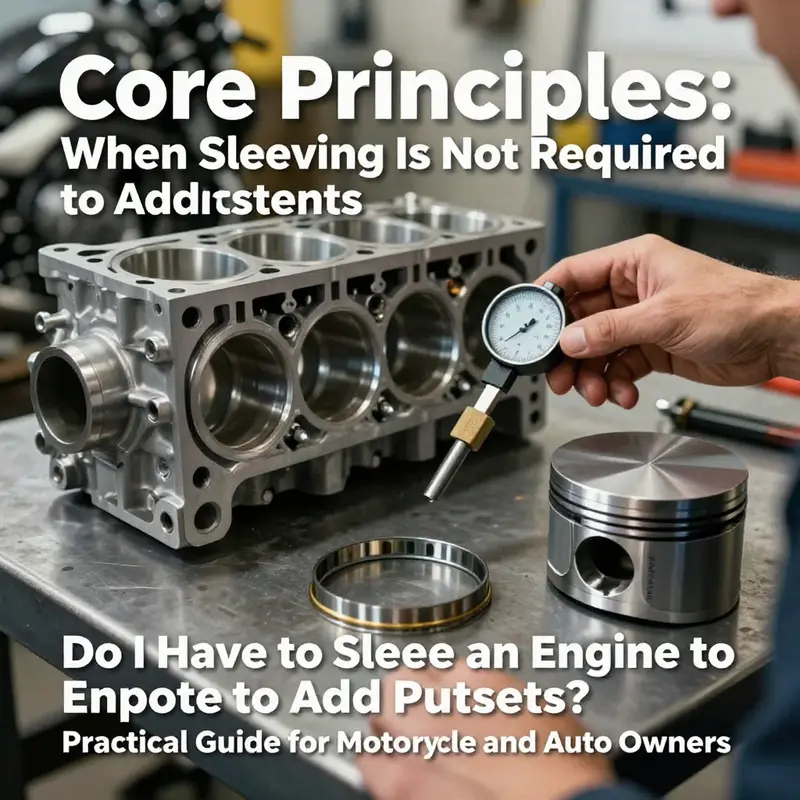
Questions about whether you must sleeve an engine in order to add pistons come up frequently in shops and garages, especially during a rebuild or a performance upgrade. The short answer is often surprising: you do not automatically sleeve a block just to install pistons. Cylinders are engineered to house pistons as a standard feature, and many routine piston replacements can be accomplished without adding a sleeve. Yet the idea of sleeving isn’t a rumor or a myth; it is a targeted remedy used in specific circumstances. Understanding when sleeving is appropriate—and when it isn’t—helps keep a project efficient, cost-conscious, and ultimately reliable over the life of the engine. In that sense, the sleeve is less about the act of inserting new pistons and more about protecting the bore, maintaining seal, and sustaining durability under particular operating conditions. The nuance matters because the decision affects heat transfer, compression geometry, and the intimate relationship between the piston, the rings, and the deck surface.
To start with the core principle: sleeving is not a universal prerequisite for piston installation. In a typical rebuild where the bore is healthy, a skilled shop can reseat the piston and rings, perform necessary honing or boring to restore true roundness, and achieve the correct clearance with standard piston dimensions. The block’s walls should be inspected for wear, scoring, or anomalies. If those bores meet tolerances and the crosshatch is crisp, new pistons can be installed without introducing a sleeve. If the bore is worn but still salvageable within acceptable tolerances, honing and proper piston-to-wall clearance can often restore compression and oil control without adding a steel or iron liner. The concept hinges on the bore’s integrity and the engine’s power ambitions. If the bore, in its current form, would still struggle to keep the rings sealing under anticipated loads, sleeving may become a preventive option. For a compact, practical orientation, consider this: sleeving is a corrective option rather than a standard step in every piston installation.
If you want a concise explainer to ground this idea, you can read the dedicated piece that clarifies what sleeving means and why it’s used in some cases. See the explainer What Sleeving an Engine Means. The takeaway is simple: sleeves address bore issues that paint a different picture than a straightforward piston replacement. They are not cosmetic or purely performance enhancements; they are a structural decision that follows from the bore’s condition and the engine’s expected duty.
When sleeving is commonly considered, it is because the bore’s walls have shown signs that a standard rebuild cannot reasonably restore long-term reliability. The first red flag is visible or measurable wear that undermines the seal between piston rings and the bore. This might include pronounced vertical scoring, deep gouges, tapering where the inner diameter at the top is smaller than at the bottom, or an out-of-round condition that cannot be corrected with boring within company-recommended limits. In such cases, the risk of blow-by, loss of compression, or degraded heat transfer increases. A sleeved bore can restore concentricity and wall thickness to a known, uniform spec, enabling the piston and rings to seat and seal more predictably under load. High-performance or forced-induction setups also push the envelope in terms of cylinder pressure and bore distortion. If you plan significant displacement changes or harness boost, the stock bore may not reliably resist the sustained pressures that a sleeve can better accommodate. In these contexts, sleeving is viewed as a durability and reliability strategy rather than a mere modification.
These considerations sit alongside practical realities. Sleeve installation is an operation that adds machining time and potential risk if not executed with precision. A properly installed sleeve must align perfectly with the block’s bore axis; the bore finish and crosshatch must be appropriate to the selected sleeve material and the piston rings intended to run in that bore. The interaction with the deck surface, head gasket sealing, and the static and dynamic compression ratio must be factored in. If a sleeve changes bore diameter by even a small amount, the piston-to-wall clearance and ring land geometry can shift enough to affect ring seal or oil control. Because sleeves and blocks expand at different rates with temperature, accurate material selection and controlled machining tolerances are essential to avoid creeping misalignment or non-uniform sealing. This is not a guess-and-go operation; it requires measured planning informed by the engine family, block material, and the intended operating envelope.
Conversely, sleeving is not the recommended path when the bore is sound and the target power level stays within the limits of the stock walls. In many engines, an overhaul that focuses on pistons, rings, and bearings—paired with precise honing to restore proper crosshatch and finish—delivers excellent results. If the wall thickness remains adequate and the deck surface remains flat, a standard rebuild can preserve the engine’s original physics while restoring performance. The decision hinges on a comprehensive bore assessment. The technician should measure true roundness along the bore length, verify taper and out-of-round conditions, and confirm that the cylinder diameter is within factory tolerances for the chosen pistons. If these checks pass, there is no mechanical or economic justification to sleeve, provided the plan is to maintain or modestly raise power.
In practice, a practical decision-making sequence unfolds like this: first, inspect the bore condition for scoring, cracks, or obvious damage. Second, measure true roundness, taper, and diameter at multiple heights; confirm how these metrics compare to the factory specifications for the intended piston. Third, evaluate the duty cycle and power goals: will you pursue high-boost, high-displacement, or sustained high-temperature operation that could compromise a stock bore? Fourth, assess block integrity, including deck height, warpage, and how a sleeve might interact with the head gasket sealing surface. Fifth, consider sleeve material, fit type, and finishing requirements, as well as any potential effects on heat transfer and expansion. Finally, weigh the overall cost and risk. Sleeving adds machining steps, the risk of misalignment, and potential changes to compression ratio that require subsequent adjustments to other clearances and tolerances. If the assessment points to a healthy bore and modest power targets, the simplest and most economical path is likely the best. If it points toward risk of bore instability under anticipated loads, sleeving becomes a prudent insurance.
The chapters that discuss sleeves often highlight another set of concerns beyond pure measurement. Sleeves can alter heat transfer patterns around the bore, which in turn influences cooling behavior and bore temperature uniformity. This matters especially in engines that run hot, or in configurations where cooling channels must be adapted to the sleeve geometry. The change in bore diameter, even if minor, can ripple into piston-to-wall clearance, ring seal geometry, and, ultimately, compression ratio—factors that affect drivability and durability. The sleeve must be compatible with piston rings, head gasket seals, and the overall geometry of the cylinder head and its train. If a sleeve is chosen, the machinist must ensure that deck resurfacing, head gasket mating surfaces, and alignment checks are performed to preserve sealing integrity throughout the engine’s life.
There is a broader caution here: sleeving should not be viewed as a universal remedy. It is a specialized operation whose justification rests on bore condition, intended power, and the engine’s design. Some engines welcome sleeves with predictable performance gains under high-stress operation, while others respond more favorably to careful bore refurbishment and precise fitting of new pistons without a liner. In borderline cases, a qualified engine shop will provide the definitive verdict after a detailed inspection and measurement protocol. Their verdict will be guided by the block’s metallurgy, the sleeve options available for that particular family, and the practical realities of achieving reliable seal with the chosen head gasket and valve train geometry.
As you navigate this question for your project, keep the narrative aligned with your goals: do you want a reliable daily driver, or a track-focused powerhouse that demands high cylinder pressures and sustained heat management? Either way, the path starts with a clean assessment of the bore and a clear plan for the piston, rings, and block. If the bore is healthy and the goal is to replace pistons without altering bore size or wall thickness, you can proceed without sleeving. If the bore shows wear that undermines seal or if the planned operation will push the engine beyond what the stock liner can reliably withstand, Sleeving becomes a strategic option worth pursuing with an experienced machinist.
In either scenario, the guiding principle remains the same: sleeves are not a default step in piston installation. They are a deliberate, condition-driven decision that demands careful measurement, thoughtful planning, and alignment with the engine’s intended life. When you approach the project with that clarity, you can move forward confidently, knowing you have chosen the right path for your engine’s longevity and performance. For readers seeking a quick cultural memory, take this away: pistons are standard equipment in bores that are in good health, and sleeves are specialized tools to address specific bore deficiencies or performance thresholds. In many builds, the piston swap is straightforward; in others, the sleeve is the prudent guardrail. Either way, the goal is dependable, repeatable performance, not a cosmetic upgrade.
External reference: For a broader technical overview on why sleeving is used in certain scenarios and how it impacts engine geometry and heat transfer, see the external resource at https://www.mechanicmaster.com/engines/sleeving-an-engine-when-is-it-needed. The resource provides practical context on when sleeving is warranted and how it fits into a comprehensive engine rebuild strategy.
Internal link reference: For readers who want a quick primer on sleeve concepts and terminology, the explainer linked earlier is a helpful starting point: What Sleeving an Engine Means.
To Sleeve or Not to Sleeve: Navigating Cylinder Wear When Adding Pistons

The question “do I have to sleeve an engine to add pistons?” often arises at the intersection of maintenance, repair, and performance goals. The short answer is usually no—adding pistons in a routine rebuild does not automatically require sleeves. Engines are designed with cylinders that house pistons as a standard feature, and many piston replacements can be accomplished by inspecting the bore, honing if needed, and choosing appropriately sized pistons. Yet the full story is subtler. A sleeves-only solution appears in specific circumstances, and those circumstances hinge on the condition of the cylinder bore itself. When you’re planning a piston upgrade or a rebuild, the bore’s health becomes the gatekeeper that decides whether you can proceed with honing and oversize pistons, or whether you need to install a fresh sleeve to restore a pristine, durable surface for the rings to seal against. For a clearer picture of what a sleeve does, see the discussion on engine sleeves in detail: What are engine sleeves?
The core of the decision rests on a meticulous bore inspection. A typical procedure begins with a careful review of the cylinder walls using a bore gauge or a similar precision instrument. The bore is measured at multiple vertical locations—usually top, middle, and bottom—to assess both diameter and geometry. The aim is to determine whether the bore remains within manufacturer-specified service limits. These limits, published in the engine’s service manual, define the acceptable range for diameter, out-of-roundness, and taper. If the bore stays within these bounds after cleaning and inspection, the path forward is straightforward: you can hone the bore to a standard oversize and install pistons sized to the same oversize, preserving compression and ensuring proper ring seal. In many engines, this approach yields excellent compression and longevity without introducing sleeves into the block. If you’re curious about how bore measurements translate into practical decisions, you’ll find the industry’s standards and best practices outlined by professional organizations and OEM manuals, which emphasize precision, repeatability, and adherence to specified tolerances.
When the bore is within tolerance, the shop often performs a light honing to remove micro-scratches and to create a crosshatch pattern that helps ring seating. The selection of oversized pistons then depends on the measured wear and the desired final displacement. Oversized pistons are a well-established solution that restores the original compression ratio and engine geometry, provided the cylinder walls are still sound. Importantly, honing and using oversized pistons rely on the assumption that the material around the bore is intact and not eroded to a point that compromises ring seal or structural integrity. The outcome is a robust rebuild that feels like a fresh engine, with reliable ring seating, balanced torque characteristics, and predictable engine heat management. In this scenario, there is no need for a sleeve, and the procedure remains simpler, faster, and often more cost-effective than sleeving.
But wear and damage do exist in engines that have endured high mileage, harsh operating conditions, or historical overheating. If the bore shows signs of excessive wear, ovality, taper, or loss of wall thickness—enough that a standard oversize bore cannot be achieved or maintained safely—the sleeve becomes a viable, sometimes essential, option. A cylinder sleeve—whether a wet sleeve that operates with coolant-filled contact or a dry sleeve that acts as a pure cylindrical liner—provides a fresh, uniform surface for the piston rings to seal against. The sleeve creates a new boring surface with predictable geometry, allowing the engine to regain compression and repeatable piston ring seal even in a bore that had become irregular or structurally compromised. Sleeve installation removes the uncertainty that comes with a badly worn bore and can also support bore alignment in blocks with cosmetic or core structural flaws that would otherwise tempt a less durable fix.
The decision to sleeve is not merely a binary choice between two repair paths. It reflects a holistic assessment of the block’s condition, the desired outcome, and the practical implications for reliability and future maintenance. If you replace a tired bore with a sleeve, you open the door to a longer service life for the piston rings and the cylinder wall. Sleeves can also stabilize bore sizing when the original block has undergone material loss, heat damage, or fatigue that would otherwise lead to compression loss or inconsistent ring seal. This stability is particularly important in engines that see high-load or high-mileage operation, where a consistent bore diameter helps maintain uniform ring pressures and reduces the risk of scuffing or glazing that can accompany uneven wear. In such cases, the sleeve becomes a tool for restoring reliability and repeatability rather than merely offsetting aging components.
If the wear is severe enough that the walls have thinned or cracked, or if the bore’s integrity is compromised to the point where repairing the bore alone would be unreliable, sleeving becomes the best, sometimes only, durable option. The sleeve provides a new, solid surface for the rings to seal against, and it can be designed to restore appropriate bore final dimensions even when the original block’s bore axis has shifted or became irregular. It is important to recognize that sleeving changes the mechanical relationship between the piston, ring packs, and the cylinder head combustion chamber. The added surface thickness and the potential change in bore diameter must be accounted for in the engine’s overall geometry, compression ratio, and timing dynamics. A well-executed sleeve installation preserves compression, reduces the risk of ring land failure, and helps maintain consistent heat transfer characteristics, especially in high-stress or high-heat applications.
In practice, the sleeve decision is strongly guided by the bore measurements and the engine’s intended use. If the bore width is within spec and the out-of-roundness and taper are minimal, honing and using oversized pistons remains the clean, efficient choice. If the bore cannot be restored to a true circular cross-section with acceptable geometry, or if the surface has suffered deep scoring, corrosion, or material loss beyond what honing can correct, sleeving—paired with properly sized pistons—presents the path to a reliable rebuild. This practical decision-making process aligns with technical guidance from reputable sources, which emphasize that sleeving is not a universal requirement for piston addition, but a targeted remedy when the bore’s structural integrity and uniformity are in question.
The nuance of this decision is best understood by looking at the broader context of engine rebuilding and the role of measurement in repair work. A piston upgrade, in isolation, is not a magic fix for all cylinder conditions. The bore must still provide a clean, round, and properly supported surface for the rings to seal and for the engine to maintain compression and combustion efficiency. If those conditions cannot be met by simply honing and using slightly oversized pistons, the sleeve becomes a critical component of the path to reliability. In this sense, the sleeve is not just a repair tool; it is a means of re-establishing the engine’s fundamental geometry and bore integrity when wear has eroded the original tolerances beyond practical repair.
As you consider your options, it helps to consult the engine’s official service literature and trusted technical resources. The guidance from seasoned technicians and engineers consistently reinforces two core ideas: first, always verify bore condition with precise measurement and compare to the manufacturer’s limits; second, reserve sleeves for cases where bore integrity and final bore geometry cannot be achieved through honing and oversized pistons. The end goal is a stable, repeatable seal, consistent compression, and predictable performance under the stresses of daily driving or demanding use. Whether you end up honing and fitting oversize pistons or choosing to sleeve, the result should be an engine that behaves like a newly built unit, with reliable compression, clean ring sealing, and balanced thermal management.
For a deeper dive into the specifics of what sleeves do and how they interact with engine blocks, this resource provides a focused explanation: What are engine sleeves? You can explore the concept there to better understand the mechanical interplay between bore wear, sleeving, and piston performance. And when you’re refining your plan for a piston upgrade, keep in mind that a well-executed bore inspection is the decisive step that clarifies whether sleeves are necessary in your case.
External reference: https://www.sae.org
Sleeving Dilemmas: When Adding Pistons Really Requires a Cylinder Sleeve—and When It Doesn’t

When you stand at an engine bench and plan to refresh a long-lived mill, a simple question often crops up: do I have to sleeve the cylinder to install pistons? The quick answer is no. Most engines allow new pistons to be seated into freshly prepared bores without resorting to sleeves. Yet the temptation to sleeve can arise when the cylinder walls show signs of fatigue or when a builder aims to push past stock displacement. Understanding why requires looking beyond a single step in a rebuild and toward the broader logic of how cylinders wear, how sleeves work, and how displacement goals interact with reliability.
Engines are built around a simple, stubbornly reliable geometry: a bore, a piston, rings, and a connecting rod. Pistons move in cylindrical walls that provide compression, maintain oil control, and seal against gas leakage. Within this system, the bore is designed to accommodate a specific piston size with a precise clearance. When you replace pistons during a rebuild, machinists measure the bore, check the wall for wear, and decide whether to hone the surface to an appropriate crosshatch and diameter, or to bore slightly for an oversize piston. In many cases, if the walls are still within tolerance, the process stops at cleaning, inspecting, and honing. A fresh set of rings and a new piston crown are installed with the correct ring-gap, and the engine is reassembled. No sleeve is needed.
Sleeving, by contrast, is a more targeted, repair-oriented technique. It inserts a new cylinder liner inside the bore. A sleeve can be cast from iron or steel and is pressed into a bored cylinder or reinforced by a sleeve that carries a closed-end bore at the bottom. There are two main sleeve configurations: dry sleeves, which sit inside the block and rely on the outer block for sealing pressure and heat transfer, and wet sleeves, which contact engine coolant and participate in heat removal more directly. The choice hinges on the engine design, the cause of bore damage, and the intended use of the engine after the rebuild. Hence, sleeving is not a default step for pistons; it is a corrective or capacity-increasing measure used when the original bore is compromised or when we intend to grow displacement.
In practice, a routine rebuild begins with a cautious inspection. A machinist will measure the bore with a bore gauge, check for out-of-round conditions, check for taper, and evaluate corrosion or scoring. If the cylinder walls show acceptable thickness and surface condition, you do not sleeve. If measurements reveal a wall too thin to properly support a new piston, the decision to sleeve is instantly clearer. A damaged bore may be scored, cracked, or worn to a point where the cross-section cannot maintain ring seal or oil control. In such cases, boring out the damaged area and inserting a fresh sleeve creates a new, clean, round interface where pistons can seal correctly again. This process, while more involved, restores compression and reduces the risk of bore-related oil consumption and blow-by. A well-executed sleeve also preserves the engine’s original architecture, allowing the machinist to maintain matching crank, rod, and piston relationships, even as the bore’s diameter grows or is repaired.
Conversely, if you want to increase displacement beyond stock — a common goal for performance work — sleeves can provide a path, but they are not always the simplest route. Increasing bore size through sleeving requires careful planning: the sleeve’s inner diameter must be matched to a correspondingly sized piston, rings, and top end hardware. The assembly must retain proper piston-to-cylinder-wall clearance and maintain reliable oil control. Sometimes, a moderate oversize bore is achieved by honing a slightly worn bore and using oversize pistons without sleeves. In other situations, sleeves are used to support a larger bore when the original wall cannot physically support it, or when the engine’s block design demands it to retain structural integrity under higher pressure and heat. There is a cost penalty here: sleeving adds machining steps, requires a press fit, and can alter heat transfer paths within the block. The net effect may be a heavier engine and altered thermal behavior that must be accounted for during tuning and cooling-system planning.
From the standpoint of reliability and long-term service, sleeves can offer advantages. They provide a fresh, wear-resistant surface, typically with high-quality liners chosen to resist wear, heat, and deformation under higher loads. They also enable multiple rebuilds by preserving the sleeve’s bore surface across several cycles. But sleeves introduce trade-offs: the extra weight of the liner, a marginal shift in heat transfer characteristics, and the potential need for specialized tools and skills to install and resize the bore accurately. When you pair a sleeve with a significantly enlarged bore, the possibility of piston fabrication or custom rings arises. If you push the limits of the bore, you may also require a customized piston profile to ensure piston skirt clearance and ring sit, as well as a need to remap the engine’s compression ratio and combustion chamber geometry. These adjustments ripple through the fuel system and ignition timing, especially if you are chasing substantial horsepower gains.
The decision often boils down to the engine’s condition and the builder’s goals. If you came here seeking a straightforward piston replacement on a healthy engine, sleeving is not a requirement. If the bore shows measurable wear or damage that threatens compression and sealing, sleeving offers a robust remedy. If the plan is to extract more displacement or to rebuild a high-mileage block for a sustained performance increase, sleeving becomes a viable option, but not the only path. It is essential to weigh the benefits against the added cost, complexity, and possible changes to thermal behavior. In many shops, a conservative rebuild may rely on honing the existing bores and installing correctly sized pistons with careful ring installation, preserving original bore geometry and cooling characteristics. In more aggressive builds, sleeves or other overbore strategies are discussed upfront to ensure compatibility with aftermarket pistons, rings, and head gasket materials.
To navigate these choices, a conversation with a qualified engine builder or mechanic is indispensable. A builder can interpret the bores’ condition, resistance to wear, and the structure of the block to decide whether sleeving is warranted. They will consider the engine’s intended duty cycle, whether you’ll drive under severe conditions, and the tolerance for additional weight in the front end or drivetrain of the vehicle. They will also plan around the practical limits of the cylinder wall when oversizing occurs. The process often begins with a precise measurement protocol: diameter, roundness, taper, and the cylinder-wall thickness above the sleeve or bore area. Next comes a decision on whether to use a genuine surface-honing approach to prepare the bore for the piston, or to transition to a sleeved configuration. The goal is to achieve proper ring sealing, optimal oil control, and consistent combustion. For many readers, the path to success starts with education about the options, then a real-world assessment of the block’s fitness and the builder’s capabilities.
For those who want a quick reference on the mechanics of sleeving, a deeper dive into what sleeving an engine means can clarify the fundamentals and the terminology. The concept is straightforward once you separate the idea of restoring a worn surface from the idea of increasing capacity. In short, sleeves provide a fresh inner wall that maintains geometry, often enabling more reliable piston sealing and oil control in the face of wear. You can explore a compact explanation here: What sleeving an engine means. [https://itw-autosleeve.com/blog/what-sleeving-an-engine-means/].
Ultimately, the question is not whether sleeves are ever used, but whether they are necessary for your engine’s condition and your goals. The track record shows that sleeves are most valuable when there is too much wall thinning, damage, or a strategic plan to increase displacement while maintaining structural integrity. For ordinary piston replacements, a sound bore that passes inspection will permit direct piston installation, followed by proper honing and ring fit. The trade-off is that sleeves introduce an added layer of complexity and cost; for some builders, that is money well spent when chasing reliability under demanding duty cycles. For others, it is more prudent to leave the block as is and reassemble with fresh pistons if the bore geometry is sound. The practical outcome is that sleeving does not come as a universal prerequisite; it is a tool in the machinist’s kit, deployed only when the cylinder walls require it or when a bore enlargement demands it. And this is precisely why experienced engine builders insist on a careful, condition-based assessment before any piston upgrade proceeds.
In the surrounding literature on engine rebuilds and performance upgrades, the emphasis remains consistent: sleeves are a specialized option that addresses specific problems. They are not a knee-jerk response to installing pistons. They can enable larger displacement and improved wear resistance, but they also impose additional cost and design considerations. The path chosen should align with the engine’s long-term reliability, the intended use of the vehicle, and the builder’s expertise. The bottom line is simple: replacing pistons does not automatically require sleeving. A careful assessment of bore condition, wall thickness, and desired performance will guide the decision. And with careful planning, you can achieve a durable, efficient rebuild that balances the comfort of stock performance with the excitement of a well-executed upgrade.
If you want to see more about the broader landscape of sleeves, including how different sleeve types affect heat transfer and durability, you can explore related discussions and case studies in the sleeve literature. For example, discussions about sleeve options, failure modes, and installation procedures help frame the decision in practical terms, rather than relying on assumptions.
External resource on sleeves and engine rebuild considerations is available here: Cylinder sleeve overview. https://www.toyotaparts.com/cylinder-sleeve-overview
To Sleeve or Not to Sleeve: Navigating Pistons, Displacement, and Heat in Engine Upgrades
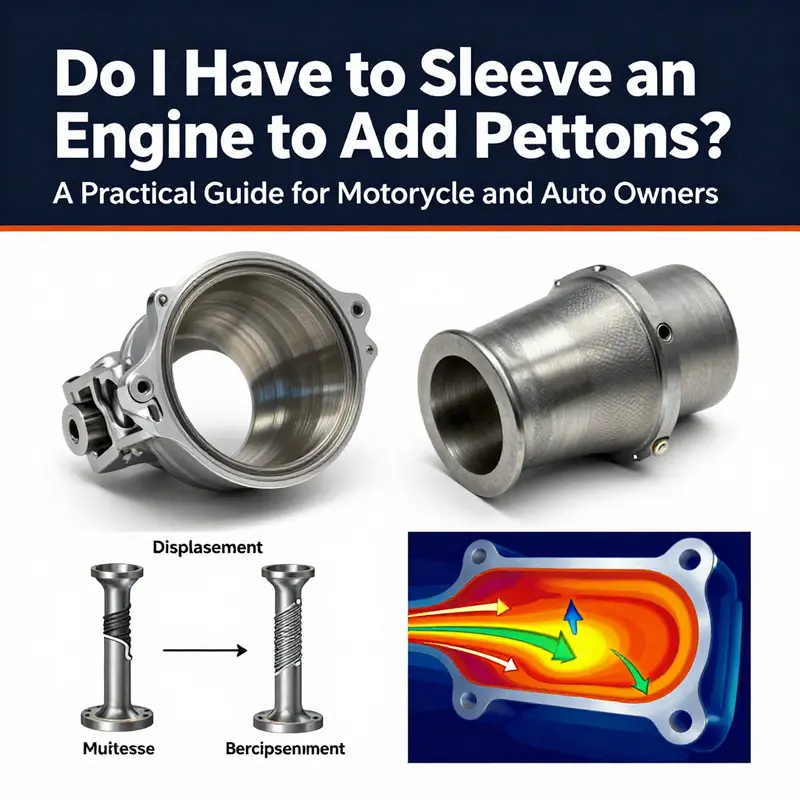
When you first start talking about upgrading an engine by swapping or adding pistons, the question often becomes less about pistons themselves and more about what the cylinder walls can handle. The instinct to sleeve a block usually comes up when you’re considering something beyond a routine piston replacement: a larger bore, higher compression, or a sustained increase in power that will push the engine harder than it was originally designed to operate. The practical answer, grounded in how engines are built, is that you do not have to sleeve an engine merely to add pistons. Pistons can be swapped in many cases without changing the cylinder walls. Yet the decision is not a blanket yes or no. It hinges on the condition of the cylinder walls, the extent of the modification, and the long-term reliability you expect from the build.
In the everyday overhaul, pistons are a standard, replaceable part that lives inside a properly honed bore. When the engine is disassembled, the bore is measured with precision, the piston rings are examined, and the piston diameter is chosen to fit within the cylinder with the correct clearance. If the walls are smooth, straight, and within tolerances, a new set of pistons that matches the existing bore can usually be installed without any sleeve work. This is the scenario most people encounter in a minor rebuild or during routine maintenance where the goal is to restore original performance rather than to push the envelope. The moment you are considering a larger bore or a significant change in displacement, however, the calculus shifts.
Sleeving is a technique that introduces a separate, heat-dissipating barrier inside the cylinder bore. It is not a universal prerequisite for piston replacement, but it becomes a critical option under certain conditions. A worn, scored, or damaged cylinder wall can compromise compression and integrity. In such cases a sleeve can restore a cylindrical surface that is too far gone for a simple hone or oversize piston. The sleeve offers a fresh, wear-resistant surface that can handle heat, pressure, and higher-cylinder pressures associated with performance upgrades. If the goal is to increase displacement through bore enlargement, the sleeve can serve as a robust support for the new bore diameter, maintaining concentricity and ring seal quality even as the piston size grows.
The reasoning behind a bore increase without sleeves often rests on the wall material, wall thickness, and overall block design. If a block is thick enough and the walls are in excellent shape, a careful re-bore combined with correctly sized oversized pistons can achieve a modest displacement increase without sleeves. In such cases, the new pistons fit into the freshly honed bore, and the engine can handle the additional stress with proper clearances and lubrication. But once you push the bore beyond the stock limits, the risks climb: excessive heat, accelerated wear, and the potential for distortion can undermine reliability. This is where sleeves—whether hypereutectic, forged steel, or another compatible material—often become a practical insurance policy.
Understanding the role of sleeves hinges on a few core mechanical realities. Displacement grows when you increase bore, stroke, or both. Bore enlargement directly changes the swept volume of air and fuel the piston operates within. Even a small increase in bore size can meaningfully raise displacement and, with it, the engine’s power potential. Yet, as displacement climbs, so does the demand on heat management, lubrication, and the structural integrity of the cylinder walls. Compression ratio behaves differently: a larger bore can change chamber geometry slightly if the head gasket and combustion chamber volumes remain fixed. If you do not adjust the piston crown or the combustion chamber, the volume of the combustion space can change, nudging the compression ratio a little lower. Conversely, a domed piston or a dished crown can compensate, helping to retain or even raise compression while expanding displacement. The takeaway is not that one path is superior, but that every piston upgrade interacts with the entire breathing and burning ecosystem of the engine.
Heat management is where sleeving reveals its value more clearly. In a non-sleeved block, the cylinder walls themselves bear the responsibility for heat transfer away from the piston and rings. In high-performance scenarios or when the engine is engineered to operate at higher temperatures, the bare walls may struggle to carry the heat load. That can lead to wall distortion, glaze in the bore, or scuffed rings under sustained high-load conditions. A sleeve adds a dedicated heat-dissipating surface that can be designed for superior thermal conductivity and wear resistance. It also provides a consistent, hard boundary for the piston rings to seal against, which helps maintain compression and reduce oil consumption in demanding operations. In mild upgrades, this added complexity may be unnecessary, but for significant bore increases or high-horsepower builds, sleeving is a well-regarded precaution that pays dividends in durability and reliability.
Piston design itself interacts with these choices. Piston material, weight, and the crown shape all influence compression ratio and combustion efficiency. A lighter piston reduces reciprocating inertia, but the crown geometry determines how the mixture flames front and how much heat is deposited in the piston itself. If you decide to increase bore size without changing the head or the combustion chamber, you’ll likely need to recalculate and possibly redesign the piston crown to preserve the intended compression and combustion dynamics. This is not merely a matter of “more is better.” It is a careful balancing act across bore, stroke, piston weight, compression, and the heat that the block must dissipate under load. The engine’s lubrication system, cooling circuits, and even the type of fuel you plan to run all feed into that balance. A modest bore increase with appropriately matched pistons can work smoothly in a well-engineered build, but it is not a plug-and-play venture to be undertaken casually.
For those who want to keep the project simple, the safest route is to maintain the original bore and install pistons that fit within the existing cylinder walls, assuming the walls are within tolerance after inspection. This path preserves the engine’s original heat management characteristics and keeps the risk profile familiar. If, however, a rebuild reveals wall wear beyond what honing can reasonably correct, or if your plan involves increasing displacement beyond what the stock walls can safely carry, it is prudent to consider sleeves. Sleeves can be chosen to suit the intended bore size, the anticipated heat load, and the desired wear resistance. They also open the door to more aggressive piston designs that might not otherwise be compatible with the original cylinder walls. In many shops, the decision to sleeve will be informed by the overall goals of the build, the intended operating conditions, and a careful assessment of the block’s remaining thickness and integrity.
When contemplating the practical steps of such a project, it helps to visualize the journey from a condition-check mindset to a design-choice mindset. Start with a thorough inspection of the block. Inspect not just for scoring or cracks, but for taper, out-of-roundness, and bore diameter variation along the cylinder. Measure the bore with calibrated gauges and compare those measurements to the manufacturer’s specifications for the intended piston size. Consider also the piston ring end gap, the wrist pin clearance, and the overall balance of the rotating assembly. If the measurements align with tolerances and you are staying within the stock bore, a straightforward piston replacement is usually adequate. If the bore shows wear, or if you plan a sizable change in displacement, then ask whether the block can sustain a larger bore with or without a sleeve. This is where the decision to sleeve often makes the most sense.
If you decide to move forward with sleeving, you are entering a realm where precision matters as much as ambition. The sleeve must be properly aligned within the block, with a precise fit to avoid distortion as the engine heats up during operation. The sealing between sleeve and block is critical to prevent coolant or oil migration into the bore. The bore finish, whether the sleeve is dry or wet, and the compatibility of sleeve material with your intended piston and ring package all play into how well the assembly will seal and how reliably it will perform under load. In many cases, the sleeve choice is guided by the intended use: a high-heat, high-load scenario benefits from sleeves designed for superior heat transfer and wear resistance. The installation itself is not a one-size-fits-all procedure; it requires careful preparation, appropriate tooling, and precise machining to ensure concentricity and surface finish. Even the best pistons and crown designs can underperform if the cylinder wall geometry is off or if the sealing surfaces are imperfect.
A final note on the overall strategy helps to connect the practical with the theoretical. The core aim is not simply to add pistons but to harmonize the entire engine system. Displacement gains should be paired with matching breathing, fuel delivery, ignition timing, and a cooling and lubrication plan that supports the new operating regime. This is why many builders consult technical resources and, when necessary, seek professional oversight for machine work like bore resizing, honing finalities, and sleeve installation. For readers exploring the broader context of how sleeves fit into the wider engine-sleeve landscape, this resource offers a foundational view: What are engine sleeves?. It helps illuminate why sleeves are chosen, how they interact with heat and wear, and what to expect when planning a sleeve-based upgrade.
In summary, you do not automatically need to sleeve an engine to add pistons. If the bore is sound and the goal is to restore or maintain stock displacement with standard pistons, sleeve-free operation is common and reliable. Sleeving becomes a practical necessity when you push bore size upward, when the wall condition dictates repair, or when the design calls for added wear resistance and heat management under high-performance demand. The most successful piston upgrades are those that consider bore condition, sleeve options, piston geometry, compression balance, and the engine’s cooling and lubrication architecture as a cohesive system. For many enthusiasts, this integrated approach yields the best mix of performance, durability, and driveability over the long haul. External references and deeper technical dives can be found in discussions about displacement, piston sizing, and their impact on head gasket volumes and chamber dynamics, such as this external thread that delves into how piston sizing influences displacement choices in practice: https://www.bimmerforums.com/forum/showthread.php?1463857-M52-Engine-Displacement-and-Piston-Sizing-Explained.
Do You Need to Sleeve a Block to Install Pistons? A Practical Guide to Bore Health, Fit, and Decision Making
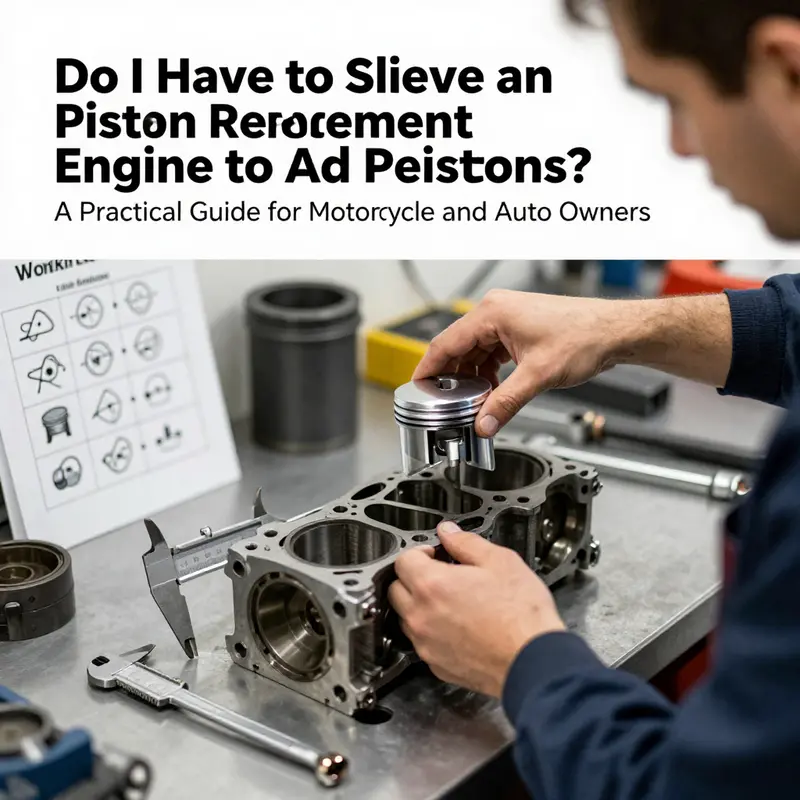
When evaluating an engine bore for piston replacement, bore health is the gatekeeper for the build path.
In most cases you can install pistons without sleeving if the bore is within factory tolerances or only mildly worn. The key checks are measurement, roundness, and the range of acceptable wear. A machinist will use a bore gauge, a dial bore indicator, and sometimes a borescope to inspect the cylinder wall. If the bore is truly round and within limits, a standard or lightly oversize piston can be selected without sleeve work.
Sleeving enters the decision when the bore shows deep scoring, glazing, cracks, or excessive out of roundness that cannot be corrected by honing or polishing. In such cases a wear resistant sleeve is installed to redefine the bore diameter and improve surface finish. Sleeving adds durability, helps with tighter tolerances, and can support higher compression in a performance build. But it also adds cost, labor, and potential changes to heat flow and lubrication paths.
A practical decision workflow follows a simple sequence. First assess bore condition with precise measurements. Second determine piston size and achievable clearance based on the measured bore. If the bore is within tolerance, sleeve free piston replacement is preferred. If not, sleeves may be necessary after evaluating whether the bore can tolerate restoration and whether the performance goals justify the extra work.
Finally, document measurements, clearances, and the final piston sleeve combination. A qualified machinist can advise the correct sleeve material and dimension, verify compatibility with rings and heat treatment, and establish final honing targets. If in doubt, seek professional input before proceeding. The core idea is that bore health drives the build path and sleeves are a targeted option when the bore cannot sustain the intended piston geometry.
Final thoughts
Understanding when sleeve installation is truly necessary for adding pistons helps protect engine reliability and aligns with goals for performance and budget. By assessing bore wear, the intended power path, and the feasibility of non-sleeved piston work, owners and technicians can make informed choices. The practical workflow outlined across the chapters supports clear decision points—from confirming bore health to evaluating displacement impacts and heat management—so you can execute piston replacements with confidence, whether you’re in a shop, on a parts bench, or planning a build.