
For marine power users, the idea of sleeving a Cummins engine—replacing worn cylinder liners to restore compression and efficiency—is a topic that blends repair mechanics with practical business sense. Sleeve replacement is a well-established repair path for several Cummins marine models, including popular blocks such as the 6CTA8.3 and NTA855 series. This guide speaks directly to Motorcycle Owners, Auto Owners, Auto Parts Distributors & Wholesalers, and Auto Repair Shops & Garages who are evaluating whether sleeve work is a viable option, how the technical steps unfold, what parts and costs to expect, and how to manage maintenance and risk after a sleeve is installed. You’ll find a structured overview of feasibility, a step-by-step sense of the technical process and installation considerations, guidance on parts sourcing and cost implications, and a practical look at maintenance, potential risks, and long-term reliability. Each chapter ties back to the central question: can you sleeve a Cummins marine engine, and if so, under what conditions does it make sense for your operation or customer base? Whether you’re coordinating with a wholesale supplier or performing the work in a repair shop, the path from assessment to aftercare hinges on proper evaluation, qualified technicians, and reliable parts sourcing. The discussion also emphasizes the importance of consulting official Cummins service manuals and certified suppliers to avoid coolant leaks, piston damage, and misfits that compromise seaworthy performance.
Sleeving a Marine Diesel Engine: Feasibility, Craft, and the Practical Reality of Extending Life at Sea
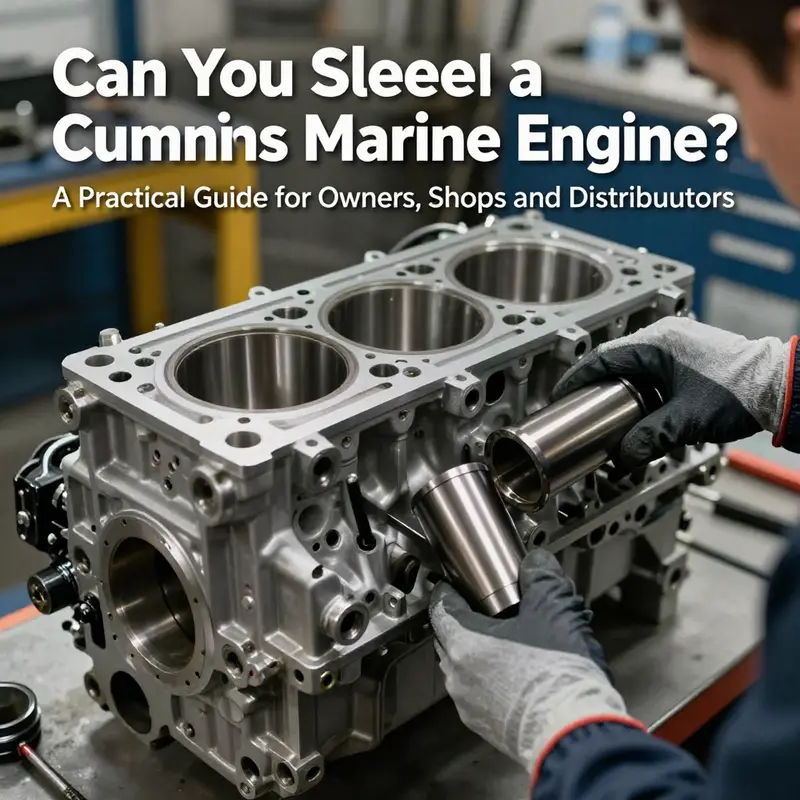
When a heavy‑duty marine diesel shows signs of bore wear or cylinder damage, repair options must be weighed with the sea’s demands in mind. Sleeving, the installation of a new cylindrical liner into the engine block, is one path that seasoned technicians consider when the block remains sound but the bore has lost integrity. This chapter surveys the feasibility and practicality of sleeving a popular class of marine engines, emphasizing how engine condition, repair goals, and the economics of the option shape the decision. It is a discussion grounded in the realities of offshore service, where reliability is not optional and downtime carries a steep cost. For a concise primer on the concept itself, consider exploring What are engine sleeves? within the resources available on technical sleeves and liner work. The explanation there helps frame the core idea: a sleeve restores the bore, providing a fresh, wear‑resistant surface to improve compression, sealing, and longevity while preserving the existing block structure. What are engine sleeves?
In classic terms, sleeving is a response to cylinder wall wear that would otherwise compromise compression and efficiency. Marine engines operate in a brutal environment: high combustion pressures, sustained temperatures, and the corrosive challenge of saltwater cooling systems. Over many hours at sea, cylinder walls can score, taper, or ovalize, and the risk of piston ring loss or coolant intrusion increases. Sleeving addresses these issues by providing a fresh, uniform surface against which pistons and rings correctly seal. The concept is well established in large diesel applications and has a track record of extending service life, but the practical decision to sleeve hinges on more than the mathematics of bore repair. It hinges on the engine’s overall health, the remaining service life, and the realities of the repair shop’s capabilities. The reality is simple: sleeving is technically feasible for a range of engines, yet it is not a universal remedy. The process demands precision, and its success rests on whether the engine block is otherwise intact and serviceable.
To appreciate the feasibility, one must first understand what sleeving entails at a high level. A sleeve is a hardened liner that fits inside the cylinder bore. It creates a new, uniform bore diameter with a precise roundness and surface finish. The fit must be tight enough to resist motion during startup and the thermal cycles of operation, yet allow for proper heat transfer to the block and cooling system. The process requires machining to restore concentricity and to prepare the block for the sleeve’s interference fit. In practice, machinists bore, hone, and finish the cylinder to the exact specifications that the new sleeve requires. Then the sleeve is inserted, secured, and, if necessary, welded or bonded in a way that ensures a permanent, leak‑free interface. Finally, the bore is honed to the precise final finish compatible with the engine’s piston and ring dynamics. The end result, if done correctly, is a renewed cylinder with a fresh surface that can restore compression and reduce the risk of coolant and oil leakage.
The feasibility question, however, is rarely a matter of capability alone. It depends heavily on the engine’s block condition and the surrounding subsystems. A block with cracks, core shift, or misalignment that would compromise crankshaft or camshaft timing can undermine a sleeving project. If the block has significant warping or a compromised deck surface, sleeving may not provide a durable fix, and the net value could be negative. In marine service, the question moves from “Can we sleeve?” to “Should we sleeve, given our long‑term goals and the costs involved?” That trade‑off often centers on three factors: the expected remaining hours of service, the cost differential between sleeving and rebuilding or replacing the engine, and the shop’s ability to execute the job to a reliable standard. A well‑maintained block with good deck integrity is far more likely to yield a favorable outcome than one carrying multiple structural concerns.
Cost and time loom large in any repair, and sleeving is no exception. The price of sleeves and the precision machining required can be substantial. In a marine context, where downtime translates into dock time and fuel costs, the economic calculus becomes more acute. The labor hours needed for precise bore preparation, sleeve fitting, and final finishing can approach or exceed those of a full engine rebuild or a rebuilt block replacement. This is especially true when one considers the risk of mismatches in expansion rates between sleeve material and the parent block, or the potential for coolant leaks if the interface is not perfectly established. Owners and operators must therefore weigh not just the price tag but the life cycle cost of sleeving versus a complete engine replacement or a block swap. A factory or certified service provider can offer a transparent estimate, including bore inspection, sleeve sourcing, machining, installation, and a comprehensive leak test. The long‑term reliability of the repaired cylinder is as much a financial matter as a technical one, and it tends to hinge on the meticulousness of the process and the quality of the sleeve materials used.
When discussing feasibility, it helps to consider the engine family’s characteristics in general terms rather than brand specifics. In marine diesel design, certain engines are built with cylinder liners as a standard feature of their architecture. Others use sleeved bores that can be replaced with renewed sleeves if wear patterns are acceptable and the block’s core remains sound. For the operator, the decision to sleeve often comes down to whether the engine block is structurally sound, the cooling system remains healthy, and the bore wear has not reached a point where the sleeve would be strained under normal or peak loads. If wear is localized, and there is uniform bore condition elsewhere, sleeving can be a practical compromise that preserves a well‑maintained block rather than discarding a useful engine. But if wear is widespread, or if the bore geometry is no longer controllable within acceptable tolerances, the more robust option—engine replacement or a rebuild with a new block—may deliver greater long‑term value.
A crucial aspect of feasibility, especially for operators who plan to keep a vessel in service for years, is the availability of skilled labor. Sleeving demands high precision and specialized tools. It is not a do‑it‑yourself project for most owners. Qualified marine diesel technicians bring to bear the right blend of machining accuracy, welding expertise (where needed for sleeve bonding), and quality control to ensure a leak‑tight, oil‑and‑coolant‑proof interface. In a marine setting, the stakes are higher than in automotive repair: the engine must withstand sudden load demands, resist salt‑water intrusion, and perform reliably under a wide range of ambient conditions. The best outcomes come from technicians who couple deep understanding of engine cooling, lubrication, and thermal management with the machining discipline required for sleeve work. The alignment of these capabilities with the vessel’s usage profile often determines whether sleeving is a prudent choice.
What about sourcing sleeves? The repair ecosystem generally offers genuine and aftermarket sleeves and related components. The availability and selection depend on the engine family and the bore diameter needed for a given model. In practice, a shop will match sleeve material and finish to the engine’s thermal and lubrication regime. The sleeves must be compatible with the block metallurgy, and the bonding method must withstand the thermomechanical stresses of marine operation. A reputable supplier network is essential here, not only for the sleeves themselves but for the ancillary components that ensure a clean seal and proper coolant flow around the liner. The path from diagnosis to a shipboard test run passes through precise measurement, correct sleeve specification, and a controlled installation environment that minimizes contaminants and misalignment. In sum, sourcing is a meaningful part of the feasibility equation, and it rewards operators who engage with established service centers that can offer technically appropriate sleeves and the assurance of factory or near‑factory tolerances.
From the owner’s perspective, the decision to sleeve rests on long‑term operating plans. If the vessel is intended to stay in service for a defined horizon—say a remaining handful of seasons—sleeving can be a cost‑effective way to extract more life from a known, well‑maintained block. Conversely, if the plan calls for years of heavy loading and mission‑critical performance, a sleeved block may still be a risk if future wear patterns emerge or if corrosion has quietly progressed in other cylinders. The prudent course is a professional evaluation that weighs current bore condition, deck and block integrity, pump and cooling system health, and the vessel’s intended usage. In many cases, a marine diesel specialist will model the risk: what is the probability of future leakage or piston damage given the present wear, and how would that risk change if we replaced the entire engine or swapped the block? The analysis often points toward sleeving as a sensible choice only when the engine block is otherwise solid, the sleeves are of the right spec and material, and the total repair cost remains favorable relative to a rebuild or replacement. In this way, sleeving becomes less about a single technical trick and more about aligning technical feasibility with the vessel’s operational strategy.
If you are considering sleeving, the best next step is a candid consultation with a certified marine diesel specialist or an authorized service center. They can assess bore damage, check block integrity, and map out a repair plan that factors in your vessel’s planned life cycle, maintenance intervals, and downtime tolerance. A thorough inspection should include bore measurement checks, deck integrity assessment, coolant and oil system evaluations, and an assessment of piston, ring, and valve health in the surrounding cylinders. The professional will also review the local supply chain for sleeves, confirming availability, quality, and lead times. In many cases, the final recommendation will arrive as a balanced verdict: sleeving is feasible and economically reasonable under certain conditions; otherwise, a full engine replacement or a rebuild with a new block would deliver a more predictable, longer‑term return on investment. Either way, the conversation should be anchored in data, not guesswork, and the decision should reflect not only the current condition but the engine’s place within the vessel’s broader life plan.
For readers who wish to dive deeper into related sleeve concepts and the broader mechanics of how sleeves interact with different engine architectures, the linked primer above offers a structured starting point. It can help demystify the terminology and provide a grounded understanding of what to expect from sleeving work in practical terms. The core takeaway remains clear: sleeving is a legitimate option for certain engines under specific conditions, but it is not a one‑size‑fits‑all solution. The success of a sleeving project hinges on selecting the right block in good health, engaging skilled technicians, and executing a precise machining and bonding sequence that preserves the engine’s integrity for the long haul. It is a decision that rewards thorough evaluation, transparent cost analysis, and a clear view of the vessel’s operational horizon.
External reference (for broader technical context): https://www.cummins.com/en/products/diesel-engines/marine/cummins-k-series/k38-marin-diesel-engine
Can You Sleeve a Cummins Marine Engine? Precision, Process, and Practical Reliability
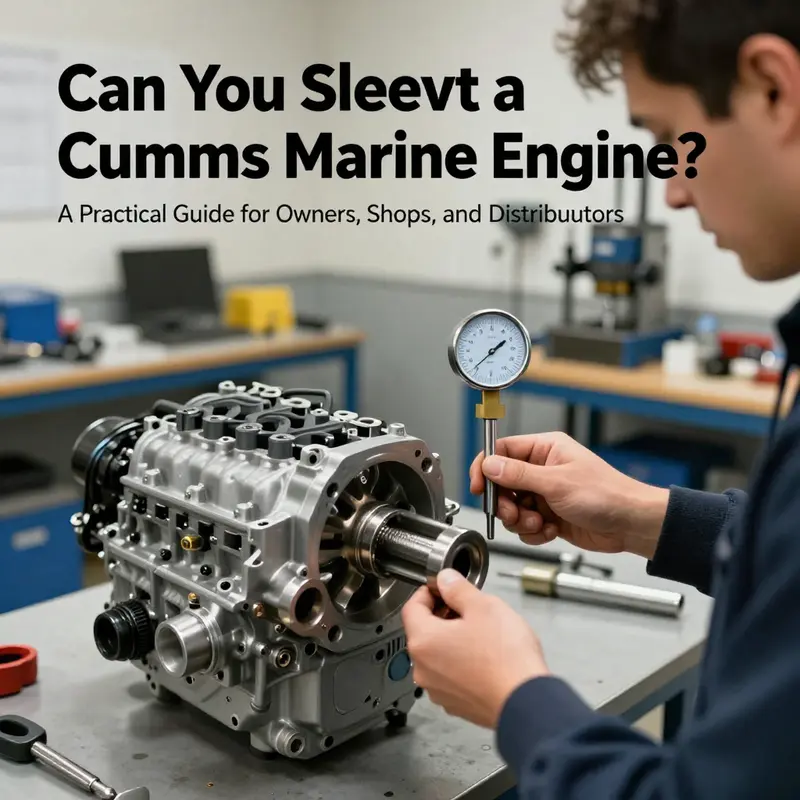
Sleeving a marine diesel engine is a repair pathway that many vessel owners and shop technicians eventually consider when cylinder bores wear or become damaged. It is a task that sits at the intersection of precision machining, cylinder technology, and careful reassembly. In practice, a successful sleeving job restores compression, smoothes power delivery, and extends the life of the block under the stern demands of saltwater operation and continuous duty. It is not a casual weekend project. The procedure demands a stable workshop, experienced hands, and access to the right tools and parts. When done correctly, sleeving returns a block to a reliable baseline; when done poorly, it can invite coolant leaks, piston scuffing, or a compromised seal that short-circuits the next season’s work. The difference is often a matter of minute tolerances, clean surfaces, and exact fit between the liner, the coolant jacket, and the piston assembly.
The need for cylinder liners arises from bore wear and material fatigue within the engine block. Over time, the bore can become oversized, out of round, or scored, compromising compression and oil control. In marine engines, the environment accelerates these stresses: thermal cycling from hot engine bays, salt exposure, and the heavy, continuous loading typical of propulsion duties. Cylinder liners, also known as sleeves in some parlance, are designed to be a replaceable, wear-resistant interface between the piston and the block. They are exposed to coolant on their outer surface, while the bore inside provides the smooth friction surface for the piston rings. In many marine configurations, the liners are seated in the block with seals that keep coolant from leaking into the combustion chamber while allowing uniform heat transfer from liner to water jacket. A proper sleeving job therefore hinges on two intertwined goals: a precise mechanical fit and a robust, leak-tight seal against the cooling system.
To appreciate what goes into achieving that fit, it helps to ground the discussion in the concept of sleeves themselves. An introduction that clarifies the sleeve’s role can be found in practical detail here: What are engine sleeves?
The general workflow begins with a thorough assessment. A technician first inspects the block and the affected cylinders, looking for step wear, scoring, or corrosion that would compromise a sleeve’s seating. Accurate bore measurements are taken with calibrated gauges to determine whether the bore remains within factory tolerances or requires reconditioning before sleeving. If a bore is out of round or oversized, it will often be re-bored or honed to a new target diameter that matches a corresponding liner size. Machining the cylinder surface to a uniform finish is crucial; any deviation can cause ring land instability, uneven ring seating, or leakage around the liner joint. The cleanliness of the work area and the bore surface is non-negotiable. Even a few particles can undermine seals and create a premature failure path.
Choosing the correct liner size is a careful balance. The installer must align the outer diameter of the liner with the block’s hole, ensuring the liner is neither too tight nor too loose. Many fleets use liners designed to be pressed into the block or to snap into a precise seat, sometimes with additional sealing features at the base or around the top end. The method of installation—whether the liner is heated to ease insertion or the block is cooled to generate a tighter initial grip—depends on the engine design and the material properties of the liner and block. In marine practice, the water jacket’s geometry and the coolant path run all the way around the liner, so the seal between liner and block interior surfaces must be watertight, yet not so tight as to constrain thermal growth during operation. This dual demand—solid seating and controlled expansion—drives the precision that sleeving requires.
Once the bore is prepared and the correct liner is selected, installation proceeds with an emphasis on alignment and seating depth. The installation process commonly involves bringing the liner into the block with a controlled press or using a heating step to ease entry. The liner must sit to a precise depth, and its orientation must be square to the crank axis and deck surface. Any misalignment translates into eccentric piston movement, abnormal ring wear, or even contact with the block’s water jacket, which could invite leaks. As the liner settles, sealing elements come into play. O-rings or gaskets designed for the specific combination of liner and block materials seal the interface between the liner and the water jacket, while other seals ensure there is no path for coolant to escape into the combustion chamber. The correct torque sequence and values on the surrounding fasteners are essential; improper torquing can distort the seating surface or fracture the liner under heat and pressure. This is a context in which meticulous cleanliness and adherence to the service manual are non-negotiable.
After the liner is in place, a suite of checks follows. The installer measures the liner protrusion relative to the deck and the bore’s surface finish to confirm concentricity. Surface finish quality inside the cylinder is critical; a rough finish invites early ring wear and oil consumption. The gap between the piston rings and the liner bore must be uniform to maintain consistent compression and oil control. A hydrostatic or coolant leak test is often performed to verify the integrity of the liner sealing system before the engine is buttoned up. Only after these checks can reassembly begin, with the careful return of the piston, connecting rods, and cylinder head in their proper torque sequence. The reassembly process must respect the engine’s fastener orders and tightening values, because a single misstep can alter the alignment of the liner or damage a seal during the heat cycle that follows.
With a sleeved block buttoned back together, the break-in and commissioning phase begins. The engine should be brought up through a controlled warm-up, and all cooling system pathways should be verified for leaks. Because the sleeving operation changes the heat transfer characteristics within the cylinder, monitoring of cylinder pressure behavior during the initial runs is prudent. It is not unusual to re-check bore alignment and liner seating after a short period of initial operation, as thermal expansion can reveal subtle seating issues that weren’t apparent in the static measurements. Working through these checks with a seasoned technician yields a reliability profile that is the best way to protect the investment in a marine engine’s longevity.
The practical realities of sourcing components also shape a sleeving project. Genuine and aftermarket sleeves are widely available through established suppliers, and the choice between them often comes down to compatibility, supply stability, and the service philosophy of the shop. The best path is to work with materials and designs that match the engine block’s metallurgy and the cooling circuit’s chemistry. The sleeves and seals must withstand continuous exposure to coolant and the thermal cycling that marine service imposes. The aim is not merely to replace a worn part but to restore the block’s integrity so that the engine can deliver reliable power for many seasons to come. In this context, reference to official guidance and a certified supplier network matters as much as the mechanical work itself. For readers who want to understand the sleeve concept in greater depth, a concise explainer is available here: What are engine sleeves?
In addition to the hands-on work, technicians frequently consult the engine maker’s service manuals for model-specific tolerances and procedures. Marine engines, while sharing general sleeving principles, often require particular alignment checks, gasket selections, and torque sequences that are unique to each block design. The official Cummins technical support portal offers comprehensive manuals and technical bulletins that address the nuances of sleeving for marine applications. Access to model-specific instructions helps ensure that the process respects the intended design margins and the cooling system’s geometry. A reliable, detailed source for those specifications is Cummins’ support site, which guides technicians toward accurate measurements, lubricants, seals, and assembly sequences.
For readers seeking practical, developer-level context about sleeves and their installation, it is useful to connect the theoretical to the hands-on practices described in industry-focused resources. The sleeve’s seal geometry, its interaction with the water jacket, and the way the liner’s deposition affects heat transfer all feed back into how you plan the machining and installation steps. The best sleeving projects blend careful measurement with disciplined reassembly, then rely on validated torque values and leak tests to confirm success. When you approach sleeving with this mindset, you recognize that every step—bore preparation, liner seating, seal placement, and final clearances—contributes to long-term reliability rather than a quick fix.
In the broader context of engine maintenance, sleeving sits among a family of restorative strategies designed to extend service life and defray the cost of a full rebuild. It is one of several accepted repair pathways for worn cylinder liners, and its value lies in preserving a block’s structural integrity while restoring healthy compression and cooling performance. A well-executed sleeving job can yield a dramatically improved power response, smoother operation, and lower risk of mid-season failures. Nevertheless, the decision to sleeve should always be anchored in careful assessment, accurate measurements, and adherence to the manufacturer’s specifications. When the workshop has the right combination of tooling, training, and documentation, the sleeving process becomes not a discretionary patch but a disciplined restoration that respects the engine’s design intent. For readers who want to begin with a deeper dive into the sleeve concept, the following internal link provides a concise primer: What are engine sleeves? And for model-specific considerations and official guidance, consult the engine maker’s technical support resources. For readers seeking external model- and procedure-specific information, official manuals are available at Cummins Support.
External resource: Cummins Technical Support site (for model-specific manuals and service bulletins): https://www.cummins.com/support
Can You Sleeve a Modern Marine Diesel Engine? Parts, Sourcing, and the True Cost of Cylinder Liners
Can you sleeve a modern marine diesel engine? The short answer is yes, with practical caveats. Sleeving is a well-established repair approach for worn or damaged cylinder liners, a wear-prone area that directly affects compression, heat transfer, and fuel efficiency. In the marine environment, where engines endure long hours at steady torque and must operate reliably in challenging conditions, cylinder liners take on extra importance. Replacing a worn sleeve can restore compression, reduce oil and coolant contamination, and extend the engine’s useful life. The decision to sleeve rests on accurate diagnosis, the right sleeve material, and a disciplined installation that respects the engine’s cooling and lubrication demands. This is not a casual hobby repair. It is a precision task that blends mechanical skill with engineering judgment, because the tolerances governing liner fit, the alignment of cooling passages, and the interaction with piston rings determine whether a rebuilt engine will sing or stumble at sea. The topic touches on sourcing, because sleeves come from a spectrum that includes genuine OEM items and carefully manufactured aftermarket equivalents, each with its own fit profile and warranty considerations. It also touches on cost, because a sleeve is only one line item in a repair bill that must be weighed against the value of the engine, the value of downtime, and the vessel’s operational role. In practice, the process begins with a clear understanding of what a liner does. The liner provides the wetted surface on which the piston seals, transfers heat to the coolant, and maintains the seal between the combustion chamber and the crankcase environment. When a liner wears unevenly, it can cause loss of compression, higher blow-by, and an unstable combustion event. Marine engines face unique challenges in this area: long cruising runs, substantial vibration, and the need for reliable, repeatable cooling across the block. A well-executed sleeving operation can address these challenges by restoring a uniform bores, correcting taper, and ensuring the coolant channels remain aligned with the sleeve’s outer wall. It is the alignment of all these pieces that makes sleeving an intricate operation rather than a simple part swap.
To understand what sleeving entails, imagine the engine block as a solid house with a corridor that has worn walls. You replace the worn corridor lining, carefully shaping it to the exact interior diameter, then you reestablish the thermal and mechanical interfaces that allow the house to function as designed. The same logic applies to the engine block. A new liner must be pressed or shrunk into the block with exact concentricity, flush with surface decks, and with precise end-gap clearances to the surrounding components. Once the liner is in place, the block interior is prepared for the final finishing: boring to the exact finished bore size, honing to the right surface texture, and ensuring that the liner’s top and bottom edges remain square to the deck faces. The work doesn’t stop at fitting. The next steps involve sealing and coolant passage alignment, followed by thorough cleanliness and dry-fit checks before the engine is reassembled. Throughout this sequence, the technician relies on torque specs, precision measuring instruments, and established service procedures to ensure the bore is perfectly coaxial with the crank centerline and piston rings. The aim is not only to restore the old power output but to do so with predictable heat rejection and stable clearance under load. If any one of these steps is rushed or mismeasured, the risk of coolant leaks, piston scuffing, or accelerated wear reappears, sometimes with dramatic consequences at sea.
A critical decision point is choosing between genuine OEM sleeves and high-quality aftermarket options. Genuine sleeves are designed to match the engine’s original specifications, including the exact bore finish, sleeve-wall thickness, and the geometry of cooling channels. They typically offer the most predictable fit and long-term reliability. Aftermarket sleeves can provide more economical options or faster availability, but they require careful vetting. The market has responded with a broad range of materials and finishes, from traditional cast iron to more exotic alloy blends, each touting its own heat tolerance and wear characteristics. The engine’s operating profile drives the choice. A vessel that runs hot climates or heavy loads for extended periods may demand a sleeve with enhanced thermal conductivity and a tighter tolerance to minimize piston growth under peak temperatures. A vessel that operates in cooler waters or with light load cycles might tolerate a more mainstream sleeve without compromising reliability. In any case, the sleeve must be compatible with the block’s casting, the piston ring set, the head gasket, and the cooling system’s geometry. The fit is not merely about diameter; it is about the entire ecosystem of the combustion chamber and its heat management.
Sourcing sleeves for marine diesels has become easier in one sense and more demanding in another. On the one hand, reputable suppliers and distributors can provide a range of sleeves intended for common marine engine families, including those used in demanding commercial and recreational vessels. On the other hand, the geographic reach of global markets means that lead times, freight costs, and quality assurance become tangible factors in the repair plan. The cost implications of sourcing are not uniform. A single sleeve can vary widely in price depending on whether it is an OEM part, an approved aftermarket substitute, or a bulk-manufactured alternative. The economics shift again if the sleeve requires special protective coatings, a unique heat-treatment process, or a nonstandard wall thickness. For typical marine maintenance cycles, the price difference between a premium OEM sleeve and a well-vetted aftermarket option may be offset by faster availability, easier warranty support, or the broader support network for the latter. Yet the potential risks should be weighed: a misfit sleeve can undermine compression, create lubricant or coolant leaks, or require rework that doubles the downtime. When sourcing, it is prudent to work with certified distributors who can verify compatibility, supply chain integrity, and return policies. The practical path is to reference the engine’s service manual and confirm the sleeve’s compatibility with the block casting and the cooling passages, then compare quotes from trusted suppliers who can demonstrate traceability, material certifications, and test records.
The reality is that a sleeve is part of a larger repair decision. Some operators consider a full engine reconditioning or even a replacement if the crew cannot secure a precise fit within the required time window. However, sleeving remains a viable option for many engines, especially when downtime is costly and the existing block is structurally sound. The cost picture tends to hinge on four variables: the sleeve material and finish, the alignment of the cooling channels, the availability of the appropriate tooling for installation, and the labor required to perform measurements and finishing work to the exact tolerances. The labor burden should not be underestimated. Even with an experienced technician, sleeving a marine engine demands meticulous inspections, including the measurement of bore straightness, the assessment of deck flatness, and the verification of end-gap clearances. The work also calls for specialized tools such as sleeve installation fixtures, precise boring bars, and alignment checking devices. In many shops, these tools are treated as essential assets because the cost of improper finish far exceeds the price of proper equipment. The result, when performed correctly, is a reconditioned engine that can deliver consistent performance and longer service life under the rigors of marine duty.
From a practical perspective, the decision to sleeve should be framed by the vessel’s operating profile and the owner’s risk tolerance. If the engine is the heart of the boat’s propulsion and reliability is non-negotiable, sleeving becomes a prioritized maintenance item. If downtime is manageable and the engine period between overhauls is long, a more conservative approach might be to monitor liner wear and plan the repair during a scheduled maintenance window. Either way, the process hinges on reliable sourcing, precise workmanship, and a clear understanding of how the liner integrates with the rest of the engine’s thermal and mechanical systems. For readers seeking initial background on what engine sleeves are and how they function, a concise primer is available here: What are engine sleeves?. This resource helps frame the broader conversation about sleeves without getting lost in model-specific details, which can cloud the central engineering truths about fit, lubrication, and heat transfer that govern a successful sleeving job.
As you weigh the options, keep in mind that accuracy in the early phase reduces risk later. Engage with a service provider who can supply a detailed parts list, including the sleeve type, required finishing steps, and a proposed timeline. Request a pre-installation inspection that assesses deck flatness, block integrity, and the alignment of coolant passages. A thorough plan also includes a recognition that some blocks may necessitate additional work such as deck resurfacing or pressure testing, and that these steps affect both the price and the schedule. The most reliable path to a successful sleeving project is a collaborative approach: the technician provides the technical plan, the supplier confirms compatibility and availability, and the operator makes informed decisions about timing and budget. In this framework, sleeves are not just parts; they are a carefully chosen component in the engine’s continuing life at sea. External references and practical sourcing details can deepen this understanding, including reputable market resources that document sleeve options and pricing patterns across engine families. For further exploration of a global sourcing perspective and the practical realities of purchasing sleeves, see the external resource linked here. https://www.alibaba.com/product-detail/China-Cummins-6CT-Liner-Sleeve-for-Cummins_1600492717764.html
Reinforcing the Cylinder Core: Sleeving a Cummins Marine Engine for Longevity, Precision, and Reliability
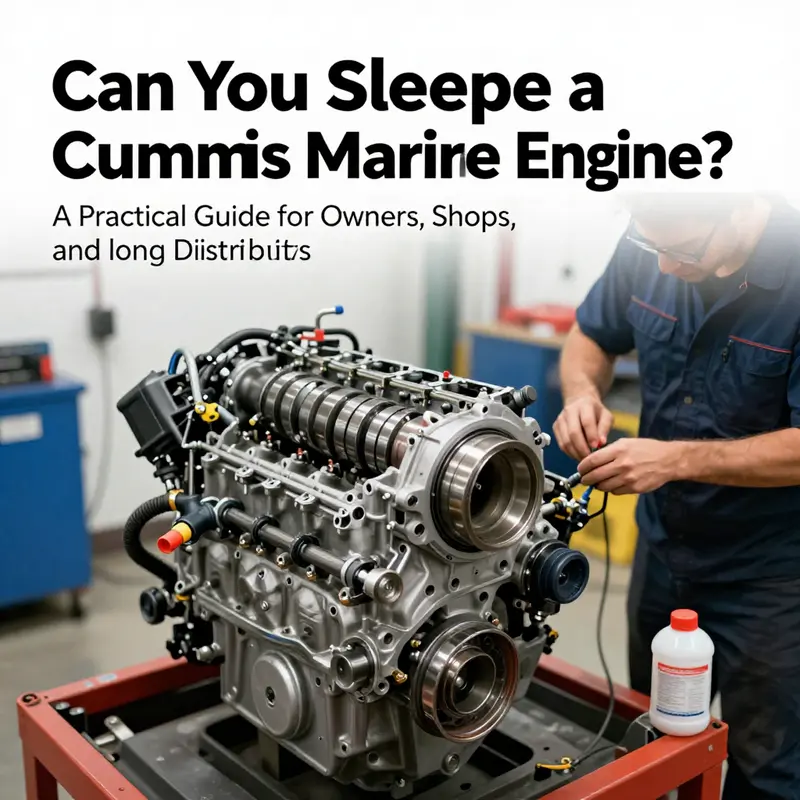
Sleeving a Cummins marine engine is a repair path that can restore life to a worn or damaged cylinder bore, especially when the engine endures the rough duty of saltwater environments and long cruising hours. It is not a routine service item; it is a targeted intervention designed to recover compression, steady power delivery, and a predictable cooling and lubrication balance. In practice, sleeving involves replacing worn cylinder liners with new ones that fit tightly inside the engine block. The aim is to bring the bore back to its original, heat-dissipating geometry so that the piston rings seal correctly and the rings’ dynamic wear remains within designed limits. In the Cummins marine family, sleeving has been a long-standing repair option for engines that experience bore wear or liner damage without requiring a full block replacement. The decision to sleeve hinges on a clear assessment of bore condition, block integrity, and the expected duty profile of the vessel. A foundational primer on engine sleeves helps frame this discussion; see What are engine sleeves?. The integration of sleeves into a marine engine must always be guided by OEM specifications and professional service, not by ad hoc improvisation. In this context, the craft of sleeving becomes a fusion of machining precision, materials science, and meticulous assembly discipline given the stresses of marine operation and thermal cycling.
Cylindrical sleeves can be implemented in two fundamental ways within engine design: dry liners and wet sleeves. The dry-liner approach, which is commonly discussed in relation to certain Cummins cylinder configurations, relies on pressing the liner into a pre-machined bore and letting the engine block conduct heat away from the bore. This arrangement demands an unusually tight tolerance stack and a mirror-like finish on the seating surfaces. Even a hairline misalignment or a minuscule surface imperfection can induce nonuniform thermal expansion, which in turn spawns hot spots, accelerated wear, and shortened liner life. In marine service, where engines endure rapid shifts in load and ambient temperature, those subtleties matter more than in many other applications. The alternative is the wet-sleeve configuration, where the liner is shaped to accommodate a coolant jacket and lubrication paths. Wet sleeves can simplify heat management and assembly in some designs, but they still require exact seating and robust sealing to prevent cross-contamination between coolant and oil. The choice between these approaches is dictated by the engine’s original architecture, the service history, and the availability of OEM-aligned components. Whatever the path, the core requirement remains: a bore that remains round under load, a liner that seats consistently, and a sealing interface that keeps lubricants and coolants in their proper lanes. For a broader technical frame on sleeves, consider the established literature on engine sleeves and their material and geometric considerations.
The installation sequence itself reads like a choreography of precision. It begins with a careful inspection of the block’s overall health, checking for warping, deck flatness, and any signs of cratering in the bore that would preclude reliable seating. If the bore shows significant wear, the technician must decide whether the bore can be brought back within spec or if re-boring to a larger size is required before sleeving. The next phase involves preparing the liner seating surfaces. The sleeve must be pressed to a precise depth so that its top surface sits flush with the block deck or to the exact recessed depth dictated by the engine’s design. Any deviation in depth can alter piston skirt clearance and disturb compression. The sleeve’s outer surface must be conditioned to promote uniform seating, and the connection interface between liner and block must be engineered to resist creep and maintain a sealed seam under heat and vibration. In marine installations, where vibration levels are sustained and cooling cycles are frequent, these tolerances are not merely academic; they translate into tangible differences in component life and reliability.
Reassembly then tests the limits of alignment. The liner’s bore must align perfectly with the crank axis and with the deck surface, ensuring that the piston rings travel in a perfectly concentric path. Any misalignment can propagate stress concentrations that, over thousands of cycles, become micro-cracks or uneven ring wear. The head gasket, seals, and mating surfaces must seal reliably without leakage. A seam that leaks oil into the cooling system or coolant into the oil gallery is not merely a nuisance; it can precipitate rapid engine damage that takes the vessel out of service. The torque sequences for head bolts, main caps, and any ancillary sealing hardware must be executed with OEM-recommended values and in the correct order. In this high-stakes context, lubrication of seals and careful handling of gaskets at the interface are essential steps. Post-installation, a monitored break-in period is necessary to confirm the absence of leaks, verify stable temperatures, and ensure smooth piston motion across a range of engine speeds. The service checklists that accompany OEM manuals and certified procedures are not optional addenda; they are the backbone of a reliable long-term repair. For readers seeking a concise primer on the subject, the linked resource above provides foundational context on engine sleeves and their role in cylinder repair.
Even when the workmanship is flawless, sleeving carries inherent risks that must be acknowledged and mitigated. A liner that is not truly concentric or one that does not seat evenly will alter thermal paths, creating localized hot zones that degrade material integrity with repeated heat cycles. In engines that operate near their thermal and mechanical limits, such distortions can shorten the life of piston rings, bearings, and valve seats. The marine environment intensifies these concerns because salt exposure, vibration, and load transients combine with cooling system demands to test every joint. If the engine’s seam gasket or seal degrades over time, oil leaks or coolant intrusion can follow, compromising lubrication and cooling and accelerating wear in adjacent components. This is why sleeving is treated not as a cosmetic repair but as a serious engineering intervention, requiring OEM-approved parts and procedures and the oversight of technicians who are trained to work within tight tolerances and validated standards. It is not unusual for some block designs to require re-machining or requalification of critical surfaces after liner seating, to ensure that the bore remains perfectly round and true under load. The dialogue between design intent and maintenance reality is never wholly settled; it is ongoing, curated by engineers, machinists, and service techs who must respect the block’s original geometry while adapting to the engine’s evolving condition. The outcome, when done correctly, is a bore that can sustain reliable compression and a piston that moves with minimal friction and predictable ring seating over many seasons.
Determining whether sleeving is the right path requires a candid appraisal of the engine’s history and the vessel’s future duty. If the bore shows uniform wear, proper roundness, and the block surfaces show no significant deformation, sleeving can restore the cylinder to near-new performance. If, however, the bore has deep scoring, asymmetries, or signs of structural compromise in the block, the repair strategy may shift toward a re-bore, a larger or different liner configuration, or in some cases, replacing the block altogether. In all scenarios, the decision should rest with certified technicians who follow OEM-approved parts and instrumentation and who document every step of the process. Before any work begins, a reliable plan, a clear parts fit, and a factory-guided procedure minimize risk and maximize the likelihood of a durable outcome. They also help ensure that the engine, once back in service, retains its intended sealing behavior, thermal management, and dynamic balance—critical factors for long-term reliability in marine use. If the reader seeks a quick orientation to the concept of sleeve-work, the internal link above provides a concise primer that frames key ideas about engine sleeves and their function within the cylinder block. The overarching message remains consistent: sleeves can be a sound path to revived performance, but they demand exacting engineering and disciplined execution.
For those weighing sleeving against other repair modalities, the decision should include consideration of the engine’s overall health, the feasibility of reusing OEM cylinders and decks, and the availability of compliant parts. In marine contexts, the bar for reliability is set high because downtime is costly and saltwater exposure accelerates corrosion and wear. Even with the best technicians, sleeving is not a universal remedy; it is a specialized solution that aligns with the engine’s original architecture and with the vessel’s long-term mission. This is why OEM manuals and authorized service documentation remain the authoritative reference point, guiding not only the mechanical steps but also the acceptance criteria for a successful repair. For those who want to explore official engineering guidance, turn to the manufacturer’s service resources and technical bulletins, which codify the standards that ensure the repair endures across environmental and loading conditions. External resource: https://www.cummins.com/support
Final thoughts
Sleeving a Cummins marine engine is a feasible repair option under the right conditions: a compatible engine block, accurate bore measurements, and a qualified technician with access to genuine or vetted sleeves. For Auto Repair Shops & Garages and Auto Parts Distributors, the key value lies in precise sourcing, standardized procedures, and clear warranty expectations. The feasibility chapter helps you decide when sleeve work makes sense; the technical chapter outlines the installation considerations that prevent misfits and coolant leaks; the sourcing chapter highlights price, lead times, and supplier reliability; and the maintenance chapter frames the aftercare required to sustain long-term reliability. The overarching takeaway is that sleeve replacement should be performed with rigor, by trained personnel, and with quality parts to extend the engine’s service life while preserving marine safety and performance.